Washington, D.C
Illinois farmers are in Washington, D.C., advocating for a new farm bill


Speaker 1: Illinois, farmers and advocates are at the nation’s capital this week to pressure Congress on a new federal farm bill. The previous farm bill which governs a huge range of food and land programs was extended but expires this fall. The group from Illinois is pushing for the next bill to address climate change and racial injustice. Joining us on the line from DC is Natasha Nichols. Thanks for being with
Speaker 2: us. Thanks for having me
Speaker 1: and Natasha, you’re the founder of we. So we grow in Chicago’s West Pullman neighborhood. Tell us about we so we grow
Speaker 2: well, the we so we grow project was born out of a desire to connect the community to their food because so often those of us who live in large cities don’t really understand how food gets directly to our tables. We just assume that we go to the grocery store and we have it.
Speaker 1: You know what I heard today that we were gonna be talking about the federal farm bill. Like a lot of people, I was thinking, you know, farming, we picture rural downstate parts of Illinois. But the work that’s governed by the farm bill is very present in cities like Chicago as well. Right.
Speaker 2: Very much so. Um whether people know it or not, we have a very robust urban ag space within any of the 77 neighborhoods that are around the City of Chicago. You can find community gardens, urban farms or other spaces that will teach you how the food that you eat gets to you.
Speaker 1: You’re advocating this week for something called the Justice for Black Farmers Act. What would that legislation do?
Speaker 2: Well, the Justice for Black Farmers Act recognizes the history of discrimination within the U.S.. D A against black farmers and ranchers and it really seeks to correct and prevent further discrimination in the federal agriculture system. Um This bill would bring critical reforms to the U.S.. D A. It would enact policies to protect against land loss and then it would also reinvest in existing and aspiring black farmers. So essentially just giving equity for every single farmer despite their racial background, black
Speaker 1: farmers have been fighting for more justice for years. Do you have hope that this Congress will actually be able to do something
Speaker 2: that I always have? Hope. We always have hope. We’ll, we’ll never ever let go of that hope. Um And we’re also hoping that our elected officials will understand that it is just an inherent right for the people who are producing the food and making sure that the food gets to the consumers will do right by every grower out there.
Speaker 1: Let’s pivot to climate change. It’s certainly a big threat that’s facing farmers. How are you trying to ensure that the next farm bill helps the food sector stay resilient?
Speaker 2: Well, we are also pushing for the agriculture resilience and that would help farmers to reach net zero greenhouse gas emissions by 2040. Um It’ll strengthen every farm, whether we’re urban or rural with research, conservation and energy investments. Essentially, we just want to be really, really good stewards over the land that we’ve been entrusted with. Um And we want to make sure that we’re leaving the land better than we found it for the future growers of the world.
Speaker 1: Like we mentioned, you’re in Washington DC and tomorrow you’ll be meeting directly with legislators who serve on the agriculture committees. What’s your plan? What are you gonna tell them?
Speaker 2: We’ve been inman for the last eight years and we just want to make sure that we have all of the tools and the support that we need in order to continue growing great food. And we are pretty lucky in Illinois to have folks who support the farm bill already. They just need to put faces to, to the people who support them and are asking for their support.
Speaker 1: Natasha Nichols is the founder and director of we, so we grow on Chicago’s South Side. She’s in Washington DC to meet with members of Congress about the next farm bill. Thanks so much for speaking with us, Natasha. Thank you so
Speaker 2: much. For having me.
Speaker 1: This is WBEZ.
WBEZ transcripts are generated by an automatic speech recognition service. We do our best to edit for misspellings and typos, but mistakes do come through.


Donald Trump kicked off what was intended to be a “spectacular birthday party” for American’s 250th year of independence with a political rally touting his presidency.
“I am thrilled to declare that America is back,” Trump said at the opening ceremony for the Great American State Fair in Washington DC, held on the National Mall. “As you know very well, a short time ago we were a dead country. We were dead. Now we’re the hottest country anywhere in the world. We’re respected by everybody. Nobody’s laughing at us any more.”
He rattled off a list of what he described as victories, including a preliminary deal to end the conflict with Iran, a crackdown on immigration and a tax bill. “In the American Revolution, they had a saying no tax on tea. But with the Great Big Beautiful Bill we did even better,” he said, harkening back to the event’s purpose.
He also boasted about projects he has spearheaded around Washington to beautify the city ahead of its independence anniversary, including his project to make the Lincoln Memorial reflecting pool “American flag blue” for the celebrations. The revamp has cost about $14.1m, as the pool has faced setbacks including an algae bloom and peeling polyurethane liner.
Trump repeated a claim, that the administration has offered no evidence of, that the peel was caused by vandals: “Thugs, bad people.”
Before the remarks, attendees gathered on the national mall waved star-spangled flags as the US marine band drummed up energy.
Popular musical acts including the Commodores, Martina McBride and Young MC had been announced as headliners for the opening ceremony, but they and other performers backed out of the event, citing its political undertone. Some states also opted out of participating in the Great American State Fair over similar concerns.
Opera singer Christopher Macchio and country musician Lee Greenwood, whose 1984 single God Bless the USA has soundtracked Maga rallies for years, took the stage instead.
Alexis Wilkins, the girlfriend of the FBI director, Kash Patel, sang the national anthem. Wilkins, who announced her performance in a Tuesday social media post, had rebuffed online speculation about nepotism factoring into her appearance. “I was invited to sing this anthem on my own accord,” she wrote on X.
Trump has spoken of America’s 250th birthday as an inflection point, a time for the nation to recommit itself to patriotism and faith. But while the events were initially touted as nonpartisan and nonpolitical, many of the scheduled celebrations have morphed into Maga-themed occasions. Those programs include Make America Healthy Again Mondays and an Independence Day celebration that will feature a campaign-style rally hosted by Trump.
after newsletter promotion
The National Mall was also the backdrop for another event celebrating America’s 250th year of independence, a UFC fight that drew ethics concerns over the optics of a for-profit company commandeering a public space.
Freedom 250 is also slated to host another sporting event dubbed the Patriot Games. High school students will compete in physical and mental challenges. Scholarship funding of $125,000 will be awarded to one male and one female champion.
The celebrations come as the Trump administration fields criticism that it has promoted “revisionist” history. Early into his second term, the president signed an executive order to purge the nation’s public monuments of “ideological indoctrination”. Materials referencing slavery, Indigenous people and the climate crisis were removed from parks, although a judge recently ordered the administration to reinstate them.
Washington, D.C
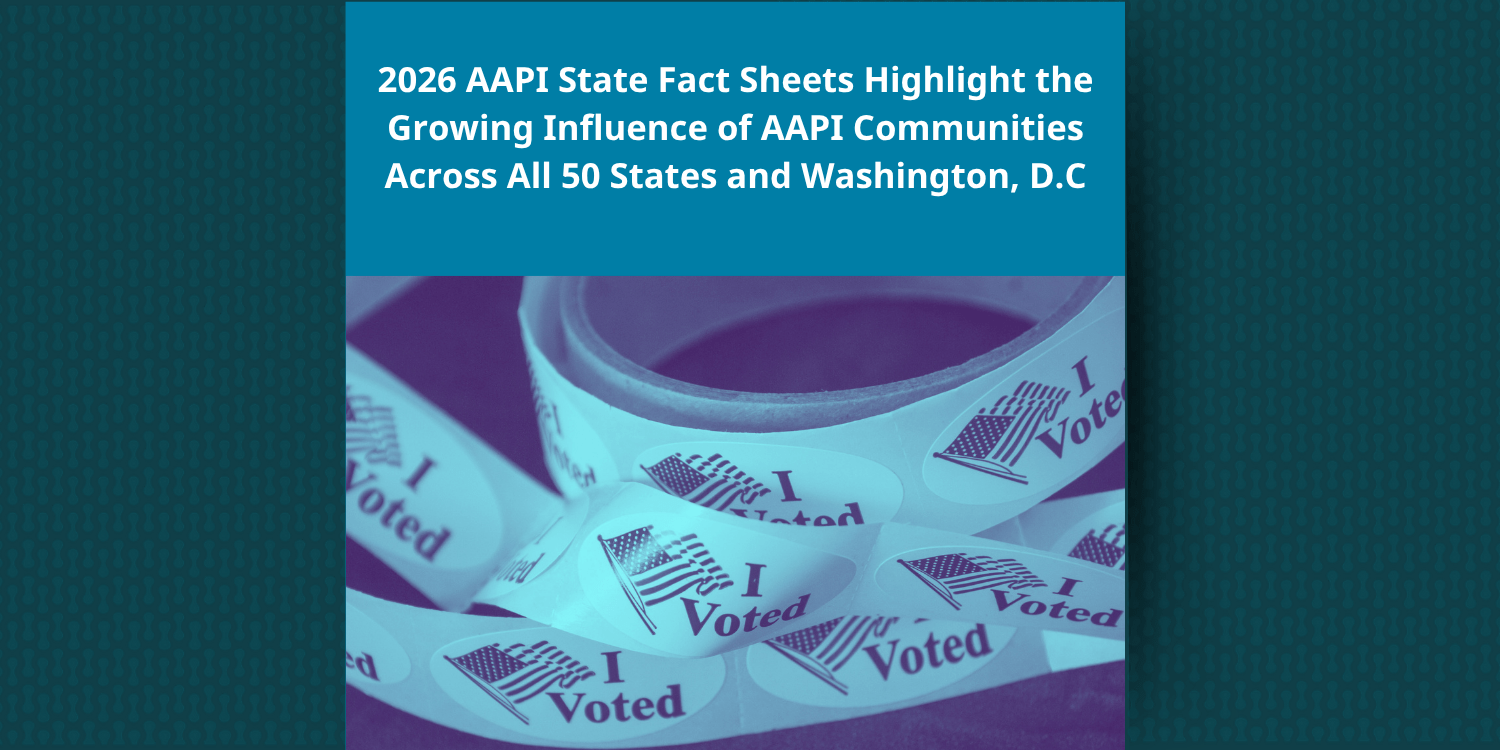
AAPI Data Releases 2026 AAPI State Fact Sheets, Highlighting the Growing Influence of AAPI Communities Across All 50 States and Washington, D.C. – AAPI Data
MEDIA CONTACT:
Amanda Ong
press@aapidata.com
AAPI Data Releases 2026 AAPI State Fact Sheets, Highlighting the Growing Influence of AAPI Communities Across All 50 States and Washington, D.C.
Washington, DC – Asian and Pacific Islander American Vote (APIAVote) and AAPI Data today released the 2026 AAPI State Fact Sheets, a comprehensive set of demographic and voter data for all 50 states and the District of Columbia. Updated every two years, the fact sheets provide policymakers, advocates, researchers, journalists, campaigns, and community organizations with essential data on the nation’s fastest-growing racial demographic and voter bloc.
“AAPI voters are shaping elections nationwide, yet our communities are still too often overlooked or misunderstood,” said Christine Chen, Executive Director of APIAVote. “These fact sheets give organizers, policymakers, media, and advocates the context they need to build more informed, effective, and inclusive engagement strategies and to better understand AAPI communities’ growing impact on American democracy.”
“Our communities are growing rapidly in places well beyond the Northeast and the Pacific West,” said Karthick Ramakrishnan, Founder and Executive Director of AAPI Data. “It is critical for news media, funders, and civic engagement organizations to use these updated findings to ensure accuracy and efficacy in their work.”
The 2026 State Fact Sheets include state-specific information on:
- AAPI population and eligible voters
- Population growth trends
- Citizenship and immigration data
- Language access and English proficiency
- Economic indicators, including poverty and health insurance coverage
- Geographic concentrations by county
- Voter demographics and civic engagement
The fact sheets are based on data from the U.S. Census Bureau’s American Community Survey and include both monoracial and multiracial AAPI populations. Together, these data provide a more complete picture of AAPI communities and equip decision-makers with the information needed to better serve and engage one of the country’s fastest-growing populations.
The 2026 AAPI State Fact Sheets are available for free and may be downloaded individually by state or as a combined report at: https://apiavote.org/policy-and-research/aapi-demographics-by-state/. The factsheets can also be found on the AAPI Data website: https://aapidata.com/demographics/2026-aapi-voter-state-fact-sheets
About AAPI Data
AAPI Data is a national research and policy organization producing accurate data to support community narratives that drive action toward enduring solutions for Asian American, Native Hawaiian and Pacific Islander (AANHPI) communities. Learn more at aapidata.com.
About APIAVote
Asian and Pacific Islander American Vote (APIAVote) is the nation’s leading nonpartisan nonprofit dedicated to engaging, educating, and empowering Asian American and Pacific Islander (AAPI) communities to strengthen and sustain a culture of civic engagement. See our website for more information at https://www.apiavote.org/

WASHINGTON, D.C. (WSAW) – It’s a day for gathering and remembering victims of internet crimes.
The parents of Bradyn Bohn, the D.C. Everest teen who was a victim of sextortion, are in Washington, D.C. for the event.
A sign with Bradyn’s picture, his name, ‘forever 15′– along with too many more– sit outside the capitol.
It’s the inaugural ‘Social Media Victims Remembrance Day.’ A number of lawmakers were on hand. Bradyn’s mom, Brittney Bird, says Congress needs to choose families over big tech.
“My first thought is it’s absolutely heartbreaking,” she said. ”None of us should be here. These groups have been doing this for coming up on four years now. And there hasn’t been a change. If four years ago there would have been a change, my son would be here. Countless children would still be here. It’s heartbreaking, but at the same time there’s strength in numbers. So there’s that strength. And it gives us hope, you know, that things will change and that we’ve got each other.”
Bradyn died by suicide in March 2025 after a sextortion scheme. The efforts of his parents helped lead to the creation of Bradyn’s Law, signed into law last December. It established sextortion as a new crime, and imposes severe penalties on perpetrators.
Click here to download the WSAW news app or WSAW First Alert weather app.
Click here to submit a news tip or story idea.
Copyright 2026 WSAW. All rights reserved.
-

 Illinois5 minutes ago
Man buys winning $1.3 million jackpot ticket at suburban gas station
-

 Indiana8 minutes ago
‘Foul play’ suspected in death investigation on Indiana-Ohio state line, Wayne County officials say
-

 Iowa13 minutes ago
New Iowa program aims to remove barriers to family support
-

 Kentucky18 minutes ago
Can you set off fireworks in Kentucky? See laws ahead of Fourth of July
-
 Louisiana28 minutes ago
Historic Gene Therapy Gives Young Louisiana Man a New Shot at Life
-

 Maine35 minutes ago
Climate Chronicles: How many tornadoes does Maine see a year?
-

 Maryland38 minutes ago
Maryland families are paying the price for failed energy policies
-

 Michigan43 minutes ago
Michigan’s single-stair reform gains as housing package languishes

