Maryland
Maryland won a tentative victory in the race for a new FBI headquarters, a potential economic boon for a majority Black county near DC


- In November, the GSA announced that Maryland had been picked to land the new FBI headquarters.
- Maryland lawmakers, including Gov. Wes Moore and Rep. Steny Hoyer, emphasized equity in their pitch.
- Some Virginia officials who have decried the selection process now want it reversed.

For over a decade, a bipartisan contingent of political leaders in Maryland and Virginia sought to land the new FBI headquarters.
The J. Edgar Hoover Building, a Brutalist complex near the White House that has housed the agency’s headquarters since 1975, became functionally obsolete years ago, with employees dispersed among different locations in the region. The current location, while centrally located, also has security vulnerabilities that a newer and more secure facility would rectify.
For years, the race to land the facility was intense. But federal officials last November selected a site in Greenbelt, Maryland, located in suburban Prince George’s County and adjacent to an existing Metro station — making it easily accessible to public transit.
The decision is a major win for Maryland Gov. Wes Moore and Maryland Sens. Ben Cardin and Chris Van Hollen, but especially for Democratic Rep. Steny Hoyer, the dean of the Maryland congressional delegation and a longtime champion of the project. Hoyer in a recent interview told me that he first discussed the move in 2009 with then-FBI director Robert Mueller.
“I went down to the building, I looked at it, took a tour through it, and he showed me how decrepit it was,” Hoyer said, noting that Mueller said the state of the building was undermining the agency’s effectiveness.
Hoyer, a former House majority leader who endorsed Moore’s campaign months before the 2022 Democratic gubernatorial primary, told Business Insider that the now-governor “immediately seized” on the FBI issue even before his eventual win in the primary.
“He digested and understood the importance of our competitive advantage and focused on achieving that objective,” Hoyer said. “And he recognized the importance of the FBI for Maryland and in particular for Prince George’s County.”
Prince George’s County, the majority-Black county directly to the east of Washington, DC, has for years had one of the most affluent Black populations of any jurisdiction in the country. But compared to Northern Virginia localities like Fairfax County, which has been an economic powerhouse for decades, Prince George’s County hasn’t enjoyed a similar level of economic development.
ERIC BARADAT/AFP via Getty Images
In that sense, the new building — which will consolidate and hold roughly 11,000 employees under one roof — is a game changer for Maryland.
“We have 4% of leased federal office space in Prince George’s County,” Hoyer told me, while also pointing out that the county is home to roughly 20% of the Washington region’s federal workers. “Fairfax County has 11% of the office space, almost three times as much as we have.”
Hoyer, like Moore, argued during the selection process that a Maryland site would be tied to equity, not only in terms of race but also regarding the level of federal investment.
“This project will be worth over $4 billion in economic activity and it’s going to solidify Maryland as the cyber capital of this country,” the governor told me in a recent interview. “The reason that we made it such a high priority is because this is going to be one of the most important federal buildings that has ever been built.”
Virginia leaders, who for years argued that a suburban site near the Marine Corps Base Quantico was a better fit for the headquarters, have criticized the selection — and now the General Service Administration will conduct an evaluation of the process.
In a November letter, a majority of Virginia’s congressional delegation asked that the decision to move the headquarters to the 61-acre Greenbelt site be reversed. And current FBI director Christopher Wray has expressed concerns about the selection process.
But a White House spokesperson in November defended the selection process as “fair and transparent.” And Maryland’s leaders remain confident.
“We’re absolutely convinced that everything was done properly,” Hoyer told me. “And I’ve been convinced from the very beginning that Greenbelt was by far the best site for all the reasons that the GSA ultimately found.”


One of the most unique ships featured in Sail250 Maryland and Airshow Baltimore can be found docked at the Baltimore Peninsula.
USS Marinette LCS25 is one of the most functional ships in the Navy fleet. At 370 feet long with 80 crew members, the ship has a helicopter landing pad and hangar, two rib boats in the belly of the vessel, and heavy artillery, including a cannon.
The ship has four engines, two of which are like jet engines, meaning it can sprint ahead of other vessels to intercept watercraft. It can also truck side to side and spin 360 degrees with controllable reversing and steering deflector buckets attached to the stern of the jet propulsion system. It can also traverse the littoral zones, water close to shore, and navigate waters as low as 15 feet deep.
“Where we shine is our ability to operate where other ships can’t,” said Cdr. Brian Sims, the ship’s executive officer. “For a 370-foot ship, one of the smallest in the fleet, it packs a punch. We can go 40 plus knots.”
The ship is used in counternarcotics missions primarily on the East Coast and in the Caribbean.
It is based in Jacksonville, Florida, but was built in Marinette, Wisconsin, which is where the ship gets its name. It began operating in 2023 and has yet to deploy. The ship can be out on the water for weeks or even months.
“We go out and find drug trafficking individuals and intercept, and the Coast Guard then takes over and arrests,” Sims said.
The pilot house is where the ship truly shines. An officer and junior officer monitor the radar and navigation, while another sailor sits at the helm and oversees steering the vessel and monitoring the engines.
“This is a very unique design for Navy ships,” Sims added.
The ship also hosts several heavy artillery pieces, including a cannon on the bow with different types of rounds to combat different threats. It can fire 220 rounds in a minute.
With its rich Naval history, Baltimore is playing host to some of the Navy’s finest, and the crews are equally as excited to be here in Maryland, the backbone of the Navy, celebrating 250 years of American history.
“Baltimore is a fantastic city, steeped in maritime tradition. Of course, we have Fort McHenry that we sailed past and rendered honors to when we arrived,” Sims said. “Having the ability to be in this role in this position on board this ship to celebrate the nation’s 250th, it’s an absolute honor, and one that, one that gives us all pause, and lets us reflect on where we’ve come as a nation.”

 As Maryland families head into another hot summer, many are about to receive an unpleasant reminder of just how badly some state leaders failed to address Maryland’s growing energy problems this year.
Higher energy bills are not coming by accident. They are the predictable result of years of poor planning and a continued refusal by Democratic leadership in Annapolis to confront the real issue facing our state: Maryland does not produce enough electricity to meet its own growing energy needs.
Instead of seriously addressing that challenge during this year’s legislative session, Democratic leaders celebrated passage of the so-called Utility Relief Act (House Bill 1532), which offers Marylanders roughly $12 in savings per month. At a time when families are facing soaring energy costs driven by a massive shortage of reliable in-state power generation, that is not meaningful relief. It is a political talking point designed to avoid the larger conversation Maryland desperately needs to have.
Our state imports nearly half of the electricity it uses. Nearly half of the power keeping homes cool, businesses operating and communities functioning every day comes from outside our borders. Yet even as demand for electricity continues to rise, Maryland continues falling behind on building the reliable generation capacity needed to support our future.
That is not a serious long-term strategy.
Families across Maryland are already struggling with inflation, rising housing costs and economic uncertainty. Energy bills are becoming another major financial burden for working families, seniors and small businesses. But instead of focusing on increasing reliable power supply, meaning fully lowering consumer costs, and strengthening Maryland’s long-term energy security, Annapolis continues offering temporary fixes that fail to address the underlying problem.
The reality is simple: Maryland needs more power generation, and every responsible energy source should be part of the conversation. Natural gas, nuclear, renewables, battery storage, clean coal and emerging technologies all have a role to play in creating a more reliable and affordable energy future for our state.
Maryland also needs a broader conversation about the role experienced infrastructure providers and utilities can play in strengthening reliability and supporting future generation needs. These are organizations that already manage the systems Marylanders depend on every day and understand the long-term planning required to maintain dependable service.
Reliable and affordable energy is not a partisan issue. It is a basic requirement for economic growth, business investment and everyday quality of life.
As summer begins and air conditioners start running around the clock, Maryland families will once again be reminded that energy policy decisions made in Annapolis have real world consequences.
Unfortunately, they are paying for those consequences every month.
Del. Jason Buckel is the Minority Leader of the Maryland House of Delegates and represents Allegany County in the Maryland General Assembly.

MARYLAND (WBFF) — A group of Republican candidates, a voter, and an election-integrity organization are asking an Anne Arundel County Circuit Court judge to stop the state from certifying primary election results until election officials contact every voter whose original ballot was rejected and allow them to correct the problem.
The lawsuit, filed in Anne Arundel County Circuit Court against the Maryland State Board of Elections, comes a month after state election officials acknowledged that some Maryland voters were mistakenly mailed ballots for the wrong political party and sent replacement ballots to affected voters.
The ballot error affected voters who requested physical mail-in ballots for the June 23 primaries.
The Maryland State Board of Elections said its vendor, Taylor Print and Visual Impressions Inc. (TPVI), mailed some of the voters’ ballots for the wrong political party, but the administrator said the board’s vendor couldn’t identify which voters received erroneous ballots. Over 500,000 Maryland voters had requested mail-in ballots, most of them in Montgomery, Baltimore, Anne Arundel and Prince George’s counties, and Baltimore City.
JOIN THE CONVERSATION (1)
Read the full story on The Baltimore Sun.
-

 Technology11 minutes ago
Android 17’s new foldable gaming mode could make flippy phones more fun
-

 World14 minutes ago
Shark attack survivor wakes from 10-day coma and shares first words with family at her hospital bedside
-

 Politics20 minutes ago
Trump administration pledges $150M in aid, deploys Navy warships after deadly Venezuela earthquakes
-

 Sports29 minutes ago
Second Lady Usha Vance joins celebrity-filled crowd for Team USA’s group-stage finale in LA
-

 Technology34 minutes ago
Debt collection letter for debt you don’t owe? What to do now
-
 Business41 minutes ago
Newsom blesses Uber ballot measure truce — but fight over car crash lawsuits continues
-
 Entertainment44 minutes ago
La Cruz offers a musical memorial to Pulse shooting victims on Pride Month
-
 Politics56 minutes ago
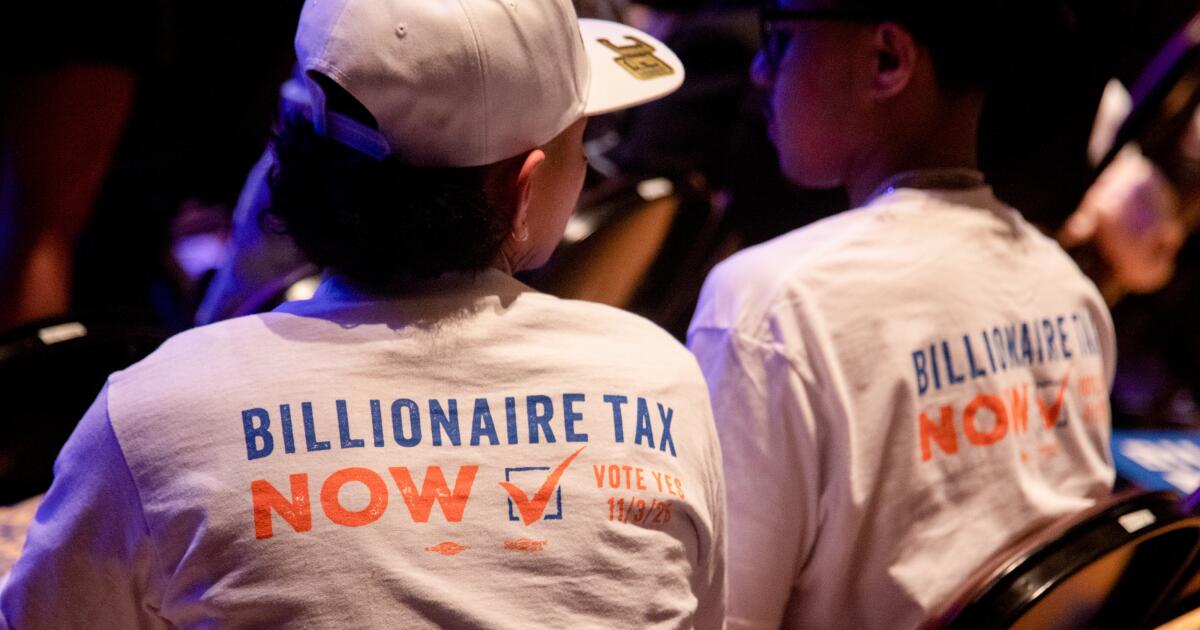
Controversial billionaire tax proposal will appear on November ballot

