Politics
Supreme Court to rule on clearing homeless encampments in California and the West

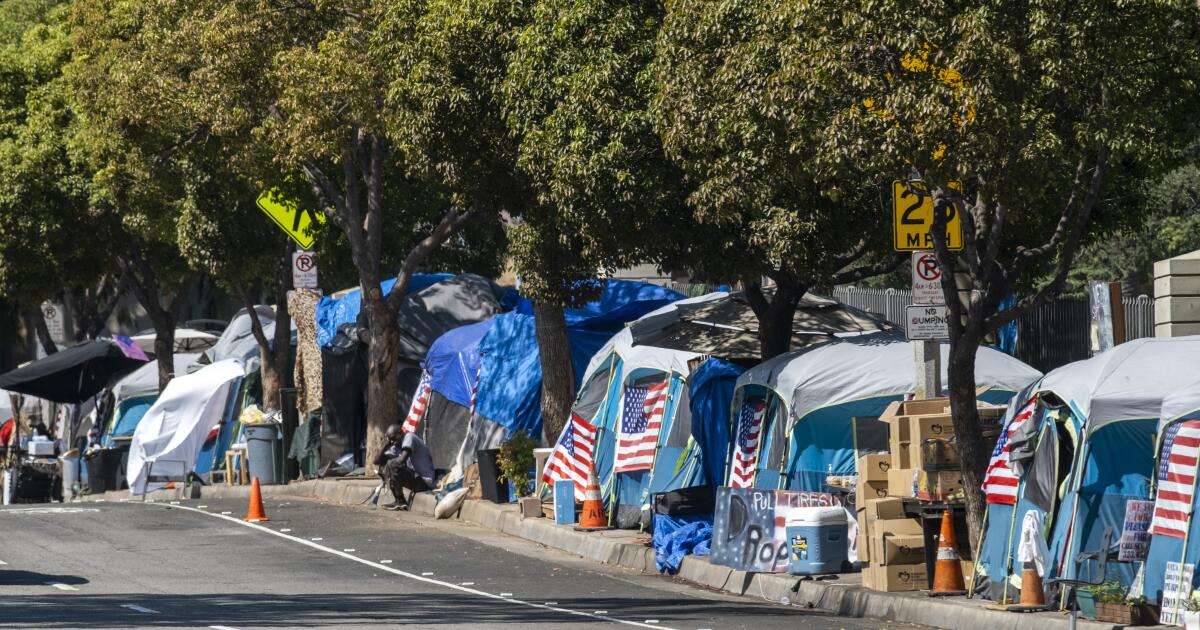
The Supreme Court agreed Friday to decide whether homeless people have a constitutional right to camp on public property when they have no other place to sleep.
Acting on appeals from city officials in California and the West, the court will review decisions of the U.S. 9th Circuit Court of Appeals, which held it was cruel and unusual punishment for cities to deny homeless people a place to sleep.
As a result of the 9th Circuit rulings, public officials in California and the eight other Western states under its jurisdiction face greater scrutiny and legal challenges when they move to clear encampments or relocate homeless people.
California Gov. Gavin Newsom and city attorneys from Los Angeles, San Francisco, San Diego and Phoenix were among two dozen government and business groups that urged the high court to restore their authority over sidewalks and parks, or at least to clarify the law.
City attorneys said it remains unclear whether encampments may be removed from sidewalks or parks if the people living on the street refuse an offer to move into temporary shelter.
They blame the 9th Circuit rulings — in cases from Boise, Idaho and Grants Pass, Ore. — for the worsening homelessness crisis in West Coast states. California alone is “home to half of the nation’s unsheltered population,” they said in their appeal in Grants Pass vs. Johnson.
The court said it would hear arguments in the case in April and issue a ruling by the end of June.
Newsom welcomed the court’s decision to hear the case.
“California has invested billions to address homelessness, but rulings from the bench have tied the hands of state and local governments to address this issue,” he said. “The Supreme Court can now correct course and end the costly delays from lawsuits that have plagued our efforts to clear encampments and deliver services to those in need.”
Theane Evangelis, the Los Angeles attorney who represents the city of Grants Pass, said she hopes the high court will agree the 9th Circuit’s rulings “are legally wrong and have tied the hands of local governments as they work to address the urgent homelessness crisis.”
But an Oregon attorney who sued on behalf of several homeless people in Grants Pass argued that cities have not been denied all authority to regulate encampments.
“The issue before the court is whether cities can punish homeless residents simply for existing without access to shelter,” said Ed Johnson, director of litigation at the Oregon Law Center. “Nevertheless, some politicians and others are cynically and falsely blaming the judiciary for the homelessness crisis to distract the public and deflect blame for years of failed policies.”
In the past, the 8th Amendment’s bar against inflicting “cruel and unusual punishments” has been applied by the Supreme Court to limit how the government deals with those convicted of crimes.
Advocates for the homeless point to a 1962 ruling that limited what can be considered a crime.
In Robinson vs. California, the Supreme Court struck down part of a California law that made it a crime to be addicted to narcotics. Lawrence Robinson had been arrested by Los Angeles police officers, who said his arm was discolored by “numerous needle marks.” He was tried, convicted and sentenced to 90 days in jail.
The Supreme Court later reversed his conviction and ruled it was cruel and unusual to punish someone, not for using or selling drugs, but for the “illness” of “narcotics addiction.”
In 2006, that ruling was cited by 9th Circuit judges to strike down a Los Angeles sidewalk ordinance that authorized police to arrest people who “lie or sleep” on the streets. The three-judge panel said homeless people were being punished simply because they had nowhere to sleep.
Rather than appeal to the Supreme Court, the city settled the case and agreed not to enforce its ordinance during overnight hours.
The 9th Circuit issued a broader ruling in 2018 that struck down ordinances in Boise, Idaho, that authorized police to arrest or fine people who were sleeping or camping on public property.
The judges said the Supreme Court’s Robinson decision established the “principle that the 8th Amendment prohibits the state from punishing an involuntary act or condition if it is the unavoidable consequence of one’s status or being.”
Grants Pass, a city of 38,000 people in southern Oregon, was estimated to have between 50 and 600 people who were homeless. In response to a suit by homeless advocates, a federal judge and 9th Circuit panel struck down its anti-camping ordinance because the city did not have “adequate shelter” for all of them.
“We affirm the district court’s ruling that the city of Grants Pass cannot, consistent with the 8th Amendment, enforce its anti-camping ordinances against homeless persons for the mere act of sleeping outside with rudimentary protection from the elements, or for sleeping in their car at night, when there is no other place in the city for them to go,” said Judge Roslyn Silver, who wrote the lower court opinion.
When the court’s conservatives moved to have the full 9th Circuit reconsider that ruling, they fell short by a 14-13 vote.
In their appeal to the Supreme Court, lawyers for the city emphasized the practical problems of homelessness.
“Across the West,” they said, “hundreds of thousands of people camp in public, their tents and belongings overtaking sidewalks, parks, and trails. Cities want to help those in encampments get the services they need while ensuring that our communities remain safe, but they find themselves hamstrung in responding to public encampments and the drug overdoses, murders, sexual assaults, diseases, and fires that inevitably accompany them.”
The closest the Supreme Court has come to ruling on the issue came in 1982. A group called the Community for Creative Non-Violence sought a permit for a demonstration in Lafayette Square across the street from the White House.
Their request included a “symbolic tent city” where about 50 people would sleep.
The Park Service approved the permit to demonstrate, but refused the request for sleeping in the park. The advocates sued, contending the ban on camping violated the 1st Amendment’s protection for free speech. They lost before a federal judge, won in the U.S. appeals court and finally lost 7 to 2 in the Supreme Court in 1984.
Writing for the court, Justice Byron White said the 1st Amendment permits reasonable limits on the “time, place and manner” of demonstrations. “We have very little trouble concluding that the Park Service may prohibit overnight sleeping in the parks involved here,” he wrote.

Politics
RFK Jr announces ‘largest autism fraud bust in American history’ with $46.6M Medicaid scheme indictment
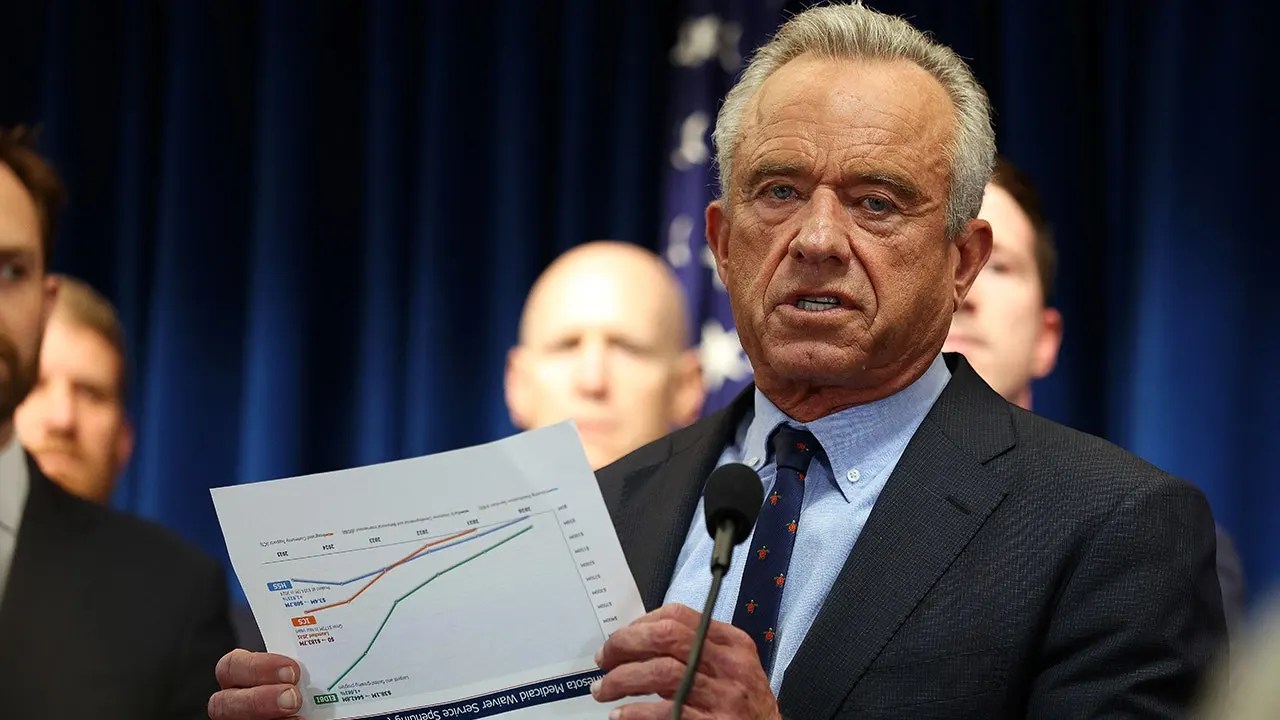
Jonathan Fahey discusses DOJ’s $90 million Minnesota fraud ring bust
Jonathan Fahey, former DHS deputy assistant secretary, discusses the Department of Justice’s $90 million Medicaid fraud bust in Minnesota. Fahey explains that the widespread fraud is likely just the tip of the iceberg, with more revelations expected from cooperating defendants. He questions why Democrats previously ignored these programs for political reasons.
NEWYou can now listen to Fox News articles!
Health and Human Services (HHS) Secretary Robert F. Kennedy Jr. announced the indictment of two Minnesota defendants charged in what officials called the “largest autism fraud bust in American history.”
The U.S. Department of Justice (DOJ) indicted 55-year-old Shamso Ahmed Hassan and 25-year-old Hanaan Mursal Yusuf, slapping them with numerous counts of fraud and related charges for their alleged $46.6 million scheme to defraud Minnesota Medicaid’s Early Intensive Developmental and Behavioral Intervention (EIDBI) Program.
The indictment was part of a wider enforcement action taken by the DOJ’s National Fraud Enforcement Division that swept up 15 alleged fraudsters in indictments for schemes that targeted over $90 million in taxpayer funds.
“Today’s arrests represent the largest autism fraud bust in American history. This was not a paperwork error. It was not a technical violation. This was organized theft that exploited the most vulnerable children in America, deceived families, stole taxpayer dollars meant to help children with autism access legitimate care and support,” Kennedy Jr. said in a Friday news conference.
‘EPICENTER OF FRAUD’: MINNESOTA’S EMPTY STOMACHS, FAKE AUTISM THERAPY AND A SCANDAL THAT COULD TOP $2 BILLION
Health and Human Services Secretary Robert F. Kennedy, Jr., speaks to the media about alleged Medicaid fraud, and charges that were brought up against 15 individuals at the federal courthouse in Minneapolis, Minnesota, on May 21, 2026. (Christopher Juhn/Anadolu via Getty Images)
Hassan was a shareholder in two autism centers, Smart Therapy Center and Star Autism Center, but she did not disclose her ownership to the Minnesota Department of Human Services as required by law, prosecutors said. Yusuf worked at the Smart Therapy Center and helped operate the center, including by submitting the businesses’ claims for Medicaid reimbursement, according to the indictment.
MINNESOTA FRAUD SUSPECT WHO JUMPED FROM BUILDING IS ARRESTED, FBI SAYS
The pair allegedly paid kickbacks to families to incentivize them to send their children to Smart Therapy Center and Star Autism Center so they could bill for autism-related services in their children’s names. They then billed Medicaid for services that were not rendered or were not reimbursable by Medicaid, according to the indictment.
Of the $46.6 million they filed for reimbursement, $21.6 million was paid out, per the indictment. The DOJ is seeking restitution for that money.
Assistant Attorney General for the National Fraud Enforcement Division Colin McDonald addresses the media to announce actions combating fraud in Minnesota at the U.S. Attorney’s Office for the District of Minnesota on May 21, 2026 in Minneapolis, Minnesota. The Department of Justice is bringing charges against 15 people for fraud that targeted seven Medicaid programs and over $90 million in taxpayer dollars. (David Berding/Getty Images)
The pair “diverted hundreds of thousands of dollars of the fraud proceeds” to “their families’ personal use and benefit, including through real property purchases and transferring funds overseas, including to Kenya,” according to the indictment.
CLICK HERE TO DOWNLOAD THE FOX NEWS APP
The defendants were each charged with one count of conspiracy to commit healthcare fraud and one count of money laundering. Yusuf was charged with five counts of healthcare fraud, while Hassan was charged with two.
Secretary of Health and Human Services Robert F. Kennedy, Jr. addresses the media to announce actions combating fraud in Minnesota at the U.S. Attorney’s Office for the District of Minnesota on May 21, 2026, in Minneapolis, Minnesota. (David Berding/Getty Images)
“Every fraudulent autism diagnosis steals time, care, and resources from the children for whom this program was designed and who desperately need this care. Families with autistic children already face enormous challenges navigating therapies, specialists, and support systems. Fraud makes those barriers even steeper,” Kennedy Jr. said in the announcement.

CLOVIS, Calif. — In the waning days before California’s primary election, the two top Republicans running for California governor delivered closing arguments in front of a friendly Central Valley audience Friday evening.
Though Riverside County Sheriff Chad Bianco and former Fox News host Steve Hilton have attacked each other throughout the campaign, they abstained from feuding and instead focused on common enemies — Gov. Gavin Newsom and Democratic lawmakers who control the Legislature.
Hilton criticized Newsom’s new $20-million program to provide free diapers for families of newborn babies, referring to the outgoing governor as “the great loaded diaper of California himself.”
Earlier this year, Hilton and Bianco topped the governor’s race polls as a packed field of Democrats split many of the state’s liberal voters. Under California’s “jungle primary” system, where the top two candidates advance from the primary to the general election regardless of political affiliation, that led to fleeting hope among Republicans that the two candidates could shut Democratic candidates out of the November election.
“That idea was always a fantasy,” Hilton wrote in an op-ed published in the New York Post earlier this week in which he urged Bianco to drop out of the race “for the sake of the state we both love.”
“Steve, it is time for you to drop out,” Bianco retorted in a video posted to social media soon after. “In no world, no world does Steve Hilton beat a Democrat in November.”
After winning an endorsement from President Trump in early April, Hilton has steadily outpaced Bianco in polls. A poll commissioned by the California Democratic Party released last week showed Hilton leading the field with support from 22% of likely voters, followed by Democrat and former Biden Cabinet member Xavier Becerra with 21%. Bianco was at 10%, down from 15% in a previous poll conducted two weeks prior.
Still, Bianco, the two-term sheriff of California’s fourth most populous county, is a favorite of many Republicans in the state and won more support from delegates during the party’s recent endorsing convention than Hilton, though neither reached the necessary 60% to win the party backing.
While the two candidates have needled each other with personal digs and insults throughout much of the campaign, they appeared to set that energy aside during the Clovis forum and even traded some compliments. Hilton praised “sheriffs like Chad who actually understand what public safety looks like” while Bianco acknowledged that his opponent “should be very proud” to have Trump’s endorsement.
State Sen. Shannon Grove (R-Bakersfield), who moderated the more than 90-minute event, praised their “extraordinary civility” before she pressured each to commit to backing whichever Republican makes it through the June 2 primary — or if they both advance, continue to focus on policy debates over attacks.
The forum was hosted by the Fresno County & City Republican Women Federated as part of a fundraiser and dinner honoring the upcoming 250th anniversary of the nation’s founding. About 450 attendees were served dishes inspired by presidential favorites including sirloin steak for Theodore Roosevelt, a chopped salad from Chasen’s, a favorite Los Angeles eatery for Ronald Reagan, and a chocolate pie with cherry vanilla ice cream for Trump.
The Central Valley stretches from Bakersfield to Redding and is home to some of the nation’s most lucrative farmland. It also includes the heart of California oil country in Kern County. Yet residents feel largely neglected by statewide politicians who are more drawn to the ample votes and wealthy donors in Southern California and the Bay Area.
“We are the breadbasket of the world but we’ve been overlooked for too long,” said Andrea Shabaglian, a vice president of the Fresno Republican women’s group. “When gubernatorial candidates come here to sit down and listen to our communities, they realize that a stronger Valley means a stronger California.”
Though he lost California handily to former Vice President Kamala Harris in the 2024 election, Trump dominated in the state’s midsection. Even in Fresno County, where the Republican forum was held, Trump beat Harris by a four percentage point margin despite Democratic voters slightly outnumbering Republicans.
“We need a Republican in office because California is a mess. I mean, anybody with common sense can see that,” said LuAnne Pinedo-Madden, a retiree living in the Sierra foothill community of Coarsegold who listed transgender girls being allowed to compete in girls’ sports and government corruption as her top concerns.
Pinedo-Madden said she was “pretty sure” she had decided which of the Republican candidates to vote for but declined to say whom. “I feel that if we don’t get a Republican in office, we’re looking at moving” to Utah, Idaho or Nevada, she said. “We can’t take this anymore.”
Bianco and Hilton spoke about their plans to improve public safety, small businesses, homeowner’s insurance and water management, a crucial issue for the conservative-leaning owners of vast swaths of California’s agricultural heartland.
Signs along the major highways that straddle California’s Central Valley proclaim that “Food grows where water flows” and criticize Newsom for allowing water to flow into the ocean instead of capturing and storing more of it for farming.
Both of the GOP candidates described their visions for the state, which include building new dams and raising existing ones to store more water.
“We don’t have the water problem. We have a water management problem,” Bianco said before falsely arguing that “we get more water every single year than any other state in the country” and that California has “never, ever, ever been in a drought.”
“The water will be flowing to our farmers, the oil will be flowing to our refineries, the forests will be managed, the timber will be harvested” and used to build new single-family homes, Hilton said. “We’ve got the best weather, we’ve got the best people, we’ve got the best farmers, we’ve got everything we need to make this place amazing, except a good governor. Very soon we’ll have that as well.”
Though a Republican governor would likely face a hostile Legislature intent on blocking many priorities, Bianco and Hilton both promised sweeping cuts and cutbacks of state agencies. Both pledged on Friday to replace every member of the state’s parole review board, which drew criticism in February when it granted elderly parole to a man convicted of 16 counts of kidnapping and child molestation in 1999.
“California criminal justice is absolutely broken and it was forced upon us in the name of reform. What I’m going to do is make it a crime to hear the word reform again, because we lost track of what that word even means,” Bianco said.
He also pledged to eliminate laws and environmental regulators often blamed for slowing housing development: the California Environmental Quality Act, the California Coastal Commission and the state Air Resources Board.
Though his opponent has the coveted Trump endorsement, Bianco argued that it will hurt Hilton’s chances of winning the general election. The Republican president has never been popular in deep-blue California; just 25% of adults in the state approved of Trump’s performance according to a February survey by the Public Policy Institute of California.
“Steve should rightfully be proud of being endorsed by President Trump [but] we have to actually realize, is that a good thing in California? It’s a good thing in this room,” Bianco said as the crowd cheered at the mention of the president’s name. “We have to realize strategically that President Trump ran three elections in this state, and he lost 60-40 in all three of them.”
The Riverside sheriff argued he is “the only person that can actually sway Democrats to vote for a Republican across party lines on a public safety platform.”

new video loaded: Tulsi Gabbard Resigns as Intelligence Chief
transcript
transcript
Tulsi Gabbard Resigns as Intelligence Chief
Tulsi Gabbard, the director of national intelligence, announced on social media on Friday that she would be leaving her post to care for her husband, who is battling an “extremely rare form of bone cancer.”
-
I’m honored and grateful to President Trump for his trust and confidence in nominating me to serve our country as the director of national intelligence, at a time when trust in the intelligence community, unfortunately, is at an all-time low.

By Jamie Leventhal
May 22, 2026
-

 Louisiana1 minute ago
U.S. citizen stopped in Lafayette, shackled, and detained in Louisiana ICE facility | The Lens
-

 Maine7 minutes ago
Maine US Senate candidate Graham Platner ad criticizing Boston Red Sox pulled during game
-

 Maryland13 minutes ago
Governor vetoes advertising bill benefiting Maryland news outlets
-

 Michigan19 minutes ago
Former border officer from Michigan sentenced for distribution of child pornography
-

 Massachusetts25 minutes ago
Celtics Heavily Tied To Legendary Massachusetts-Born UConn Prospect | NESN
-

 Minnesota31 minutes ago
Real Salt Lake settles for a draw as Minnesota United scores in stoppage time
-

 Mississippi37 minutes ago
Game Time Set for Oklahoma and Mississippi State’s Super Regional Finale
-
 Missouri43 minutes ago
Kansas City, Missouri, man indicted in 2024 fatal crash

