West
'May December' movie on Mary Kay Letourneau 'offended' student lover Vili Fualaau

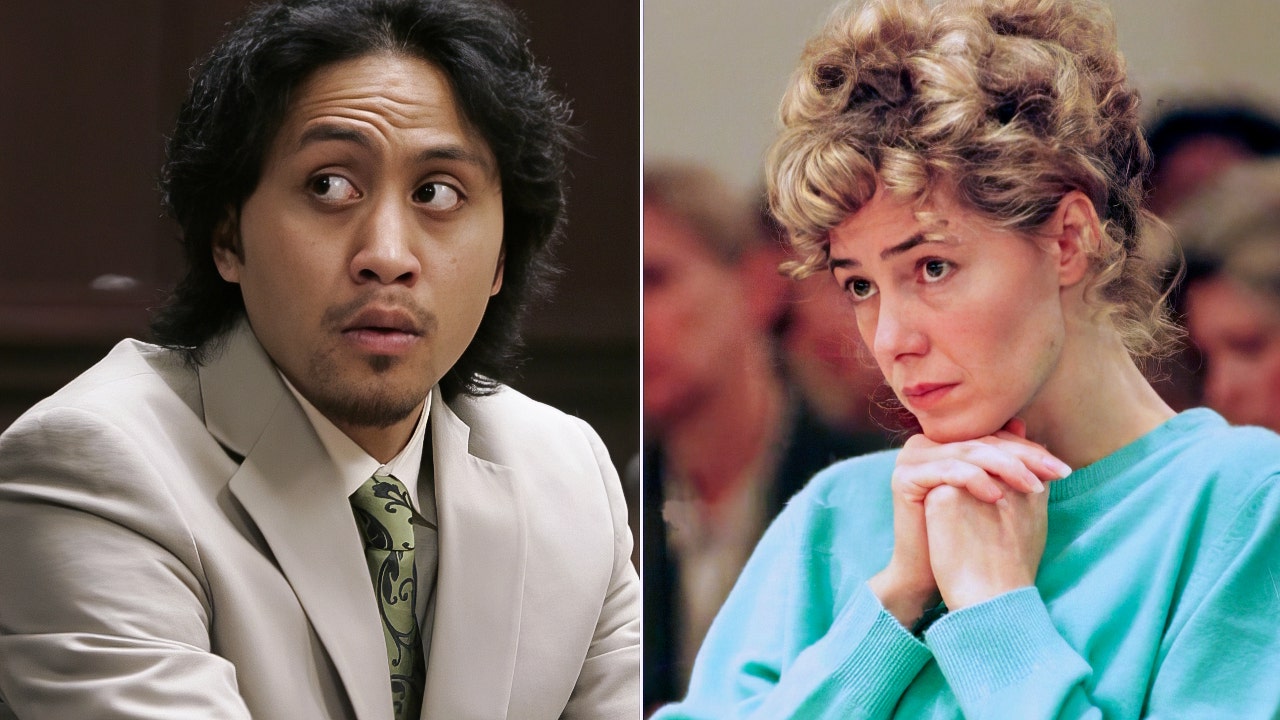
Vili Fualaau, the now-40-year-old whose illicit relationship and post-conviction marriage to his sixth-grade teacher made international news, said he is “offended” by the hit Netflix movie based on the ’90s scandal.
Although the movie diverges from its real-life counterpart, with the couple meeting in a pet shop rather than a school, “May December” writer Samy Burch cited the Mary Kay Letourneau case as her inspiration for the critically acclaimed 2023 film, according to The Hollywood Reporter.
Letourneau, then 34, was initially sentenced to six months on two counts of second-degree child rape after she became pregnant with then-12-year-old Fualaau’s child.
GYPSY ROSE TAKES BLANCHARD BECOMES OVERNIGHT INTERNET STAR AFTER PRISON RELEASE
Convicted child rapist Mary Kay Letourneau died of cancer in 2020 when she was 58 years old, leaving behind her then-37-year-old ex-husband, Vili Fualaau, and their two daughters. Georgia, the younger daughter, is expected to deliver a baby boy in the coming months. (Ron Wurzer and Reuters)
She would give birth to their first child after pleading guilty and awaiting sentencing, then conceive their second while breaking the terms of her post-release supervision after serving a reduced three-month sentence. Letourneau gave birth to their second daughter during her subsequent seven-year prison stint at Washington Corrections Center for Women, and the pair married upon her release in 2004.
Fualaau, who divorced Letourneau in 2015 and remarried after her death from cancer in 2020, told The Hollywood Reporter that the movie could have been “a masterpiece” – if directors had ever reached out to consult him.
“I’m still alive and well,” Fualaau told the outlet. “If they had reached out to me, we could have worked together… Instead, they chose to do a ripoff of my original story.”
Fualaau still lives in the Seattle area, where he and Letourneau settled after their widely publicized nuptials, according to the outlet, and would have gladly collaborated with filmmakers.
MANHUNT UNDERWAY FOR ‘PERSON OF INTEREST’ IN INDIANA LAWYER’S DISAPPEARANCE AFTER CROSS-COUNTRY TRIP
Mary Letourneau, then 43, Vili Fualaau, then 22, and their two children are pictured driving along the beach from their home on May 8, 2005, in the Seattle suburb Normandy Park, Washington. (Ron Wurzer/Getty Images)
“I’m offended by the entire project and the lack of respect given to me – who lived through a real story and is still living it,” he added.
He managed to stay out of the limelight after Letourneau’s death, keeping the identity of his new partner a secret. But last year, his second daughter with the embattled teacher, now 24, announced her pregnancy – which will make Fualaau a grandfather at 40 years old.
Fualaau stressed that he was not opposed to the concept of a film surrounding his remarkable story. But the portrayal in “May December,” he said, was far more “simple” than his reality.
“I love movies – good movies… I admire ones that capture the essence and complications of real-life events. You know, movies that allow you to see or realize something new every time you watch them,” he told the outlet. “Those kinds of writers and directors – someone who can do that – would be perfect to work with.”
HANDWRITING EXPOSED OBA CHANDLER’S HORRIFIC FLORIDA MURDERS OF WOMAN, DAUGHTERS FOUND FLOATING IN TAMPA BAY
Mary Kay Letourneau and Vili Fualaau pose on April 9, 2005, outside their home in Seattle. Fualaau worked as a DJ and Letourneau as a legal assistant after their marriage, People magazine reported. (Mark Greenberg/AP)
Although Burch has publicly cited Letourneau’s case as the jumping off point, Julianne Moore – who played the movie’s lead based off the infamous sex offender – stressed at a November premiere that the movie was “not the story of Mary Kay Letourneau.”
But at the same event, according to The Hollywood Reporter, director Todd Haynes said there were “times when it became very, very helpful to get very specific about the research, and we learned things from that relationship.”
Fualaau’s story has been co-opted for television before, with the USA Network running “All American Girl: The Mary Kay Letourneau Story.”
Anne Bremner, the Seattle attorney who befriended Letourneau after successfully defending the Des Moines Police Department and the Highline School District against a lawsuit brought by Fualaau’s family in 2002, told Fox News Digital that “May December” captured the nuance of the couple’s relationship well before Fualaau spoke out against the adaptation:
“Watching that movie, I thought it did well, about the dynamics and the angst Vili and Mary felt about this,” she told Fox News Digital last month. “They had some things in there that were straight out of my case – the pink lipstick, the blush, that [Fualaau is] the seducer. [Fualaau] is so well played by Charles Milton, some people say he should get an Oscar. He’s a child raising children.”
The subject of who was the “pursuer” in the inappropriate school romance was broached repeatedly as the couple’s relationship was dissected in court, Bremner recalled.
In a 2018 interview on Channel Seven’s “Sunday Night in Australia,” taped months before the couple’s legal separation, host Matt Doran repeatedly asked Fualaau “who [was] the boss” in the couple’s initial romance.
The interview was used as inspiration for one of the film’s most harrowing scenes, in which the character played by Moore repeatedly asks Melton’s, “Who was the boss? Who was in charge?”
Later, Melton’s character confronts Moore’s about who really was responsible for their relationship beginning.
Netflix, Burch, Moore, Haynes and Fualaau could not immediately be reached for comment.
Read the full article from Here


SALT LAKE CITY — The Utah Department of Public Safety is urging people to make sure items are safely secured to vehicles while traveling on Utah roads. Saturday marks the 10th annual National Secure Your Load Day, and DPS is using the occasion to remind motorists that securing cargo isn’t just the law — it saves lives.
So far this year, there have been over 130 debris-related crashes in Utah, which are dangerous for other drivers and troopers who have to retrieve that debris.
“Statewide, on average about 70 times a day, highway patrol gets called to respond to debris in the roadways, so that adds up to over 25,000 times per year that we’re having to respond to get items pulled out of the roadway that people have not secured,” said UHP Lt. Zach Randall.
Unsecured loads are a persistent hazard on Utah’s roads, contributing to more than 700 preventable crashes and traffic disruptions each year. While incidents have dropped 12% over the past five years, DPS said the risk remains high and urges drivers to take “full responsibility for their cargo” before hitting the road.
Over the last five years, 17 fatalities have been caused by debris-related crashes.
Debris hazards can also cause serious injuries or deaths when striking vehicles, cyclists, or pedestrians, with DPS noting that such obstacles are often difficult to avoid safely, leading to sudden braking, swerving, and collisions.
Clearing debris can also slow traffic to a crawl. Interstate traffic is often halted entirely so crews can remove dangerous items from the roadway, adding delays and frustration for drivers.
Utah law carries fines between $200-1,000 for unsecured loads, and in severe cases, offenders can face penalties up to a Class A misdemeanor. Officials emphasize that a few minutes spent checking and securing cargo can prevent tragedy — and costly legal consequences.
Randall explained how it is important to use bungee cables, racket straps and rope to secure items to your car.
“We have a blanket that you could wrap over and then a bungee or tie-down strap over top of that,” he said. “So with some loose items like wood, we tied them together so they’re not bouncing around the truck, being able to bounce out. You can use something like a plastic wrap or a cellophane wrap to tie those together so that they’re in one unit.”
DRIVEN TO CHANGE
Have a question for UHP? Share it below and we’ll ask.

MONTGOMERY, Ala. (WSFA) – A request was approved for the Alabama National Guard to support operations surrounding the America250 events in Washington, Gov. Kay Ivey announced Thursday.
“One month from today, our nation will mark 250 years of freedom. Without hesitation, the Alabama National Guard is proud to support America250 events,” Ivey said.
As the nation prepares to mark the 250th anniversary of American independence, 150 soldiers from the 123rd Quartermaster Company in Arab will assist with support operations connected to major public events in Washington, D.C.
The guard members will work alongside the D.C. National Guard and civil servants throughout the U.S. National Capital Region in coordination with the National Guard Bureau.
“From the founding of our country to the freedoms we are still blessed to defend today, America’s 250th anniversary is a powerful reminder of the service and sacrifice that make greatness possible,” said Alabama National Guard Adjutant General Maj. Gen. David Pritchett.
The soldiers are expected to arrive in Washington before the 4th of July activities and serve a 90-day rotation.
Not reading this story on the WSFA News App? Get news alerts FASTER and FREE in the Apple App Store and the Google Play Store!
Copyright 2026 WSFA. All rights reserved.
Wyoming
Wyoming lawmakers reject upfront bonding for industrial projects, advance state fund alternative

CASPER, Wyo. — State lawmakers rejected a proposal to require industrial companies to post bonds for upfront impact assistance to local governments.
The Joint Minerals, Business and Economic Development Interim Committee let the draft bill die without a motion during its recent meeting. Lawmakers instead advanced an alternative that uses state funds to help communities facing financial strain from industrial projects before construction begins.
The defeated draft bill, 27LSO-0021, would have authorized prepayments to local communities, but it required the permit applicant to submit a bond to cover that amount.
Mills Mayor Leah Juarez told the committee the current system is broken because towns must wait for construction to start before receiving funds. She said Mills is waiting on hundreds of thousands of dollars for the delayed Dinosaur Solar Energy Project and Settler wind developments.
“Mills can’t afford this. We can’t afford to keep shouldering this burden,” Juarez said.
She echoed earlier comments from Natrona County Commissioner Dave North that cities and towns often enter contracts for expensive equipment long before a project breaks ground. He called for upfront funding, specifically pointing to long lead times to purchase fire trucks and ambulances.
He said local governments just want an advance on future tax revenues.
“We are not asking for anything additional from the companies at this point in time,” he said, suggesting a prepayment of up to 50% might be appropriate rather than the 20% cap in the draft bill.
Rep. Jayme Lien asked the committee to mandate a 100% upfront bond.
“Without adequate upfront resources, our citizens suffer things like overcrowded schools, strained emergency response, deteriorating roads, increased pressure on housing, infrastructure,” Lien said. “The upfront payment ensures accountability. If the project does not proceed responsibly, the bond is available to mitigate harm.”
Industry advocates and some lawmakers opposed the bonding suggestion. Holland & Hart LLP attorney Cindy DeLancey, who represents industrial clients, said Wyoming competes with neighboring states to attract large facilities.
“To add additional burdens in the process, additional costs … really undermines that position that we’re trying to signal to the world that we want business in Wyoming,” DeLancey said.
Rep. Christopher Knapp, R-Campbell County, said he was initially interested in the original bill but withdrew his support when the bonding requirement was introduced. He also spoke against the bill draft that provides upfront payments to local governments from state legislative reserve funds, thereby placing the risk on the state. The state would then recoup the funds through withheld payments once the project begins.
Knapp said the state shouldn’t bear the financial burden for speculative improvements or equipment, adding there are alternative funding avenues available to communities, such as the State Loan and Investment Board.
“When it comes to a very specialized piece of equipment, often times industry themselves provide that equipment on site,” he said, citing Campbell County’s coal mines as an example.
Sweetwater County Rep. J.T. Larson said lawmakers shouldn’t fear investing in the state’s communities.
“If a project falls through, why are we afraid? We’re helping those local communities get something they need or replace something that they have needed to replace for many years,” he said.
Related
-

 Tennessee4 minutes ago
2026 Tennessee football preview: Grady Dangerfield
-

 Texas11 minutes ago
Fort Worth police launch drone program to speed response times
-
Utah14 minutes ago
Got cargo? Utah Highway Patrol, DPS want you to secure your load before you drive
-

 Vermont19 minutes ago
Vermont barn-building ‘legend’ still visits every job site at 83
-

 Virginia26 minutes ago
West Virginia Vs. Cal Poly Predictions & Preview: 2026 NCAA Baseball Tournament Super Regional
-

 Washington29 minutes ago
Ivey announces Alabama National Guard support for America250 events in Washington
-
 Wisconsin34 minutes ago
Wisconsin Senate leader leaves door open for another budget surplus vote
-

 West Virginia41 minutes ago
CTC Council approves presidential appointments at BridgeValley, Pierpont, and West Virginia Northern – WV MetroNews

