World
Video: Videos Contradict Israel’s Rationale for Deadly Hospital Attack


new video loaded: Videos Contradict Israel’s Rationale for Deadly Hospital Attack
transcript
transcript
Videos Contradict Israel’s Rationale for Deadly Hospital Attack
The strikes on Nasser Hospital in Gaza killed at least 20 people. A Times visual analysis calls into question what the Israeli military was initially targeting there, and why its troops attacked a second time, killing first responders and journalists.
-
This is the moment before the Israeli military killed a group of journalists and rescue workers who were responding to a strike at a hospital in Gaza. [EXPLOSION] It was the second attack on that location in nine minutes, which was not only part of a hospital but also a well-established gathering spot for journalists. Hospitals, medical workers and the media are protected from attack under the laws of war. In total, at least 20 people were killed, including five journalists and four health workers. The Israeli military says it launched the attack to take out a Hamas-operated camera used to track its troops but did not provide any evidence of the type of camera in question, where it may have been located or why taking out a camera justified firing shells at a hospital and at journalists. [EXPLOSION] An analysis of visual evidence and footage from the scene raises questions about what they were targeting to begin with and why they launched a second attack that killed first responders and more journalists. Israel first struck the hospital in two separate locations, including this east-facing outdoor staircase, which has a view of the city and has frequently been used by journalists, including Mariam Abu Daqqa, an AP freelancer who appeared in this video from June. Journalists worked there, shot videos and photos, and hung out together. The Reuters news agency was running livestreams from that stairwell throughout the week before the attack. The Associated Press also recently ran livestreams there. The first attack killed at least two people, including Reuters cameraman Hussam al-Masri. These are the last moments al-Masri’s camera recorded. The picture and audio freeze at the moment of impact. Footage shows the immediate aftermath of the first attack, which also included a strike on a second location around the corner. It’s unclear why the Israeli military hit two separate staircases at a hospital when they only said they were targeting one Hamas-operated camera. Reuters journalist al-Masri’s camera is the only one that can be seen in the rubble in the east-facing stairway. Visuals of this staircase after the first attack do not appear to show any type of surveillance camera. Rescue workers and journalists rush up the stairs. Several first responders are wearing reflective vests. Here’s Mariam Abu Daqqa again and Hatem Khaled, a Reuters photographer. Khaled’s footage shows a chaotic rescue operation on the stairway with no sign of a military threat. Israeli troops fired again — [EXPLOSION] — about nine minutes after the initial attack. This second attack consisted of two projectiles that hit the same spot within a fraction of a second, killing most people on the stairway — [EXPLOSION] — including more journalists and several rescue workers. AP journalist Abu Daqqa was one of the victims. Reuters photographer Khaled was injured but survived. Soon after, Israeli Prime Minister Benjamin Netanyahu called the strikes a tragic mishap. In its initial inquiry, the military also claimed six Palestinian militants had been killed and said it is further investigating the decision-making around the attacks. The inquiry identified the unit involved as the Golani Brigade. It’s the same brigade that attacked and killed 15 Palestinian emergency workers in March. The Israeli military admitted to breaches of orders and dismissed one deputy commander, but no one was held criminally responsible for that attack. The military declined to answer further questions from The Times about the attacks on Nasser Hospital. The war in Gaza has been one of the deadliest modern conflicts for both journalists and medical workers. [MUSIC]
Recent episodes in Visual Investigations
Using evidence that’s hidden in plain sight, our investigative journalists present a definitive account of the news — from the Las Vegas massacre to a chemical attack in Syria.
Using evidence that’s hidden in plain sight, our investigative journalists present a definitive account of the news — from the Las Vegas massacre to a chemical attack in Syria.



Why did Netflix just impose a price increase across U.S. plans? As the “KPop Demon Hunters” Oscar-winning hit song “Golden” says: “We’re goin’ up, up, up.”
It’s not rocket science. The formula is pretty simple: Invest in more content (Netflix is eyeing $20 billion in content cash spending in 2026, up 10%) to attract and retain streaming subscribers, and keep your profit margins ticking upward by increasing the retail price.
Under the new pricing, effective March 26 for new users and rolling out to current customers depending on their billing cycle, Netflix’s Standard plan (which has no ads and provides streaming on two devices simultaneously) is rising by $2, from $17.99 to $19.99/month. The ad-supported plan is going up a buck, from $7.99 to $8.99/month, and the top-tier Premium plan (no ads, streaming on up to four devices at once, Ultra HD and HDR) is increasing from $24.99 to $26.99/month..
But the question is: Why now?
First off, it would be difficult to imagine Netflix would have pulled this pricing lever — hiking fees for its approximately 86 million U.S. customers — if the deal to acquire Warner Bros. were still in play. That deal would have required approval by the Justice Department and other regulatory bodies, amid allegations by David Ellison’s Paramount Skydance (the winning bidder for Warner Bros. Discovery) that the combo of Netflix + HBO Max would create a monopolistic entity in the streaming biz.
Netflix strongly disputed that, asserting it would have had a roughly 21% share of the U.S. subscription-streaming market with the addition of HBO Max. However, the optics of a Netflix price hike as the WB deal was pending would be terrible, especially after co-CEO Ted Sarandos testified at a Senate hearing that “We will give consumers more content for less” through the Warner Bros. deal. (Sarandos meant Netflix would have bundled its service with HBO Max at a price discount.)
Without the need to worry about such appearances in the midst of a massive M&A deal, the reason Netflix feels confident in ratcheting up prices in its biggest market is illustrated by this chart from Wall Street analyst firm MoffettNathanson. It estimates revenue streamers generated in 2025 as a function of total number of hours viewed.
In a nutshell, it shows that Netflix delivers the best bang for the buck of this cohort — it pulls in 48 cents per hour viewed, lower than anyone else. That indicates Netflix not only has upside in ad revenue relative to the others but also that has room to raise its pricing from a competitive standpoint.
Even with the new price increases, Netflix will still have a sector-low revenue/hour viewed metric (call it in the 50-cents-per-hour range). As the MoffettNathanson analysts put it: “Netflix delivers significant value to its subscribers that has room to be better monetized over time.”
Note that all of Netflix’s competitors have also recently hiked prices. Disney+ and Hulu, HBO Max and NBCUniversal’s Peacock upped pricing last year, and Paramount+ raised prices in January. Next month, Amazon’s ad-free Prime Video tier (now called “Ultra”) is going up to $5/month.
And Netflix’s new pricing, while higher, keeps it roughly in line with the rest of the field. Indeed, its ad-supported tier remains cheaper than those from Disney+, Hulu, HBO Max and Peacock (and is now the same as Paramount+ with ads):
Netflix’s launch of the cheaper, ad-supported option, first introduced in November 2022, gave it an important tool to mitigate churn as it raises the price on its Standard (no ads) plans. Instead of presenting customers a take-it-or-leave-it price hike, Netflix can now steer those on the Standard package toward the lower-cost package with ads. In theory, the company is agnostic about which plan someone chooses: The ad revenue should make up the difference in subscription fees.
Netflix execs once swore they wouldn’t implement an advertising model, asserting that it’s a subpar user experience. But it’s clear people are willing to sit through ad breaks if it means paying less — and in the U.S., Netflix’s Standard With Ads plan is half the cost of the no-ads tier.
The streaming giant’s U.S. price increases reinforce its long-range strategy, according to MoffettNathanson’s Robert Fishman: It maintains a “wide gap between its highest and lowest tiers to simultaneously maximize monetization of its least price-sensitive subscribers while nudging more price-sensitive customers toward its still-nascent ad tier, driving engagement and, in turn, advertising revenue,” the analyst wrote in a research note Friday. “The result is a ‘best of both worlds’ approach that captures value across the full spectrum of its subscriber base and should drive even higher margins for the leading profitable streaming service.”
Will some Netflix customers cancel over the latest fee increases? Yes, of course. But the math indicates that overall, it will yield higher returns — letting the company dig an even wider moat against competitors.
Pictured top: Sadie Sink as Max Mayfield in Netflix’s “Stranger Things” Season 4
SEE ALSO: U.S. Household Spending on Streaming Video Services Remains Flat at $69 per Month, as 68% Now Pay for Ad-Supported Tiers
World
The race against time to destroy Iran’s illicit nuclear weapons program heats up amid fresh strikes

NEWYou can now listen to Fox News articles!
The Iranian regime’s retention of key nuclear weapons facilities and its material for building atomic bombs — highly enriched uranium — has led to new efforts by the U.S. and Israeli militaries to take out the last vestiges of the regime’s program.
On Friday, the Israel Defense Forces (IDF) said in a statement that, that it’s “Air Force Struck the Arak Heavy Water Plant—A Key Plutonium Production Site for Nuclear Weapons.” The Arak plant is located in central Iran.
Prior to Friday’s attack, an IDF spokesperson told Fox News Digital concerning Arak, that there is a “high estimation” that attacks on “uranium enrichment sites are part of the plan.” The IDF declined to answer more specific questions about its target list and if any ground operations to retrieve the nuclear weapons-grade uranium were being considered.
NEXT MOVE ON IRAN: SEIZE KHARG ISLAND, SECURE URANIUM OR RISK GROUND WAR ESCALATION
An IDF infographic shows Iran’s Arak heavy water plant, described as a key infrastructure for plutonium production. (IDF)
Reuters, quoting regime media outlet Fars, reported that joint U.S.-Israeli strikes on Friday hit the Khondab heavy water research reactor.
A statement released by the IDF said, “Heavy water is a unique material used to operate nuclear reactors, such as the inactive Arak reactor, which was originally designed to have weapons-grade plutonium production capabilities. These materials can also be used as a neutron source for nuclear weapons.”
The IDF statement added that “The plant was a significant economic asset for the terror regime and served as a source of income for the Iranian Atomic Energy Organization, generating tens of millions of dollars for the regime each year.”
The regime’s foreign minister posted a condemnation of Israel and warned the Jewish state, “Iran will exact HEAVY price for Israeli crimes.”
According to an article published by the Washington, D.C.-based Institute for Science and International Security (ISIS), “The IR-40 Arak, aka Khondab, Heavy Water Reactor and Heavy Water Production Plant date to the early 2000s… The reactor core design was ideal for making substantial amounts of weapon-grade plutonium for nuclear weapons.”
STRIKES MAY SET IRAN BACK — BUT LIKELY WON’T END NUCLEAR PROGRAM, UN WATCHDOG CHIEF SAYS
Jason Brodsky, the policy director of United Against Nuclear Iran (UANI), told Fox News Digital, “The one nuclear site which hasn’t been hit to date has been Pickaxe Mountain, so striking that site as part of Operation Epic Fury will be important to further degrade the Iranian nuclear program.”
A White House spokesperson referred Fox News Digital to President Trump’s cabinet meeting comments about Iran’s nuclear weapons program. Trump said on Thursday, “We’re free to roam over their cities and towns and destroy all of their crazy nuclear weapons and missiles and drones that they’re building.”
A map shows damage to Iran’s Fordow nuclear site after being struck by the United States in Operation Midnight Hammer on June 22, 2025. (Fox News)
David Albright, a physicist, founder and president of the Institute for Science and International Security told Fox News Digital that with respect to key nuclear weapons facilities that remain, “The elephants in the tent are Natanz and Isfahan. There was an attack on Natanz that the Iranians revealed, but the Israelis said we are not aware of an attack. So it must have been the U.S.,” he claimed.
TRUMP SAYS US, ISRAEL SHATTERED IRANIAN MILITARY CAPABILITIES, PRESSES LEADERS TO SURRENDER: ‘CRY UNCLE’
He said that Natanz has enriched uranium. “The Iranians were doing recovery operations in the underground fuel enrichment plant there and continuing to build this pickaxe mountain tunnel complex, which could hold enriched uranium. Right next to it is another tunnel complex that was built much earlier, around 2007… And the Iranians sealed it up, fortified it. There is something obviously important there.”
Albright said U.S. and Israeli airstrikes “have not attacked the underground Isfahan site. We know, according to the IAEA [International Atomic Energy Agency], highly enriched uranium is in that site.” He continued that, “There may be an enrichment plant under construction in that underground complex. We would like that site to be attacked.”
Iranian worshippers hold up their hands as signs of unity with Iran’s Supreme Leader, Ayatollah Ali Khamenei, during an anti-Israeli rally to condemn Israel’s attacks on Iran, in downtown Tehran, Iran, on June 20, 2025. (Morteza Nikoubazl/NurPhoto via Getty Images)
Albright warned that the war should not end like the previous U.S.-Israel war with Iran in 2025 with Tehran retaining the “crown jewels” of its atomic weapons program: highly enriched uranium and a number of centrifuges.
CLICK HERE TO DOWNLOAD THE FOX NEWS APP
He warned, “You don’t want it to come out of this war with the same kind of nuclear weapons capabilities that it had at the end of June war with a higher incentive to build a bomb.” He added, that is why it’s so important “to finish the job,” in Iran.

United States Secretary of State Marco Rubio has offered wide-ranging remarks upon his departure from the latest Group of Seven (G7) ministers’ meeting in France, denouncing Iran’s continued chokehold on the Strait of Hormuz as well as settler violence in the occupied West Bank.
Standing on an airport tarmac on Friday, Rubio fielded questions from journalists about reports that Iran plans to implement a tolling system in the strait, a vital waterway for the world’s oil supply.
list of 3 itemsend of listRecommended Stories
Rubio used the topic to double down on pressure for countries to participate in securing the Strait of Hormuz, a demand US President Donald Trump has repeatedly made.
“One of the immediate challenges we’re going to face is in Iran, when they decide that they want to set up a tolling system in the Strait of Hormuz,” Rubio said.
“Not only is this illegal, it’s unacceptable. It’s dangerous for the world, and it’s important that the world have a plan to confront it. The United States is prepared to be a part of that plan. We don’t have to lead that plan, but we are happy to be a part of it.”
He called on the G7 members — among them, Japan, Canada, France, the United Kingdom, Italy, Germany and the European Union — as well as countries in Asia to “contribute greatly to that effort”.
Rubio calls toll plan ‘unacceptable’
The Strait of Hormuz is a key artery for the global transport of oil and natural gas, and prior to the start of the US and Israel’s war against Iran on February 28, an average of 20 million barrels of oil per day passed through the waterway.
That amounted to roughly 20 percent of the world’s liquid petroleum supply.
But since the outbreak of war, Iran has pledged to close the Strait of Hormuz, which borders its shores. The threat of attacks has ground most of the local tanker traffic to a standstill, though a few vessels, some linked to Iran or China, have been allowed to pass through.
Media reports suggest that Iran is setting up a “tollbooth system” that would require passing ships to put in a request through Iran’s armed forces, the Islamic Revolutionary Guard Corps (IRGC). There would also be a fee to secure passage.
“ They want to make it permanent. That’s unacceptable. The whole world should be outraged by it,” Rubio said on Friday.
He added that he conveyed a warning about the polling scheme to his colleagues at the G7.
“All we’ve said is, ‘You guys need to do something about it. We’ll help you, but you guys are going to need to be ready to do something about it,’” Rubio said.
“Because when this conflict and when this operation ends, if the Iranians decide, ‘Well, now we control the Strait of Hormuz and you can only go through here if you pay us and if we allow you to, that’s not only is it illegal under international law and maritime law. It’s unacceptable, and that can’t be allowed to exist.”
The Trump administration, however, has struggled to rally allies and world powers to join the US in its offensive against Iran.
Legal experts have criticised the initial strikes against Iran as an unprovoked act of aggression, though the Trump administration has cited a range of rationales for launching the attack, including the prospect that Iran may develop a nuclear weapon.
Many of the US allies in Europe have maintained that they would limit their involvement to defensive actions. Trump, meanwhile, has accused members of the NATO alliance of being “cowards”, adding in a social media post, “We will REMEMBER.”
In a statement following the G7 meeting, member countries reiterated their stance that there should be an “immediate cessation of attacks against civilians and civilian infrastructure”.
They also underscored the “absolute necessity to permanently restore safe and toll-free freedom of navigation in the Strait of Hormuz”. But the statement fell short of pledging any resources or aid to the US and Israeli war effort.
Achieving goals ‘without any ground troops’?
It is unclear when the war might end. On Saturday, it reaches its one-month anniversary, having stretched for four weeks.
Rubio on Friday echoed Trump’s assessment that the war was going as planned and that the US was achieving its objectives, including to destroy Iran’s navy, missile stockpiles and uranium enrichment programme.
“ We are ahead of schedule on most of them, and we can achieve them without any ground troops, without any,” he said, addressing an oft-raised concern about the prospect of US troops being deployed to Iran.
Rubio also briefly addressed the increasing levels of Israeli settler violence against Palestinians in the occupied West Bank.
Footage has shown settlers this month torching Palestinian homes and vehicles, as well as assaulting residents.
On March 19, the United Nations estimated that more than 1,000 Palestinians have been killed in the West Bank since Israel began its genocidal war in Gaza in October 2023. The international body underscored that a quarter of the victims were youths.
“ Well, we’re concerned about that, and we’ve expressed it. And I think there’s concern in the Israeli government about it, as well,” Rubio responded, adding that it was a “topic we follow very closely”.
He suggested that the Israeli government may take action to stop the violence, though critics argue that Israel has largely turned a blind eye to settler violence.
“Maybe they’re settlers, maybe they’re just street thugs, but they’ve attacked security forces, Israelis, as well. So, I think you’ll see the government going to do something about it,” Rubio said.
Upon taking office for a second term in January 2025, President Trump also moved to cancel sanctions against Israeli settlers accused of grave abuses in the West Bank.
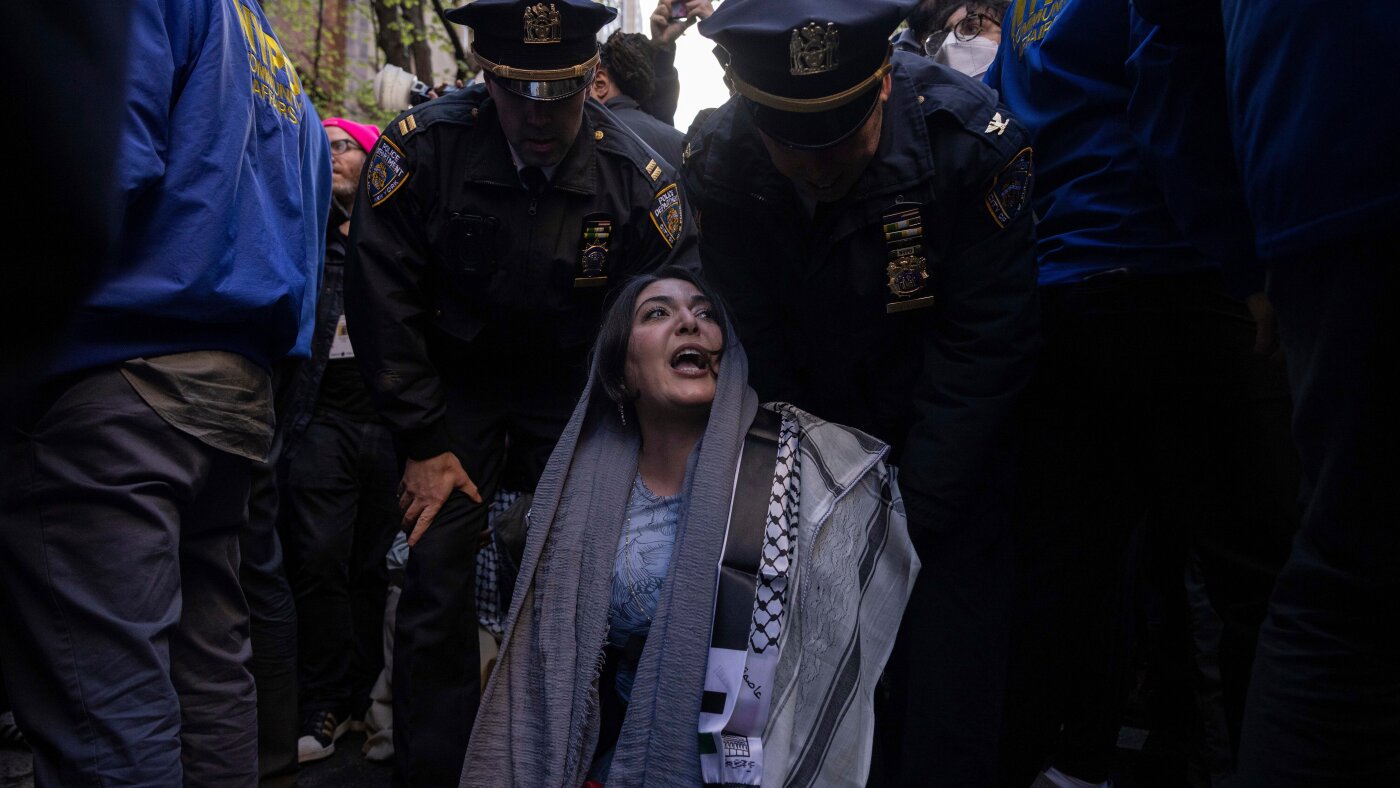
Man arrested in plot to firebomb Palestinian activist’s home after undercover op

Video: We Analyzed the Deadly Crash at LaGuardia

PWHL players bond with women’s hockey pioneers at Detroit clinic | NHL.com

Fielder may resign from Board of Supervisors, possibly over illegal leak

Dallas Mayor Eric Johnson says he trusts latest City Hall repair estimates

Florida High School Football Rankings: Top 25 teams – Oct. 21

How old is Bo Nix? What to know about Oregon quarterback ahead of 2024 NFL Draft

Cleary's 21 help Le Moyne down Central Connecticut State 69-64 in OT

99th annual Pony Swim held in Virginia

Indiana Members Credit Union announced as new anchor tenant at Bottleworks District
Man arrested in plot to firebomb Palestinian activist’s home after undercover op

WATCH: Senate hearing goes silent after Angel Father confronts top Dem over daughter’s death

US diplomat Marco Rubio denounces settler violence, tolls in Hormuz strait

Iran-linked hackers have breached FBI Director Kash Patel’s personal emails | CNN Politics

Live: CPAC 2026 Day 2
-

 Detroit, MI1 week ago
Drummer Brian Pastoria, longtime Detroit music advocate, dies at 68
-

 Movie Reviews1 week ago
‘Youth’ Twitter review: Ken Karunaas impresses audiences; Suraj Venjaramoodu adds charm; music wins praise | – The Times of India
-

 Sports7 days ago
IOC addresses execution of 19-year-old Iranian wrestler Saleh Mohammadi
-

 New Mexico5 days ago
Clovis shooting leaves one dead, four injured
-
 Business1 week ago
Disney’s new CEO says his focus is on storytelling and creativity
-

 Technology6 days ago
YouTube job scam text: How to spot it fast
-

 Tennessee4 days ago
Tennessee Police Investigating Alleged Assault Involving ‘Reacher’ Star Alan Ritchson
-

 Texas1 week ago
How to buy Houston vs. Texas A&M 2026 March Madness tickets