World
US to evacuate some diplomats from Haiti after recent gang attacks: Reports


The United States embassy in Haiti is preparing to evacuate some of its non-essential diplomatic staff as a powerful gang coalition tightens its grip on Haiti’s capital, according to US media reports.
Gunman targeted two of the US embassy’s vehicles this week, though no personnel were injured, the US Department of State confirmed on Friday.
One of the targeted vehicles had its windshield shattered and another, which was not struck, belonged to the chief of mission, The Miami Herald reported. Photographs obtained by Al Jazeera from a security source appeared to confirm the extensive damage to the vehicles.
Other foreign officials have also come under fire in Haiti. On Thursday, a marked UN helicopter with 18 people on board was hit by gunfire while flying over the capital, Port-au-Prince, the UN’s human rights office in Haiti told Al Jazeera.
The helicopter was hit but no one was injured and it was able to land safely.
Due to the deteriorating security situation around the embassy, some 20 non-essential diplomatic staff are expected to leave the country in the coming days, according to reports by CNN and The Miami Herald.
In a statement to Al Jazeera, a State Department spokesperson declined to share details of its staff adjustments in Haiti, adding that the embassy would remain open. The spokesperson reiterated the US’s “strong condemnation against ongoing gang violence aimed at destabilising Haiti’s government”.
Earlier this year, Haiti’s international airport was shut down for nearly three months after gangs swarmed the perimeter and fired at planes on the tarmac.
In March, the US military had to airlift non-essential embassy personnel from the Caribbean country after a state of emergency was declared.
It also brought in additional personnel to boost security at the embassy.
Surge in violence
The blitz of attacks on foreign officials comes amid a steadily worsening security situation in the Americas’ poorest country, where a powerful gang coalition commands control of much of the capital and its outskirts.
The coalition, called Viv Ansanm (Live Together), this week ramped up attacks on numerous towns outside the capital, setting homes aflame, seizing farmland and blocking off roads.
In one attack earlier this month, more than 100 people were slaughtered in a gang attack on the town of Pont-Sonde, the UN said.
The latest assaults have displaced another 10,000 Haitians in the last week, the UN estimated, adding to more than 700,000 already pushed out of their homes. Thousands more have been killed during the conflict.
“The situation in Haiti is very critical, especially in the capital,” said the UN’s humanitarian coordinator for the country Ulrika Richardson. “Many neighbourhoods are completely under the control of gangs, which use brutal violence.”
Haiti’s gangs, accused of recruiting child soldiers into their ranks, have long clashed with national police and civilian self-defence groups. But their latest attacks on foreign vehicles – and surge into areas beyond the capital – have heightened security concerns.
The conflict is fueling famine-level hunger in swaths of the nation, as people forced to flee their homes can no longer depend on steady income for food.
While the UN authorised an international police force to help Haiti’s police take back control from the gangs, the 400-strong Kenya-led mission lacks resources and has produced scant results.
Haiti’s leadership has requested the UN to convert the force into a formal peacekeeping mission to shore up resources, an initiative that was blocked last month by China and Russia.
The UN’s independent human rights expert for Haiti, William O’Neill, said there are “simply not enough” security forces to keep in check the gangs, allowing them to have a stranglehold over Port-au-Prince, and isolating the city from the rest of the country, except by air.
“The whole southern peninsula of three million people held hostage by a gang of maybe 1,000, half of them teenagers. Crazy,” O’Neill told Al Jazeera.



In any talks with the U.S., Iran would not only demand an end to the war but concessions that are likely red lines for U.S. President Donald Trump – guarantees against future military action, compensation for wartime losses and formal control of the Strait of Hormuz, the sources said.
Iran would also refuse to negotiate any limitations to its ballistic missile programme, they said, an issue that had been a red line for Tehran during the talks that were taking place when the U.S. and Israel launched their attack last month.
Reuters
World
Who actually runs Iran right now? The key power players as Trump claims talks to ‘top’ official

NEWYou can now listen to Fox News articles!
“Nobody knows who to talk to,” President Donald Trump said Tuesday at the White House, describing what he portrayed as both chaos and opportunity inside Iran’s leadership. “But we’re actually talking to the right people, and they want to make a deal so badly.”
His remarks come as the U.S. claims it is engaged in talks with a “top” Iranian figure, even as Tehran publicly denies negotiations are taking place.
The question now is not just whether talks are happening, but whether anyone in Tehran has the authority to deliver. With strikes on senior Iranian leadership and growing internal fractures, Iran appears to be operating less like a centralized theocracy and more like a wartime system run by overlapping power centers, with the Islamic Revolutionary Guard Corps (IRGC) at its core.
Here’s who matters now.
TRUMP’S MIDDLE EAST ENVOY REVEALS WHAT LED TO BREAKDOWN IN IRAN TALKS BEFORE OPERATION EPIC FURY
A State Department Rewards for Justice poster offers up to $10 million for information on key leaders tied to Iran’s Islamic Revolutionary Guard Corps (IRGC), including Mojtaba Khamenei, Ali Asghar Hejazi, Yahya Rahim Safavi, Ali Larijani, Eskandar Momeni and Esmail Khatib. (State Department / Rewards for Justice)
The IRGC: The real power behind the state
Across intelligence assessments and recent reporting, one conclusion is consistent: the Islamic Revolutionary Guard Corps has emerged as the dominant force in Iran’s political system.
Behnam Ben Taleblu, senior fellow at the Foundation for Defense of Democracies, said the current moment is accelerating a long-standing trend.
“No doubt both the 12-Day war and this current conflict have trimmed the commanding heights of the Islamic Republic’s political and military leadership,” he said. “But it has also expedited the trend lines inherent in Iranian politics, which is the dominance of the security forces and the ascendance of the IRGC.”
“Yes, there is more IRGC control over the state than ever before, but the state is weaker than ever before and more of a national security rump state than ever before,” he said.
“It shouldn’t particularly preoccupy Washington, who is and isn’t offering negotiations,” Ben Taleblu added, “The preeminent preoccupation of Washington has to be working toward a military win at a political win, and that does not come by working with the IRGC, but actually beating them on the battlefield and supporting the forces’s most arrayed against them in Iran, which are the Iranian people.”
Islamic Revolutionary Guard Corps (IRGC) military personnel are walking along Enghelab (Revolution) Avenue as an Iranian Kheibar Surface-to-Surface missile is being unveiled during the Ela Beit Al-Moghaddas (Al-Aqsa Mosque) military rally in Tehran, Iran, on November 24, 2023. The IRGC is unveiling two new missiles during the rally. (Morteza Nikoubazl/NurPhoto via Getty Images)
The command room: Supreme National Security Council
If the Islamic Revolutionary Guard Corps is the power in Iran, the Supreme National Security Council appears to be the mechanism through which that power is exercised.
The Supreme National Security Council is Iran’s top forum for coordinating military and foreign policy, bringing together senior Islamic Revolutionary Guard Corps commanders and government officials under the authority of the supreme leader. It was established after the 1979 revolution and has played a central role in managing major crises, from nuclear negotiations to wartime operations.
Iran appointed Mohammad Bagher Zolghadr, a former Islamic Revolutionary Guard Corps commander, as secretary of the council, reinforcing its central role in coordinating military and political decisions, Reuters reported Tuesday.
A Middle Eastern official source with knowledge of the system described the structure:
“Right now, the power is in the hands of the IRGC,” the source said. “The Supreme National Security Council makes the decisions, of course, with the backing of the majority of IRGC commanders.”
A mourner holds a poster depicting Ayatollah Mojtaba Khamenei, right, the successor to his late father, Ayatollah Ali Khamenei, left, as supreme leader, during the funeral procession for senior Iranian military officials and civilians killed during the campaign in Tehran, Iran, March 11, 2026. (Vahid Salemi/AP Photo)
Mojtabā Khamenei: The supreme leader in name
Formally, Iran’s system centers on Supreme Leader Mojtaba Khamenei. But his actual grip on power remains uncertain.
Khamenei inherited the position’s sweeping authority following his father’s death, but “lacks the automatic authority enjoyed by his father,” the Middle Eastern official said.
Moreover, he has not appeared publicly since taking power and only has issued written statements, raising questions about both his health and his ability to govern, after reportedly being injured in the initial Feb. 28 U.S.-Israeli strikes that killed his father and other senior Iranian leaders.
Brig. Gen. (res.) Yossi Kuperwasser, head of the Jerusalem Institute for Strategy and Security, suggested his role may currently be limited: “For the time being, since Mojtaba has been injured, it seems he’s a hologram and not holding power. However, if Mojtaba recovers, he will be involved in ruling Iran. He is not just a figurehead. But anyhow, for the time being, the control of Iran is in the hands of the revolutionary guards.”
WITH DOGS, DANCE AND UNCOVERED HAIR, IRANIANS DEFY ‘UNHOLY ALLIANCE’ OF SOCIALISTS, RADICALS: ‘HYPOCRITES!’
Ghalibaf: The man at the center of Trump’s claim
Iranian Parliament Speaker Mohammad Bagher Ghalibaf speaks during a public event in Iran in 2024 (Hossein Beris / Middle East Images / Middle East Images via AFP)
Trump’s statement that he is speaking to a “top person” has focused attention on one name in particular: Mohammad Bagher Ghalibaf.
The White House is quietly exploring Ghalibaf as a potential interlocutor and even a possible future leader, Axios reported.
A former Islamic Revolutionary Guard Corps commander and current parliament speaker, Ghalibaf represents a hybrid figure inside the system, bridging military credentials and political authority.
He was one of the key security figures involved in the crackdown on student protests in July 1999 and has run for president four times since 2005.
IRAN WAR, 11 DAYS IN: US CONTROLS SKIES, OIL SURGES AND THE REGION BRACES FOR WHAT’S NEXT
Ghalibaf is expected to meet U.S. special envoys Steve Witkoff and Jared Kushner in the capital of Pakistan as early as the end of this week.
Ben Taleblu said: “Those who see the ascendants of someone like Ghalibaf, who is an IRGC veteran, having extended power outside his traditional civilian rule, have missed the decades of how personality, not profession, has been the driving force, has been a driving force in Iranian politics for the past few decades. I would also say those who worry about the IRGC background of the Supreme National Security Council are all that in Iran today, may have missed the fact that the past few Supreme National Security Council Secretaries, Shamkhani, Larijani, Ahmadian, all also had IRGC backgrounds.”
At the same time, Ghalibaf has publicly denied engaging in talks with the United States, and no direct confirmation of negotiations has been provided by either side.
Araqchi: The diplomat carrying messages
Iran’s Foreign Minister Abbas Araghchi attends a joint press conference with Russian Foreign Minister following their talks in Moscow on April 18, 2025. (Getty Images)
Foreign Minister Abbas Araqchi remains one of the most visible figures internationally.
If talks were to take place, Araqchi likely would be part of the Iranian delegation alongside Ghalibaf, Reuters reported.
But analysts caution that his role is limited. He may act as a channel for communication, but does not set policy independently.
Strategic decisions, particularly on war and negotiations, are still shaped by the Islamic Revolutionary Guard Corps and the broader security establishment.
Iranian President Masoud Pezeshkian, Gholam-Hossein Mohseni-Eje’i, the head of the judiciary and Alireza Arafi, deputy chairman of the Assembly of Experts, attend the meeting of the interim leadership council of Iran in an unknown location, amid the U.S.-Israel conflict with Iran, in Iran, March 1, 2026. (IRIB/WANA (West Asia News Agency)/Handout via Reuters)
The wider power circle: generals, clerics and enforcers
Beyond the headline figures, a broader group of officials who continue to shape Iran’s direction can be identified.
These include Islamic Revolutionary Guard Corps chief Ahmad Vahidi, Quds Force commander Esmail Qaani, naval commander Alireza Tangsiri, Judiciary Chief Gholamhossein Mohseni-Ejei, President Masoud Pezeshkian, and senior clerical and political figures such as Saeed Jalili and Ayatollah Alireza Arafi.
Each represents a different pillar of the system: military power, regional proxy operations, control of strategic waterways, internal repression and religious legitimacy.
Together, they form what analysts describe as a fragmented but resilient governing network.
CLICK HERE TO DOWNLOAD THE FOX NEWS APP
A billboard depicting Iran’s supreme leaders since 1979: (L to R) Ayatollahs Ruhollah Khomeini (until 1989), Ali Khamenei (until 2026), and Mojtaba Khamenei (incumbent) is displayed above a highway in Tehran on March 10, 2026. Iran marked the appointment of Ayatollah Mojtaba Khamenei to replace his father as its supreme leader on March 9, 2026. (AFP/Via Getty Images)
Despite internal divisions, Iran’s leadership remains united on one core objective: survival of the regime.
Kuperwasser described the split: “There are the more pragmatic elites, like Araghchi, Rouhani, and Zarif. There are also the hardliners who have usually held the upper hand … But they are united in one issue — that the regime should survive and stay in power.”
Iran’s U.N. mission did not respond to a request for comment in time for publication.

Mohammad Bagher Zolghadr, ex-IRGC commander, to replace late Ali Larijani as chief of Iran’s Supreme National Security Council.
Published On 24 Mar 2026
Iran has named Mohammad Bagher Zolghadr, a former commander of Iran’s Islamic Revolutionary Guard Corps (IRGC), as the successor to Ali Larijani, head of the country’s Supreme National Security Council (SNSC), who was killed in a US-Israeli air strike earlier this month.
President Masoud Pezeshkian’s deputy of communications announced the appointment on X on Tuesday.
list of 3 itemsend of listRecommended Stories
The SNSC, formally chaired by Pezeshkian, coordinates security and foreign policy and includes top military, intelligence and government officials, in addition to representatives of Supreme Leader Mojtaba Khamenei.
Zolghadr, who served in the 1980s war against Saddam Hussein’s Iraq, went on to become head of the IRGC’s joint staff for eight years and then deputy commander-in-chief of the elite force for another eight years.
In 2005, he was named deputy interior minister for security and police in the government of then-President Mahmoud Ahmadinejad, a move that was seen at the time as bolstering the IRGC’s influence in politics.
Since 2023, he has been the secretary of the Expediency Council, a powerful body that plays both an advisory and mediating role between Iran’s various power structures and the supreme leader.
Zolghadr’s new position consolidates the IRGC’s growing clout in Iran amid growing uncertainty regarding decision-making at the top of the system. Mojtaba Khamenei has not been seen in public since he succeeded his assassinated father, Ayatollah Ali Khamenei, in early March.
Larijani, one of the most prominent non-clerical figures in Iranian politics, was killed last Tuesday in a week that saw the war spiralling throughout the region, upending global energy markets and roiling the world economy.
On Tuesday, the war showed no sign of de-escalation after US President Donald Trump’s claim that he was speaking to an unidentified “top person”, as he extended by five days a deadline to hit Iran’s power plants.
Iran’s Parliament Speaker Mohammad Bagher Ghalibaf said “no negotiations” were under way, accusing Trump of seeking “to manipulate the financial and oil markets”.
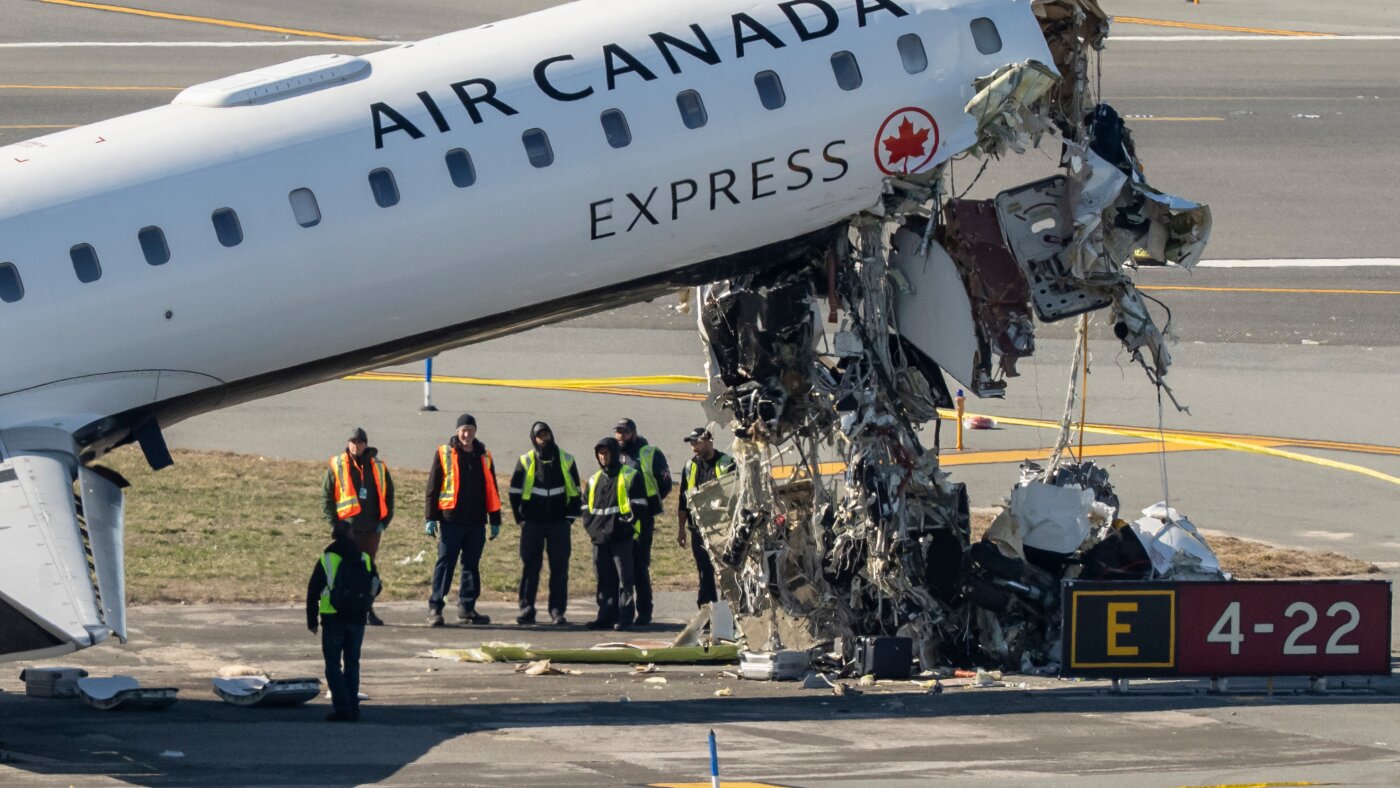
An air traffic controller was juggling extra roles during the LaGuardia plane crash

Video: LaGuardia Crash Survivors Recount Ordeal

Michigan ‘adventure seekers’ take flight at new experiential venues

Barricaded suspect in standoff with police in San Francisco’s Tenderloin neighborhood

Jack Hughes scores twice as Devils beat Stars 6-4, end Dallas streak with four-goal first period

Florida High School Football Rankings: Top 25 teams – Oct. 21

How old is Bo Nix? What to know about Oregon quarterback ahead of 2024 NFL Draft

Cleary's 21 help Le Moyne down Central Connecticut State 69-64 in OT

99th annual Pony Swim held in Virginia

Indiana Members Credit Union announced as new anchor tenant at Bottleworks District
An air traffic controller was juggling extra roles during the LaGuardia plane crash

Iran War: Pentagon set to send thousands of elite 82nd Airborne troops to region | BBC News

Video: Passengers Wait in Long Security Lines at LaGuardia After Deadly Crash

King Charles to address Congress in historic first state visit to Washington

Iran names successor to security chief killed in US-Israeli attack
-

 Detroit, MI6 days ago
Drummer Brian Pastoria, longtime Detroit music advocate, dies at 68
-

 Georgia1 week ago
How ICE plans for a detention warehouse pushed a Georgia town to fight back | CNN Politics
-

 Movie Reviews6 days ago
‘Youth’ Twitter review: Ken Karunaas impresses audiences; Suraj Venjaramoodu adds charm; music wins praise | – The Times of India
-

 Alaska1 week ago
Police looking for man considered ‘armed and dangerous’
-

 Education1 week ago
Video: Turning Point USA Clubs Expand to High Schools Across America
-

 Sports3 days ago
IOC addresses execution of 19-year-old Iranian wrestler Saleh Mohammadi
-
 Science1 week ago
Industrial chemicals have reached the middle of the oceans, new study shows
-

 New Mexico2 days ago
Clovis shooting leaves one dead, four injured