World
Russia ups jail sentence of US citizen to 10 years for beating prison staff


NEWYou can now listen to Fox News articles!
Russia once again extended the prison sentence of U.S. citizen Robert Gilman Wednesday after a regional court found him guilty of a new assault on prison staff.
The ruling adds two more years to the former Marine’s existing term, now bringing his total sentence to 10 years, Reuters reported.
The latest extension came in the Voronezh region, where Gilman continues to serve time.
Prosecutors accused him of attacking two prison guards, and the court ruled that the incident constituted a new offense which warranted additional punishment.
US PILOT AND INFLUENCER RELEASED FROM CHILEAN ANTARCTIC DETENTION 2 MONTHS AFTER ALLEGED UNAUTHORIZED LANDING
Robert Gilman now faces 10 years total after Voronezh court adds two more years for allegedly attacking guards. (REUTERS/Vladimir Lavrov)
The move follows a pattern of steadily increasing charges for Gilman since his initial arrest in 2022, highlighting how his prison time has lengthened over consecutive years.
Gilman, from Dracut, Massachusetts, was first arrested in January 2022 after passengers on a train reported he was drunk and causing a disturbance.
NATIONAL GUARDSMAN ACCUSED OF SEEKING TO SEND PHOTOS OF SENSITIVE MILITARY TECHNOLOGY TO RUSSIA
The former Marine’s Russian prison sentence keeps growing after a new assault conviction. (REUTERS/Vladimir Lavrov)
Transport police took him off the train in Voronezh, where he was detained for petty hooliganism.
At the time, Russian media reported that Gilman, who had been traveling between Sochi and Moscow to replace a damaged passport, was heavily intoxicated.
He later claimed in court that he believed his drink had been spiked.
Gilman was convicted in 2022 of assaulting a police officer, initially receiving a sentence of three and a half years.
At the time, prosecutors recommended four and a half years, of a possible five.
US AND QATAR SECURE RELEASE OF AMERICAN CITIZEN AMIR AMIRY FROM AFGHANISTAN DETENTION
Gilman’s legal troubles escalated since his 2022 arrest for a train disturbance while he was traveling to replace his passport. (REUTERS/Vladimir Lavrov)
Fox News Digital also reported that Gilman bruised a Russian police officer with a kick while being dragged off of the train.
Gilman’s troubles in custody then increased in 2024 when he was found guilty of attacking a prison inspector during a cell check, assaulting an investigator and beating another guard.
Those convictions brought a sentence of eight years and one month, with Wednesday’s decision pushing the total to a decade.
UKRAINE ARRESTS BRITISH SUSPECT WHO ALLEGEDLY AIDED RUSSIA’S FSB IN ASSASSINATION PLAN
The former U.S. Marine got two more years in a Russian prison for assault. (Vladimir Lavrov/REUTERS)
Local media, including the business newspaper Kommersant, reported that Gilman admitted to some of the assaults, per Reuters.
He said he began breaking prison rules after he was threatened with transfer from his current detention facility, which he described as humane and where he could receive packages from relatives, to a maximum-security penal colony.
On Wednesday, Gilman apologized in court and explained he preferred to remain in the Voronezh facility.
According to Reuters, Gilman’s lawyer, Irina Brazhnikova, told the state-run TASS news agency that he would not appeal the newest verdict.
Gilman is among at least nine Americans still imprisoned in Russia following multiple high-profile prisoner exchanges in 2024 and 2025.
FORMER SECURITY GUARD AT US EMBASSY OVERSEAS IS CONVICTED OF SPYING FOR RUSSIA AND IRAN
Former prisoners released by Russia, journalist Evan Gershkovich, right, former U.S. Marine Paul Whelan, center, and U.S.-Russian journalist Alsu Kurmasheva, left, smile after landing at Joint Base San Antonio-Kelly Field, Texas, on August 2, 2024. (Suzanne Cordeiro/AFP via Getty Images)
Several, like Gilman, have U.S. military backgrounds, including Michael Travis Leake and Gordon Black.
CLICK HERE TO DOWNLOAD THE FOX NEWS APP
Supporters of Gilman in the United States argue he was ill when first detained and was provoked into actions that produced additional charges.



Published on •Updated
Belgium’s three regions announced on Friday that they would introduce a road tax next year that foreign drivers transiting the country would also have to pay.
ADVERTISEMENT

ADVERTISEMENT
The country does not currently charge drivers to use its highways and the issue of introducing some form of payment has been debated for years.
“Everyone who uses our roads must contribute fairly to their maintenance,” said the transport minister for the southern Wallonia region, François Desquesnes.
Starting on 1 May 2027 drivers will need to register their vehicle and pay the road tax, with day passes available for drivers driving across the country.
An annual pass for a zero-emission car will cost €90 and up to €125 for higher polluting vehicles.
Road cameras that catch cars that haven’t paid for a pass will incur a fine of €70.
In Belgium, the individual regions are responsible for maintaining roads and motorways.
Currently, drivers can use almost all highways toll-free but the possibility of an introducing a charge has been under discussion for several years.
The revenue would be used for the operation and maintenance of the road network.
The proposed toll still needs final approval from the regions and European authorities.
According to the chairman of the liberal-conservative MR party, the government intends to offset the new toll by lowering other taxes for Belgians.
Additional sources • AFP

World
With US unleashing attacks, Iranian official threatens that the Islamic Republic will deliver a ‘hard slap’

NEWYou can now listen to Fox News articles!
An Iranian official warned that the Islamic Republic will deliver a “hard slap” while another blatantly threatened the U.S. that “if you strike, you’ll get hit,” according to automatic translations from the two men’s Persian-language posts on X.
Ebrahim Rezaei, whose profile on the social media platform indicates that he is a representative in Iran’s Parliament and the spokesperson for the National Security and Foreign Policy Commission, wrote in a post on X, “The martyred Khamenei taught us not to fear America and showed that ‘falsehood will perish.’ Await the hard slap from the Iranians.”
The speaker of Iran’s Parliament, Mohammad Bagher Ghalibaf, warned, “America still hasn’t learned that bullying and breaking promises are no longer cost-free. Let me put it plainly: if you strike, you’ll get hit. Don’t flail around pointlessly, or you’ll sink even deeper: the Strait of Hormuz will only open with ‘Iranian arrangements,’ not American threats.”
Both of the men issued their posts on Wednesday after U.S. Central Command (CENTCOM) announced more strikes against Iran.
“At the direction of the Commander in Chief, U.S. Central Command forces have started conducting additional strikes against Iran to further degrade their ability to threaten freedom of navigation in the Strait of Hormuz. The United States is holding Iran accountable for recent unjustified aggression against commercial shipping and civilian crews freely navigating a vital international waterway,” CENTCOM had noted in a post on X.
TRUMP SAYS IRAN CEASEFIRE DEAL IS ‘OVER’ AFTER NEW ROUND OF STRIKES
People gather at the Imam Khomeini Grand Mosalla for a farewell ceremony for Iran’s late Ayatollah Ali Khamenei on July 4, 2026, in Tehran, Iran. (Majid Saeedi/Getty Images)
The U.S. military later provided more information about the attacks.
“U.S. Central Command (CENTCOM) forces completed an additional round of strikes against Iran, July 8, to further degrade Iran’s ability to attack commercial shipping and innocent civilian mariners in the Strait of Hormuz,” CENTCOM noted on Wednesday night.
“U.S. forces struck approximately 90 Iranian military targets including air defense systems, coastal surveillance assets, missile and drone storage sites, naval capabilities, and military logistics infrastructure along Iran’s coastline. The latest strikes follow successful execution of offensive strikes in Iran the night before,” the announcement noted. “CENTCOM forces hit approximately 80 Iranian military targets July 7, including more than 60 Islamic Revolutionary Guard Corps small boats, to impose heavy costs for Iran violating the ceasefire by attacking three commercial vessels navigating the Strait of Hormuz.”
TRUMP DEMANDS END TO TRADE WITH KEY US ALLY, CALLS IT A ‘WASTED CAUSE’
President Donald Trump indicated on Wednesday that, as far as he was concerned, the U.S.-Iran Memorandum of Understanding ceasefire was “over.”
Kuwait and Bahrain have both reported coming under attack.
The Kuwait Army noted in a Thursday post on X, which was written in Arabic, “The Official Spokesman for the Ministry of Defense, Major General Saud Abdulaziz Al-Otaibi, stated that the armed forces detected, at dawn today, (3) ballistic missiles, (1) cruise missile, and (10) hostile drones within Kuwaiti airspace, which were successfully intercepted and dealt with.”
TRUMP SAYS ‘IRAN LIES AND CHEATS’ AS IRGC EMERGES AS DOMINANT FORCE IN NEGOTIATIONS WITH US
President Donald Trump speaks as he meets with NATO Secretary General Mark Rutte on the sidelines of the NATO summit in Ankara, on July 8, 2026. (SAUL LOEB / AFP via Getty Images)
CLICK HERE TO DOWNLOAD THE FOX NEWS APP
The Bahrain Defense Force noted in a post that was in Arabic, “The General Command clarifies that, with firm resolve and high combat readiness, the Bahrain Defense Force’s air defense systems confronted, intercepted, and destroyed several treacherous Iranian aerial attacks this morning, Thursday, July 9, 2026 CE.”
-

 World4 minutes ago
Belgium to introduce new road tax in 2027, even for transiting drivers
-
 News29 minutes ago
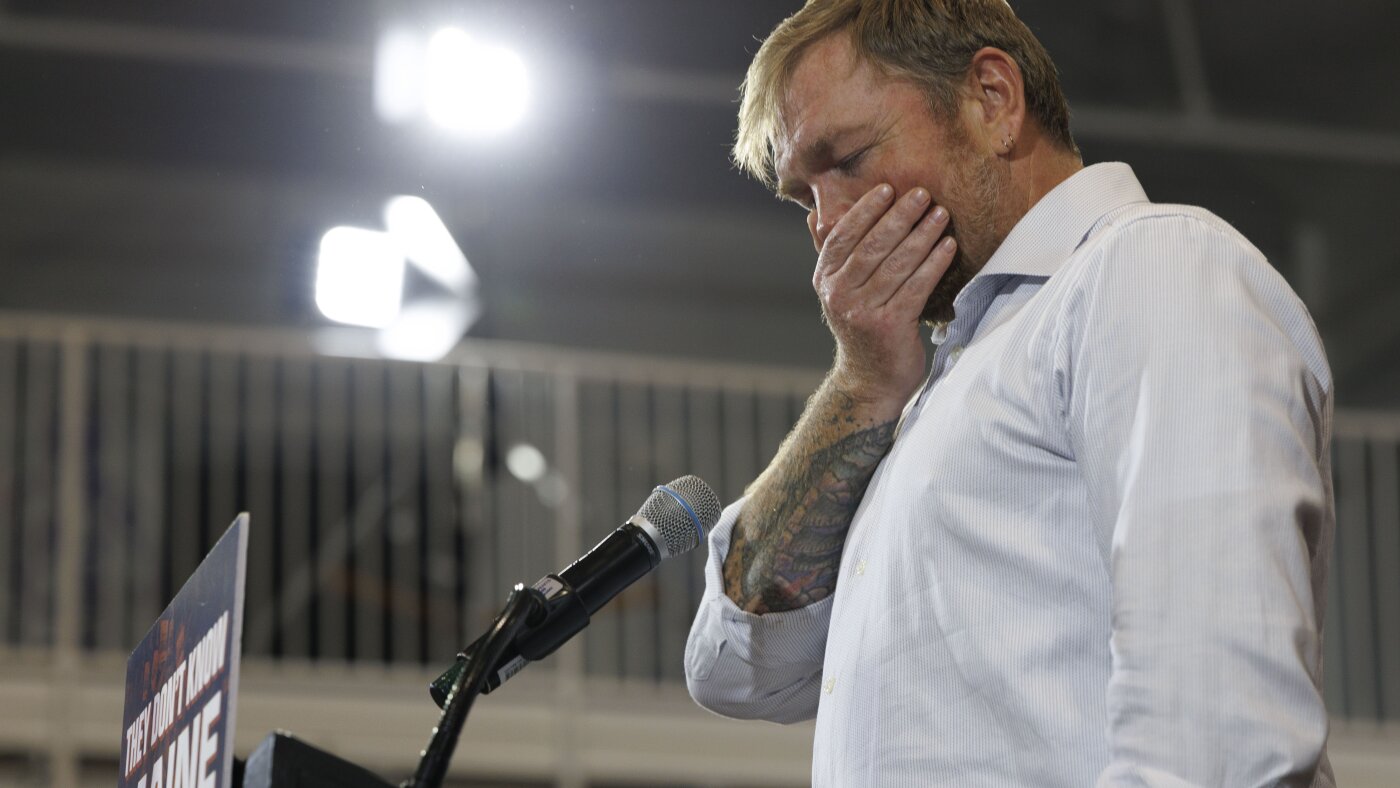
Graham Platner makes it official in Maine, submitting paperwork to leave Senate race
-

 Los Angeles, Ca2 hours ago
Knee irritation forces Shohei Ohtani out of Friday start, All‑Star game
-

 Detroit, MI2 hours ago
Detroit Evening Report: Waymo cars blocking first responders – WDET 101.9 FM
-

 San Francisco, CA2 hours ago
San Francisco Mayor Daniel Lurie Blocks Vacant Grocery Store Tax Proposal | KQED
-

 Miami, FL2 hours ago
Oregon Battling Miami, Mario Cristobal for Four-Star EDGE Recruit
-

 Dallas, TX2 hours ago
FC Dallas Forward Logan Farrington Inks Contract Extension
-

 Boston, MA3 hours ago
Red Sox face lengthy travel issues ahead of series vs. Mets

