World
Robert Carradine, ‘Revenge of the Nerds’ and ‘Lizzie McGuire’ star, dies at 71


Robert Carradine, the youngest of his prolific Hollywood family and whose biggest hit was the 1984 comedy “Revenge of the Nerds,” has died at 71.
In a Tuesday statement to news outlets, his family said he lived with bipolar disorder for two decades and died by suicide.
“We want people to know it, and there is no shame in it,” his brother Keith Carradine told Deadline. “It is an illness that got the best of him, and I want to celebrate him for his struggle with it, and celebrate his beautiful soul. He was profoundly gifted, and we will miss him every day.”
___
EDITOR’S NOTE — This story includes discussion of suicide. If you or someone you know needs help, the national suicide and crisis lifeline in the U.S. is available by calling or texting 988.
___
Known for both his film and television work, Robert Carradine worked steadily in the industry for over 40 years. Though he collaborated with some of the most respected directors of the day, he never gained the worldwide recognition of his more famous siblings Keith Carradine (also the father of Martha Plimpton) and half-brother David Carradine, who died in 2009.
Robert Carradine, a Los Angeles native and son to character actor John Carradine, was introduced to audiences with roles on the television series “Bonanza” in 1971 and in the John Wayne Western “The Cowboys” in 1972.

Despite his family background, acting wasn’t his first calling, though.
“I always had a passion to be a race car driver, and that’s what I thought I was going to do, and at some penultimate moment … I think I was sitting with my brother David when ‘The Cowboys’ was being cast, and they were interested in David as the bad guy, and he didn’t want to be the guy that shot John Wayne in the back,” Carradine recalled in a 2013 interview with Popdose. “But he said, ‘You know, it is called The Cowboys, and they’re meeting all these young guys. Why don’t you go in?’”
In addition to starring in a short-lived television spinoff of “The Cowboys,” and appearing alongside David Carradine in his popular ABC series “Kung Fu,” he would go on to nab roles in Martin Scorsese’s “Mean Streets,” Hal Ashby’s Vietnam drama “Coming Home,” and Samuel Fuller’s World War II film “The Big Red One.”
The heights of his brother David’s success eluded Robert Carradine, but the two could often be seen in the same projects, including in Walter Hill’s “The Long Riders” and Paul Bartel’s “Cannonball.”
Robert Carradine’s biggest hit would come in 1984 with the off-color comedy “Revenge of the Nerds,” in which he played head nerd Lewis Skolnick, with his abrupt, infectious and guttural laugh. He reprised the role for the big-screen sequel and two made-for-television follow-ups, and continued to pay homage to the beloved character with a guest role on the series “Robot Chicken” and as a co-host (with “Revenge of the Nerds” co-star Curtis Armstrong) of the pop culture competition show “King of the Nerds,” which aired for three seasons.
In the 2000s, Carradine gained small-screen success in The Disney Channel’s “Lizzie McGuire” as the eponymous character’s father.
“It’s really hard to face this reality about an old friend,” Hilary Duff, who played Lizzie McGuire, wrote on Instagram. “There was so much warmth in the McGuire family and I always felt so cared for by my on-screen parents. I’ll be forever grateful for that. I’m deeply sad to learn Bobby was suffering.”
Work remained consistent even if the projects diminished in prestige and quality. Then Quentin Tarantino, ever the champion of fading character actors, cast Carradine in “Django Unchained” as one of the trackers in the 2012 film after seeing a “very furry” photograph, as Carradine told Popdose.
In 2015, Carradine was cited for a Colorado crash that injured him and his wife, Edith. They later divorced, after more than 25 years of marriage.
Carradine’s survivors include his three children, actor Ever Carradine, Marika Reed Carradine and Ian Alexander Carradine.
“Whenever anyone asks me how I turned out so normal, I always tell them it’s because of my dad. I knew my dad loved me, I knew it deep in my bones, and I always knew he had my back,” Ever Carradine wrote on Instagram. “I think it’s partly because we basically grew up together. Twenty years age difference really isn’t that much, and while I never ever thought of him as a sibling, I did always think of him as my partner. We were in it together.”



London, United Kingdom – Hundreds of thousands of people have marched through central London in what organisers are calling the largest ever demonstration against the far right in British history.
The Together Alliance march, backed by about 500 groups including trade unions, antiracism campaigners and Muslim representative bodies, brought together a diverse crowd of all ages from across the country on Saturday, converging on Whitehall near the Houses of Parliament.
list of 3 itemsend of listRecommended Stories
Organisers said that half a million people took part.
Kevin Courtney, chairman of the Together Alliance, told crowds the march “gives us all confidence to carry on.”
London’s Metropolitan Police put the figure considerably lower, at approximately 50,000, though officers acknowledged it was difficult to reach an accurate figure given how spread out the crowds were.
The protest was met with a far smaller group of counterprotesters waving Israeli flags and Iran’s pre-1979 monarchical flag.
Aadam Muuse, a trade union activist, told Al Jazeera that racism and Islamophobia had moved from the fringes into mainstream politics, and was “being pushed by parliamentarians”.
He said the march was “much needed to push back against [Reform leader Nigel] Farage and his ilk,” adding that the populist party “must be defeated at the ballot box”.
Al Jazeera’s Milena Veselinovic, reporting from the march, said demonstrators were pushing back against what they saw as “the politics of hate and division” in the United Kingdom.
One demonstrator, activist and writer Hamja Ahsan, told Al Jazeera he was motivated to attend after a rally organised by the far-right agitator-activist Tommy Robinson that drew 150,000 people and was marred by violence that injured several police officers. Robinson is reportedly planning another rally in May.
“We need to show them that we’re the majority,” Ahsan said. “At a street level, the far right won’t take over our streets.”
He said the atmosphere on Saturday was akin to the Notting Hill Carnival, as the march united people from all backgrounds, “from pensioners to children”.
Museum worker Charlotte Elliston told Al Jazeera that she also feels unsettled by the far right’s creeping rise.
“You think this would never happen here, and then all of a sudden this might happen,” she said. “You see that it is getting scary.”

Several left-wing politicians joined the demonstration.
Independent MP Jeremy Corbyn posted on X that the “problems we face are not caused by migrants or refugees”, arguing they were rooted instead in “an economic system rigged in favour of corporations and billionaires”.
MP Zarah Sultana said on X, “There’s one minority we should be angry at: the billionaires funding division while working class people can’t make ends meet.”
Green Party leader Zack Polanski, Dianne Abbott and Greater Manchester mayor Andy Burnham were also among the crowds.
‘Historic demonstration’
The rights group Amnesty UK hailed the “historic demonstration”, saying marchers were “calling for a different vision of society – one which places dignity, compassion and human rights at its heart”.
A separate march organised by the Palestine Solidarity Campaign, which assembled at Exhibition Road near Hyde Park, converged with the main demonstration during the afternoon.
Eighteen people were arrested outside New Scotland Yard on Saturday after staging a protest in support of Palestine Action, the protest group which remains proscribed under the Terrorism Act despite a High Court ruling in February that the government’s decision to ban it was unlawful.
The march comes amid rising racism as Farage’s Reform party surges in the polls.
Hope Not Hate, an antiracism campaign group, warned earlier in March that the British far right is now “bigger, bolder and more extreme than ever before”.

new video loaded: Humpback Whale Stranded Off German Coast Is Freed by Rescuers

By Axel Boada
March 27, 2026

NEWYou can now listen to Fox News articles!
A Russian man convicted of assaulting a woman in London in an attack witnessed by Barron Trump, President Donald Trump’s youngest son, on a video call was sentenced to four years in prison by a London court on Friday.
Matvei Rumiantsev, 23, an MMA fighter, was convicted by a jury on Jan. 28 of assault with bodily harm but was acquitted of rape and choking charges. He was also convicted of perverting the course of justice stemming from a letter he sent the woman from jail asking her to retract her allegations.
After the assault, Rumiantsev admitted he was jealous of his girlfriend’s friendship with the 19-year-old son of President Donald Trump.
BARRON TRUMP REPORTEDLY SAVED WOMAN’S LIFE AFTER WITNESSING VIOLENT ASSAULT ON FACETIME CALL
Barron Trump attends inauguration ceremonies in the U.S. Capitol Rotunda on Jan. 20, 2025, in Washington, D.C. (Kevin Lamarque/Pool/Getty Images)
“Your lack of insight and empathy was apparent at trial,” Justice Joel Bennathan said. “You continue to try to blame the complainant for everything that has happened.”
Trump told investigators he had placed a late-night FaceTime call to the woman, whom he had met on social media, and had been startled when the call had been briefly answered by a shirtless man on Jan. 18, 2025.
“That view lasted maybe one second and I was racing with adrenaline,” Barron Trump said. “The camera was then flipped to the victim getting hit while crying, stating something in Russian.”
BARRON TRUMP SPOTTED ON NYU CAMPUS FOR FIRST TIME SINCE INAUGURATION
Barron Trump looks on ahead of the Presidential Inauguration of Donald Trump at the Rotunda of the U.S. Capitol in Washington, D.C. on Jan. 20, 2025. (KEVIN LAMARQUE/POOL/AFP via Getty Images)
Barron Trump called the police in London.
“It’s really an emergency … I’m calling from the U.S., uh, I just got a call from a girl, you know, she’s getting beat up,” he told an operator.
Police responded to the address and arrested Rumiantsev, a London-based receptionist.
At his trial at Snaresbrook Crown Court, Rumiantsev was acquitted of rape and choking related to the attack, as well as a separate rape and assault allegation from November 2024.
His attorney, Sasha Wass, said that Trump wasn’t aware the woman had a boyfriend and questioned how much he could have seen in just a few seconds of video.
Barron Trump watches as his father, President Donald Trump attends an indoor Presidential Inauguration parade event at Capital One Arena, in Washington, Jan. 20, 2025. (AP Photo/Evan Vucci, File)
CLICK HERE TO DOWNLOAD THE FOX NEWS APP
Trump never testified in the case. However, the judge praised him for his quick-thinking actions.
“Mr, Trump properly and responsibly, despite being in the United States, made sure the emergency services here were called, and he told them what he had seen,” he said.
The Associated Press contributed to this report.

‘Quad God’ Ilia Malinin avenges Olympic disappointment with backflip for third straight world title

Baseball is changing forever with robot ump challenges

How the landmark verdict against Meta and YouTube could hit their businesses
Florida manosphere influencer Clavicular arrested on suspicion of battery
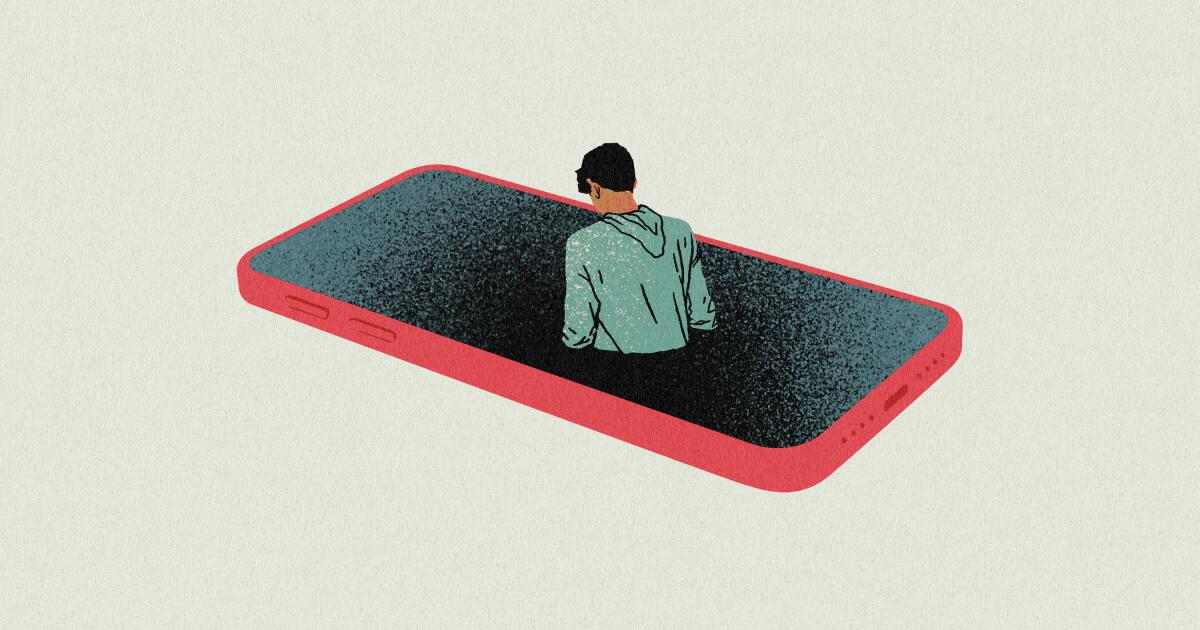
Gen Z is the loneliest generation. Here’s what can help

Florida High School Football Rankings: Top 25 teams – Oct. 21

How old is Bo Nix? What to know about Oregon quarterback ahead of 2024 NFL Draft

Cleary's 21 help Le Moyne down Central Connecticut State 69-64 in OT

99th annual Pony Swim held in Virginia

Indiana Members Credit Union announced as new anchor tenant at Bottleworks District

Hundreds of thousands march through London in stand against the far right

2 students killed, 7 other people injured in Tennessee bus crash during school field trip

Dem senators dodge crucial question on illegal alien accused of killing Chicago college student

EU Parliament unblocks key political hurdle in digital euro talks

Man arrested in plot to firebomb Palestinian activist’s home after undercover op
-

 Detroit, MI1 week ago
Drummer Brian Pastoria, longtime Detroit music advocate, dies at 68
-

 Movie Reviews1 week ago
‘Youth’ Twitter review: Ken Karunaas impresses audiences; Suraj Venjaramoodu adds charm; music wins praise | – The Times of India
-

 Sports1 week ago
IOC addresses execution of 19-year-old Iranian wrestler Saleh Mohammadi
-

 New Mexico6 days ago
Clovis shooting leaves one dead, four injured
-
 Business1 week ago
Disney’s new CEO says his focus is on storytelling and creativity
-

 Tennessee5 days ago
Tennessee Police Investigating Alleged Assault Involving ‘Reacher’ Star Alan Ritchson
-

 Technology6 days ago
YouTube job scam text: How to spot it fast
-

 Texas1 week ago
How to buy Houston vs. Texas A&M 2026 March Madness tickets