World
Iran expands weaponization capabilities critical for employing nuclear bomb


The Islamic Republic of Iran has continued its pursuit of obtaining a nuclear weapon by not only stockpiling enriched uranium to near-weapons grade purity, it has expanded its covert actions in developing its weaponization capabilities.
According to information obtained by sources embedded in the Iranian regime and supplied to the National Council of Resistance of Iran (NCRI), an opposition organization based out of D.C. and Paris, there are indications that Tehran has once again renewed efforts to advance its ability to detonate a nuclear weapon.
At the head of Iran’s detonators program is an organization the NCRI has dubbed METFAZ, which is the Farsi acronym for the Center for Research and Expansion of Technologies on Explosions and Impact, and its recent movements at a previously deactivated site, known as Sanjarian, has drawn immense speculation.
The Foundation for Defense of Democracies has analyzed where Iran’s nuclear infrastructure is located. (Foundation for Defense of Democracies)
IRAN HIDING MISSILE, DRONE PROGRAMS UNDER GUISE OF COMMERCIAL FRONT TO EVADE SANCTIONS
“Our information shows the METFAZ has expanded its activities, intensified activities, and their main focus is basically the detonation of the nuclear bomb,” Alireza Jafarzadeh, deputy director of the NCRI in the U.S., told Fox News Digital. “When you make a bomb, you have the fissile material at the center of it, but you need to be able to trigger it, to detonate it, and that’s a sophisticated process.
“It’s important to see what METFAZ does and follow their activities because that is sort of like a gauge on figuring out where the whole nuclear weapons program is,” he added.
Iran has at least a dozen sites across the country dedicated to nuclear development, weaponization, research and heavy water production, but information shared with Fox News Digital suggests that there has been an increase in covert activity in at least two of these locations, including Sanjarian, which was once one of Iran’s top weaponization facilities.
The Sanjarian site, located roughly 25 miles east of Tehran and once central to Iran’s nuclear program under what is known as the Amad Plan, was believed to have been largely inactive between 2009 and late 2020 after stiff international pushback on Iran’s nuclear program.
The Sanjarian site in 2017, when the NCRI announced that its activities had moved to Plan 6 in Parchin. (Image provided by the NCRI)
Though by October 2020 renewed activity had returned to the area under the alleged guise of a filming team, first captured through satellite imagery and which the Islamic Republic used to justify why vehicles had reportedly been regularly parked outside the formerly top nuclear site.
In 2022, trees were planted along the entrance road to the compound, effectively blocking satellite imagery from monitoring vehicles stationed there, before a security gate was then believed to have been installed in May 2023, according to information also verified by the Institute for Science and International Security.
Sanjarian in 2024 (Image provided by the NCRI)
Now, according to details supplied by on-the-ground sources to the NCRI this month, top nuclear experts have been seen regularly visiting the site since April 2024 and are believed to be operating under the front company known as Arvin Kimia Abzaar, which claims to be affiliated with the oil and gas industry, a sector in which Iran has long attempted to conceal its activities.
ISRAEL EYES IRAN NUKE SITES AMID REPORTS TRUMP MULLS MOVES TO BLOCK TEHRAN ATOMIC PROGRAM
Jafarzadeh said one of the executives of the Arvin Kimia Abzaar company is Saeed Borji, who has been a well-known member of the Islamic Revolutionary Guard Corps since 1980 and has long headed METFAZ.
METFAZ falls under Iran’s Organization of Defensive Innovation and Research, which is widely known to security experts as the organization spearheading Iran’s nuclear development and is suspected of using the Sanjarian site for renewed research on exoloding bridgewire (EWB) detonators.
Iran has previously attempted to conceal its EBW detonators program, a system first invented in the 1940s to deploy atomic warheads but which has expanded into non-military sectors, under activities relating to the oil industry.
In a 2015 report, the United Nations nuclear watchdog, the International Atomic Energy Agency (IAEA), noted that Iran’s detonator development was an “integral part of a program to develop an implosion-type nuclear explosive device.”
It also highlighted how Iran attempted to conceal its program by alleging during a May 20, 2014, meeting that the detonator program dating back to 2000-2003 was related to Tehran’s aerospace industry and was needed to “help prevent explosive accidents” but which the IAEA determined was “inconsistent with the timeframe and unrelated to the detonator development program.”
Technicians work at the Arak heavy water reactor’s secondary circuit as officials and media visit the site in December 2019. (Atomic Energy Organization of Iran/AP)
During the same 2014 meeting, Iran claimed that “around 2007 its oil and gas industry had identified a requirement for EBW detonators for the development of deep borehole severing devices.”
FALL OF SYRIA’S BASHAR ASSAD IS STRATEGIC BLOW TO IRAN AND RUSSIA, EXPERTS SAY
The IAEA assessed that while the application of EBW detonators, which are fired within “sub-microsecond simultaneity,” are “not inconsistent with specialized industry practices,” the detonators that Iran has developed “have characteristics relevant to a nuclear explosive device.”
“The Iranian regime has really basically, over the years, used deceptive tactics – lies, stalling, playing games, dragging [their feet], wasting time,” Jafarzadeh said when asked about this report. “That’s the way they’re dealing with the IAEA, with the goal of moving their own nuclear weapons program forward without being accountable for anything.”
The IAEA did not respond to Fox News Digital’s questions on the NCRI’s most recent findings, which were shared with the nuclear watchdog this week, and it remains unclear what advancements or research Iran continues to pursue in the detonator field.
The launch of a Simorgh, or “Phoenix,” rocket is shown at the Imam Khomeini Space Launch Terminal in Iran’s Semnan province on Dec. 6, 2024. (Iranian Defense Ministry via AP)
“While the international community and the IAEA have mainly focused on the amount and the enrichment level of uranium Tehran possesses, which would provide fissile material for the bomb, the central part, namely the weaponization, has continued with little scrutiny,” Jafarzadeh told Fox News Digital.
The NCRI also found that METFAZ, which operates out of a military site known as Parchin some 30 miles southeast of Tehran, has expanded its Plan 6 complex where it conducts explosive tests and production.
Parchin, which is made up of several military industrial complexes, was targeted in Israel’s October 2024 strikes. According to the Institute for Science and International Security, the strikes destroyed “multiple buildings” within the complex, including a “high explosive test chamber” known as Taleghan 2.
Iran’s layered approach to its nuclear program, which relies on networks operating under the guise of privately owned companies, false operations and immense ambiguity, has made tracking Tehran’s nuclear program difficult for even agencies dedicated to nuclear security, like the IAEA, Jafarzadeh said.
“The regime has used deceptive tactics to prevent any mechanism for verification, and it has yet to provide an opportunity or the means for the IAEA to have a satisfactory answer to the inquiries it has raised,” he told Fox News Digital. “Our revelation today shows that the regime has no transparency related to its program for building an atomic bomb and is moving towards building the bomb at a rapid pace.”
The NCRI confirms that neither the Sanjarian site nor Parchin’s Plan 6 have ever been inspected by the IAEA.



Ukrainian President Volodymyr Zelenskyy says he plans to increase his armed forces’ lethality as part of a strategy to disarm Moscow and turn a deadlocked negotiating table.
“The task of Ukrainian units is to ensure a level of destruction of the occupier at which Russian losses exceed the number of reinforcements they can send to their forces each month,” he told military personnel on Monday.
list of 4 itemsend of listRecommended Stories
“We are talking about 50,000 Russian losses per month, this is the optimal level,” he said.
Video analysis, Zelenskyy recently said, showed 35,000 confirmed kills in December 2025, up from 30,000 in November and 26,000 in October. But on Monday, he clarified that the 35,000 were “killed and badly wounded occupiers”, who would not be returning to the battlefield.
His commander in chief, Oleksandr Syrskii, conservatively estimated “more than 33,000” confirmed kills in December.
Ukraine believes it has killed or maimed 1.2 million Russians since Russia’s full-scale invasion in 2022.
The Center for Strategic and International Studies recently estimated that Russia had suffered 1.2mn casualties, including at least 325,000 deaths, and Ukraine up to 600,000 casualties, with as many as 140,000 deaths.
Al Jazeera cannot confirm casualty estimates from either side.
The war is currently stalemated, with Russia struggling to make meaningful territorial gains.
Russia held just more than a quarter of Ukraine a month into its full-scale war, in March 2022, according to geolocated footage.
The following month, Ukraine pushed Russian forces back from a string of northern cities – Kyiv, Kharkiv, Sumy and Chernihiv – leaving Russia in possession of one-fifth of the country.
In August and September 2022, then-ground forces commander Syrskii masterminded a campaign to push Russian forces east of the Oskil River in the northern Kharkiv region, and Russia itself withdrew east of the Dnipro River in the southern region of Kherson, leaving it with 17.8 percent of the country.
In the last three years, Russia increased that number to 19.3 percent.
For almost six months, Russia has struggled to seize two towns it has almost surrounded with 150,000 troops in Ukraine’s eastern Donetsk region.
“In Pokrovsk and Myrnohrad, the Ukrainian Defence Forces continue to contain the enemy, which is trying to infiltrate the northern districts of both cities in small groups,” Syrskii said last week.
Russia claimed it had captured the northern city of Kupiansk last month, but Russian military reporters say Ukrainian forces have retaken control of the town and surrounded the Russian assault force within it.
The engine of war
Zelenskyy’s strategy involves increasing domestic drone production and honing the skills of drone operators, because drones now hit 80 percent of targets on the battlefield.
“In just the past year alone, 819,737 targets were hit – hit by drones. And we clearly record every single hit,” he said on Monday.
The military has instituted a point system, rewarding drone operators for the number and precision of their hits.
That reflects a system put in place in April 2024, offering financial rewards to ground troops for destroying Russian battlefield equipment, culminating in $23,000 for capturing a battle tank.
Zelenskyy appointed Mykhailo Fedorov as defence minister this month, who previously served as digital transformation minister and deputy prime minister for innovation, education, science and technology.

Last week, Fedorov began to appoint his advisers. They include Serhiy Sternenko, who last year created Ukraine’s largest non-state supplier of military drones, to step up drone production. Fedorov’s former deputy at the digital transformation ministry, Valeriya Ionan, was put in charge of international collaborations, thanks to her experience with Silicon Valley giants like Google and Cisco. Fedorov also appointed Serhiy Beskrestnov as technological adviser. Beskrestnov is an expert on Russian drone and electronic warfare innovation.
Russian assaults pound Ukraine
Zelenskyy’s war aims stem in part from the fact that Russia refuses to give up its campaign to seize more of Ukraine.
Despite US President Donald Trump’s efforts to bring about a ceasefire, talks remain deadlocked over the future of Donetsk.
Russia’s worst attack against Ukrainian cities and energy facilities last week came on Saturday, involving 375 drones and 21 missiles, as Russian, US and Ukrainian delegations were negotiating a ceasefire in Abu Dhabi.
The strike left 1.2 million homes without power nationwide, including 6,000 in Kyiv.
Energy Minister Denys Shmyhal said 800,000 homes in Kyiv were still without power following three previous strikes this month. “Constant enemy attacks unfortunately keep the situation from being stabilised,” he wrote on social media.
Zelenskyy told Ukrainians in an evening video address that electricity supply problems were still widespread in Kyiv, Kryvyi Rih, Dnipro and in the Chernihiv and Sumy regions.
“We are scaling up assistance points and warming centers,” he said, adding that 174 [crews] were working to fix the damage in Kyiv alone. Shmyal said 710,000 people were still without power in Kyiv.
A Czech grassroots initiative fundraised $6m to buy hundreds of electric generators for Ukrainian households. On Friday, the European Commission said it was sending 447 generators to Ukraine.
On Wednesday, Russian drones killed three people. Two of them were a young couple in Kyiv killed when a drone struck their apartment building. Rescuers found only their four-year-old daughter alive.
“When I carried her out, the girl started crying very hard, and then she began to shake violently,” said Marian Kushnir, a journalist who was a neighbour of the couple.
At least five more people died when a drone struck a passenger train in the northern Kharkiv region, and two children and a pregnant woman were wounded when 50 drones rained down on the southern port of Odesa.
Talks in Abu Dhabi ended without a ceasefire. Kremlin spokesman Dmitry Peskov had said before they began that Russia was not willing to compromise on any of its territorial demands.
US Secretary of State Marco Rubio said talks were focusing on the nub of disagreement between the two sides, which is Ukraine’s refusal to hand over the remaining one-fifth of Donetsk that Moscow does not control.
Talks are scheduled to continue in Abu Dhabi on Sunday, officials said.
Unvarnished truth from Zelenskyy
In a scathing speech to the World Economic Forum in Davos, Zelenskyy accused his European allies of “wait-hoping” the Russian threat would disappear after almost four years of war in Ukraine.
“Europe relies only on the belief that if danger comes, NATO will act. But no one has really seen the Alliance in action. If Putin decides to take Lithuania or strike Poland, who will respond?” Zelenskyy asked.
US President Donald Trump’s threat to take Greenland by force on January 17, he said, revealed Europe’s lack of readiness when seven Nordic countries sent 40 soldiers to the island.
“If you send 30 or 40 soldiers to Greenland – what is that for? What message does it send? What’s the message to [Russian President Vladimir] Putin? To China? And even more importantly, what message does it send to Denmark – the most important – your close ally?”
In contrast, said Zelenskyy, Trump was willing to seize Russian tankers selling sanctioned oil, and put Venezuelan President Nicolas Maduro on drug charges, while Putin, an indicted war criminal, remained free. “No security guarantees work without the US,” he said.
NATO Secretary-General Mark Rutte echoed those sentiments in a speech to the European Parliament on Monday [January 26].
“If anyone thinks here . . . that the European Union or Europe as a whole can defend itself without the US, keep on dreaming,” he said. “You can’t.”
World
FACT FOCUS: A look at false and misleading claims made during Trump’s first cabinet meeting of 2026

President Donald Trump held his first cabinet meeting of 2026 on Friday, focusing on the economy, housing, energy, health initiatives and drug prices. But while he painted a rosy picture of his administration’s accomplishments, some of his boasts —- and that of other officials —- were off the mark.
Here’s a look at the facts.
Investments
TRUMP: “$18 trillion is being invested now.”
THE FACTS: Trump has presented no evidence that he’s secured this much domestic or foreign investment in the U.S. Based on statements from various companies, foreign countries and the White House’s own website, that figure appears to be exaggerated, highly speculative and far higher than the actual sum.
The White House website offers a far lower number, $9.6 trillion, and that figure appears to include some investment commitments made during the Biden administration.
A study published Tuesday raises doubts about whether more than $5 trillion in investment commitments made last year by many of America’s biggest trading partners will actually materialize and questions how it would be spent if it did.
Housing
SCOTT TURNER, secretary of housing and urban development: “Because of your policy sir, home sales in December, they rose sharply to their strongest pace in three years.”
THE FACTS: That overstates what’s happening in the housing market, a persistent source of frustration for U.S. consumers.
The National Association of Realtors did report that the seasonally adjusted annual rate of home sales in December rose to 4.35 million units, “nearly” the highest in three years, as the trade association noted. But the sum was just a 1.4% year-over-year increase.
More importantly, it could have been a monthly blip as the association separately said that pending home sales in December had fallen 3% from a year ago.
Trump has said he wants to keep home prices high to increase people’s net worth, but doing so will likely keep construction levels low and price out possible first-time buyers.
California wildfires
TRUMP, discussing state and local permitting for rebuilding homes destroyed in the 2025 wildfires around Los Angeles: “They have been unable to give permits. There are like three houses being built out of thousands and thousands. They have no permits.”
THE FACTS: On Friday, Trump signed an executive order directing the Federal Emergency Management Agency and the Small Business Administration to find a way to issue regulations that would preempt state and local rules for obtaining permits and allow builders to “self-certify” that they have complied with “substantive health, safety, and building standards.”
According to Los Angeles county and city data, about 3,100 permits have been issued within the Palisades and Eaton fire zones as of Thursday. Fewer than a dozen residences have been rebuilt, but about 900 homes are under construction.
California Gov. Gavin Newsom responded to Trump on social media, saying local officials are moving at a fast pace. Newsom called on the Trump administration to approve the state’s $33.9 billion disaster aid request.
Survivor advocates also told The Associated Press that permits are not necessarily the primary obstacle for impacted households right now, as many still struggle to secure full insurance payouts, or face gaps of hundreds of thousands of dollars between what they’ve received and actual rebuilding costs.
Typically it takes about 18 months after a major wildfire for the permitting process to gain steam, according to Andrew Rumbach, co-lead of the Climate and Communities Program at the Urban Institute.
He pointed to the recovery pattern of a December 2021 blaze that erupted south of Boulder, Colorado, destroying more than 1,000 homes. After a year, the cleanup was mostly done and most permit applications were in. Then it took about six more months for the permits to be issued, he told the AP this month.
The two California fires killed 31 people and destroyed about 13,000 residential properties.
___
TRUMP, discussing the effects of the 2025 Los Angeles wildfires: “They should have allowed the water to come down from the Pacific Northwest, which was very plentiful. But they didn’t do that.”
THE FACTS: Contrary to Trump’s claim, no water supply from the Pacific Northwest connects to California’s system.
Most of California’s water comes from the northern part of the state, where it melts from mountain snow and runs into rivers that connect to the Sacramento-San Joaquin River Delta. From there, much of it is sent farther south to farmers and cities like Los Angeles through two large pumping and canal systems. One is run by the federal government and the other by the state.
Some Los Angeles fire hydrants ran dry during last year’s wildfires, but local officials said the outages occurred because the municipal system was not designed to deal with such a massive disaster.
Kelly Loeffler, administrator of the Small Business Administration, also brought up Trump’s claim about releasing water to fight the fires, claiming an executive order got “water to the scene in your earliest days of your presidency.”
But the Jan. 24, 2025, executive order resulted in water going to a dry lake basin more than 100 miles from Los Angeles.
Trump repeats other false claims
TRUMP: “There’s never been a first year like this, including the fact that we put out — extinguished — eight wars.”
THE FACTS: This statistic is highly exaggerated. Although Trump has helped mediate relations among many nations, his impact isn’t as clear-cut as he makes it seem.
___
TRUMP: “You’re not allowed to say the word coal without preceding by saying clean, beautiful coal. Clean, beautiful coal.”
THE FACTS: The production of coal is cleaner now than it has been historically, but that doesn’t mean it’s clean.
___
TRUMP, on China: “They make the windmills, but they don’t have a lot of wind farms. That’s — somebody’s oughta look at that. How many wind farms do they have? Very, very few. They make them. They sell them. They make a fortune, but they don’t use them.”
THE FACTS: China is the world’s largest manufacturer of wind turbines, producing more than half of the supply. It is also installing them at a record pace.
___
Associated Press writers Melissa Goldin in New York, Josh Boak in Washington, Christopher Weber in Los Angeles and Gabriela Aoun in San Diego contributed to this report.
___
Find AP Fact Checks here: https://apnews.com/APFactCheck.

NEWYou can now listen to Fox News articles!
Iran will conduct live-fire military drills next week in the Strait of Hormuz after President Donald Trump announced a U.S. armada was on its way to the region amid escalating tensions with Tehran.
The exercises will be carried out by the Islamic Revolutionary Guard Corps’ naval forces, Iranian state media reported Thursday.
The announcement came one day after Trump said a large naval force, led by the USS Abraham Lincoln carrier strike group, was heading toward Iran.
In a statement posted to Truth Social, the president warned Tehran to quickly return to negotiations over its nuclear program, saying the fleet was prepared to act with “speed and violence” if necessary.
US OPENS NEW AIR DEFENSE OPERATIONS CELL AT QATAR BASE THAT IRAN TARGETED IN RETALIATORY ATTACK
A satellite view shows the Strait of Hormuz, a key global energy chokepoint connecting the Persian Gulf to the Gulf of Oman, on Oct. 2, 2024. (Gallo Images/Orbital Horizon/Copernicus Sentinel Data via Getty Images)
“Time is running out, it is truly of the essence! As I told Iran once before, MAKE A DEAL! They didn’t, and there was ‘Operation Midnight Hammer,’ a major destruction of Iran,” he wrote. “The next attack will be far worse! Don’t make that happen again.”
The U.S. struck Iran’s Fordow, Natanz and Isfahan nuclear sites in June using B-2 bombers and Tomahawk missiles.
The bombers flew for 37 hours non-stop from Whiteman Air Force Base in Missouri to drop 12 GBU-57 Massive Ordnance Penetrators on Fordow and two on Natanz.
TOP IRANIAN GENERAL THREATENS TO ‘CUT OFF’ TRUMP’S HAND OVER POTENTIAL MILITARY STRIKES
Islamic Revolutionary Guard Corps Navy personnel stand on a warship during an IRGC marine parade marking Persian Gulf National Day near the Bushehr nuclear power plant in Bushehr, Iran, on April 29, 2024. (Morteza Nikoubazl/NurPhoto via Getty Images)
More than two dozen cruise missiles were also launched at Isfahan from a U.S. submarine.
Trump is weighing military action against Tehran, as U.S. assets move into the region amid international scrutiny over a crackdown by the Islamic regime that has killed thousands of anti-government protesters.
CLICK HERE TO DOWNLOAD THE FOX NEWS APP
Iran warned last week that it would respond “with everything we have” to any new U.S. military attack, accusing Washington and its allies of exploiting recent unrest to push the region toward a wider war.
“As Iranians grieve their loved ones and rebuild what has been destroyed, another threat looms: the final failure of diplomacy. Unlike the restraint Iran showed in June 2025, our powerful armed forces have no qualms about firing back with everything we have if we come under renewed attack,” Iran’s foreign minister, Abbas Araghchi, said,.

Waymo under scrutiny after hitting child near Santa Monica elementary school

Review: Kaley Cuoco’s ‘Vanished’ unravels a mystery but lacks spark and suspense

How Jewellery Houses Aim to Stay Ahead In 2026

California Democrats help lead counter-offensive against Trump immigration crackdown
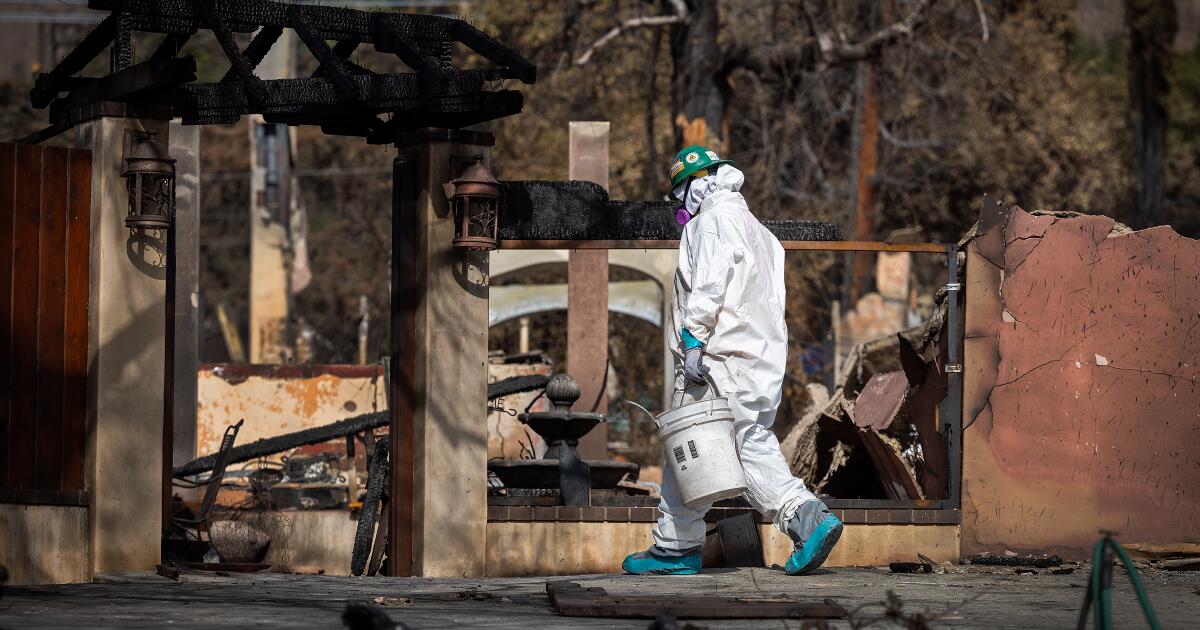
A push to end a fractured approach to post-fire contamination removal

Florida High School Football Rankings: Top 25 teams – Oct. 21

Cleary's 21 help Le Moyne down Central Connecticut State 69-64 in OT

How old is Bo Nix? What to know about Oregon quarterback ahead of 2024 NFL Draft

99th annual Pony Swim held in Virginia

Indiana Members Credit Union announced as new anchor tenant at Bottleworks District

Zelenskyy seeks 50,000 Russian ‘losses’ a month to win the Ukraine war

Trump sues IRS and Treasury for $10 billion over leaked tax information

Map: 4.2-Magnitude Earthquake Shakes Montana

Virginia Democrats seek dozens of new tax hikes, including on dog walking and dry cleaning

Putin should make concessions before direct talks with Europe: Kallas
-

 Illinois1 week ago
Illinois school closings tomorrow: How to check if your school is closed due to extreme cold
-

 Pennsylvania4 days ago
Rare ‘avalanche’ blocks Pennsylvania road during major snowstorm
-
 Science1 week ago
Contributor: New food pyramid is a recipe for health disasters
-

 Technology1 week ago
Ring claims it’s not giving ICE access to its cameras
-
 Science1 week ago
Fed up with perimenopause or menopause? The We Do Not Care Club is here for you
-
Movie Reviews1 week ago
Movie Review: In ‘Mercy,’ Chris Pratt is on trial with an artificial intelligence judge
-

 Politics1 week ago
Supreme Court appears ready to keep Lisa Cook on Federal Reserve board despite Trump efforts to fire her
-

 News7 days ago
Video: Jack Smith Defends His Trump Indictments During House Hearing

