World
Gaza polio vaccination drive resumes as Israel continues attacks


WHO says six people, including four children, injured in strike on polio vaccination centre in northern Gaza.
United Nations agencies have begun a new phase of a polio vaccination campaign for children in northern Gaza amid concerns that Israeli attacks and access constraints could make it impossible to reach some areas.
The UN’s agency for children (UNICEF) reported on Saturday that the vaccination campaign against the virus – which can paralyse or even kill children – resumed in northern Gaza after multiple delays “despite extremely harsh conditions”.
The first phase began in September and reached more than 560,000 children aged over one day old and under 10. Authorities are now trying to administer a second and final dose of the oral vaccine.
“This polio campaign is critical, but while we protect children with vaccines, they will continue to die and suffer each day until there is a comprehensive and lasting ceasefire, which is needed more urgently than ever,” said UNRWA, the agency for Palestinian refugees.
The UN said the aim of the second-round campaign in the north is to inoculate an estimated 119,000 children, but “achieving this target is now unlikely due to access constraints”.
UN agencies said 216 teams are now working across 106 fixed sites to offer the vaccine, including to Palestinians who have been newly displaced as a result of the expanding ground invasion of Israel in northern Gaza.
Despite extremely harsh conditions, the #Polio vaccination campaign resumed in the north of #Gaza today, carried out by the Palestinian MoH, @UNICEF, @WHOoPt, @UNRWA & partners.
⁰#ForEveryChild, Health
⁰Read our statement here: https://t.co/remo7UhXP2 pic.twitter.com/GrTi8kTCBQ— UNICEF Palestine (@UNICEFpalestine) November 2, 2024
The situation in parts of northern Gaza has been described as “apocalyptic” by the UN as Israel continues to block humanitarian aid and continues to launch attacks from the ground, air and sea.
Multiple air strikes were reported in the north on Saturday, with one of the latest in the afternoon killing at least two people in Jabalia’s Naza area.
More than 43,200 Palestinians have been killed in Gaza since the start of the war, with more than 101,800 people wounded, according to Palestinian health authorities.
Strike hits vaccination centre
Later on Saturday, the World Health Organization (WHO) said four children were injured in a strike on a polio vaccination centre in Gaza City.
“The Sheikh Radwan primary health care centre in northern Gaza was struck today while parents were bringing their children to the life-saving polio vaccination in an area where a humanitarian pause was agreed to allow vaccination to proceed,” WHO chief Tedros Adhanom Ghebreyesus, said in a post on X, without saying who had launched the strike.
“Six people, including four children, were injured,” he added.
Al Jazeera’s Hind Khoudary, reporting from Deir el-Balah in central Gaza, said the centre was targeted with a sound bomb by an Israeli quadcopter.
“We know that when the Israelis fire sound bombs, or even live ammunition or bullets, there are a lot of fragments that fall after these attacks. At least three children were injured in this attack,” she said.
Khoudary said thousands of children are expected to miss out on the vaccine as Israeli attacks and troops are hindering authorities from reaching some areas in the north. Those include Jabalia, Beit Lahiya and Beit Hanoon, which have borne the brunt of the Israeli siege that has killed more than a thousand people in the past month.
Polio had been eradicated in Gaza 25 years ago, but the destruction of the healthcare system in the enclave as a result of Israeli attacks triggered multiple health crises, which saw the virus spreading again.
A 10-month-old Palestinian baby was partly paralysed as a result of the virus earlier this year, prompting the rollout of the campaign.
But the campaign will not only benefit those inside the enclave, as authorities are also trying to prevent spread to neighbouring countries, including Israel.



World
‘Criminal Minds’ Star Paget Brewster Tells TV Journalist to ‘Work at a Shelter’ After Mixed Review, Sparking Outrage From Other Critics

“Criminal Minds” star Paget Brewster lashed out at ScreenRant staffer Shealyn Scott over X on Saturday afternoon for her story lamenting the changes Paramount+ has brought to the long-running procedural drama.
“Hello critic Shealynn Scott,” Brewster wrote in the since-deleted post. “You’re young. You don’t know that bad pics and bad reviews can lead to 350 people losing their jobs. Sell vintage. Work at a shelter. Do something better than what you do now. Because right now you suck.”
Film and TV critics were quick to hit back in the replies. David Rooney, chief film critic at The Hollywood Reporter, wrote in his response to Brewster, “This is a very bad look. An actor on a long-running show attacking a young reviewer who contextualizes her respectful criticisms with obvious knowledge of the material — says way more about u being thin-skinned than it does about her professionalism. ‘Work at a shelter,’ really?!”
Senior ScreenRant writer Andy Behbakht also came to the defense of Scott, writing, “This is disgusting behavior on your part, and really tragic to see you tearing down a young female journalist whom you are literally telling that she ‘sucks’ and that she shouldn’t be in the field that she is in. I stand by my colleague, and you owe her an apology.”
Brewster released an apology for the post on Sunday. She wrote on X, “Hi guys, I was mean to Shealyn Scott last night and I profoundly regret it. Shame on me for insulting a human being for doing their job. I’m very sorry, Shealyn. And I’m sorry to those who follow me that you saw me behave like that. Turns out, last night, I sucked.”
“Criminal Minds” premiered its 15th and final season on CBS in 2020, and then was revived for Paramount+ in 2022 under the title “Criminal Minds: Evolution.” Scott’s piece discussed the changes “Criminal Minds” underwent when it went from linear to streaming.
“From details as small as a ratings change to TV-MA— which allows David Rossi (Joe Mantegna) and Emily Prentiss (Paget Brewster) the occasional heated expletive— to new main cast members like Tyler Green (Ryan-James Hatanaka), there’s no doubt that ‘Criminal Minds: Evolution’ has its own unique identity,” Scott wrote in her story. “Plenty of the continuation’s changes have been received warmly, and ‘Criminal Minds’ unquestionably still works as a gripping crime drama, but there are just as many tweaks that feel more like downgrades— including the new 10-episode season structure. Though logical in theory, the shortened seasons are unfortunately working against ‘Criminal Minds’’ greatest strengths.”

NEWYou can now listen to Fox News articles!
Italian Prime Minister Giorgia Meloni’s escalating feud with President Donald Trump is nothing but a calculated political strategy aimed at boosting her standing at home, a leading Italian political analyst told Fox News Digital on Sunday.
After the row between Trump and Meloni escalated on June 20, analysts also said the Italian leader may see little downside in confronting Trump, particularly as she faces declining approval ratings ahead of Italy’s 2027 general election.
The diplomatic dispute had reached a boiling point after Italian Foreign Minister Antonio Tajani announced June 19 that he was scrapping a trip to Washington, where he had been scheduled to meet Secretary of State Marco Rubio.
“Giorgia Meloni must have calculated that a public row with Trump yields no tangible consequences, other than an increase in her domestic and international standing,” Mattia Diletti, a political science lecturer at Sapienza University of Rome, said.
TRUMP SAYS MELONI ‘WANTS TO BE FRIENDS AGAIN’ AFTER ITALY REFUSED TO HELP US AMID IRAN WAR
Giorgia Meloni said President Trump’s statements were “completely made up” and that “neither I nor Italy ever beg.” (Mandel NGAN / POOL / AFP via Getty Images; Bastien Ohier / Hans Lucas / AFP via Getty Images))
Giovanni Orsina, a political scientist at Rome’s Luiss University, also told the Financial Times that the row would offer a “positive image” for Meloni and a “silver lining” to a confrontation she had “desperately tried to avoid.”
The friction between Trump and Meloni intensified after an interview broadcast by Italy’s La7 television network, where the president claimed she had asked for a photograph with him at the G7 summit and that he agreed only out of pity.
“She begged me to take a picture with her,” Trump said. “She wanted a picture with me so badly. I wouldn’t have taken it, but I felt sorry for her.”
RUBIO MEETS MELONI AS TRUMP–POPE CLASH CLASH ESCALATES US STRAINS WITH KEY EUROPEAN ALLY
Italian Prime Minister Giorgia Meloni attends her annual press conference in Rome on Jan. 9, 2026, addressing government priorities and policy challenges for the year ahead. (Antonio Masiello/Getty Images)
Meloni fired back, releasing a video statement on X rejecting the president’s narrative.
“I am frankly stunned,” Meloni said in the video message. “I don’t know why the president of the United States behaves this way toward his own allies. But there’s one thing he must remember: Neither I nor Italy ever beg.”
Trump doubled down on Truth Social and tied the row directly to Meloni’s political fortunes.
“Italian Prime Minister Giorgia Meloni asked, over and over, for a picture with me during the G7 meeting in France,” Trump wrote on Truth Social.
“She is doing poorly in Italy with her level of popularity, possibly because she turned down the United States of America… when it came to denying Iran from obtaining or developing a nuclear weapon … She wouldn’t even let us use Italy’s landing strips or runways, a great logistical inconvenience … Now, after the United States defeated Iran militarily, she wants to be friends again in order to get her ‘numbers up.’ No thanks!!!”
Within hours, Meloni responded on social media: “As for my popularity, being your friend certainly has not helped it … My popularity depends on my ability to defend Italy’s national interest… In any case, my popularity is none of your concern. I suggest you focus on yours.”
TRUMP ‘RIGHT TO BE OUTRAGED’ BY EUROPE’S BETRAYAL ON IRAN, SAYS FORMER THATCHER ADVISOR
Rubio will travel to Italy on Wednesday for meetings with Pope Leo and Prime Minister Giorgia Meloni. (Maria Grazia Picciarella/SOPA Images/LightRocket via Getty Images)
The back-and-forth marks a reversal for two leaders who once enjoyed a close political alignment.
When Meloni first came to power, she positioned herself as a bridge between Washington and Brussels while pushing ties with Trump based on shared nationalism and stances on immigration.
“Politically, Trump has favored Meloni,” Diletti noted, pointing out that she had previously visited Trump’s Mar-a-Lago estate in Florida in 2025. She was the only European Union leader to attend his second inauguration.
The cracks also appeared in April when Trump criticized Meloni for siding with Pope Leo XIV’s condemnation of the U.S. conflict with Iran.
On Sunday, Trump also criticized Italy and Giorgia Meloni over their approach to Iran, accusing the NATO ally of failing to help confront Tehran’s nuclear ambitions.
CLICK HERE TO DOWNLOAD THE FOX NEWS APP
“As the 2027 Italian general election approaches, Meloni is facing a decline in approval ratings for the first time,” Diletti explained.
“The opportunity to counter a President so unpopular in Europe and Italy helps bolster her approval ratings and allows her to build European solidarity,” he claimed.

Renowned turtle conservationist Mona Khalil had been wounded in an Israeli attack in southern Lebanon.
Published On 21 Jun 2026
Mourners have gathered in Beirut to pay their respects to a much-loved Lebanese conservationist who died from wounds caused by an Israeli strike on her home on the country’s southern coast.
Mona Khalil, 77, who spent more than two decades protecting sea turtles along Lebanon’s coastline, was critically injured in the attack in the village of al-Mansouri in Tyre province on June 4 and succumbed to her wounds more than two weeks later, on Friday.
list of 4 itemsend of listRecommended Stories
News of her death triggered an outpouring of grief among environmentalists and those who volunteered and worked with her over the years, many of whom gathered in Beirut on Sunday.
The Orange House Project, which Khalil helped build into a small conservation hub and ecotourism site in al-Mansouri, became a refuge for endangered loggerhead and green sea turtles and a training ground for volunteers documenting nesting activity along the coast.
Khalil was born in Lagos, Nigeria, in 1949. She held Dutch as well as Lebanese citizenship, having lived in the Netherlands before returning to Lebanon and settling in what had once been her grandmother’s home – the building that would later become known as the Orange House.
At the heart of Khalil’s work was a narrow stretch of coastline, al-Mansouri beach, where a fleeting encounter with a turtle that had emerged from the ocean to lay its eggs in 1999 propelled her on a lifelong journey devoted to animals.
Each nesting season, Khalil and volunteers would patrol the beach at night, marking fresh tracks in the sand and carefully relocating vulnerable nests away from human activity and coastal light pollution.
Journalist and environmental activist Fadia Jomaa first met Khalil in 2016 while researching sea turtles in Lebanon and then decided to volunteer with her project.
During the previous war between Israel and the Lebanese armed group Hezbollah in 2024, Khalil initially refused to leave al-Mansouri beach, Jomaa said. The Lebanese army ultimately persuaded her to evacuate for her safety.
“She was the last one to leave the area,” Jomaa noted.
“She had an awful time in Beirut,” the journalist said, adding that Khalil longed to return to the south, to the Orange House and the beach she had spent years protecting.
“She used to say, ‘My soul will stay here,’” Jomaa said, recalling conversations in which Khalil would point to an olive tree or a small hill overlooking al-Mansouri beach. “She used to say, ‘This is where you will bury me.’”
Where Khalil will ultimately be buried remains uncertain and is tied to the security situation in the area, Jomaa said.
-

 Maine6 minutes ago
4-year-old girl in critical condition after near drowning at Kennebunk hotel pool
-

 Maryland9 minutes ago
Crash Shuts Down All Northbound Lanes Of I-95
-

 Michigan14 minutes ago
Michigan bills establishing American Freedmen infrastructure introduced in House
-

 Massachusetts21 minutes ago
Joyous occasion: Boston celebrates new beginnings, local pride
-

 Minnesota24 minutes ago
Over a dozen cases dropped against Minnesota protesters accused of assaulting federal agents during ICE operation
-

 Mississippi29 minutes ago
Fort Worth youth baseball team rescued after floodwaters trap families in Mississippi
-

 Missouri36 minutes ago
MoDOT scheduled road work across Northwest Missouri for June 22–28
-
 Montana38 minutes ago
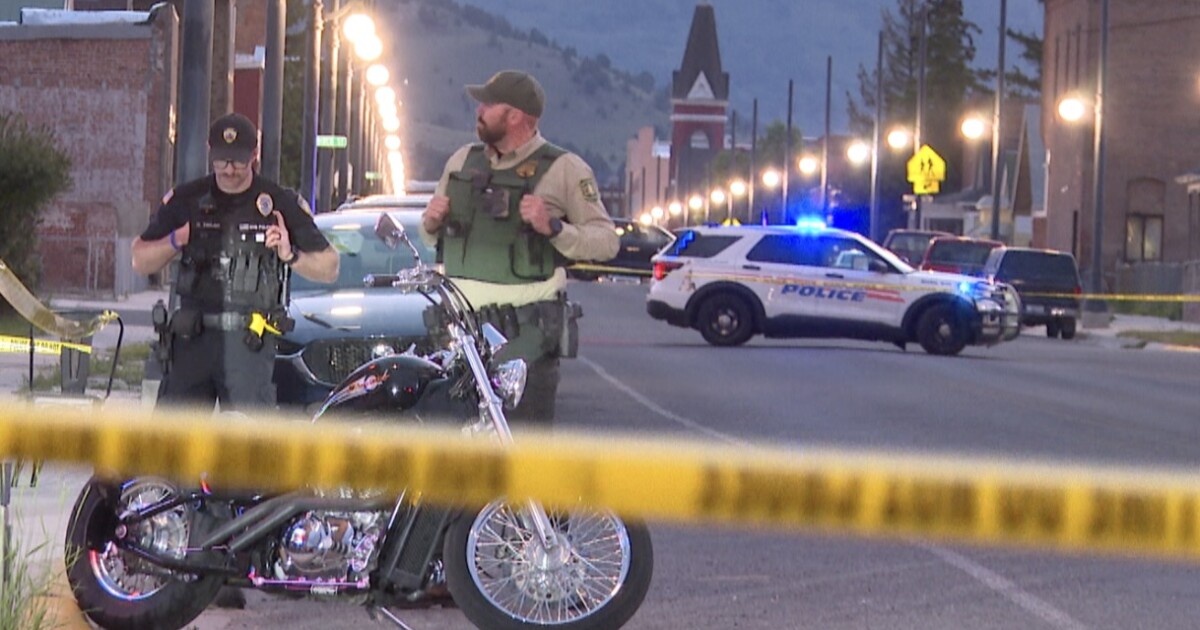
Anaconda shaken by second bar shooting within a year

