World
G20 summit calls for more aid to Gaza and an end to the war in Ukraine


RIO DE JANEIRO (AP) — Leaders of the world’s 20 major economies called for a global pact to combat hunger, more aid for war-torn Gaza and an end to hostilities in the Mideast and Ukraine, issuing a joint declaration Monday that was heavy on generalities but short of details on how to accomplish those goals.
The joint statement was endorsed by group members but fell short of complete unanimity. It also called for a future global tax on billionaires and for reforms allowing the eventual expansion of the United Nation Security Council beyond its five current permanent members.
At the start of the three-day meeting which formally ends Wednesday, experts doubted Brazilian President Luiz Inácio Lula da Silva could convince the assembled leaders to hammer out any agreement at all in a gathering rife with uncertainty over the incoming administration of U.S. President-elect Donald Trump, and heightened global tensions over wars in the Mideast and Ukraine.
Argentina challenged some of the language in initial drafts and was the one country that did not endorse the complete document.
“Although generic, it is a positive surprise for Brazil,” said Thomas Traumann, an independent political consultant and former Brazilian minister. “There was a moment when there was a risk of no declaration at all. Despite the caveats, it is a good result for Lula.”
Condemnation of wars, calls for peace, but without casting blame
Taking place just over a year after the Oct. 7 Hamas attack on Israel, the declaration referred to the “catastrophic humanitarian situation in the Gaza and the escalation in Lebanon,” stressing the urgent need to expand humanitarian assistance and better protect civilians.
“Affirming the Palestinian right to self-determination, we reiterate our unwavering commitment to the vision of the two-State solution where Israel and a Palestinian State live side by side in peace,” it said.
It did not mention Israel’s suffering or of the 100 or so hostages still held by Hamas. Israel isn’t a G20 member. The war has so far killed more than 43,000 Palestinians in Gaza, according to local health officials, and more than 3,500 people in Lebanon following Israel’s offensive against Hezbollah, according to Lebanon’s Health Ministry.
The omitted acknowledgment of Israel’s distress appeared to run contrary to U.S. President Joe Biden’s consistent backing of Israel’s right to defend itself. It’s something Biden always notes in public, even when speaking about the deprivation of Palestinians. During a meeting with G20 leaders before the declaration was hammered home, Biden expressed his view that Hamas is solely to blame for the war and called on fellow leaders to “increase the pressure on Hamas” to accept a cease-fire deal.
Biden’s decision to ease restrictions on Ukraine’s use of longer-range U.S. missiles to allow that country to strike more deeply inside Russia also played into the meetings,
“The United States strongly supports Ukraine’s sovereignty and territorial integrity. Everyone around this table in my view should, as well,” Biden said during the summit.
Russian President Vladimir Putin did not attend the meeting , and instead sent his foreign minister, Sergey Lavrov. Putin has avoided such summits after the International Criminal Court issued a warrant that obliges member states to arrest him.
The G20 declaration highlighted the human suffering in Ukraine while calling for peace, without naming Russia.
“The declaration avoids pointing the finger at the culprits,” said Paulo Velasco, an international relations professor at the State University of Rio de Janeiro. “That is, it doesn’t make any critical mention of Israel or Russia, but it highlights the dramatic humanitarian situations in both cases.”
The entire declaration lacks specificity, Velasco added.
“It is very much in line with what Brazil hoped for … but if we really analyze it carefully, it is very much a declaration of intent. It is a declaration of good will on various issues, but we have very few concrete, tangible measures.”
Fraught push to tax global billionaires
The declaration did call for a possible tax on global billionaires, which Lula supports. Such a tax would affect about 3,000 people around the world, including about 100 in Latin América.
The clause was included despite opposition from Argentina. So was another promoting gender equality, said Brazilian and other officials who spoke on condition of anonymity because they weren’t authorized to speak publicly.
Argentina signed the G20 declaration, bit also had issues with references to the U.N.’s 2030 sustainable development agenda. Its right-wing president, Javier Milei, has referred to the agenda as “a supranational program of a socialist nature.” It also objected to calls for regulating hate speech on social media, which Milei says infringes on national sovereignty, and to the idea that governments should do more to fight hunger.
Milei has often adopted a Trump-like role as a spoiler in multilateral talks hosted by his outspoken critic, Lula.
Concrete steps for fighting global hunger
Much of the declaration focuses on eradicating hunger — a priority for Lula.
Brazil’s government stressed that Lula’s launch of the global alliance against hunger and poverty on Monday was as important as the final G20 declaration. As of Monday, 82 nations had signed onto the plan, Brazil’s government said. It is also backed by organizations including the Rockefeller Foundation and the Bill & Melinda Gates Foundation.
A demonstration Sunday on Rio’s Copacabana beach featured 733 empty plates spread across the sand to represent the 733 million people who went hungry in 2023, according to United Nations data.
Viviana Santiago, a director at the anti-poverty nonprofit Oxfam, praised Brazil for using its G20 presidency “to respond to people’s demands worldwide to tackle extreme inequality, hunger and climate breakdown, and particularly for rallying action on taxing the super-rich.”
“Brazil has lit a path toward a more just and resilient world, challenging others to meet them at this critical juncture,” she said in a statement.
Long-awaited reform of the United Nations
Leaders pledged to work for “transformative reform” of the U.N. Security Council so that it aligns “with the realities and demands of the 21st century, makes it more representative, inclusive, efficient, effective, democratic and accountable.”
Lula has been calling for reform of Security Council since his first two terms in power, from 2003 to 2010, without gaining much traction. Charged with maintaining international peace and security, its original 1945 structure has not changed. Five dominant powers at the end of World War II have veto power — the U.S., Russia, China, Britain and France — while 10 countries from different regions serve rotating two-year terms.
Virtually all countries agree that nearly eight decades after the United Nations was established, the Security Council should be expanded to reflect the 21st century world and include more voices. The central quandary and biggest disagreement remains how to do that. The G20 declaration doesn’t answer that question.
“We call for an enlarged Security Council composition that improves the representation of the underrepresented and unrepresented regions and groups, such as Africa, Asia-Pacific and Latin America and the Caribbean,” the declaration said.
The United States announced shortly before a U.N. summit in September that it supports two new permanent seats for African countries, without veto power, and a first-ever non-permanent seat for a small island developing nation. But the Group of Four – Brazil, Germany, India and Japan – support each other’s bids for permanent seats. And the larger Uniting for Consensus group of a dozen countries including Pakistan, Italy, Turkey and Mexico wants additional non-permanent seats with longer terms.
___
Associated Press writers Aamer Madhani in Rio de Janeiro, Edith M. Lederer at the United Nations and Isabel DeBre in La Paz, Bolivia contributed.



Published on •Updated
Belgium’s three regions announced on Friday that they would introduce a road tax next year that foreign drivers transiting the country would also have to pay.
ADVERTISEMENT

ADVERTISEMENT
The country does not currently charge drivers to use its highways and the issue of introducing some form of payment has been debated for years.
“Everyone who uses our roads must contribute fairly to their maintenance,” said the transport minister for the southern Wallonia region, François Desquesnes.
Starting on 1 May 2027 drivers will need to register their vehicle and pay the road tax, with day passes available for drivers driving across the country.
An annual pass for a zero-emission car will cost €90 and up to €125 for higher polluting vehicles.
Road cameras that catch cars that haven’t paid for a pass will incur a fine of €70.
In Belgium, the individual regions are responsible for maintaining roads and motorways.
Currently, drivers can use almost all highways toll-free but the possibility of an introducing a charge has been under discussion for several years.
The revenue would be used for the operation and maintenance of the road network.
The proposed toll still needs final approval from the regions and European authorities.
According to the chairman of the liberal-conservative MR party, the government intends to offset the new toll by lowering other taxes for Belgians.
Additional sources • AFP

World
With US unleashing attacks, Iranian official threatens that the Islamic Republic will deliver a ‘hard slap’

NEWYou can now listen to Fox News articles!
An Iranian official warned that the Islamic Republic will deliver a “hard slap” while another blatantly threatened the U.S. that “if you strike, you’ll get hit,” according to automatic translations from the two men’s Persian-language posts on X.
Ebrahim Rezaei, whose profile on the social media platform indicates that he is a representative in Iran’s Parliament and the spokesperson for the National Security and Foreign Policy Commission, wrote in a post on X, “The martyred Khamenei taught us not to fear America and showed that ‘falsehood will perish.’ Await the hard slap from the Iranians.”
The speaker of Iran’s Parliament, Mohammad Bagher Ghalibaf, warned, “America still hasn’t learned that bullying and breaking promises are no longer cost-free. Let me put it plainly: if you strike, you’ll get hit. Don’t flail around pointlessly, or you’ll sink even deeper: the Strait of Hormuz will only open with ‘Iranian arrangements,’ not American threats.”
Both of the men issued their posts on Wednesday after U.S. Central Command (CENTCOM) announced more strikes against Iran.
“At the direction of the Commander in Chief, U.S. Central Command forces have started conducting additional strikes against Iran to further degrade their ability to threaten freedom of navigation in the Strait of Hormuz. The United States is holding Iran accountable for recent unjustified aggression against commercial shipping and civilian crews freely navigating a vital international waterway,” CENTCOM had noted in a post on X.
TRUMP SAYS IRAN CEASEFIRE DEAL IS ‘OVER’ AFTER NEW ROUND OF STRIKES
People gather at the Imam Khomeini Grand Mosalla for a farewell ceremony for Iran’s late Ayatollah Ali Khamenei on July 4, 2026, in Tehran, Iran. (Majid Saeedi/Getty Images)
The U.S. military later provided more information about the attacks.
“U.S. Central Command (CENTCOM) forces completed an additional round of strikes against Iran, July 8, to further degrade Iran’s ability to attack commercial shipping and innocent civilian mariners in the Strait of Hormuz,” CENTCOM noted on Wednesday night.
“U.S. forces struck approximately 90 Iranian military targets including air defense systems, coastal surveillance assets, missile and drone storage sites, naval capabilities, and military logistics infrastructure along Iran’s coastline. The latest strikes follow successful execution of offensive strikes in Iran the night before,” the announcement noted. “CENTCOM forces hit approximately 80 Iranian military targets July 7, including more than 60 Islamic Revolutionary Guard Corps small boats, to impose heavy costs for Iran violating the ceasefire by attacking three commercial vessels navigating the Strait of Hormuz.”
TRUMP DEMANDS END TO TRADE WITH KEY US ALLY, CALLS IT A ‘WASTED CAUSE’
President Donald Trump indicated on Wednesday that, as far as he was concerned, the U.S.-Iran Memorandum of Understanding ceasefire was “over.”
Kuwait and Bahrain have both reported coming under attack.
The Kuwait Army noted in a Thursday post on X, which was written in Arabic, “The Official Spokesman for the Ministry of Defense, Major General Saud Abdulaziz Al-Otaibi, stated that the armed forces detected, at dawn today, (3) ballistic missiles, (1) cruise missile, and (10) hostile drones within Kuwaiti airspace, which were successfully intercepted and dealt with.”
TRUMP SAYS ‘IRAN LIES AND CHEATS’ AS IRGC EMERGES AS DOMINANT FORCE IN NEGOTIATIONS WITH US
President Donald Trump speaks as he meets with NATO Secretary General Mark Rutte on the sidelines of the NATO summit in Ankara, on July 8, 2026. (SAUL LOEB / AFP via Getty Images)
CLICK HERE TO DOWNLOAD THE FOX NEWS APP
The Bahrain Defense Force noted in a post that was in Arabic, “The General Command clarifies that, with firm resolve and high combat readiness, the Bahrain Defense Force’s air defense systems confronted, intercepted, and destroyed several treacherous Iranian aerial attacks this morning, Thursday, July 9, 2026 CE.”
-
 Business2 minutes ago
Los Angeles hotels saved by last-minute surge in World Cup bookings
-
 Entertainment7 minutes ago
Emily Ratajkowski’s viral essay on sex life as a single mom scores her a seven-figure book deal
-

 Lifestyle14 minutes ago
The BoF Podcast | Decoding Paris Haute Couture: Wonder, Restraint and the Call of the Void
-
 Politics17 minutes ago
Trump ousts bipartisan commission in latest effort to reshape elections before midterm
-
 Science22 minutes ago
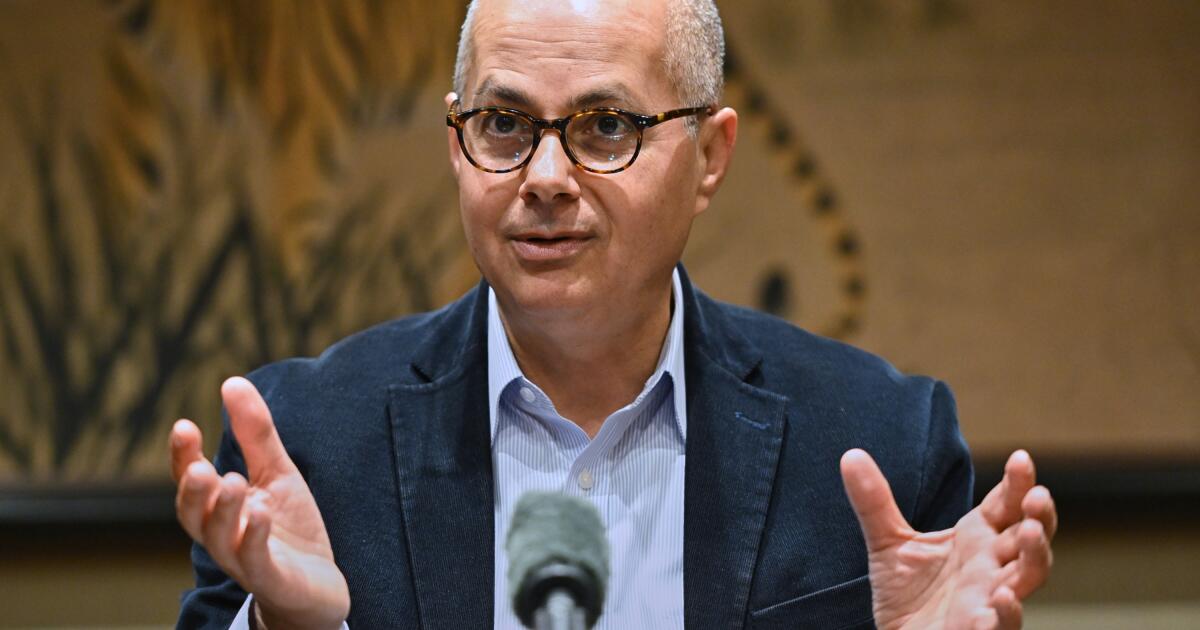
Nobel Prize winner leaving UC Berkeley for new role in China
-
 Sports29 minutes ago
Mikel Merino lifts Spain over Belgium, setting up World Cup showdown with France
-

 World37 minutes ago
Belgium to introduce new road tax in 2027, even for transiting drivers
-
 News1 hour ago
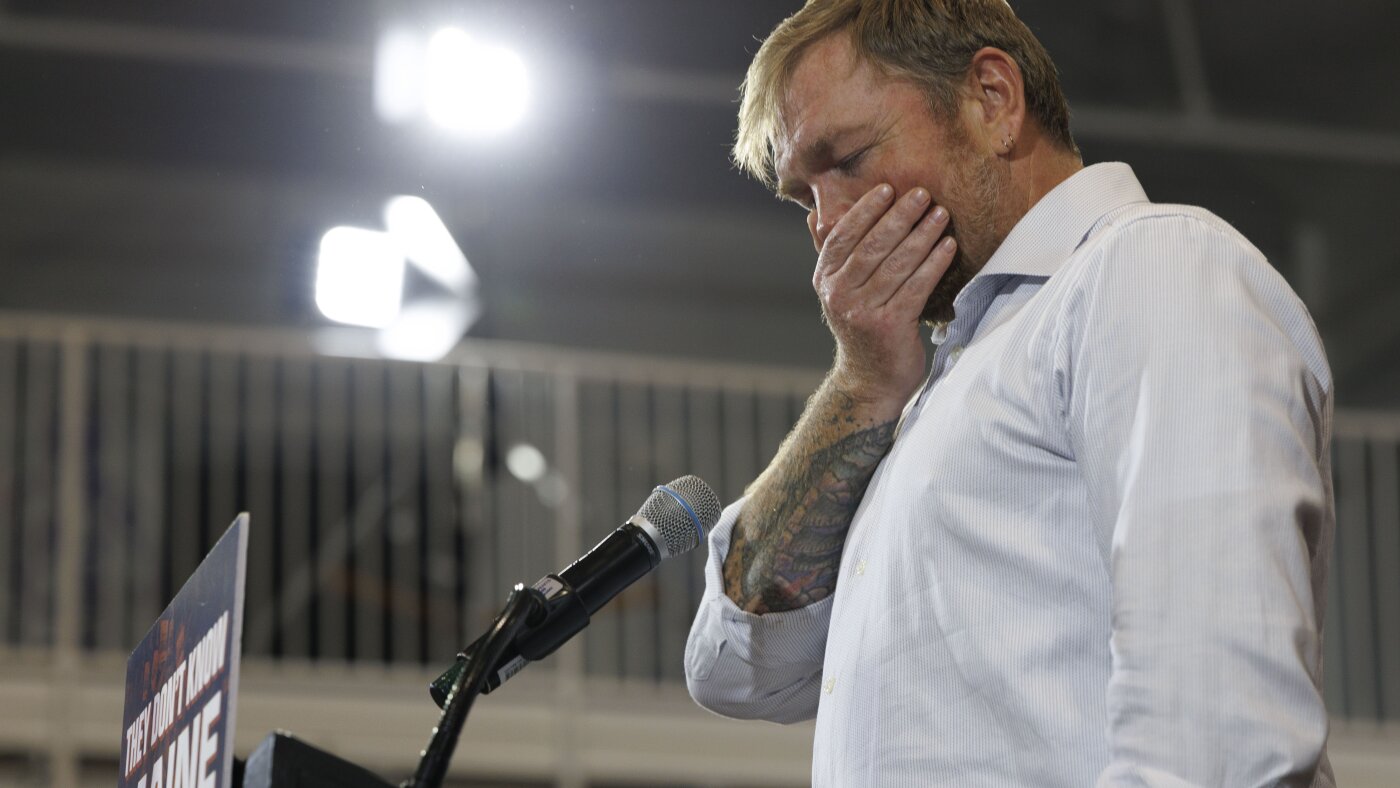
Graham Platner makes it official in Maine, submitting paperwork to leave Senate race

