World
First brewery opens in Abu Dhabi as parts of UAE loosen alcohol laws


In 2018, Chad McGehee opened Side Hustle Brews and Spirits, an Abu Dhabi-branded brewery and distillery with funky camels on its cans and playful names familiar to anyone living in the United Arab Emirates.
The only problem was it was illegal to produce alcohol in the country, so his company made its hoppy India pale ale in the United States and then imported it to the UAE for sale.
That’s all changed as Abu Dhabi has overhauled its laws to allow for the micro and craft breweries that have taken the rest of the world by storm, part of a wider reconsideration of alcohol policies in the Islamic nation increasingly drawing tourists. And McGehee’s dream of IPAs in Arabia became a reality — though it took hard work as they were the first to open.
NEW YORK WEIGHS ENDING POST-PROHIBITION LAW, POTENTIALLY MAKING STATE’S DRY TOWNS A THING OF THE PAST
“The government had created a regulation around fermentation, but the steps of getting a permit, the steps of inspection, all of these things were not put on paper yet. So that had to be built out as we were going through this process,” McGehee said on a recent afternoon at his brew pub on Abu Dhabi’s Al Maryah Island.
Abu Dhabi has long been considered by those living in the UAE to be more buttoned-up than the rambunctious neighboring emirate of Dubai, home to nightclubs, beach bars and pubs drawing tourists and residents to imbibe. In the seven emirates of the UAE, Sharjah outright bans the sale and consumption of alcohol, like neighboring Saudi Arabia, as well as Iran and Kuwait.
But beginning in 2020, Abu Dhabi changed its policies. It eliminated its licensing system for alcohol purchases for drinkers to boost sales and tourism during the coronavirus pandemic. Eliminating the licenses allowed Muslims, if they chose, to drink, as well as decriminalized alcohol possession for those without a license.
Mitchell Dougherty, the brewmaster at Side Hustle Brews and Spirits, pours a pint of beer at his brew pub in Abu Dhabi, United Arab Emirates, on May 13, 2024. (AP Photo/Malak Harb)
“I think progression in this country is par for the course, they’re always moving things forward,” said Nadeem Selbak, one of the partners at Craft, which is Side Hustle’s brew pub.
The Emirates still maintains a strict no-tolerance policy on drunken driving and public intoxication. Islam also considers alcohol consumption as “haram,” or forbidden.
But alcohol sales long have been a major driver of tax revenue and a moneymaker for the UAE. Dubai Duty Free, for instance, sold 6 million cans of beer last year, as well as 3.8 million bottles of liquor and 2.3 million bottles of whiskey for thirsty travelers.
But despite that demand, there was no local equipment available to open a brewery in the UAE. McGehee ended up importing almost everything for the brewery, nearly all of it coming from the U.S.
Abu Dhabi represents a completely untapped market for Side Hustle.
“The idea for me was like going back in time, when I started almost 20 years ago,” said Mitchell Dougherty, Side Hustle’s brewmaster.
At any given point, Craft has 14 beers on tap. So far this year they have brewed 34 and aim to reach up to 100 by the end of the year. The names of the beers include some winking reminders of life in the UAE, including one called “Massage Card Ninja” — a nod to business cards showing scantily clad women that appear under car windshield wipers in some Dubai neighborhoods.
McGehee said the different types of beers include ingredients from the Czech Republic, the United Kingdom, Japan and the U.S., covering a variety of palates for their international customers.
“If you look at Abu Dhabi, you have people from almost 200 countries,” he said. “They all have their own definition of what beer is, what craft beer is, or what lager is, or what IPA is, so we’re trying to cater to as many of them as possible.”



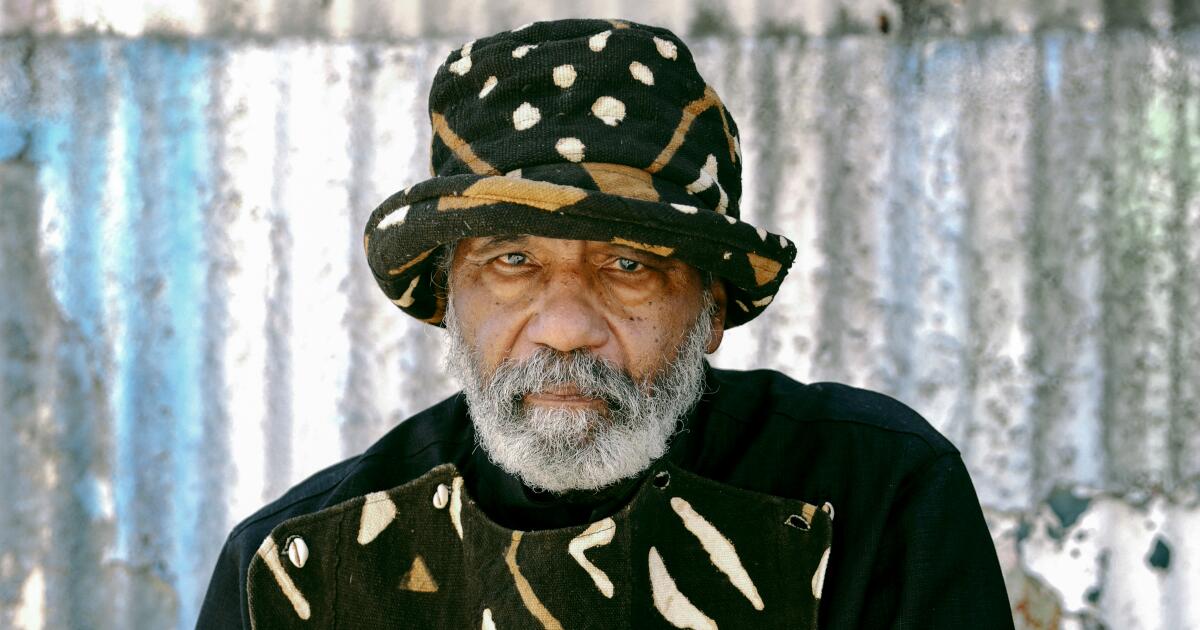

Pugapia and her daughters Aiga and Babawru lived for years as the only surviving members of the Akuntsu, an Indigenous people decimated by a government-backed push to develop parts of the Amazon rainforest. As they advanced in age without a child to carry on the line, many expected the Akuntsu to vanish when the women died.
ADVERTISEMENT

ADVERTISEMENT
That changed in December, when Babawru – the youngest of the three, in her 40s – gave birth to a boy. Akyp’s arrival brought hope not just for the Akuntsu line but also for efforts to protect the equally fragile rainforest.
“This child is not only a symbol of the resistance of the Akuntsu people, but also a source of hope for Indigenous peoples,” says Joenia Wapichana, president of Brazil’s Indigenous protection agency, known as Funai. “He represents how recognition, protection and the management of this land are extremely necessary.”
Protecting Indigenous territories is widely seen as one of the most effective ways to curb deforestation in the Amazon, the world’s largest rainforest and a key regulator of global climate.
Researchers warn that continued forest loss could accelerate global warming. A 2022 analysis by MapBiomas, a network of nongovernmental groups tracking land use, found Indigenous territories in Brazil had lost just 1 per cent of native vegetation over three decades, compared with 20 per cent on private land nationwide.
In Rondonia state, where the Akuntsu dwell, about 40 per cent of native forest has been cleared, and what remains untouched is largely within conservation and Indigenous areas. The Akuntsu’s land stands out in satellite images as an island of forest surrounded by cattle pasture as well as soy and corn fields.
In the 1980s, an agriculture push sparked attacks in Rondonia
Rondonia’s deforestation traces back to a government-backed push to occupy the rainforest during Brazil’s military regime in the 1970s. Around the same time, an infrastructure program financed in part by the World Bank promoted domestic migration to the Amazon, including the paving of a highway across the state.
In the 1980s, Rondonia’s population more than doubled, according to census data. Settlers were promised land titles if they cleared the forest for agriculture and risked losing claims if Indigenous people were present, fuelling violent attacks by hired gunmen on Indigenous groups such as the Akuntsu.
Funai made first contact with the Akuntsu in 1995, finding seven survivors. Experts believe they had numbered about 20 a decade earlier, when they were attacked by ranchers seeking to occupy the area. Funai agents found evidence of the assault, and when they contacted the Akuntsu, the survivors recounted what happened. Some still bore gunshot wounds.
The last Akuntsu man died in 2017. Since then, Babawru lived with her mother, Pugapia, and Aiga, her sister. The women, whose ages aren’t known for certain, have chosen to remain isolated from the non-Indigenous world, showing little interest in it.
In 2006, Funai granted territorial protection to the Akuntsu, establishing the Rio Omere Indigenous Land, which they have since shared with the Kanoe people. The two groups, once enemies, began maintaining contact, usually mediated by officials. The relationship is complex, with cooperation but also cultural differences and language barriers.
The Associated Press requested a facilitated interview with the women through Funai, but the agency didn’t respond.
Amanda Villa, an anthropologist with the Observatory of Isolated Peoples, says Akuntsu women depend on Kanoe men for tasks considered masculine, such as hunting and clearing fields. The two groups have also exchanged spiritual knowledge – the current Kanoe spiritual leader, for example, learned from the late Akuntsu patriarch.
But the most consequential development for the future of the Akuntsu may have occurred last year, when Babawru became pregnant by a Kanoe man.
Linguist Carolina Aragon is the only outsider able to communicate with the three women after years studying and documenting their language. She works closely with Funai, translating conversations almost daily through video calls. Aragon also supported Babawru remotely during her labour and was with her during an ultrasound exam that confirmed the pregnancy.
Aragon said Babawru was stunned by the news. “She said, ‘How can I be pregnant?’” Aragon recalled. Babawru had always taken precautions to avoid becoming pregnant.
Social collapse shaped the Akuntsu’s choices
The surviving Akuntsu women had decided they would not become mothers. The decision was driven not only by the absence of other men in their community, but also by the belief that their world was disorganised – conditions they felt were not suitable for raising a child.
“You can trace this decision directly to the violent context they lived through,” says Villa, the anthropologist. “They have this somewhat catastrophic understanding.”
The Akuntsu believed they could not bring new life into a world without Akuntsu men who could not only perform but also teach tasks the group considers male responsibilities, such as hunting and shamanism.
“A breakdown of social relations that followed the genocide shaped their lives and deepened over the years. That does lead people to think – and rethink – the future,” Aragon says. “But the future can surprise everyone. A baby boy was born.”
Aragon says the women were embarking on a “new chapter”, choosing to welcome the child and adapt their traditions with support from the Kanoe and Funai. Villa says the fact that the newborn is a boy creates the possibility of restoring male roles like hunter.
Researchers and officials who have long worked with the three women understood that protecting the territory depended on the Akuntsu’s survival as a people. They sought to avoid a repeat of what happened to Tanaru, an Indigenous man who was discovered after living alone and without contact for decades.
After the discovery, authorities struggled to protect Tanaru’s territory. After he died in 2022, non-Indigenous groups began disputing the land. Late last year, the federal government finally secured the area, turning it into a protected conservation unit.
Funai’s Wapichana says Babawru’s child “is a hope that this next generation will indeed include an Indigenous person, an Akuntsu, ensuring the continuity of this people.”
Through years of careful work, Funai secured territorial protection for the Akuntsu and helped foster ties with the Kanoe. The agency also arranged spiritual support from an allied shaman, allowing the women to feel safe bringing new life into the world after decades of fear and loss.
The Akuntsu form emotional bonds with the forest and with the birds. Now, they are strengthening those bonds with a new human life in their world.
“What kind of relationship will this boy have with his own territory?” Aragon says. “I hope it will be the best possible, because he has everything he needs there.”

Iran’s leaders are scrambling to replace Supreme Leader Ayatollah Ali Khamenei, who ruled the country for 37 years before he was killed in the surprise U.S. and Israeli bombardment.
It’s only the second time since the 1979 Islamic Revolution that a new supreme leader is being chosen. Potential candidates range from hard-liners committed to confrontation with the West to reformists who seek diplomatic engagement.
The supreme leader has the final say on all major decisions, including war, peace and the country’s disputed nuclear program.
In the meantime, a provisional governing council composed of President Masoud Pezeshkian, hard-line judiciary chief Gholamhossein Mohseni Ejei and senior Shiite cleric Ayatollah Ali Reza Arafi is guiding the country through its biggest crisis in decades. Foreign Minister Abbas Araghchi said Sunday that a new supreme leader would be chosen early this week.
The supreme leader is appointed by an 88-member panel called the Assembly of Experts, who by law are supposed to quickly name a successor. The panel consists of Shiite clerics who are popularly elected after their candidacies are approved by the Guardian Council, Iran’s constitutional watchdog.
Khamenei had major influence over both clerical bodies, making it unlikely the next leader will mark a radical departure.
Here are the top contenders.
Mojtaba Khamenei
The son of Khamenei, a mid-level Shiite cleric, is widely considered a potential successor. He has strong ties to Iran’s paramilitary Revolutionary Guard but has never held office. His selection could prove awkward, as the Islamic Republic has long criticized hereditary rule and cast itself as a more just alternative.
Ayatollah Ali Reza Arafi
Arafi is a member of the provisional government council. The senior Shiite cleric was handpicked by Khamenei to be a member of the Guardian Council in 2019, and three years later he was elected to the Assembly of Experts. He leads a network of seminaries.
Hassan Rouhani
Rouhani, a relative moderate, was president of Iran from 2013 to 2021 and reached the landmark nuclear agreement with the Obama administration that U.S. President Donald Trump scrapped during his first term. Rouhani served on the Assembly of Experts until 2024, when he said he was disqualified from running for reelection. Rouhani criticized it as an infringement on Iranians’ political participation.
Hassan Khomeini
Khomeini is the most prominent grandson of the founder of the Islamic Republic, Ayatollah Ruhollah Khomeini. He is also seen as a relative moderate, but has never held government office. He currently works at his grandfather’s mausoleum in Tehran.
Ayatollah Mohammed Mehdi Mirbagheri
Mirbagheri is a senior cleric popular with hard-liners who serves on the Assembly of Experts.
He was close to the late Ayatollah Mohammad Taghi Mesbah Yazdi, a fellow hard-liner who wrote that Iran should not deprive itself of the right to produce “special weapons,” a veiled reference to nuclear arms.
During the COVID-19 pandemic, Mirbagheri denounced the closure of schools as a “conspiracy.”
He is currently the head of the Islamic Cultural Center in Qom, the main center for Islamic teaching in Iran.

NEWYou can now listen to Fox News articles!
The U.S. has been cleared to use British bases for limited strikes on Iran’s missile capabilities after Prime Minister Keir Starmer signed off on the plan, and while U.K. Defense Secretary John Healey stated on Sunday Britain had “stepped up alongside the Americans.”
“The only way to stop the threat is to destroy the missiles at source, in their storage depots or the launchers which are used to fire the missiles,” Starmer confirmed in a recorded statement to the nation.
“The U.S. has requested permission to use British bases for that specific and limited defensive purpose,” he said. “We have taken the decision to accept this request.”
The decision came amid escalation across the Middle East in the wake of U.S. and Israeli strikes on Iran and Tehran’s retaliatory missile and drone attacks, raising fears of a broader regional conflict.
British Prime Minister Keir Starmer signed off on a plan to use British bases for limited strikes on Iranian missile capabilities. (Kin Cheung / POOL / AFP via Getty Images)
On Feb. 28, in the wake of Operation Epic Fury, Starmer confirmed British planes “are in the sky today” across the Middle East “as part of coordinated regional defensive operations to protect our people, our interests and our allies.”
Healey went on to disclose Sunday that two Iranian missiles were fired in the direction of Cyprus, where Britain maintains key sovereign base areas.
The Royal Air Force confirmed that Typhoon jets operating from Qatar as part of the joint U.K.-Qatar Typhoon Squadron successfully intercepted an Iranian drone heading toward Qatar.
About 300 British personnel are stationed at a naval facility in Bahrain, where Iranian missiles and drones struck nearby areas.
“We’re taking down the drones that are menacing either our bases, our people or our allies,” Healey told “Sunday Morning with Trevor Phillips” on Sky. “We’ve stepped up alongside the Americans. We’ve stepped up our defensive forces in the Middle East. We’re flying those sorties.”
ISRAEL’S LARGEST EVER MILITARY FLYOVER HAMMERS IRANIAN MILITARY TARGETS
British Defense Secretary John Healey stressed that the U.K. had “no part” in the American-Israeli strikes on Iran. (Peter Nicholls/Pool via Reuters)
Healey also made sure to stress that the U.K. had “no part” in the U.S. and Israeli strikes on Iran and insisted all British actions were defensive. “All our actions are about defending U.K. interests and defending U.K. allies,” he said.
When asked if the U.K. would join the U.S. in offensive action, Healey said, “I’m not going to speculate,” according to Sky News.
CLICK HERE TO DOWNLOAD THE FOX NEWS APP
Downing Street also confirmed Feb. 28 that Starmer and President Donald Trump had spoken by phone about the “situation in the Middle East,” the BBC reported.
Fox News Digital has reached out to Downing Street for comment.
Related Article

Trump sends official notification to Congress on strikes against Iran

Punch the monkey, viral star, experiences dramatic breakthrough among zoo mates

NBA player calls for Hawks to cancel their ‘Magic City’ strip club promotional night out of respect for women

Why the Microsoft 365 Copilot bug matters for data security
California gas is pricey already. The Iran war could cost you even more

Florida High School Football Rankings: Top 25 teams – Oct. 21

Cleary's 21 help Le Moyne down Central Connecticut State 69-64 in OT

How old is Bo Nix? What to know about Oregon quarterback ahead of 2024 NFL Draft

99th annual Pony Swim held in Virginia

Indiana Members Credit Union announced as new anchor tenant at Bottleworks District
Trump sends official notification to Congress on strikes against Iran

Unexpected birth brings hope to near-extinct Amazon tribe

Supreme Court blocks redrawing of New York congressional map, dealing a win for GOP

Map: Earthquake Shakes Central California

Gas prices could jump as Middle East tensions threaten global oil supply
-

 World5 days ago
Exclusive: DeepSeek withholds latest AI model from US chipmakers including Nvidia, sources say
-

 Massachusetts5 days ago
Mother and daughter injured in Taunton house explosion
-

 Denver, CO5 days ago
10 acres charred, 5 injured in Thornton grass fire, evacuation orders lifted
-

 Louisiana1 week ago
Wildfire near Gum Swamp Road in Livingston Parish now under control; more than 200 acres burned
-

 Technology1 week ago
YouTube TV billing scam emails are hitting inboxes
-

 Politics1 week ago
OpenAI didn’t contact police despite employees flagging mass shooter’s concerning chatbot interactions: REPORT
-

 Technology1 week ago
Stellantis is in a crisis of its own making
-

 News1 week ago
World reacts as US top court limits Trump’s tariff powers