World
China threat looms large as Taiwan votes in pivotal election: 'choice between war and peace'


The future of Taiwan hangs in the balance as voters head to the polls to pick their next president in what remains a closely watched contest with intense interest from China and the U.S.
“This election has been a real test for whether the Taiwan electorate is willing to push back against Chinese pressure and coercion and make an independent choice for who they want to be their next leader,” Matt McInnis, senior fellow for the Institute for the Study of War’s China program, told Fox News Digital.
“That choice is going to determine the nature of the security situation over the next four years — in particular in the western Pacific,” McInnis said, noting the most expected result will see the ruling Democratic Progressive Party (DPP) win.
BIDEN TO SEND DELEGATION TO TAIWAN DAYS AFTER ELECTION IN MOVE LIKELY TO ANGER CHINA
People vote for the presidential election at a polling station in southern Taiwan’s Tainan city on Saturday, Jan. 13, 2024. Taiwanese are casting their votes Saturday for a new president in an election that could chart the trajectory of its relations with China over the next four years. (AP Photo/Ng Han Guan)
The DPP faces stiff competition from the Koumintang (KMT), or Chinese Nationalist Party, which has tried to cast the ruling party as dangerous leadership that will steer the country towards conflict with China due to its insistence on pursuing formal independence.
William Lai of the DPP leads with an average of 36% of the vote, while KMT’s Hou Yu-ih has 31% and Taiwan People’s Party (TPP) candidate Ko Wen-je sits at 24% as of Jan. 1, according to The Economist.
Taiwan does not release any new polls within 10 days of the election, but voter sentiment shows that some polls have the leading candidates separated by just 1%.
Supporters of the Democratic Progressive Party (DPP) hold up banners during a campaign rally in Taipei City, Taiwan, on Thursday. (Annabelle Chih/Getty Images)
McInnis noted that Taiwan officials have already highlighted “pervasive” Chinese information operations “at unprecedented levels,” framing the election as a “choice between war and peace.”
China has not publicly named a preferred candidate or specified what the “right” choice is, but Beijing’s Taiwan Affairs Office labeled DPP’s candidate William Lai as an “obstinate Taiwan independence worker” who would further promote separatist activities.
TAIWAN APOLOGIZES AFTER EMERGENCY ALERT MISTRANSLATION LED TO ‘MISSILE’ WARNING FOR CHINESE SATELLITE LAUNCH
Taiwan’s Foreign Ministry condemned China for “once again blatantly intimidating the Taiwanese people and the international community” and trying to influence the election.
“China has tried to shape that narrative over the past 10 to 12 months, and I think they’ve been fairly effective with that,” McInnis explained, arguing that “China’s influence operations, psychological operations during the campaign… ultimately is not dramatically swinging the election in the way they would like it to.”
Democratic Progressive Party presidential candidate William Lai votes in southern Taiwan’s Tainan city on Saturday, Jan. 13, 2024. (AP Photo/Ng Han Guan)
Beijing has employed other tactics to influence Taiwanese voters, including economic pressure and some broad military coercion: China launched a satellite on Tuesday that flew over Taiwan as it exited the atmosphere, and some surveillance balloons wandered into Taiwan’s airspace, China expert Gordon Chang told Fox News Digital.
“[Chinese President] Xi Jinping in his 2024 New Year message actually listed the annexation of Taiwan in the portion of his speech where he put all the things he hoped would occur [this year],” Chang explained. “Of course, there have been threats to cut off trade, they have worked very closely in China with some of the candidates in Taiwan, so the election interference has been substantial.”
NEW FOCUS IN MILITARY SPENDING CAN KEEP PENTAGON STEP AHEAD OF CHINA: EXPERT
Chang also noted the negative impact China’s pressure has had on its ambitions, prompting the voters to instead focus on geopolitical issues and “issues of identity.”
“Those who identify as Chinese only [on Taiwan] is usually less than 5%, and that is the core support of KMT,” Chang said.
Hou Yu-ih, presidential candidate for the Kuomintang and mayor of New Taipei City, arrives for a news conference in Taipei, Taiwan, on Thursday. (Chan Long Hei/Bloomberg via Getty Images)
Chang called Taiwan’s election “fascinating,” arguing that even if China’s preferred candidate should win, he expects to see “friction” between the island and the mainland.
“If you have a pro-China president… there’s going to be friction regardless of who was elected, and we have just got to make sure we do not permit China to interfere anymore,” he said.
CHINA FLOATS PLAN TO FOSTER ECONOMIC TIES WITH DEMOCRAT-LED CITIES: REPORT
Chinese President Xi Jinping reviews the honour guard during a welcome ceremony at The Great Hall of the People on November 22, 2023 in Beijing, China. (Florence Lo – Pool/Getty Images)
Lai has tried to reach out and start a dialogue with Beijing following eight years of near-total non-communication, but insisted that he would continue to “build up Taiwan’s defense deterrence, strengthen Taiwan’s capabilities in economic security, enhance partnerships with democracies around the world and maintain stable and principled leadership on cross-Strait relations.”
Lai has also, in turn, portrayed the KMT as a pro-Beijing group, which has various levels of allegiance to the mainland ranging from a similar stance to the DPP’s own to one that seeks distance with the U.S. to maintain strong, positive relations with the ruling Chinese Communist Party (CCP), according to The Diplomat. A small number of die-hard party members still seek reunification with China — a stance at odds with the opinion of the public.
Supporters of Taiwan People’s Party (TPP) attend an election campaign rally in Taipei, Taiwan, on Thursday. (Annice Lyn/Getty Images)
Heino Klinck, former deputy assistant secretary of defense for East Asia and military attaché to China, puts a lot of weight on public sentiment to maintain autonomy.
“The election in Taiwan is a manifestation of what a vibrant democracy looks like,” Klinck told Fox News Digital, calling Taiwan “a very striking juxtaposition to what the People’s Republic of China represents.”
GIANT PANDAS SET TO RETURN TO CALIFORNIA IN 2024, CHINA’S FOREIGN MINISTER SAYS
“It evolved relatively peacefully from an autocratic one-party nation to a very, very vibrant democracy in all its forms, and it shows you that democracy can work,” Klinck added, suggesting that, “From a U.S.-Taiwan bilateral perspective… whoever will be leading [Taiwan], it’s not going to change much.”
“I could see nuances in the approach that a new Taiwanese president, depending on who it is, will take with respect to the cross-Strait relationship and, more specifically, from a national security and defense perspective,” Klinck explained. He highlighted concerns that the KMT might “roll back some of the progress that has been made under the leadership of President Tsai [Ing-wen].”
Klinck visited Taiwan as part of a delegation from the Ronald Reagan Foundation to demonstrate the strong ties between the U.S. and Taiwan and meet with Tsai, who stressed the shared values of freedom and democracy between the two countries.
Klinck stressed that as much as the election itself matters, he would suggest keeping an eye on the months between the election and the inauguration in May, during which time he expects Beijing to ramp up pressure on the president-elect — especially in the event DPP’s Lai does win.
“I envision that the Chinese will escalate their pressure on the president-elect because the inaugural speech will set a tone and the Chinese will try to influence that tone,” Klinck said.
The Associated Press and Reuters contributed to this report.


The Italian government is sounding the alarm after 80 vials of fentanyl, a synthetic opioid up to one hundred times more powerful than morphine, were stolen from Rome’s Israelitic Hospital.
ADVERTISEMENT

ADVERTISEMENT
The missing quantity would be enough to produce up to around 20,000 doses potentially destined for illicit use, which in countries such as the United States and Canada has become a national emergency.
Fentanyl is used legally in medicine as an anaesthetic and to treat severe pain, including in cancer patients. But taking this “party anaesthetic” for non-medical purposes has devastating effects. As little as 3 milligrams of the “zombie drug” (as it is known when mixed with xylazine) are enough to kill a person.
In Italy too, its growing spread on the illegal drug market has raised public health concerns, leading to a “National prevention plan against the improper use of fentanyl and other synthetic opioids” presented in March 2024 by the Anti-Drugs Policy Department of the Prime Minister’s Office.
How the fentanyl theft unfolded
The head of the hospital pharmacy reported the theft on 24 June. What is striking is the absence of any sign of forced entry on the safe where the vials were kept, the keys to which are held by several members of staff.
Prosecutors in Rome have opened an investigation. An initial report on the incident has been sent to the criminal court of the capital. The inquiries have been entrusted to the Carabinieri’s NAS unit. The case concerns allegations of theft and possession with intent to supply narcotic substances.
In the meantime, the Ministry of Health – at the instigation of Minister Schillaci – has launched an inspection through its competent offices. The ministry is also preparing “a new circular to further step up checks on the improper use and circulation of fentanyl and on how it is stored in medical and hospital facilities”.
The government’s response
The theft prompted an emergency meeting at Palazzo Chigi, chaired by undersecretary Alfredo Mantovano. During the meeting “the need to ensure compliance with the procedures laid down for the management of high-risk medicines, in order to protect public health and prevent similar incidents from happening again” was reiterated.
“In the coming days,” it was explained, “the monitoring committee on the implementation of the anti-fentanyl plan will be reconvened at Palazzo Chigi, with the aim of ensuring that all the parties involved put in place the necessary safeguards and controls”.
Meanwhile, the Lazio Region has ordered an extraordinary inspection visit to Rome’s Israelitic Hospital to check how the hospital pharmacy manages narcotic drugs.
At the same time, it “announces that it has instructed the territorially competent local health authorities to verify the proper management of narcotic drugs in the region’s various hospitals, thereby extending the control measures to the entire regional territory so as to guarantee the highest safety standards”.


NEWYou can now listen to Fox News articles!
U.S. Ambassador to the United Nations Mike Waltz scolded Iran during this week’s U.N. Security Council meeting, saying Tehran “will not silence” the body following claims by the Islamic Republic’s representative that council members were spreading falsehoods about its recent attack targeting neighboring Gulf states.
“Let me remind you where you are,” Waltz told Iranian diplomat Amir Saeid Iravani. “This is the United States of America. This is the United Nations Security Council. You will not silence this body.”
Waltz’s remarks came during an emergency meeting of the council in response to drone and missile attacks targeting Bahrain and Kuwait Sunday after new U.S. airstrikes against Iran.
GULF COUNTRIES STRONGLY CONDEMN IRAN’S DRONE ATTACK ON BAHRAIN AS RISING TENSIONS THREATEN MOU
U.S. Ambassador to the United Nations Mike Waltz holds up images he said show the aftermath of Iranian drone and missile attacks on Bahrain and Kuwait. (U.N. Security Council)
During his remarks, Iravani argued the council should not have met, while accusing the U.S., Bahrain and other members of lying.
“Once again, the representative of the United States has resorted to lies and disinformation against Iran in a desperate attempt to justify the US’s unlawful acts of aggression,” Iravani said.
He also rejected the “unfounded accusations made by certain Western members of the Council and the representative of Bahrain.”
IRAN HARDLINER BEHIND US DEAL WARNS TEHRAN WON’T HONOR AGREEMENT IF TRUMP FAILS TO DELIVER
Ambassador Amir-Saeid Iravani of Iran speaks during a Security Council meeting after members voted on draft resolution on reopening of Strait of Hormuz at U.N. Headquarters. (Pacific Press/LightRocket via Getty Images)
“Instead of addressing the root cause of the current crisis, they have ignored the unlawful aggression committed against Iran and sought to shift blame onto the victim,” he added. “Their double standards and hypocritical behavior have deprived them of any credibility to lecture others.”
In a post on X, Waltz reiterated his position.
“Iran will not silence us on our own soil,” he wrote. “That might work in Tehran, but not in the UN Security Council. We will tell the truth.”
HOW IRAN ATTACKS ARE FORCING THE PENTAGON TO RETHINK ITS DECADES-OLD MIDDLE EAST BASE STRATEGY
Firefighters work to extinguish fire in the aftermath of Iranian drone attacks, according to Bahrain’s Interior Ministry, at a location given as Bahrain, in this handout image released on June 11, 2026. (Ministry of Interior of the Kingdom of Bahrain/Handout via Reuters)
During the exchange, Waltz held up what he said were images of the aftermath of the Iranian attacks, including a family whose home in Bahrain was destroyed by a Shahed drone, a hotel full of tourists that was also hit and a building used by first responders that Waltz said was deliberately targeted.
“Are they lying?” Waltz said of the victims of the attack. “Is this hypocrisy? Is this what this council is here to denounce today? I ask the representative, are these lies? … I’d say not.”
Abdullatif bin Rashid Al Zayani, Bahrain’s minister of foreign affairs, said that, since Feb. 28, the island nation has been subjected to 808 attacks comprising 203 ballistic missiles and 605 armed drones.
“These attacks deliberately targeted civilian facilities, critical infrastructure and residential areas, resulting in the deaths of three innocent civilians and injuries to 465 others,” he said, disputing Tehran’s claim that its aggression is directed solely against military objectives.
Washington and Tehran have repeatedly accused each other of violating a fragile ceasefire agreement. On June 27, President Donald Trump said U.S. forces struck Iranian missile and drone storage locations and coastal radar sites after Iran violated the deal.
U.S. Ambassador to the United Nations Mike Waltz speaks after the United Nations Security Council voted on a resolution calling for the unblocking of the Strait of Hormuz during a U.N. Security Council meeting on Iran and the Middle East at U.N. headquarters in New York April 7, 2026. (AFP via Getty Images)
CLICK HERE TO DOWNLOAD THE FOX NEWS APP
The exchanges of fire began when an Iranian drone struck a merchant vessel off Oman last week and the U.S. military retaliated, officials said.
“It is very possible that they will never learn! There may come a point when we are no longer able to be reasonable, and will be forced to militarily complete the job that we very successfully started,” Trump wrote on Truth Social. “If that happens, the Islamic Republic of Iran will no longer exist!”
-

 Health3 minutes ago
The ‘1776 Diet’: What Americans really ate during the nation’s founding
-

 Sports10 minutes ago
Kylian Mbappé’s seventh goal of the World Cup lifts France past Paraguay in physical Round of 16 match
-
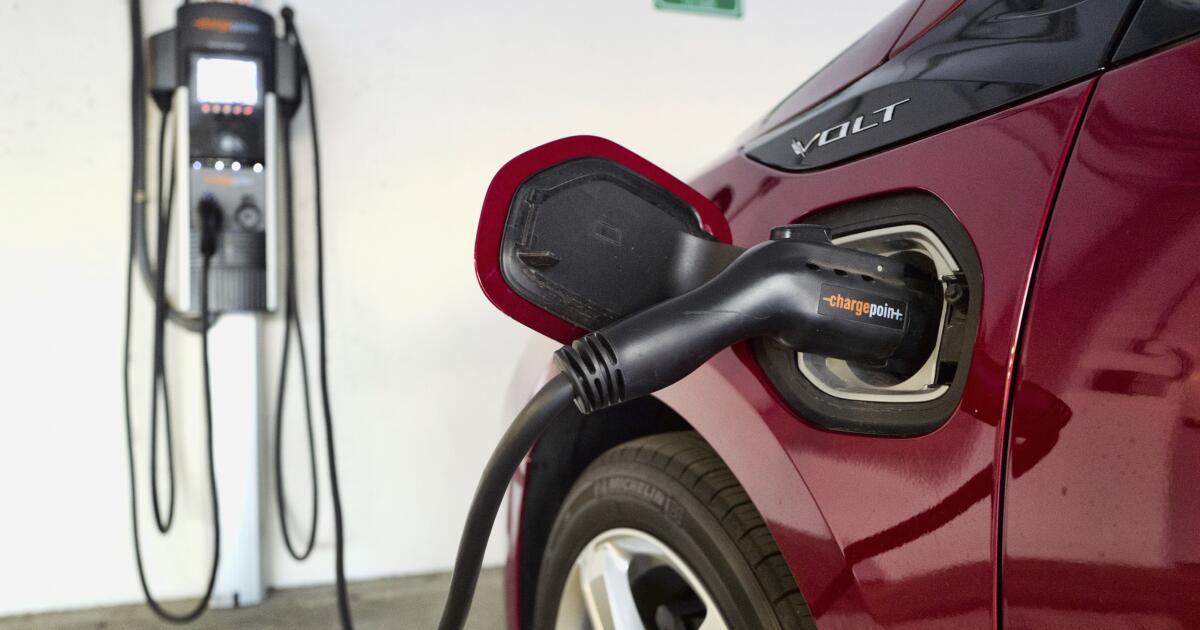 Business18 minutes ago
California is bringing back EV rebates. This is how to get one
-
 Entertainment25 minutes ago
Comedy saved her life. Now Teruko Nakajima’s ‘Made in America’ is saving others
-
 Politics33 minutes ago
Legal correspondent Paula Reid expected to join MS NOW after CNN departure
-
 Sports43 minutes ago
Four more Dodgers players selected as National League All-Stars
-

 World55 minutes ago
80 vials of fentanyl stolen from Rome hospital
-

 News1 hour ago
Crowds ordered to evacuate National Mall area as stormy weather slams DC

