World
Brussels, my love? Instability in Georgia overshadows EU enlargement


In this edition, we discuss how Georgian authorities have been moving the country away from the European Union and how the Western Balkans feel about an EU growth plan.
Our guests this week include Tinatin Akhvlediani, a research fellow with CEPS, Iliriana Gjoni, a research analyst with Carnegie Europe and Teona Lavrelashvili, policy expert at the Wilfried Martens Centre.
The panel reflected on the outcome of parliamentary elections in Georgia that saw the pro-Kremlin Georgian Dream come first. Thousands took to the streets to protest what they said was a rigged vote.
“The country that wants to be an EU candidate should not hold these types of elections”, Teona Lavrelashvili told the panel.
“There was rigging on election day that nobody knows how to prove”, said Titatin Akhvlediani.
Spanish MEP Antonio López-Istúriz White, who was observing the elections with a group of other MEPs, said he was “shocked” to hear the Prime Minister inform him of a plan to ban the opposition after the elections.
“This is something that, as you might understand, for democrats is shocking”, he told Euronews.
Another major talking point in Brussels this week: EU enlargement reports published on Wednesday, a few days after European Commission President Ursula von der Leyen’s whistle-stop tour of the Western Balkans.
The reviews detail progress in the ten countries waiting to join the EU — and it seems the Commission is unlikely to recommend opening accession talks with Georgia any time soon.
Watch Brussels, my love? in the player above.



Published on •Updated
Belgium’s three regions announced on Friday that they would introduce a road tax next year that foreign drivers transiting the country would also have to pay.
ADVERTISEMENT

ADVERTISEMENT
The country does not currently charge drivers to use its highways and the issue of introducing some form of payment has been debated for years.
“Everyone who uses our roads must contribute fairly to their maintenance,” said the transport minister for the southern Wallonia region, François Desquesnes.
Starting on 1 May 2027 drivers will need to register their vehicle and pay the road tax, with day passes available for drivers driving across the country.
An annual pass for a zero-emission car will cost €90 and up to €125 for higher polluting vehicles.
Road cameras that catch cars that haven’t paid for a pass will incur a fine of €70.
In Belgium, the individual regions are responsible for maintaining roads and motorways.
Currently, drivers can use almost all highways toll-free but the possibility of an introducing a charge has been under discussion for several years.
The revenue would be used for the operation and maintenance of the road network.
The proposed toll still needs final approval from the regions and European authorities.
According to the chairman of the liberal-conservative MR party, the government intends to offset the new toll by lowering other taxes for Belgians.
Additional sources • AFP

World
With US unleashing attacks, Iranian official threatens that the Islamic Republic will deliver a ‘hard slap’

NEWYou can now listen to Fox News articles!
An Iranian official warned that the Islamic Republic will deliver a “hard slap” while another blatantly threatened the U.S. that “if you strike, you’ll get hit,” according to automatic translations from the two men’s Persian-language posts on X.
Ebrahim Rezaei, whose profile on the social media platform indicates that he is a representative in Iran’s Parliament and the spokesperson for the National Security and Foreign Policy Commission, wrote in a post on X, “The martyred Khamenei taught us not to fear America and showed that ‘falsehood will perish.’ Await the hard slap from the Iranians.”
The speaker of Iran’s Parliament, Mohammad Bagher Ghalibaf, warned, “America still hasn’t learned that bullying and breaking promises are no longer cost-free. Let me put it plainly: if you strike, you’ll get hit. Don’t flail around pointlessly, or you’ll sink even deeper: the Strait of Hormuz will only open with ‘Iranian arrangements,’ not American threats.”
Both of the men issued their posts on Wednesday after U.S. Central Command (CENTCOM) announced more strikes against Iran.
“At the direction of the Commander in Chief, U.S. Central Command forces have started conducting additional strikes against Iran to further degrade their ability to threaten freedom of navigation in the Strait of Hormuz. The United States is holding Iran accountable for recent unjustified aggression against commercial shipping and civilian crews freely navigating a vital international waterway,” CENTCOM had noted in a post on X.
TRUMP SAYS IRAN CEASEFIRE DEAL IS ‘OVER’ AFTER NEW ROUND OF STRIKES
People gather at the Imam Khomeini Grand Mosalla for a farewell ceremony for Iran’s late Ayatollah Ali Khamenei on July 4, 2026, in Tehran, Iran. (Majid Saeedi/Getty Images)
The U.S. military later provided more information about the attacks.
“U.S. Central Command (CENTCOM) forces completed an additional round of strikes against Iran, July 8, to further degrade Iran’s ability to attack commercial shipping and innocent civilian mariners in the Strait of Hormuz,” CENTCOM noted on Wednesday night.
“U.S. forces struck approximately 90 Iranian military targets including air defense systems, coastal surveillance assets, missile and drone storage sites, naval capabilities, and military logistics infrastructure along Iran’s coastline. The latest strikes follow successful execution of offensive strikes in Iran the night before,” the announcement noted. “CENTCOM forces hit approximately 80 Iranian military targets July 7, including more than 60 Islamic Revolutionary Guard Corps small boats, to impose heavy costs for Iran violating the ceasefire by attacking three commercial vessels navigating the Strait of Hormuz.”
TRUMP DEMANDS END TO TRADE WITH KEY US ALLY, CALLS IT A ‘WASTED CAUSE’
President Donald Trump indicated on Wednesday that, as far as he was concerned, the U.S.-Iran Memorandum of Understanding ceasefire was “over.”
Kuwait and Bahrain have both reported coming under attack.
The Kuwait Army noted in a Thursday post on X, which was written in Arabic, “The Official Spokesman for the Ministry of Defense, Major General Saud Abdulaziz Al-Otaibi, stated that the armed forces detected, at dawn today, (3) ballistic missiles, (1) cruise missile, and (10) hostile drones within Kuwaiti airspace, which were successfully intercepted and dealt with.”
TRUMP SAYS ‘IRAN LIES AND CHEATS’ AS IRGC EMERGES AS DOMINANT FORCE IN NEGOTIATIONS WITH US
President Donald Trump speaks as he meets with NATO Secretary General Mark Rutte on the sidelines of the NATO summit in Ankara, on July 8, 2026. (SAUL LOEB / AFP via Getty Images)
CLICK HERE TO DOWNLOAD THE FOX NEWS APP
The Bahrain Defense Force noted in a post that was in Arabic, “The General Command clarifies that, with firm resolve and high combat readiness, the Bahrain Defense Force’s air defense systems confronted, intercepted, and destroyed several treacherous Iranian aerial attacks this morning, Thursday, July 9, 2026 CE.”
-

 World3 minutes ago
Belgium to introduce new road tax in 2027, even for transiting drivers
-
 News28 minutes ago
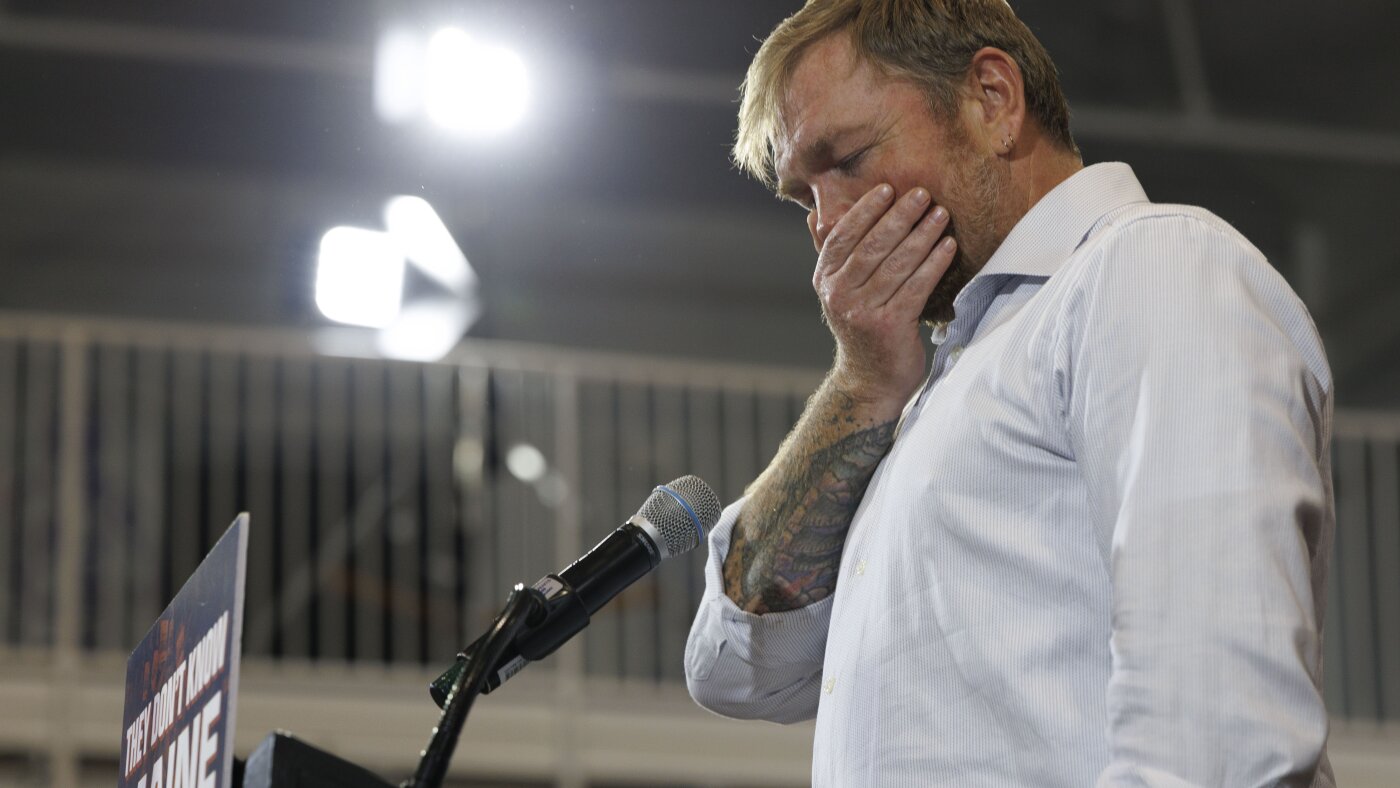
Graham Platner makes it official in Maine, submitting paperwork to leave Senate race
-

 Los Angeles, Ca2 hours ago
Knee irritation forces Shohei Ohtani out of Friday start, All‑Star game
-

 Detroit, MI2 hours ago
Detroit Evening Report: Waymo cars blocking first responders – WDET 101.9 FM
-

 San Francisco, CA2 hours ago
San Francisco Mayor Daniel Lurie Blocks Vacant Grocery Store Tax Proposal | KQED
-

 Miami, FL2 hours ago
Oregon Battling Miami, Mario Cristobal for Four-Star EDGE Recruit
-

 Dallas, TX2 hours ago
FC Dallas Forward Logan Farrington Inks Contract Extension
-

 Boston, MA3 hours ago
Red Sox face lengthy travel issues ahead of series vs. Mets

