World
Africa’s Christian Crisis: How 2025’s deadly attacks finally drew global attention after Trump’s intervention


NEWYou can now listen to Fox News articles!
JOHANNESBURG: Millions of Christians in sub-Saharan Africa (SSA), spending Christmas under the reported threat of persecution, kidnapping, sexual violence and in some cases, death from Islamist militants, have seen Friday’s U.S. strikes on Islamic State militants in Nigeria as a real sign that President Trump is serious in his efforts to stop the killing of Africa’s Christians.
Over 16 million Christians are estimated to have been displaced and ripped from their homes across the region. The alleged release of 130 kidnapped schoolchildren in Nigeria this week has done little to reduce fears, as many on the continent try to worship at Christmas.
But this year, Fox News Digital has highlighted the catastrophe from Africa on multiple occasions. The situation led to senior members of Congress, including Sen. Ted Cruz, R-Texas., Rep. Chris Smith, R-N.J., and ultimately, President Donald Trump’s threats and now actions have shone strong light on the violence.
LAWMAKERS SOUND ALARM ON ‘DEADLIEST PLACE ON EARTH TO BE A CHRISTIAN’ AS NIGERIA VIOLENCE ESCALATES
In Africa this Christmas, so far there’s reportedly little sign of improvement. “The militant Islamist onslaught across SSA is a catastrophe of global proportions unfolding before us,” Henrietta Blyth, CEO of Open Doors UK & Ireland, told Fox News Digital this week.
Open Doors is a global Christian charity supporting Christians persecuted for their faith.
Blyth continued, “the last year has seen a non-stop stream of reports from sub-Saharan Africa. (including) reports of militant Islamist groups brutally attacking, among others, defenseless Christian communities.”
“At Open Doors, we have been sounding the alarm through our Arise Africa campaign. We’ve prayed repeatedly that the campaign of terror will reach public awareness.”
Referring to Nigeria and the thousands of Christians reported to have been killed there each year and the speeches, articles and posts against the violence, Open Doors’ Blyth states, “There is no sign that this has abated in 2025”.
Members of St Leo Catholic Church hold a procession to mark Palm Sunday in Ikeja, Lagos, Nigeria, on April 13, 2025. (Adekunle Ajayi/Getty Images)
“The lack of global outrage and action on this issue is a moral disgrace,” South Africa’s Chief Rabbi, Dr. Warren Goldstein, told Fox News Digital. He added, “It seems as if black lives do not matter if they are murdered by Islamists in Africa. The persecution of Christians in Africa needs to be seen in its global context. It is part of a multi-continental jihadi war on the ‘infidels’ — Jews and Christians — and on Western values.”
He continued “it is a world war, with Israel at the epicenter of the fire of the jihadi forces of Iran, Hamas, Hezbollah and others. The Islamist war on Christians in Africa is another front of this world war that stretches from Sudan in the north to Mozambique in the South.”
TRUMP ADMIN TARGETS ANTI-CHRISTIAN VIOLENCE WITH NEW VISA CRACKDOWN POLICY FOLLOWING NIGERIA ATTACKS
Fox News Digital has highlighted where persecution has hit hardest in Africa in 2025:
NIGERIA
According to Open Doors, the continent’s most populous nation saw the worst persecution in Africa in 2025, with ‘non-stop stories of deadly attacks and kidnappings’ across Nigeria’s north and Middle Belt — a litany of villages torched, citizens raped, abducted, shot and beheaded.
Pope Leo XIV spoke out this year against killings attributed to Muslim Fulani tribesmen in Nigeria’s Benue State in June, saying “Some 200 people were murdered, with extraordinary cruelty.”
Christians hold signs as they march on the streets of Abuja during a prayer and penance for peace and security in Nigeria in Abuja on March 1, 2020. The Catholic Bishops of Nigeria gathered faithful as well as other Christians and other people to pray for security and to denounce the barbaric killings of Christians by the Boko Haram insurgents and the incessant cases of kidnapping for ransom in Nigeria. (Photo by Kalo Sulaimon/AFP via Getty Images)
Bishop Wilfred Anagbe’s Makurdi Diocese in north-central Nigeria is almost exclusively Christian. But the constant and escalating attacks by Islamist Fulani militants led him to testify at a congressional hearing in Washington in March. Back in Nigeria, he was threatened, and some 20 of his parishioners killed.
THE DEMOCRATIC REPUBLIC OF THE CONGO (DRC)
A screen shot shows villagers inspecting the damage left by jihadi terrorists who killed 49 Christians in DR Congo in late July. (Open Doors)
The war-torn country is 95% Christian, yet the faithful are being targeted by jihadists. In February, terrorists linked to Islamic State from the so-called ADF group, who want the eastern part of the country to become a Muslim caliphate, rounded up 70 Christians and reportedly beheaded them — in a church. In September, at least 89 Christians were reportedly slaughtered by jihadists at a funeral and in surrounding fields.
SUDAN
Sudan’s estimated 2 million Christians make up an estimated 4% of the country’s population,
Like the rest of Sudan’s people, they face chronic food shortages and the horror of a yearslong war. But Christians are also allegedly singled out for discrimination and persecution by both sides in the conflict.
The Evangelical church in Omdurman after being bombed even though it was not in a combat zone or used by any warring forces. (Open Doors)
A senior Sudanese church leader told Fox News Digital that in the Darfur city of El Fasher, that “now Christians are eating animal feed and grass. No wheat, no rice, nothing can get in.”
CAMEROON
A civil conflict and weak governance have allowed armed militants to step into the vacuum of law and order, Open Doors reported. In the far north, Boko Haram and Islamic State West Africa Province regularly swoop into villages in overnight raids, killing, abducting and destroying. Thousands of people have fled their homes for displacement camps.
Ali, a villager, said, “It never ends. I want it to end, but it doesn’t. We must sleep in the mountains for safety.”
MOZAMBIQUE
Situated in the southwest of the continent, Mozambique has a Christian population of 55%. Islamic State Mozambique is causing havoc in the far north, targeting Christian communities, burning their churches and destroying homes. The killings have multiplied this year, and thousands more are fleeing their homes, joining more than 1.3 million who have already been displaced.
Christian villages targeted in Mozambique (Middle East Media Research Institute)
CLICK HERE TO DOWNLOAD THE FOX NEWS APP
In one mass attack on the village of Napala in October, Open Doors reported militants killed 20 Christians and displaced some 2,000. A local pastor described how four elderly sisters were tied up and burned to death inside a house.
On the airstrikes in Nigeria, Open Doors’ Henrietta Blyth told Fox News Digital, “a military operation like this is not going to provide any sort of quick fix for decades of violence. The Nigerian government must pursue lasting solutions that ensure peace, protection of civilians and religious freedom for everyone.”
Chief Rabbi Goldstein concluded, “The West can only win this war if it can find the moral clarity to call it by its name and see all the theaters of war as part of the same fight.”



new video loaded: Humpback Whale Stranded Off German Coast Is Freed by Rescuers

By Axel Boada
March 27, 2026

NEWYou can now listen to Fox News articles!
A Russian man convicted of assaulting a woman in London in an attack witnessed by Barron Trump, President Donald Trump’s youngest son, on a video call was sentenced to four years in prison by a London court on Friday.
Matvei Rumiantsev, 23, an MMA fighter, was convicted by a jury on Jan. 28 of assault with bodily harm but was acquitted of rape and choking charges. He was also convicted of perverting the course of justice stemming from a letter he sent the woman from jail asking her to retract her allegations.
After the assault, Rumiantsev admitted he was jealous of his girlfriend’s friendship with the 19-year-old son of President Donald Trump.
BARRON TRUMP REPORTEDLY SAVED WOMAN’S LIFE AFTER WITNESSING VIOLENT ASSAULT ON FACETIME CALL
Barron Trump attends inauguration ceremonies in the U.S. Capitol Rotunda on Jan. 20, 2025, in Washington, D.C. (Kevin Lamarque/Pool/Getty Images)
“Your lack of insight and empathy was apparent at trial,” Justice Joel Bennathan said. “You continue to try to blame the complainant for everything that has happened.”
Trump told investigators he had placed a late-night FaceTime call to the woman, whom he had met on social media, and had been startled when the call had been briefly answered by a shirtless man on Jan. 18, 2025.
“That view lasted maybe one second and I was racing with adrenaline,” Barron Trump said. “The camera was then flipped to the victim getting hit while crying, stating something in Russian.”
BARRON TRUMP SPOTTED ON NYU CAMPUS FOR FIRST TIME SINCE INAUGURATION
Barron Trump looks on ahead of the Presidential Inauguration of Donald Trump at the Rotunda of the U.S. Capitol in Washington, D.C. on Jan. 20, 2025. (KEVIN LAMARQUE/POOL/AFP via Getty Images)
Barron Trump called the police in London.
“It’s really an emergency … I’m calling from the U.S., uh, I just got a call from a girl, you know, she’s getting beat up,” he told an operator.
Police responded to the address and arrested Rumiantsev, a London-based receptionist.
At his trial at Snaresbrook Crown Court, Rumiantsev was acquitted of rape and choking related to the attack, as well as a separate rape and assault allegation from November 2024.
His attorney, Sasha Wass, said that Trump wasn’t aware the woman had a boyfriend and questioned how much he could have seen in just a few seconds of video.
Barron Trump watches as his father, President Donald Trump attends an indoor Presidential Inauguration parade event at Capital One Arena, in Washington, Jan. 20, 2025. (AP Photo/Evan Vucci, File)
CLICK HERE TO DOWNLOAD THE FOX NEWS APP
Trump never testified in the case. However, the judge praised him for his quick-thinking actions.
“Mr, Trump properly and responsibly, despite being in the United States, made sure the emergency services here were called, and he told them what he had seen,” he said.
The Associated Press contributed to this report.

Published on
EU lawmakers have overcome a key political hurdle in the negotiations of digital euro, making the project closer to approval, according to a draft text seen by Euronews.
ADVERTISEMENT

ADVERTISEMENT
The Parliamentary rapporteurs involved in the legislation have found an agreement on the design of the digital euro, which will be able to function both online and offline.
The digital euro would be an electronic form of cash issued by the European Central Bank, designed to sit alongside banknotes and the payments services offered by commercial banks.
It has taken on new political weight as economic tensions between the EU and the US sharpen the debate over Europe’s reliance on American payment giants, such as Visa and Mastercard.
Under the European Commission’s proposal, digital euro users would have a wallet for both online and offline payments, with transactions designed so they are not trackable.
The situation in Parliament changed on Wednesday evening, when the centre-right politician Fernando Navarrete, who is the leading rapporteur on the file, announced the withdrawal of his position to reduce the scope of the digital euro to offline use only.
His position blocked the advancement of negotiations for months, jeopardising the whole legislative process, according to three sources familiar with the negotiations.
The political deadlock has pushed EU leaders to accelerate progress on the digital euro. At the European Council meeting on 19 March, they set a goal to have the digital euro legislation approved by the end of 2026.
With the Council, representing EU countries, having already adopted its position, the European Parliament is now the only institution left to advance the law.
“Thanks to our amendments and firm stance, we have finally broken the political deadlock on the digital euro. The distinction between online and offline has been removed, and it is now established as a single payment system,” Pasquale Tridico, the rapporteur for The Left, told Euronews.
However, lawmakers still need to agree on two key aspects: the “hold limits” and the “compensation.”
The hold limits determine the maximum amount a user can store in a digital euro wallet, while compensation sets out a model for reimbursing commercial banks that provide digital euro services.
Although negotiations are not yet complete, the text is expected to be voted on in the Parliament’s economy committee before the summer, according to a source familiar with the matter.

Pa. House committee advances bill to require radon testing and mitigation in schools

Think you’re middle class in Rhode Island? Here’s the income range

Where to watch South Carolina vs. Oklahoma in March Madness Sweet 16: Time, TV Channel

Coaches select all-state boys basketball players from Class AA, A & B

What are the Titans’ top remaining needs ahead of 2026 NFL Draft?

Florida High School Football Rankings: Top 25 teams – Oct. 21

How old is Bo Nix? What to know about Oregon quarterback ahead of 2024 NFL Draft

Cleary's 21 help Le Moyne down Central Connecticut State 69-64 in OT

99th annual Pony Swim held in Virginia

Indiana Members Credit Union announced as new anchor tenant at Bottleworks District

Dem senators dodge crucial question on illegal alien accused of killing Chicago college student

EU Parliament unblocks key political hurdle in digital euro talks
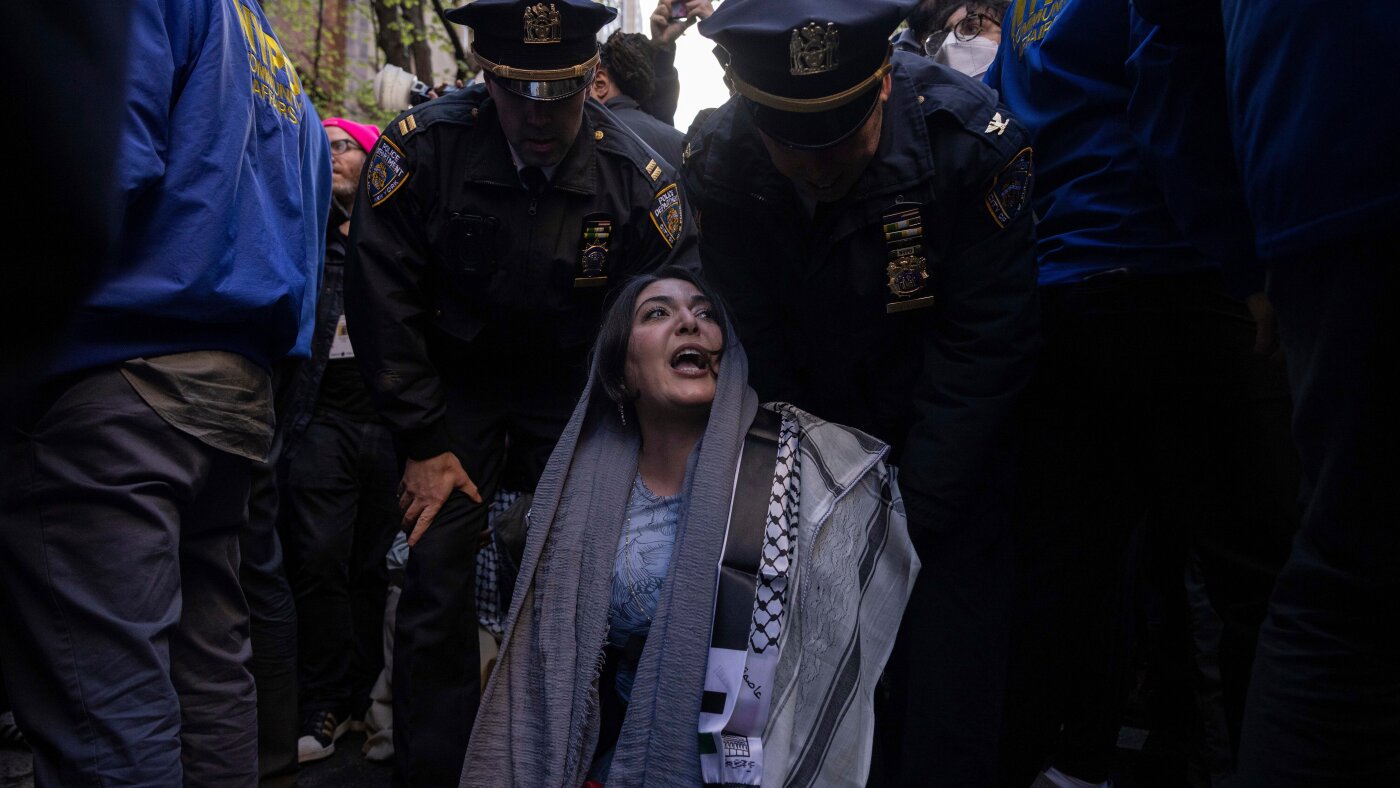
Man arrested in plot to firebomb Palestinian activist’s home after undercover op

WATCH: Senate hearing goes silent after Angel Father confronts top Dem over daughter’s death

US diplomat Marco Rubio denounces settler violence, tolls in Hormuz strait
-

 Detroit, MI1 week ago
Drummer Brian Pastoria, longtime Detroit music advocate, dies at 68
-

 Movie Reviews1 week ago
‘Youth’ Twitter review: Ken Karunaas impresses audiences; Suraj Venjaramoodu adds charm; music wins praise | – The Times of India
-

 Sports7 days ago
IOC addresses execution of 19-year-old Iranian wrestler Saleh Mohammadi
-

 New Mexico6 days ago
Clovis shooting leaves one dead, four injured
-
 Business1 week ago
Disney’s new CEO says his focus is on storytelling and creativity
-

 Tennessee5 days ago
Tennessee Police Investigating Alleged Assault Involving ‘Reacher’ Star Alan Ritchson
-

 Technology6 days ago
YouTube job scam text: How to spot it fast
-

 Texas1 week ago
How to buy Houston vs. Texas A&M 2026 March Madness tickets