West
Yosemite National Park employee targeted in brutal rape incident: officials

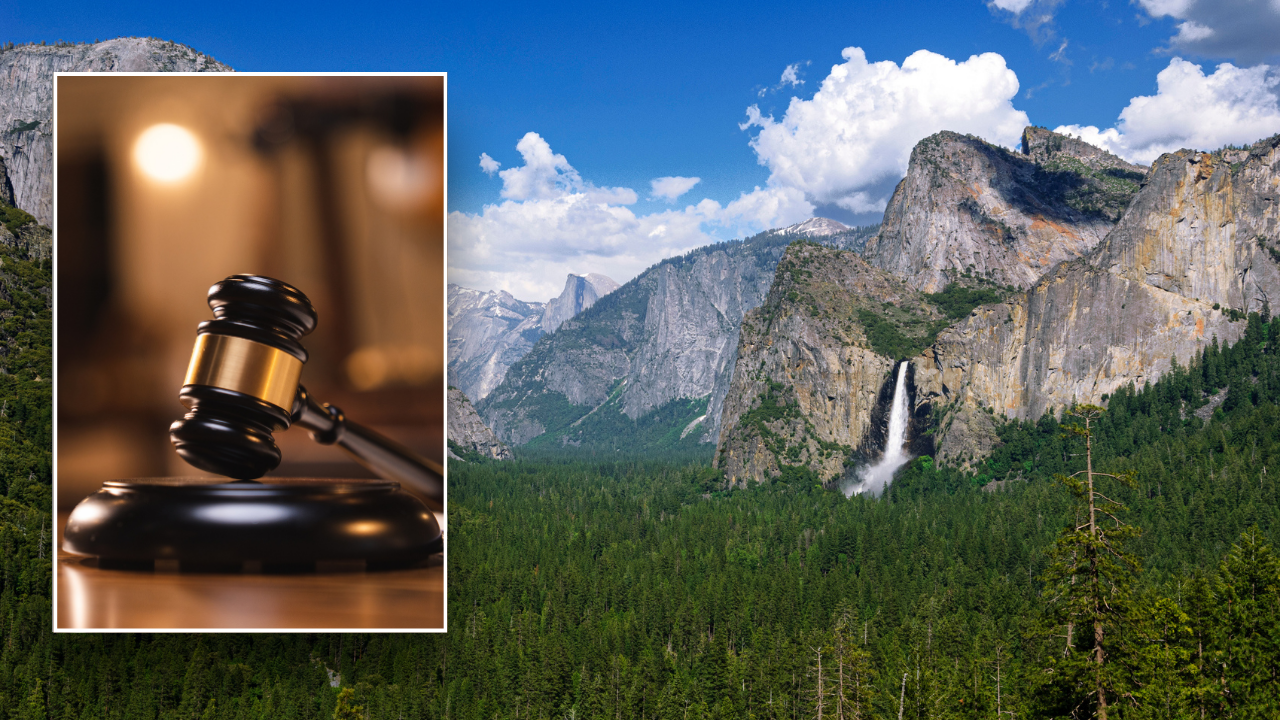
Federal authorities recently announced the indictment of a suspect who is accused of raping a Yosemite National Park employee last month.
In a press release published by the U.S. Attorney’s Office, Eastern District of California on Thursday, authorities named Nathan Baptista as the suspect. The 36-year-old has been charged with one count of aggravated sexual abuse after an indictment by a grand jury on Thursday.
Authorities are accusing the suspect of sexually assaulting and choking a female Yosemite National Park employee at the end of May.
“According to court documents, on May 31, 2024, Baptista forcibly raped and strangled a female park employee after meeting her that night,” the press release read.
YELLOWSTONE TOURIST SENTENCED TO 7 DAYS IN JAIL OVER ‘DANGEROUS’ CAUGHT-ON-CAMERA INCIDENT
A suspect has been indicted for allegedly raping a park employee at Yosemite National Park in California. (iStock)
“This case is the product of an investigation by the National Park Service,” the statement added. “Assistant U.S. Attorney Arin C. Heinz is prosecuting the case.”
According to court documents obtained by Fox News Digital, Baptista was a Yosemite Hospitality employee at the time of the incident. The rape took place at a house that the suspect shared with his co-workers.
“[The victim] reported that when she and a friend were walking home they stopped at the house the subject (“Nate”) shares with other Yosemite Hospitality employees… [the victim] indicated that she was in the living room talking with the subject, nobody else was around, and that is when he assaulted her,” the documents described.
TOURISTS FILMED BRAZENLY DESTROYING ANCIENT ROCK FORMATIONS AT NEVADA’S LAKE MEAD: ‘SEND THEM TO JAIL’
A welcome sign is seen at the Yosemite National Park in California, United States on December 13, 2023. (Tayfun Coskun/Anadolu via Getty Images)
“The subject was physically violent, and she had visible bruising from the incident.”
The maximum punishment that the suspect faces is life in prison and a $250,000 fine. The U.S. Attorney’s Office added that Baptista’s punishment “would be determined at the discretion of the court after consideration of any applicable statutory factors and the Federal Sentencing Guidelines, which take into account a number of variables.”
Authorities are actively investigating the incident. No additional details are known at this time.
The setting sun casts light and shadow across the face of Half Dome in Yosemite National Park on Aug. 4, 2021. (Mark Hume/Chicago Tribune/Tribune News Service via Getty Images)
Fox News Digital reached out to the National Park Service for additional information, but did not immediately hear back.
Read the full article from Here


CASPER, Wyo. — Wyoming ranks 29th in the nation for overall health, according to the America’s Health Rankings 2025 Annual Report. That middling score hides a sharper story, and Wyoming voters have the power to change it.
Wyoming performs well on education and income equality, but it ranks 49th in cancer screening and 43rd for its uninsured rate.
At the same time, voter turnout sits at just 56.4%, below the national average, on ballots that will decide who can bridge the gap.
Those things are related, said Dr. Gabriela Alvarado, a health policy researcher at the University of Wyoming and former RAND Corp. analyst.
“All the sources are kind of saying the same thing: Wyoming health is not where it should be,” Alvarado said.
While lawmakers write the laws that shape Wyoming’s health outcomes, voters hold the power to change them. Whether it’s increasing preventative care, funding the 988 hotline, preventing maternity deserts or shortening the distance to the emergency room after a workplace accident, voting could be the difference between life and death.
Ripple effects of policy
To vote smarter, citizens need to know the candidates, their plans to tackle the state’s healthcare challenges, and how those plans translate to policy.
The connections aren’t always clear. The cancer screening rate, for instance, is tied to low HPV vaccination rates and Title X–funded reproductive health clinics, Alvarado said.
“Those clinics screen for cervical cancer and administer the vaccine that prevents it,” she said. “Cultural discomfort deepens the gap, because Americans associate the HPV vaccine with sex rather than cancer prevention.”
Wyoming’s low rates of preventive care are a policy outcome.
Wyoming is one of only 10 states that has not expanded Medicaid, a decision lawmakers have upheld session after session, excluding roughly 9,000 residents who earn too much for the state’s narrow program but too little to afford private coverage.
“That ripples over to all these other indicators,” Alvarado said. “If you don’t have insurance, you’re not going to get a colonoscopy or other forms of cancer screening.”
Dr. Beth Robitaille sees where those people end up. Robitaille is a family physician and interim chief medical officer at the Educational Health Center of Wyoming, a federally qualified health center and residency program with clinics in Casper, Cheyenne and Laramie.
She said her clinics saw more than 60,000 provider visits last fiscal year, and roughly 20% of those patients are uninsured.
Uninsured patients who skip routine care because they can’t pay for it, Robitaille said, arrive only when their conditions have advanced. An uninsured diabetic who can’t afford checkups or insulin develops uncontrolled blood sugar. That can lead to a foot wound, then an infection.
“Those infections often end with amputation, which requires hospitalization,” she said. “That hospitalization and treatment become uncompensated care for the hospital.”
Those unpaid bills added up to $141 million in 2024–25, according to the most recent report by the Wyoming Hospital Association.
Who pays when hospitals fail?
Hospitals recoup the losses by charging insured patients more, Robitaille said. Taxpayers who oppose Medicaid expansion as a cost-saving measure are already covering the bill through premiums instead, which impact the broader community.
“The reality is we’re still paying for it,” Robitaille said. “It’s just in a different manner.”
Her clinic writes off 80%–85% of costs for its lowest-income patients through a sliding fee scale, turning a $140 visit into a $15 charge. Federal funding offsets only part of that.
Robitaille pushed back on a common assumption about who’s uninsured.
“There’s a misconception that it’s all these people taking advantage of the system,” she said. “In 25 years of caring for this population, I find that they are often employed, self-employed or working for small businesses that can’t afford private insurance.”
Michael Shepherd, a political scientist who studies how health outcomes shape politics, said uncompensated care is a leading cause of rural hospital closures nationally.
“That’s everybody’s hospital,” he said. “That’s not just the people who are on Medicaid.”
The stakes are high in Wyoming, a largely rural state in which farming and ranching — among the country’s most dangerous jobs — depend on nearby emergency rooms when workplace accidents strike. Rural residents already travel twice as far as urban patients for care. In life-or-death situations — such as strokes and heart attacks — every mile and minute counts.
Strained hospitals cut services before they close, Alvarado said, and obstetrics usually goes first.
Nearly 60% of rural hospitals nationwide no longer deliver babies. Medicaid pays for nearly half of rural births, and federal cuts under the One Big Beautiful Bill Act are expected to leave about 10 million more people uninsured by 2034, per the Congressional Budget Office.
Yes, but…
The same law created a $50 billion Rural Health Transformation Program to soften the blow, though researchers estimate it covers only about 37% of the Medicaid funding rural areas stand to lose.
Wyoming’s share is substantial. The state was awarded $205 million in the program’s first year, according to reporting by WyoFile. That’s the second-largest per-capita award in the nation, behind Alaska, and providers can apply for the funds through Aug. 3.
Eric Boley, president of the Wyoming Hospital Association, told Oil City News that those one-time funds have the potential to be “transformational for struggling hospitals.”
“We may be able to use the funds to strengthen OB-GYN and emergency services,” he said. “Studies show that, with heart attack and stroke, getting care within an hour significantly improves your chances of making a full recovery.”
A vicious cycle
So why don’t bad outcomes produce different votes? Shepherd calls the answer the “rural health spiral.”
“Poor outcomes breed resentment toward government, resentment elects candidates who campaign on it, and those candidates pass policies that worsen the outcomes,” he said. “Instead of voters rallying to correct that course, they often double down on the course that they’re on, and things continue to spiral out of control.”
Alvarado worries that voters aren’t connecting policies to outcomes.
“Legislators are there to serve their constituents,” she said. “If we tell our legislators what it is we care about, they know that there’s votes attached to that.”
Breaking the cycle
The mechanism to repair a broken system is the ballot.
Alvarado urged voters to treat elections as a “window of opportunity” when a known problem, an available solution and political will align.
“Whoever wins decides what the Legislature takes up,” she said.
Robitaille framed the choice as a question.
“Is healthcare a right or a privilege?” she asked. “Depending on where you as an individual stand on that question would affect who you vote for.”
Her advice is to go beyond the commercials, social media posts and yard signs to learn where candidates actually stand, because healthcare touches everyone eventually.
“We all need healthcare at some point, or our loved ones do,” she said. “So it affects everybody.”
Related
San Francisco, CA
I’m a writer who left LA for an AI startup in San Francisco. It was like stepping into a whole new world.

I moved from Los Angeles to San Francisco because of a cold DM on X.
I grew up in the LA suburbs, and after attending college there I built my career in journalism across the country, first covering local news, and then crypto. I liked my comfortable life with friends and family.
Then in February, the chief of staff at Corgi, the AI insurance startup that recently went viral for its seven-day workweek, messaged me on X to ask if I would be interested in a role. I’d never heard of Corgi, but I’d seen a lot of people in crypto pivot to the AI industry and wanted to check it out.
A week later, I flew to San Francisco to visit the team, and in March, I joined them as their Head of Brand. My entire life changed in an instant.
Moving from Los Angeles to San Francisco felt like stepping into a completely different value system

Courtesy of Erika Lee
In San Francisco, there’s a strong sense that AI is transforming the city and a level of intensity that I don’t think people outside the Bay Area fully appreciate. Everyone here believes they’re early to something massive.
Everyday, I meet people who’ve moved across state and city lines to work at startups in San Francisco. Like me, they’re willing to make extraordinary sacrifices for the possibility of being part of the next OpenAI or Anthropic.
In LA, one of the first questions people would ask me at events was, “What’s your Instagram?” Conversations often orbited around who you knew, what parties you were invited to, and how well you’ve curated yourself online.
In San Francisco, online curation still matters, but in a different way. People ask for your LinkedIn or X account. Or sometimes they skip social media entirely and ask, “What are you building?” Nobody seems particularly interested in whether you’re fashionable, attractive, or influential online. The currency is ideas, fundraising, and products.
Neither city is better; they optimize for different things. For now, I’m happy to be working with my head down in San Francisco, where I’m more productive and motivated than I was in LA.
My journalism background was more valuable than I expected
Coming from journalism, I assumed I’d be the least technical person in almost every room.
When you think of Silicon Valley, you think of engineers and founders who’ve raised millions of dollars. Conversations move quickly from product roadmaps to fundraising. At times, I wondered whether someone with an entirely different skillset really belonged in this environment.
Over time, I realized I was wrong. In the age of AI, companies compete on narrative, taste, and making people care. Storytelling is becoming infrastructure. OpenAI has highlighted the enormous opportunity for new forms of creative and narrative work emerging alongside AI, while hiring roles dedicated specifically to shaping the stories that help executives and customers understand the technology.
Rippling is hiring a Head of Storytelling to build its editorial voice and point of view, and Notion now has an entire Storytelling function within the company. In a world where everyone has access to the same models, the advantage increasingly belongs to the people who can synthesize ideas, understand culture, create meaning, and tell compelling stories. The humanities aren’t becoming less valuable in the AI era, they may be becoming more valuable than they have been in decades.
Courtesy of Erika Lee
Since journalists can identify what matters in a sea of information and explain complicated topics clearly, my experience is incredibly useful for writing, editing, and shaping content about Corgi’s brand.
Changing industries doesn’t always mean leaving behind the skills you love most. Sometimes, it means finding a new way to use them.
I’m glad I moved despite the emotional trade-offs
I still miss many things about Los Angeles, like being close to my family, familiar neighborhoods, and the comfort of a city where I always knew the best spots to meet friends for coffee. LA shaped who I am, and I don’t think anywhere will ever replace it.
But moving to San Francisco has stretched me in ways staying comfortable never could have. I didn’t just change address, I moved into an entirely different world. I’m surrounded by people who genuinely believe they’re living through one of the most consequential technological shifts of our generation.
Whether history proves them right remains to be seen, but as a journalist used to documenting periods of change from the outside, I’m glad I’m experiencing this defining moment where the action is happening.
Like many others, I’m willing to uproot my life to be part of this once-in-a-lifetime shift. Even with the uncertainty, long hours, and emotional trade-offs that came with leaving my life in Los Angeles behind, I’m grateful I said yes to that cold message on X.

Seattle – Our pleasant weekend continues as afternoon highs remain a few degrees cooler than normal. Onshore flow will keep many along the coastal regions in the low 60s, while the interior lowlands warm into the 70s to close out our weekend.
Onshore flow will continue to keep afternoon highs cooler than normal.
Stronger onshore flow, along with a weak disturbance to our north will increase clouds on Sunday morning with a few spots potentially seeing a stray light shower. Clouds will quickly begin to clear by the afternoon with sunnier skies by midday.
Sunday will begin cloudy with sunnier skies by the afternoon.
A stretch of warmer weather is heading our way beginning Tuesday when we warm into the 80s, and it sticks around into the upcoming weekend.
A stretch of 80 degree days are ahead!
-

 West Virginia7 minutes ago
DEP headquarters renovation project making progress in Kanawha City – WV MetroNews
-
Wyoming9 minutes ago
Health and elections: Vote like your life depends on it
-

 Crypto15 minutes ago
Bitcoin’s 14th Difficulty Reset Slashes Mining Pressure by 6.7 Trillion
-

 Finance21 minutes ago
PERSONAL FINANCE: Finance 101 — the lessons every college-bound kid should learn now
-

 Fitness24 minutes ago
What Fitness Experts Want GLP-1 Users to Know About Exercise | NewBeauty
-

 Movie Reviews37 minutes ago
Movie Review: Black Teen faces the trials of being a “Mississippi Scholar”
-
World44 minutes ago
Disney’s live-action ‘Moana’ crashes to shore with an underwhelming splash at the box office
-

 News52 minutes ago
Map: 4.1-Magnitude Earthquake Shakes Southern California


