Wyoming
Wyoming lawmakers punt on protecting electric utilities from wildfire liability – WyoFile


A panel of lawmakers punted Monday on an effort to address the rising cost of electricity in the wake of utility sparked wildfires, which industry officials describe as an existential threat. The multipronged legislation, which sought to incentivize power companies to make wildfire mitigation upgrades in exchange for limits on damage claims, was too mired in complex amendments to secure the votes needed to move forward.
The Minerals, Business and Economic Development interim committee tabled the draft Public utilities-wildfire protection plans and liability measure, which means it will not be introduced as a committee-sponsored bill in the upcoming legislative session that begins in January. A group of stakeholders that crafted the bill, however, will likely seek individual sponsors, according to one member.
Climate-driven wildfire and utilities
Wildfires, driven by human-caused climate change, have become much more frequent and intense, particularly in the West. The region’s vast network of electric power lines and other energized facilities is aging and it simply wasn’t built to safely operate in an ever warmer and drier climate, according to industry experts.
Utilities have sparked devastating fires in California, Hawaii and Texas in recent years, prompting hundreds of lawsuits seeking enormous payouts. PacifiCorp, which operates as Rocky Mountain Power in Wyoming, faces tens of billions of dollars in claims for its role in wildfires that raged in Oregon in 2020.
Some industry leaders in Wyoming say it’s only a matter of time before a similar situation plays out here. “We’re just one wildfire away from bankruptcy if we don’t have liability relief,” Wyoming Rural Electric Association Executive Director Shawn Taylor told WyoFile earlier this year.
Meantime, utilities face another potentially crushing financial strain in the form of soaring insurance costs. Wyoming’s largest electric utility, Rocky Mountain Power, cites skyrocketing wildfire liability in its current bid to increase rates by 14.7%, claiming insurance premiums for its Wyoming operations have risen 1,888% over the past five years.
“What has happened over the last few years is that wildfire has become a real existential threat, not just for the investor-owned utility, but all utilities,” Rocky Mountain Power Vice President of Government Affairs Thom Carter told the committee.
Legislative remedies
The basic legislative concept being considered in Wyoming, which is borrowed from similar measures in other western states, would restrict what wildfire victims can claim damages for when an electric utility sparks a blaze. To qualify for the protection, a utility would be required to invest in and maintain more stringent wildfire mitigation strategies. While the cost of those upgrades would be passed on to customers, they’re intended to stem rising insurance rates, according to proponents.
“This is not intended to be a dollar-for-dollar cost reduction,” Wyoming Office of Consumer Advocate Administrator Anthony Ornelas said in support of the bill. “To us, the real benefit here that we’re trying to do is to put some legal protections around … liability exposure.”
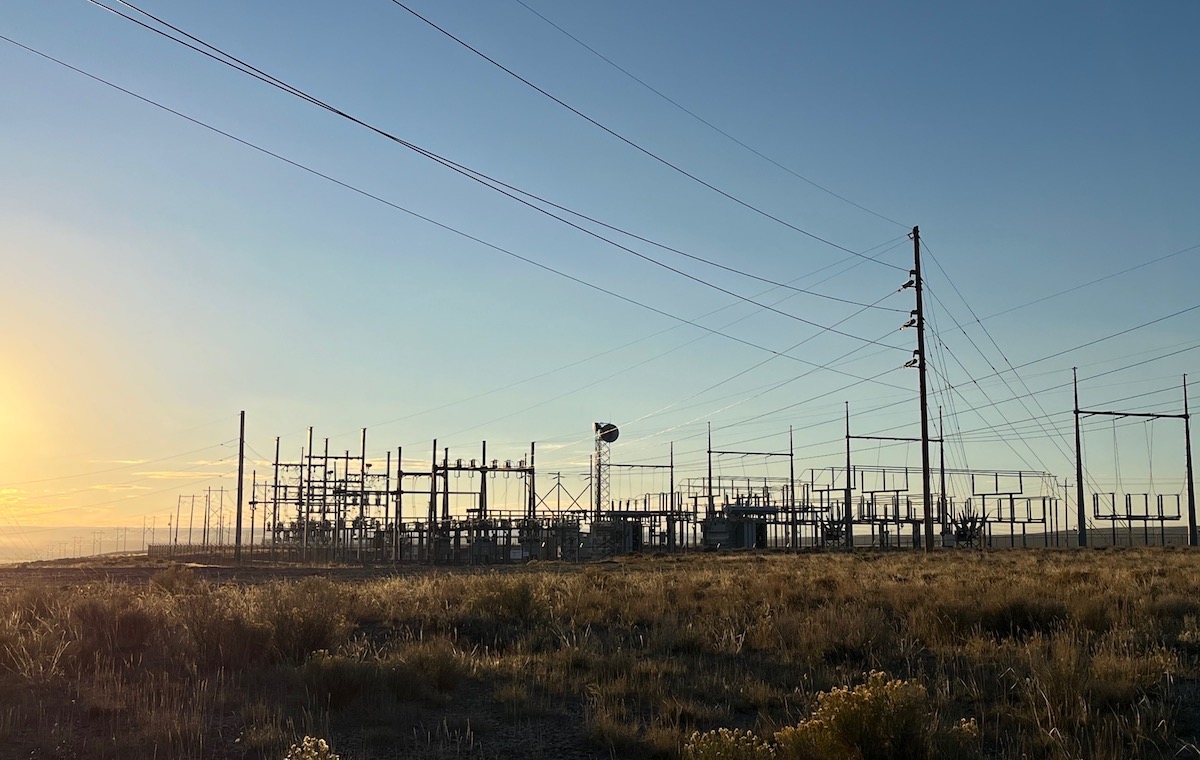
Though many committee members agreed the Legislature should provide some protection for utilities from what could be costly damage claims, the bill draft was marked up with too many complicated amendments to move forward, some lawmakers said. Others worried the ultimate goal of the bill — to protect utilities from expensive litigation and to stem rising insurance costs — remains speculative.
“The economics are not aligning in my mind,” Sen. Chris Rothfuss (D-Laramie) said. “I see where it’s really good for the utilities. I’m struggling to see how it’s really good or even marginally good for our ratepayers.”
Though Utah passed a similar bill in 2020, it’s difficult to calculate the net benefit of avoided damage claims and insurance costs versus ongoing investments in wildfire prevention, Carter of Rocky Mountain Power told the committee.
The Wyoming Trial Lawyers Association also warned that the bill may go too far in removing legal remedies for wildfire victims.

For example, a person or entity would not be able to sue a utility that is determined by the Wyoming Public Service Commission to have “reasonably” implemented and maintained a wildfire mitigation plan. But that determination is more suited to be determined by a court or jury, not the public service commission, according to Sarah Kellogg, who serves as the association’s board of directors president.
“This legislation is essentially taking the question of reasonableness away from a jury, after the fact, and giving it to a governmental administrative body to decide reasonableness through a process that has not been laid out at all,” Kellogg told the committee.
“Wyoming juries are conservative people, they’re reasonable people,” Kellogg continued. “So taking this question away from Wyoming people and Wyoming juries — and in an adversarial setting — is not going to be good for Wyomingites.”
In addition to limiting utilities’ liability, several western states have acknowledged rising insurance costs and the need for major spending to prevent utility sparked wildfires. California authorized three utilities there to tap ratepayers for some $27 billion and has created an industrywide fund for such costs.
BEFORE YOU GO… If you learned something from this article, pay it forward and contribute to WyoFile. Our work is funded by readers like you who are committed to unbiased journalism that works for you, not for the algorithms.



Like many rabbit holes, it all started with a simple question.
About two years ago, Jaye Wells was at a small gathering in Cody when the topic of the 2026 centennial anniversary of the Dude Ranchers’ Association came up.
Wells asked how many dude ranches in the country had a comparable 100-year legacy to the Cody-based member organization.
“Nobody in the room knew,” said Wells, co-founder of the True Ranch Collection, with a portfolio of dude ranches around the West, including the Blackwater Creek Lodge and Guest Ranch in Cody.
Thus began a yearslong and, at times laborious, project of tracking down the number of dude ranches in operation since 1926, which are commemorated in “100 Years of Dude Ranching,” a coffee-table-style book published by Wells in December.
Though it took a lot of digging through records at the Wyoming Historical Society, old newspaper clippings and cross-referencing family records, the team behind the book finally identified a fitting answer to Wells’ question.
Of the 94 dude ranches that are members of the association today, 26 were in operation and accepting guests a century ago.
“That shocked us,” Wells said. “Every ranch has got its own little curiosity.”
The team behind the book was strict about the criteria it established: To be included in the book, a dude ranch must have been accepting guests in 1926. Had they expanded their criteria, the list would have been even longer.
“There are a lot of ranches that are 97 or 98 years old,” Wells said.
A Tribute To Hospitality
As much as the book celebrates the long legacy of dude ranching, it also serves as a tribute to a unique way of life — particularly in Wyoming.
The state is home to half of the 26 centennial ranches: A Bar A Ranch (Encampment), Absaroka Ranch (Dubois), Blackwater Creek Lodge and Guest Ranch (Cody), CM Ranch (Dubois), Crossed Sabres Ranch (Cody), Darwin Ranch (Jackson), Eatons’ Ranch (Wolf), the Hideout Lodge and Guest Ranch (Shell), Medicine Bow Lodge and Guest Ranch (Saratoga), Paradise Guest Ranch (Buffalo), Rimrock Ranch (Cody), Shoshone Lodge and Guest Ranch (Cody), and Triangle X Ranch (Moose).
As the book details, the origins of dude ranching trace back to the 1880s, when a ranch near modern-day Medora, North Dakota, began charging guests from back East room and board when they’d come out West to hunt bison and other big game.
The word “dude” had become a popular term by that time for a man with fancy duds.
More and more ranches started opening up to guests in the 1900s, including welcoming many young men whose parents had sent them West to dry out and stay out of trouble.
“You had to be wealthy to stay at a dude ranch back in the day,” Wells said.
But life on these ranches today might look surprisingly similar to a century ago.
Ranch hands might start rounding up horses at 4:30 in the morning and preparing breakfast so it’s ready for guests when they awaken, Wells said. In addition to historic photos of the ranches, photographer Scott Baxter spent four months on the road capturing how the ranches look now.
While still offering a vacation that’s more expensive than a typical tourist might be able to afford, Wells said one of the constants at the centennial ranches spread across four states is the service and experience they offer.
“The strongest element that’s kept dude ranching going all that time is a common denominator,” Wells said. “It’s the desire to offer great hospitality.”
-

It was while kicking around ideas for the 100-year anniversary of the Dude Ranching Association that Jaye Wells asked how many ranches have a similar legacy. “Nobody in the room knew,” Wells recalled. That’s how the new book “100 Years of Dude Ranching” was born. (Courtesy Scott T. Baxter) -
As much as the book celebrates dude ranches, it’s also a tribute to a unique way of life, particularly in Wyoming. “It’s such a tough business, but it’s such a joy,” said Jaye Wells, who owns the Blackwater Creek Lodge & Guest Ranch in Cody. (Courtesy Scott T. Baxter) -
As much as the book celebrates dude ranches, it’s also a tribute to a unique way of life, particularly in Wyoming. “It’s such a tough business, but it’s such a joy,” said Jaye Wells, who owns the Blackwater Creek Lodge & Guest Ranch in Cody. (Courtesy Scott T. Baxter)


Pressures To Modernize
Even so, dude ranch owners do feel some pressure to modernize to appease guests who have become downright uncomfortable unplugging.
Such changes have seen ranches offering Wi-Fi, say, or packing days with lots of activities.
Even though guests will quickly learn that riding a horse all day is exercise in and of itself, Wells said he’s felt that pressure, too. “We have a full-blown exercise room at White Stallion Ranch,” he said of one of his ranches near Tucson, Arizona. “You have to have it now.”
What’s more, even though guests will rave about how relaxing they find their stay or how much they appreciate the quality time with loved ones, they’re booking shorter and shorter stays.
In the 1920s, people from out East might come to a ranch for months at a time, and there was a time not so long ago when a one- or two-week stay was the norm.
“Now, guests only want to stay three nights. That’s the number one trend in the business we see,” Wells said. “We forget we’re so connected now, it’s almost too much. We’re being bombarded by information 24 hours a day.”

‘It’s Such A Joy’
Putting this book together gave Wells a newfound appreciation for the diversity of Wyoming’s topography and landscapes.
The project also offered constant reminders about why he loves dude ranching so much and how pivotal the business was to shaping the West.
Of course, he’s also reminded of how unique this business is while conversing with guests over the years — including tourists from abroad who marvel at the idea of being able to shoot a gun, spend a week bonding with a horse or simply get to decompress in a way they haven’t been able to do since childhood.
“I would venture to say it’s one of the most iconic symbols in the world,” Wells said of dude ranching. “It’s such a tough business, but it’s such a joy.”

CASPER, Wyo. — There was magic, or something like it, in the air on Saturday as the Central Wyoming Fairgrounds presented the 2026 Casper Holistic Expo, Casper’s longest running holistic expo and a hallmark of the beginning of spring in Natrona County.
Countless vendors from Casper and beyond gathered with their goodies to present them to eager customers searching for something a little different.
The holistic expo featured crystal and metaphysical shops, tattoo and body piercing studios, henna and glitter tattoo studios, holistic shops, tarot readings, fortune tellers, magic and so much more. There was truly something for everyone, and Christina Kuhn, the lead organizer, said that nobody who came to the expo would leave disappointed.
“This actually started over 20 years ago,” Kuhn said. “I’ve been doing it for years. My mom did it for seven years before me. And Judy Ick, who actually does our photography, she did it before that. So it’s been a very long, very longstanding and growing event.”
Kuhn said that the Holistic Expo has grown exponentially over the years.
“When Judy passed it down to mom, there were 38 booths,” she said. “After mom passed it down to me, there were 78. Now I think we’re up to, like, 98.”
The booths are as eclectic as the people who run them. There’s magic, mysticism and moonlight; storytellers and palm readers; conversationalists and creators. There are CBD products, organic teas, energy testing, and even fudge.
“Some of this is kind of a special niche,” Kuhn shared, “but some of it is not. We’ve got a chiropractor. We’ve got people that are working with healing modalities. Some of it’s spiritual stuff. We’ve got crafts, too.”
There’s a wide variety of vendors and customers as the Holistic Expo, and Kuhn said she wouldn’t want it any other way. The most important thing they do, Kuhn said, is donate to local nonprofits.
“People can either pay the $5 door fee — anybody that’s 13 or over — or they can donate five nonperishable goods,” Kuhn said. “We started donating that to poverty resistance, and then we did City Park Church. This year we’re donating to the Wyoming Food for Thought Project.”
Kuhn said this was just a simple way to give back to the community, a community she and her business have been a part of for years. Kuhn owns a store in downtown Casper called A Place for Passion, and the Holistic Expo also allows her to bring some merch from her store and put in on display with a variety of other items. It’s a fun way to spend a weekend, she said, and she’s proud to be a part of it.
“Good lord, I’ve been doing this for a long time,” she said. “I helped my mom with it for ages and she wanted somebody that would carry on and keep expanding and doing well with it. Before I was helping run the show and managing it, I was a booth. I started sharing a booth with my mom because I only had a few things and I wasn’t sure how well they’d sell. But then it just expanded and took off, and now here I am.”
Kuhn said it means a lot that she’s able to continue the Holistic Expo for her mother.
“It’s nice to keep expanding something, especially something that contributes so much to the community,” she said. “There are so many people that come out and enjoy everything that they get here. And it’s a big opportunity for them to connect with others, to connect with people that have stuff they want to offer them.”
That, Kuhn said, is her favorite part of the Holistic Expo — meeting people.
“It’s just nice connecting with people and helping them out in any way that you can,” she said. “Everybody’s got their own knowledge, gifts, products that they’re putting out — services, whatever it is. So being able to share that with others is awesome. You’ve got to come check it out. It’s an awesome experience. There’s a little something for everyone.”
The Casper Holistic Expo is happening Saturday until 6 p.m. and on Sunday from 10 a.m. to 5 p.m. at the Industrial Building at the Central Wyoming Fairgrounds.
Photos from the Holistic Expo can be seen below:


Related

A 6-inch megalodon shark tooth was found by a Wyoming teen during a dive trip off Manasota Key, Florida earlier this week.
Sixteen-year-old Aiden Andrews and his father Brian were on a guided dive with Fossil Junkies, a local fossil-hunting tour company.
Captain John Kreatsoulas told FOX 13 Tampa Bay reporter Kimberly Kuizon that while finding small megalodon teeth isn’t uncommon, finding one that size is quite rare.
Video captured the moments when Aiden and his father celebrated underwater after making the remarkable discovery.
Popularized by Hollywood monster movies, the Carcharocles megalodon was the largest shark to have ever lived, according to the Smithsonian Institution.

Scientists believe the largest megalodon reached up to 60 feet in length and weighed up to 50 tons.
And as Andrews can attest — they possessed teeth the size of a human hand.
According to the Smithsonian, megalodon lived between 23 and 3.6 million years ago across all of Earth’s oceans.

Sunday Puzzle: Vowel Renewals

Red Rooms makes online poker as thrilling as its serial killer

Over 2 dozen children among 33 bodies pulled from Kenyan mass grave: authorities

Scathing report claims nation’s oldest labor union ‘betrayed’ MAGA members through ‘shocking’ spending

Cases of ‘white plague’ rising in US as doctors warn of ‘rebound effect’

Florida High School Football Rankings: Top 25 teams – Oct. 21

How old is Bo Nix? What to know about Oregon quarterback ahead of 2024 NFL Draft

Cleary's 21 help Le Moyne down Central Connecticut State 69-64 in OT

99th annual Pony Swim held in Virginia

Indiana Members Credit Union announced as new anchor tenant at Bottleworks District
Scathing report claims nation’s oldest labor union ‘betrayed’ MAGA members through ‘shocking’ spending

Republican US lawmaker demands Congress vote on any Iran troop deployment

So you went to a No Kings protest. Now what?

JD Vance says he was ‘obsessed’ with UFOs, believes aliens are actually ‘demons’
The EU's recipe for trade deals : easy on beef, tough on wine
-

 Sports1 week ago
IOC addresses execution of 19-year-old Iranian wrestler Saleh Mohammadi
-

 New Mexico7 days ago
Clovis shooting leaves one dead, four injured
-

 Miami, FL3 days ago
Jannik Sinner’s Girlfriend Laila Hasanovic Stuns in Ab-Revealing Post Amid Miami Open
-

 Tennessee6 days ago
Tennessee Police Investigating Alleged Assault Involving ‘Reacher’ Star Alan Ritchson
-

 Minneapolis, MN3 days ago
Boy who shielded classmate during school shooting receives Medal of Honor
-

 Technology1 week ago
YouTube job scam text: How to spot it fast
-

 Science1 week ago
Record Heat Meets a Major Snow Drought Across the West
-

 Politics1 week ago
Schumer gambit fails as DHS shutdown hits 36 days and airport lines grow