Wyoming
Tiny St. Alban’s Chapel In The Middle Of Nowhere… | Cowboy State Daily


Nestled in the Snowy Range Mountains sits a quiet mountain chapel.
With stunning views of the range and the Centennial Valley, St. Alban’s Chapel near Little Brooklyn Lake draws outdoor enthusiasts, engaged couples and parishioners of St. Matthew’s Cathedral to the site year after year.
“It’s this little chapel on a hill, but it overlooks the big vast valley,” said photographer Rick Osborne. “It’s just beautiful.”
One-of-A-Kind Wedding Venue
Osborne and his wife Stephanie of Ardent Photography photograph at least two or three weddings at the chapel every summer. He said it’s one of the couple’s favorite places to capture ceremonies in the Snowies.
“I think there’s not really anything that compares to St. Alban’s Chapel in that area,” Osborne said. “It’s unique in the fact that you can have your ceremony right there in the Snowies. You don’t have to bring in your own seating. It’s extremely affordable. And so I think that’s why it’s always so busy and booked out. It’s beautiful. It’s accommodating. It just kind of checks all those boxes.”
Sara Haugen decided St. Alban’s Chapel was the perfect spot for her mountain wedding after several hiking, camping and fly-fishing adventures in the Snowy Range with her future husband.
“I loved the idea of bringing our flatlander extended families into the mountains if they were already flying all the way to Wyoming,” she said. “My ceremony was July 13, 2013, and I’d say that’s about the earliest I’d recommend a wedding up there. Up until about a week before the wedding, there were still road drifts heading up to Little Brooklyn Lake. There are probably drifts up there right now that’ll be gone by next week.”
The morning of the ceremony the weather looked like it wasn’t going to cooperate, with black clouds hanging low over the peak. Haugen’s parents, who were there to set up early, were dealing with hail and rain around 11:30 a.m.
“Our ceremony was at 1 p.m., and by then it was sunny and blue skies opened up,” she said. “It was picture perfect, but I was mentally preparing to be soaked the whole time.”
Haugen said it was a dream wedding. The wooden benches were just enough for her 85 guests. And a harpist set up under the cover of the chapel, something that had always been on her wish list since she was a little girl.
“The ceremony was just beautiful, and the wildflowers were popping,” she said. “We still go visit St. Alban’s each summer around our anniversary, now with our two kiddos.”
Created As A Memorial
St. Alban’s Chapel was built in 1940 as a memorial to Lutie Stone by her son, Dr. Ferdinand Fairfax Stone, according to an informational pamphlet from St. Matthew’s. It was consecrated in 1941 in dedication to St. Alban.
The chapel’s name harkens back across the Atlantic to the grand Anglican St. Alban’s Cathedral in Hertfordshire, England, and is named after the country’s first Christian martyr of 304 A.D.
The authentic log structure of the open-air chapel reflects the skill involved in its hand-hewn log construction. This traditional Scandinavian craftsmanship was commonly used by work crews for President Franklin D. Roosevelt’s Civilian Conservation Corps of the Great Depression.
The chapel’s log walls shelter the simple, hand-hewn lodgepole cross within the open window. The altar beneath the cross reflects the CCC skill of stone masonry, using the variegated hues of granite up on The Ridge — bold rose, delicate pinks, turquoise and crystal white, literally bringing the mountain to the altar.
The granite rocks of the altar have an inscription referring to Psalm 121, “I will lift mine eyes up unto the hills.”
The congregation of St. Matthew’s Cathedral gathers at the spot every summer from July through August for worship and invites others to, “Come experience peace and God’s blessings at this quiet, mountain chapel on the Brooklyn Lake Road.”
Peaceful, Beautiful Place
When David Vernon proposed to his wife in 1988 using the scoreboard at the University of Wyoming, they considered the chapel as a potential wedding location.
“We had both spent time in the Snowies and really like St. Alban’s as a location,” he said. “But our wedding was scheduled for Memorial Day weekend in 1988, and we were actually worried about snow still being up there and having to drag my grandparents through that, so we got married at Ivinson Mansion instead.”
However, St. Alban’s and Little Brooklyn Lake have always been beloved by the couple, and when they were last up there in July 2017 on a visit from their home in Illinois, the wildflowers were in full bloom.
“It was beautiful, but sadly we were surprised by how much pine beetle damage there was and how the trees were just so barren,” Vernon said. “It’s still a lovely place with a lovely view, and we miss the Snowies so much to this day. We’ll be back in southeastern Wyoming in September, and if we get up to the Snowies, we’ll definitely pay another visit to the little chapel on the hill.”
A few years ago Rose Brackett was also looking at possible wedding venues, and St. Alban’s was on her list. So she made a trip up in July 2022 and took a few photographs, which she shared on the Wyoming Through the Lens Facebook page.
“My then-fiancée and I had just gotten engaged, and I had been looking for unique wedding venues in the area, and I’d heard about that place, but I’d never been there, so I wanted to go and see what it was like in person,” she said.
She thought the location was perfect for a small ceremony with a rustic, Wyoming vibe. And while the couple didn’t end up getting married at the chapel because they decided to have the ceremony in October, she enjoyed being there so much she made a return trip later with her sister.
“It’s just a peaceful site — just the little chapel, then the wildflowers and down a little bit further there’s a lake,” she said. “It’s off the beaten path just a little bit. It was just a gorgeous view.”



CODY— A Wyoming archaeologist is speaking out against vandalism of petroglyphs in Bighorn Basin.
Bonnie Lawrence-Smith, president of the Wyoming Association of Professional Archaeologists, said she often sees signs of vandalism near the petroglyphs, such as bullet holes and new engravings.
Watch the report below:
‘Hurts my heart’: Wyoming archaeologist speaks out against petroglyph vandalism
She estimates some the petroglyphs, left by Indigenous Peoples, date back to thousands of years old.
“People have been shooting at these panels for probably decades,” said Lawrence-Smith. “It’s just unfortunate that people think that it’s okay to erase someone else’s heritage.”
Vanessa Willardson/Q2
Other petroglyphs have chalk drawn over them and man-made pecking marks.
“Prior to better education, people would… come out and they would take a piece of chalk, and they would outline the petroglyph because it makes it easier to see in photographs… not understanding the damage that they were doing,” said Lawrence-Smith. “So that’s unintentional vandalism.”
Lawrence-Smith showed MTN a site where many names and dates were scratched onto the surface of the rock panel.
“It hurts my heart,” she said.
Vanessa Willardson/Q2
The site is one of six sites the Bureau of Land Management is investigating for vandalism.
According to a recent BLM press release, another site was damaged from a bonfire, “resulting in discoloration, cracking, and the loss of rock fragments”.
Lawrence-Smith said she wants more people to face criminal charges for vandalism.
“They need to understand that there are repercussions for your actions,” she said.
Vanessa Willardson/Q2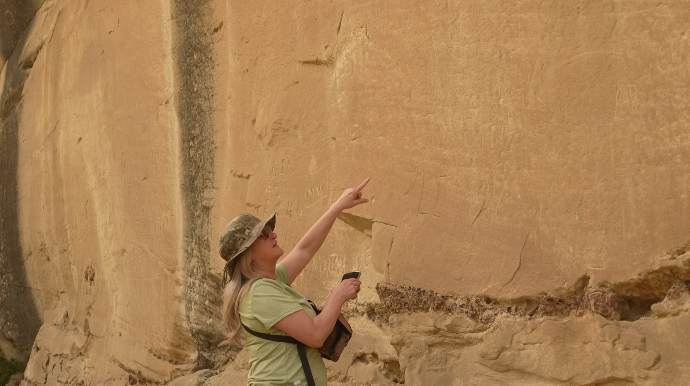
She told MTN she would like to see more participation in the Wyoming Site Stewardship Program.
“You can volunteer, and you can monitor sites,” said Lawrence-Smith. “And then you also have a better timeline of when vandalism does occur.”
Vanessa Willardson/Q2
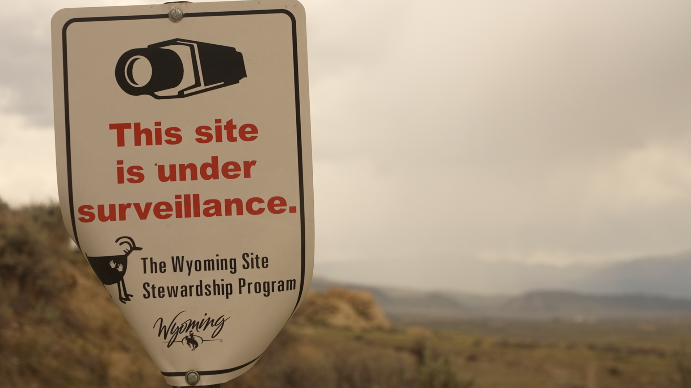
Even though many sites contain vandalism, Lawrence-Smith has noticed it has decreased over the years.
“What I’ve seen in my 16 years, vandalism is on the downside,” she said. “I’m optimistic. I think they’re getting better.”
BLM encourages people who witness vandalism of rock art sites to leave tips at their Cody Field Office phone number, 307-578-5900.

Rodeo champion Rusty Wright’s big comeback didn’t start with a wild bronc or record-setting ride. It began between rides, in the dust and noise of Cheyenne Frontier Days when a stranger asked him to do a quick interview for a documentary about barrel racing legend Angela Ganter.
They wanted him to talk about something he feels strongly about — the importance of women in the rodeo world.
“I’ve got a pretty strong opinion about it, so I figured I’d go ahead and do it,” said the saddle bronc champ. “I didn’t expect it to be as big of a deal as it turned out being. I was passionate about it, and they loved that, so I think the interview went a little longer than it was supposed to.”
His off-the-cuff, passionate interview would become what Wyoming filmmaker Raen LeVell describes as the “beating heart” of his “Outriding the Devil,” a film he believes is well on its way to becoming a grassroots rodeo blockbuster.
It’s enjoyed a multi-week run as the No. 1-ranked Western documentary on IMDb and earned major praise from national outlets like Sports Illustrated.
It’s also gained elite backing from professional rodeo leaders, who have given it prime screenings at some of the sport’s biggest venues, including the National Finals Rodeo.
Women Behind Rodeo’s Biggest Champions
Ask Wright who the real heroes of rodeo are, and he’ll point first to the women — those who compete in the arena and the ones who never step inside of it.
In his Cheyenne interview, he poured his heart out about his own mother, ShaRee Wright, and all of the other rodeo moms and wives who help keep riders like himself going.
“They asked me what my mom meant to me, and the things she’s done for me in my career,” he said. “Everybody hears how our dad helped us along. He gets lots of recognition, which he should.
“But I don’t feel like my mom or the wives behind the scenes ever really get the recognition they deserve. Honestly, I think it should be just as much as what my dad would get.”
If there were gold buckles for “backbone of the family,” Rusty said he’s convinced his mom would have several of those.
The deep respect for women behind the chutes is exactly the kind of authenticity LeVell was hoping to capture in his film, from Ganter’s story to the moms and wives behind the scenes.
Ganter’s ‘Red Devil’ Comeback
“Outriding the Devil” focuses on the little-told comeback story of Ganter, a barrel racer whose stunning career slammed into a stage-four breast cancer diagnosis so advanced doctors told her she was unlikely to live.
But Ganter had always been a fighter and refused to give up.
The chemotherapy that ultimately saved her has a telling nickname, though. It’s called the “red devil,” and it wreaks havoc on the human body in its quest to ultimately save it.
There were days Ganter couldn’t walk from her bedroom to the living room. After chemo like that, almost no one believed Ganter would even be able to ride a horse again, much less fight her way back to compete at an elite level.
“That red devil chemo had road-graded her nervous system,” LeVell said. “She had lost her balance. She didn’t really know left from right. So the idea that she would get on a horse and be able to just kind of like work on a horse was a little fanciful, and the thought that she would come back to rodeo was kind of like Disney-line stuff.”
And yet, Ganter not only survived, but she returned to rodeo at the highest levels, finding a special horse named Bugs and clawing her way back to champion-caliber barrel racing.
Lighting A Fire Under Rusty Wright’s Comeback
For Wright, who hadn’t known the full depth of Ganter’s ordeal until that Cheyenne interview, her resilience ended up lighting a fire right when he needed it most.
“When I did that interview, honestly, I was kind of right in the middle of my own personal issues and stuff,” he said. “I went from, you know, top of the world — I was reserve world champion in 2018 — and then I had a bunch of personal struggles. I wasn’t even making finals one year. I wasn’t even top 50.”
Learning what Ganter had overcome helped him push the reset button.
“You start playing the ‘poor me’ game, and if you open your eyes and look around, everyone’s got something,” he said. “You sitting there crying about your problems, that isn’t going to help you get out of them.
“A lot of people have it a lot worse off than I do, and they made it. They conquered it. So that kind of lit that fire under me to get my stuff together, and you know, set my goals, realign my priorities, and away we went.”

From NFR To Wyoming
After its premiere at the National Finals Rodeo in Las Vegas — the Super Bowl of Western sports — “Outriding the Devil” has hit the rodeo trail. That’s included premiering at major Texas events like RodeoHouston and the San Angelo Stock Show & Rodeo.
Now after making waves on a national stage, the film is circling back to where Rusty’s turning point began — Wyoming. The film will have an especially long runway in the Cowboy State with several free premieres ahead.
It will open the College National Finals Rodeo in Casper on June 13, making it one of the rare films to both premiere as an official event of the NFR and later open the college finals as well.
From there, it heads to Sheridan for the WYO Rodeo kickoff on July 5 and then to Cheyenne Frontier Days, where it will premiere July 16.
All of these shows will be free to the public thanks to Visit Casper, the Wyoming Foundation for Cancer Care, the WYO Rodeo, and the Gold Buckle Club.
These Wyoming events will also be the last chances to see “Outriding the Devil” on the big screen, and they’ll include opportunities to quiz the director and rodeo figures after the show.
Streaming deals are being negotiated for a wider, national release, but premiere-style events will end once those begin.
-

“Outriding the Devil” Director Raen Le Vell with “Yellowstone” actor Mo Brings Plenty. (Courtesy Photo) -
Included in “Outriding the Devil” are, from left, Stetson Wright, Rusty Wright, Sha Ree Wright, Lily Wright, Angela Ganter and Jackie Ganter. (Courtesy Photo) -
Barrel racing legend Angela Ganter and her battle from near death to elite competition is highlighted in “Outriding the Devil.” (Courtesy Photo)


True Meaning Of Grit
The Wright family is considered rodeo royalty by many, and has been an integral part of “Outriding the Devil,” LeVell said.
During the Las Vegas premiere, the Wrights were there in force alongside country music stars and “Yellowstone” actors, including Mo Brings Plenty.
One of those stars was Ned LeDoux, who plays a young Ganter’s uncle in the movie opposite Lily Wright, who is Stetson Wright’s sister.
In the film, Rusty’s brother, Stetson Wright, takes viewers inside the chute as he walks through his mental processes before a ride.
Rusty, meanwhile, talks about the importance of family sticking together and why he sees rodeo as “one big family.”
Rodeo is one of America’s most dangerous and physically demanding sports. It takes a certain mindset to keep going, one that’s hard to sustain without family and friends backing it up.
“Everybody always sees our highlights and our wins on social media,” he said. “Everyone talks about our wins and yeah, that’s inspiring and everything. But to me the real inspiration, what gets me fired up, is seeing people’s struggles and what they had to go through to get there.”
Rusty said it took 50-some horses before he could stay on a bronc at all, and probably 300 horses before it finally started to click.
“I remember that moment when it finally clicked for me and I thought, ‘Oh, that’s how it’s supposed to feel,’” he said. “If people could watch how many dirt naps and how many wrecks I got in getting to where I’m at, I guarantee you, most people would be like, ‘I can’t believe he’s still riding.’”
By showing those struggles, Rusty hopes his own kids will realize that whatever they want to do in life, they can do it.
“It doesn’t matter what you’ve been through, or what you go through,” he said. “If you work at it, buckle down, if you stay hooked, you can get your way to the top.”
That’s the larger message he sees in Ganter’s story, too, and it’s one he absorbed thanks to a random interview request at Cheyenne Frontier Days in Wyoming.
“I don’t really believe in coincidences,” he said. “I believe in faith. I was just walking by, and they’re like, ‘Hey, you want to come do this interview?’ God knew I needed that. He knew I needed to hear something, to give me that little push I needed.”
Now that push is on a much bigger stage, playing out in rodeo arenas and theaters across Wyoming and the West — an audience full of cowboys and cowgirls who know exactly what it means to get bucked off hard, dust off, and stand back up again in the arena.
It’s no surprise that such a film would have a Wyoming director behind it, or that it would find its biggest runway in the Cowboy State, where grit has become part of the local DNA.
Renée Jean can be reached at renee@cowboystatedaily.com.

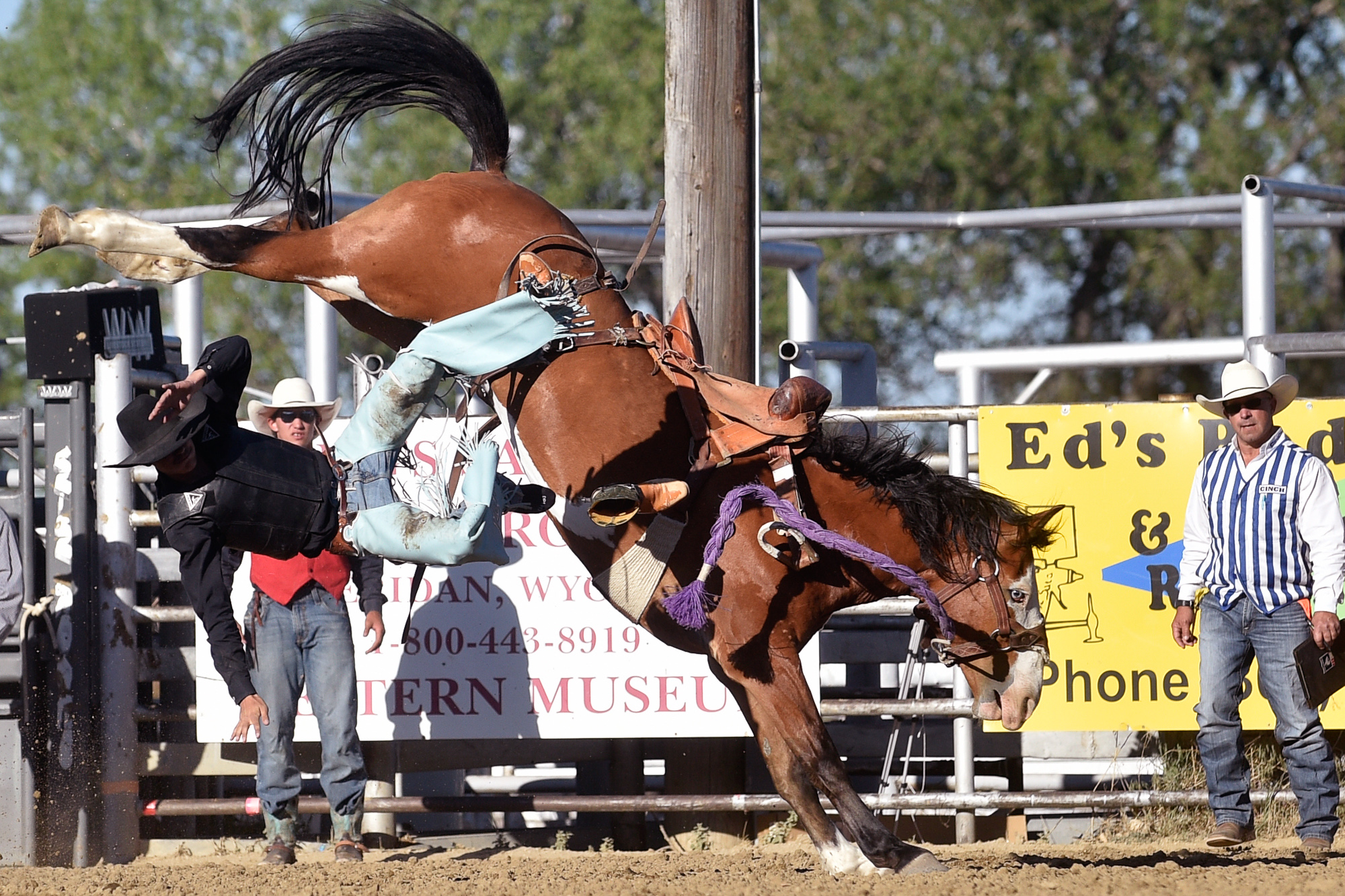
Several local cowboys and cowgirls competed in the Wyoming High School State Finals at the Johnson County Fairgrounds in Buffalo Friday, June 5, 2026. This was fourth performance of the three-day event.
Photos by Clint Wood




-
Montana33 seconds ago
Montana Lottery Big Sky Bonus, Millionaire for Life results for June 7, 2026
-

 Nebraska6 minutes ago
Nebraska lands commitment from three-star tight end Joey Hunter
-
Nevada13 minutes ago
DNA Doe Project unlocks cold case in Nevada
-
New Hampshire15 minutes ago
NH Lottery Pick 3 Day, Pick 3 Evening winning numbers for June 7, 2026
-

 New Jersey21 minutes ago
Gerth: N.J. congressional candidate isn’t saving KY coal | Opinion
-

 New Mexico28 minutes ago
4 Las Cruces eateries fined for operating without a permit in May
-

 North Carolina30 minutes ago
Inside North Carolina’s Small Business Centers and their role as ‘economic development engines’
-

 North Dakota36 minutes ago
Today in History: June 8, 1960 – Veteran total in North Dakota tops 72,000

