Wyoming
Guides face federal charges for allegedly leading illegal mountain lion hunts in Idaho, Wyoming

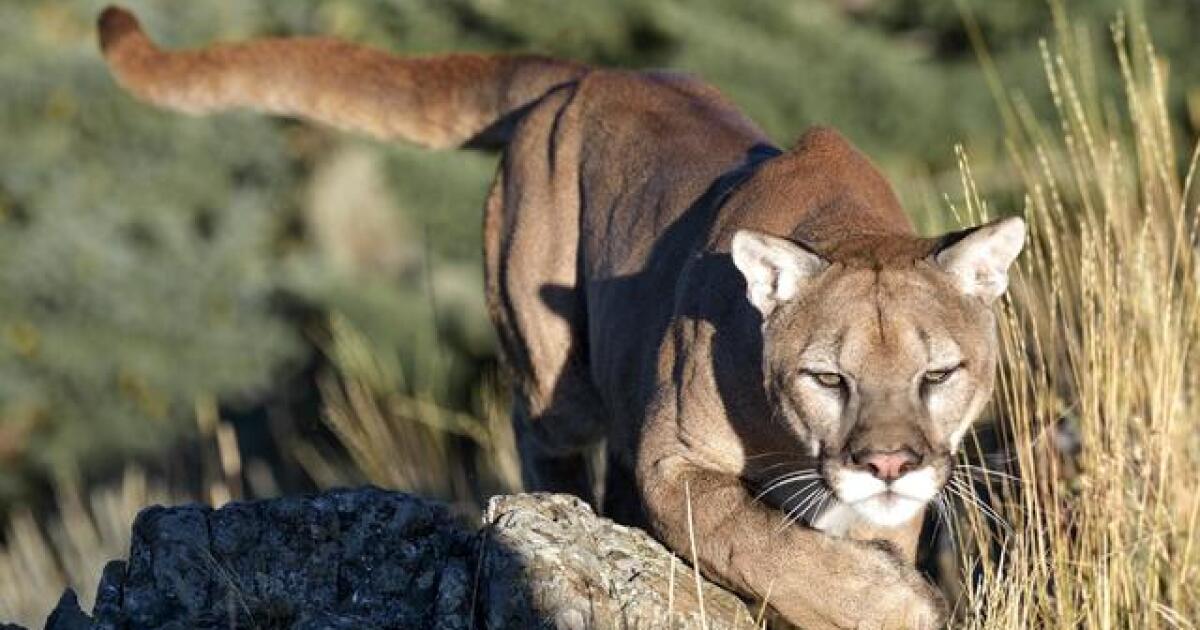
Three wildlife guides are facing possible prison time and fines up to a quarter of a million dollars, after they allegedly ran an illegal hunting enterprise that resulted in the deaths of at least a dozen mountain lions, federal prosecutors said Wednesday.
In a 13-count indictment returned at the end of August, a federal grand jury charged Michael Kulow, 44, Andrea May Major, 44, and LaVoy Linton Eborn, 47, with conspiracy to violate a federal act banning illegal trafficking of wildlife and multiple violations of the act itself, according to the U.S. Attorney’s Office in Idaho. The guides are all from Idaho.
The charges stemmed from the trio’s alleged exploits between December 2021 and February 2022. They are accused of working illegally as big game outfitters and guides in the Caribou-Targhee National Forest and the Bridger-Teton National Forest, U.S. Attorney Josh Hurwit said, citing the indictment. The national forests are located in southeastern Idaho and western Wyoming, respectively.
Kulow, Major and Eborn were employed in Idaho by a licensed outfitter — a company that provides various services to hunters, including guiding — when they began to independently book and accept payments from hunting clients at the end of 2021, the U.S. attorney said. The three of them allegedly guided those clients through illegal hunts for mountain lions, leading to the killings of at least 11 of the animals in Idaho, and one more Wyoming. The mountain lion killed in Wyoming was a cougar recorded by the Boone and Crockett Club.
The trio is also accused of falsifying portions of their big game mortality reports, which Idaho requires them to submit to the state’s fish and game department, after those illegal hunts. At least three of the poached mountain lions were shipped to Texas without proper documentation, officials said, and all the animals were transported from protected land to or from Idaho, Utah, Wyoming, Montana, Alaska, Texas and North Carolina. Each of those transports would violate Idaho state laws as well as federal laws under the Lacey Act.
The Lacey Act prohibits illegal trafficking of wildlife and plants, and regulates how both are traded or moved between states or into the country. Under the terms of the act, it is against federal law “to import, export, transport, sell, receive, acquire, or purchase in interstate or foreign commerce any plant, with some limited exceptions, taken or traded in violation of the laws of the United States, U.S. State or a foreign country,” according to Customs and Border Protection.
Amendments to the law in recent decades extended its provisions to bar trafficking of plants or animal products that were illegally harvested, as well as products without a certain kind of declaration, the Animal and Plant Health Inspection Service says.
Kulo and Major were arrested Sept. 24 and booked with the U.S. Marshals Service in Boise, according to Hurtwit’s office. Eborn was taken into custody the following day and booked with the Marshals Service in Pocatello. Each pleaded not guilty during initial appearances before U.S. Magistrate Judge Debora K. Grasham in Idaho district court.
Their jury trial is scheduled to begin Nov. 18 in federal court in Pocatello.
The charges were announced the same week than an 81-year-old Montana man was sentenced to six months in federal prison for violating the Lacey Act. Arthur “Jack” Schubarth was accused of illegally using tissue and testicles from large sheep hunted in Central Asia and the U.S. to create hybrid sheep for captive trophy hunting in Texas and Minnesota.


Wyoming
Measles confirmed in Teton County, Wyoming, as summer crowds flock to parks – East Idaho News

JACKSON, Wyo. (WyoFile) — After confirming a case of measles in an unvaccinated adult in Teton County, Wyoming, health officials are warning the public about possible exposure at locations in Grand Teton National Park and Jackson.
The news comes as summer crowds flood the region with tourists from around the world.
The public may have been exposed between June 17-25 at several locations in Teton County, according to the Wyoming Health Department. They include restaurants in Grand Teton National Park’s Colter Bay Village on June 17-18; a Colter Bay convenience store on June 20 and the Target in Jackson on June 25.
“We are asking people who may have been exposed to watch for measles symptoms for 21 days past the exposure date and consider avoiding crowded public places and high-risk settings such as daycare centers,” State Health Officer Alexia Harrist said in a press release.
Monitoring is especially critical for people who have not been vaccinated with the measles, mumps, and rubella vaccine, according to the health department.
It marks Wyoming’s second confirmed case of the highly contagious infection in 2026. Wyoming went 15 years without a confirmed case of measles until last year.
Resurgence
Health officials confirmed Wyoming’s first 2026 case in May. An adult patient in Fremont County who did not have a confirmed vaccination status caught the disease, according to the Wyoming Department of Health.
Measles was declared eliminated in the U.S. in 2000 — indicating no endemic transmission for 12 months or more. But it re-emerged in recent years primarily due to declining vaccination rates and increased public health skepticism. Those trends spawned during the COVID-19 pandemic and have persisted during the second Trump administration.
The neighboring state of Utah is one of America’s 2026 measles hotspots, with 499 cases reported so far this year.
RELATED | Anguished parents. Doctors in tears. Utah’s long measles outbreak takes a toll
A vaccination rate of 95% is necessary for community immunity to prevent measles outbreaks, according to the Centers for Disease Control.
In 2025, Wyoming’s proportion of kindergarten students who had completed the MMR vaccine was 93.6%, the CDC reports. That rate is higher than Colorado, Utah and Montana for the same year.
However, it’s declined overall since 2012-13, when Wyoming’s kindergarten vaccination rate was above 97%. It fell to 90.2% in 2020-21 before inching back up to the current 93.6%.
A measles case had not been reported in the state since 2010 until July 2025, when the health department confirmed measles in an unvaccinated child from Natrona County. By year’s end, 13 more cases were confirmed. The majority involved unvaccinated children and adults.
Along with being extremely contagious, measles can cause severe complications like pneumonia and brain swelling and can leave lasting impacts on the immune system. One to three out of every 1,000 children who become infected with measles will die from complications, according to the CDC.
RELATED | The US is on the verge of losing its measles elimination status. Here’s why that matters
RELATED | Measles is not the only disease on the rise. Mumps also may be making a comeback
=htmlentities(get_the_title())?>%0D%0A%0D%0A=get_permalink()?>%0D%0A%0D%0A=htmlentities(‘For more stories like this one, be sure to visit https://www.eastidahonews.com/ for all of the latest news, community events and more.’)?>&subject=Check%20out%20this%20story%20from%20EastIdahoNews” class=”fa-stack jDialog”>

GILLETTE, Wyo. — As the Aug. 18 primary election approaches, County 17 is introducing candidate questionnaires to help voters make informed decisions at the ballot box.
Every candidate in the primary field was sent the same three questions and given a limit of 500 words, which could be distributed among their answers as they saw fit. To ensure a fair and direct line to the community, all responses are published exactly as submitted, without edits or alterations.
Candidates were asked:
- What are the most crucial challenges your constituents are facing?
- If elected, how will you address these challenges?
- What qualities or qualifications do you possess that have prepared you to meet these challenges?
Questionnaires are being published on a rolling basis online through Aug. 11. They will be accessible via the County 17 Election Tracker.
Scott Smith (R), Wyoming state treasurer
What are the most crucial challenges your constituents are facing?
Everywhere I go many Wyoming citizens are concerned that our government is selling out our state lands to the highest bidder for crony capitalism. Some are concerned about Data Centers, Commercial Wind Generators, or nuclear waste storage. The biggest concern is the resources these outfits are taking, secondly, they are concerned about health issues related to living nearby, and lastly they are concerned with cost associated with these projects being passed onto the taxpayer.
If elected, how will you address these challenges?
One of the things that many people don’t know is that the State Treasurer sits on the State Land and Investment Board. (SLIB) The same issues that concern our citizens are the same reasons that I have decided to run for this office. The SLIB has voted to lease state lands to a hydrogen plant in Converse County that would take eight gallons of our valuable water to produce one gallon of hydrogen jet fuel using wind and solar generation to power the plant. These same elected officials have sold off $100 million of our state lands to the federal government. I believe that some things are not for sale. As Treasurer you can count on me to count the cost and listen to the people in the public testimony. If we are going to accept some of these projects the citizens need to have the benefit, like lower utility costs.
What qualities/qualifications do you possess that have prepared you to meet these challenges?
My bachelor’s degree is in Business Administration with an emphasis in management and marketing. I will be a leader in the state treasurer’s office that creates a positive work environment that will allow our investment team to create higher returns on the people’s money that the state invests. I would like to work with the legislature to use these interest earnings to buy down the people’s property taxes to alleviate part of the burden inflation has caused on the average citizen. My day job, I work as a bookkeeper and work with numbers day in and day out and have corrected some inefficiencies to help small businesses become more profitable. I plan to do that within the state office and make those profits available to the legislature to reduce the tax burden for the people. I have also served in the Wyoming House of Representatives for Goshen County and I have served on the Appropriations Committee and I am familiar with the massive state budget.
Related
-

 Minnesota4 minutes ago
Hope lost: Minnesota AG closes unit that freed wrongfully convicted prisoners
-

 Mississippi6 minutes ago
Mississippi Lottery rolls out 4 new scratch-off games for July – SuperTalk Mississippi
-

 Missouri12 minutes ago
Missouri Highway Patrol investigates death of staffer at youth ranch in Reynolds County; 1 juvenile arrested
-

 Montana19 minutes ago
Montana DEQ warns of algal blooms ahead of holiday weekend
-

 Nebraska21 minutes ago
Some Nebraska communities ban fireworks in year marked by drought, wildfires
-

 Nevada27 minutes ago
How Chinese-Americans contributed to mining in Nevada
-

 New Hampshire34 minutes ago
Man From Concord Arrested On Drug Sale, Subsequent Possession Charges: Concord Police Log
-

 New Jersey37 minutes ago
Mikie Sherrill welcomes July 4 tall ships to NJ at Sandy Hook

