Connect with us

West

Whistleblower alleges blue city jails hired over 100 illegal guards over several years

Published

on

Whistleblower alleges blue city jails hired over 100 illegal guards over several years
NEWYou can now listen to Fox News articles!

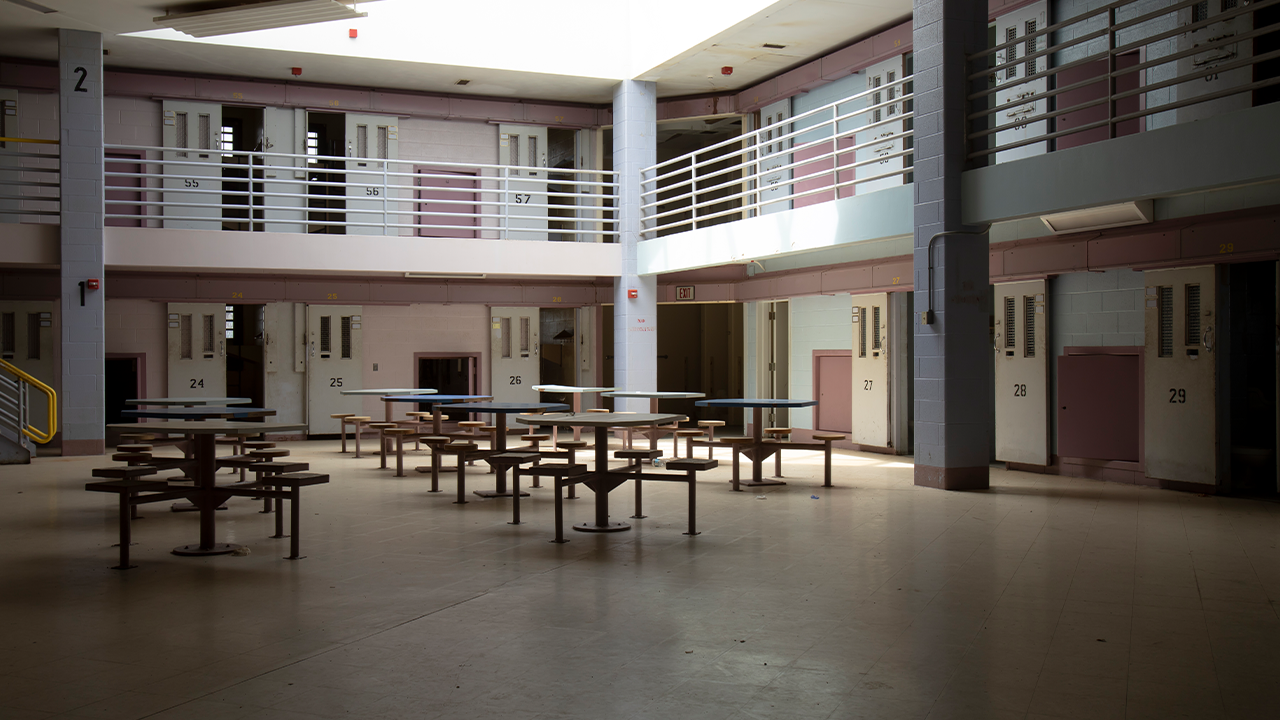
State and local officials are investigating a Seattle-area corrections department after a whistleblower alleged the county was hiring unqualified immigrants as guards, according to a complaint filed with Washington state authorities.

“Individuals have been hired while holding only temporary work visas, and in some cases, with expired work authorization altogether,” the unnamed whistleblower wrote to the state’s Criminal Justice Training Commission (WSCJTC), regarding hirings in King County. “These hires are in direct violation of the statutory requirements set forth by state law.”

The whistleblower was identified only as an officer from the King County Department of Adult and Juvenile Detention.

The department said in a statement that it is actively investigating the complaint and denied that any of the guards were illegal immigrants, even though some appear to have failed to meet the legal eligibility requirements.

Advertisement

KENTUCKY WHISTLEBLOWER CLAIMS LICENSING CENTER SOLD IDS TO ILLEGAL IMMIGRANTS ‘UNDER THE TABLE’

A pedestrian passes by the King County Correctional Facility in downtown Seattle, Washington, U.S., September 17, 2020. (Reuters/Lindsey Wasson)

At the time of the filing on Aug. 27, the whistleblower alleged the violations had been happening for “several years” and remained ongoing. The complaint was first reported by SeattleRed host Jason Rantz this week.

Washington law requires all peace officers in the state have their immigration status verified and must be American citizens, lawful permanent residents or beneficiaries of the Deferred Action for Childhood Arrivals program, known as DACA.

Read the whistleblower’s complaint:

Advertisement

The law does not allow for the hiring of people with temporary visas or illegal immigrants who do not fall under DACA.

ILLEGAL IMMIGRANTS COULD DOMINATE DC ARRESTS UNDER FEDERALIZED POLICE FORCE, SAYS EXPERT

“The officers in question are all authorized to work in the United States, are highly trained for their roles, have undergone an extensive criminal background check process, and are in good standing with King County,” the King County Department of Adult and Juvenile Detention said in a statement.

The SeattleRed report, citing an anonymous source with knowledge of the case, placed the number at more than 100 corrections officers. But the scope of the issue was not immediately clear.

A person walks by the King County Correctional Facility in downtown Seattle, Washington, U.S., September 17, 2020.  (Reuters/Lindsey Wasson)

Advertisement

The county said that “the total number of corrections officers whose employment eligibility is in question is well below what has been reported in the media.”

GOP SENATE HOPEFUL UNLOADS ON BIDEN ADMIN AFTER WHISTLEBLOWER EXPOSES WHO WAS SOLD IDS: ‘APPALLED’

“However, it appears that King County may have improperly applied a requirement set forth by a Washington State statute that limits the categories of workers eligible to serve as corrections officers in our adult jail facilities,” a spokesperson said. “King County takes this potential oversight seriously and is actively investigating and taking remedial steps as necessary.”

The state’s training commission told Fox News Digital that while it trains newly hired corrections officers, it’s the responsibility of the hiring agencies to vet the candidates. However, after learning of the whistleblower complaint, county officials told the commission that four of its recent hires did not meet eligibility requirements, and they were expelled from the training program.

A pedestrian crosses the street near the King County Correctional Facility in downtown Seattle, Washington, U.S., September 17, 2020. (Reuters/Lindsey Wasson)

Advertisement

“The agency is aware of the complaint and we are conducting an open investigation into King County’s hiring practices,” WSCJTC spokesman David Quinlan told Fox News Digital.

CLICK HERE TO DOWNLOAD THE FOX NEWS APP

The county is cooperating with the probe, he added, and the state will decertify anyone it uncovers who fails to meet the legal qualification requirements.

King County is the largest in the state and includes Seattle and some of its suburbs.

Read the full article from Here

Advertisement

Denver, CO

Person dies after being hit by plane at Denver airport

Published

on

Person dies after being hit by plane at Denver airport


NewsFeed

A Frontier Airlines plane has hit and killed a person at Denver’s international airport, prompting the evacuation of passengers. Authorities say the man jumped a perimeter fence and ran in front of the plane as it was taking off to Los Angeles.


Source link

Continue Reading

Seattle, WA

‘Do you care more about the kids or the drug addicts?’: Jake calls out Seattle for potential homeless shelters near schools – MyNorthwest.com

Published

on

‘Do you care more about the kids or the drug addicts?’: Jake calls out Seattle for potential homeless shelters near schools – MyNorthwest.com


After the Seattle City Council moved forward with legislation that would expand temporary homeless shelters without buffer zones near schools, KIRO host Jake Skorheim questioned who the city really cares about.

Jake wondered aloud about what goes on in a Seattle City Council member’s head, assuming they even read the proposal.

“They see the thing, they go like, ‘Well, what do we think about this one here, about school zones?’ They’re like, ‘I don’t know about that. Let’s scratch that out. We can have homeless people around school zones, drug addicts, people who are trying to get their fix,’” he said on “The Jake and Spike Show” on KIRO Newsradio.

Seattle legislation would increase shelter capacity by 50%

If approved, the legislation would let temporary shelter sites, including tiny home villages, RV safe lots, and tent encampments, increase capacity by 50%, raising the maximum from 100 to 150 residents.

Advertisement

Approved amendments would require sites with more than 100 beds to maintain public safety plans and around-the-clock staffing. Another amendment would require shelters to establish agreements with surrounding neighborhoods outlining expectations for resident behavior and site management. A final amendment mandates at least one manager for every 15 high-needs residents.

Still, several nonprofits urged council members to pass the bill without amendments, arguing the added restrictions could slow resources to people experiencing homelessness and further stigmatize them.

Jake had a question for city leaders: “Who do you care more about? You care more about the kids or the homeless drug addicts?”

Watch the full discussion in the video above.

Listen to “The Jake and Spike Show” weekdays from noon to 3 p.m. on KIRO Newsradio 97.3 FM. Subscribe to the podcast here.

Advertisement


Source link

Continue Reading

San Diego, CA

It’s ‘trust, but verify’ for new AI spine surgery system

Published

on

It’s ‘trust, but verify’ for new AI spine surgery system


On a recent morning, Dr. Joseph Osorio arrived in the operating room ready to sink six surgical screws into his patient’s spine, and he did not seem remotely nervous that their placement and size had been recommended by artificial intelligence software.

Osorio was the first neurosurgeon on the West Coast to begin using Medtronic’s new “Stealth AXiS” surgical robotic system, conducting a spinal fusion procedure to treat degenerative scoliosis at Jacobs Medical Center in La Jolla by anchoring two small custom-shaped metal rods across three vertebrae in his patient’s lower spine.

The process started with a CT scan, identifying the segment of spine that needed reinforcement. A program analyzed the resulting three-dimensional image, using an AI model trained on information from previous successful surgeries, not just where screws should go, but also the best path for their insertion.

An X-ray is taken of a patient’s spine before a spinal fusion surgery at Jacobs Medical Center at UC San Diego Health in La Jolla on Wednesday, April 29, 2026. (Kristian Carreon / The San Diego Union-Tribune)

Board-certified with thousands of such surgeries in his past, having completed a fellowship at Columbia University after a surgical residency at UC San Francisco, Osorio is well-qualified to make these calls with zero help from technology. So, why bother using an algorithm to plan these crucial, but routine details?

Advertisement

The utility, he said, is similar to what many are now experiencing when they use AI writing tools. The software can quickly get a person to the neighborhood of what they intend to say.

“You might say, ‘write me a paragraph on this,’ and it’s going to cut down your time, but you might still need to change some words, add a comma, tweak a sentence … that’s essentially what the AI is doing here,” Osorio said.

In this particular case, the AI system’s recommendations for screw length and diameter seemed on point, allowing the army of surgical technicians assisting with the procedure to pull the proper supplies ahead of time. The suggested locations, though, did require minor adjustment.

“It was slight, very slight, I’d say probably, like one or two millimeter adjustments,” Osorio said.

And the AI auto planning feature, he added, is even more useful in situations where a patient’s health insurance company will not pay for a pre-surgical CT scan, meaning that the guiding image must be taken after the patient is already sedated in an operating room on the day of their surgery.

Advertisement
An X-ray is taken of a patient's spine before a spinal fusion surgery at Jacobs Medical Center at UC San Diego Health in La Jolla on Wednesday, April 29, 2026. (Kristian Carreon / The San Diego Union-Tribune)Dr. Joseph Osorio, a neurosurgeon, uses the Medtronic Stealth Axis Autopilot during a spinal fusion surgery at Jacobs Medical Center at UC San Diego Health in La Jolla on Wednesday, April 29, 2026. The machine uses artificial intelligence to help navigate a patient's spine.(Kristian Carreon / The San Diego Union-Tribune)
An X-ray is taken of a patient’s spine before a spinal fusion surgery at Jacobs Medical Center at UC San Diego Health in La Jolla on Wednesday, April 29, 2026. (Kristian Carreon / The San Diego Union-Tribune)

Once a digital surgical plan is created and approved by a qualified surgeon, a surgical robot can use a system of cameras and electromagnetic sensors, registered against each patient’s anatomy with an initial X-ray, to move its arm to each screw location, placing a drilling guide at the exact angle needed to put each anchor in the correct spot. Here, too, AI is at work comparing previously recorded X-rays with real-time sensor data to compensate for any patient movements that may occur.

It is an evolution of Medtronic’s previous “Mazor” robotic spike system, which had already achieved levels of anatomy navigation using sensors and cameras that have reduced the need for X-ray images during surgery. And other medical device companies have launched similar systems, building in AI functions as the entire industry begins to see such augmentation as table stakes to play in a market that has always been as competitive as a high-stakes table in a Las Vegas casino.

Patients may wonder whether this push toward AI guidance is a good thing. After all, this is a technology that has made headlines for its ability to “hallucinate” convincing, but incorrect details.

ECRI, an independent non-profit organization that works to improve patient safety and cost effectiveness in health care, has been watching these systems develop.

In an email, Scott Lucas, ECRI’s vice president of devices, therapeutics and technology, said that the organization does not comment on any individual case or procedure, but has found that AI-enabled systems do have their merits.

“We can say that AI seems to be particularly helpful when it is used to support imaging, planning, navigation and precision in technically demanding procedures such as spine surgery,” Lucas said. “These tools may help surgeons in multiple ways, including tailoring procedures to a patient’s anatomy and improving consistency in implant placement and alignment.”

Advertisement
An AI-enabled display depicts the position of surgical screws being inserted into a patient's vertebra during a spinal fusion surgery at Jacobs Medical Center at UC San Diego Health in La Jolla on Wednesday, April 29, 2026. (Kristian Carreon / The San Diego Union-Tribune)
An AI-enabled display depicts the position of surgical screws being inserted into a patient’s vertebra during a spinal fusion surgery at Jacobs Medical Center at UC San Diego Health in La Jolla on Wednesday, April 29, 2026. (Kristian Carreon / The San Diego Union-Tribune)

That said, the executive makes it clear that there is no argument for blind loyalty. In these early days, he argues, AI assistance should be less involved with surgeries, and there must be a clear path that allows surgeons to verify the work that their algorithmic assistants perform.

“Used well, AI may strengthen surgical safety; used without appropriate governance, human oversight, training and monitoring, it could introduce new risks, including overreliance, workflow disruption, planning errors or automation bias,” Lucas said.

Such bias, he added, occurs when a surgeon “fails to recognize when the technology is wrong.”

Osorio said that he believes the checks and balances built into the new system he is now using weekly do give him solid checkpoints to make sure that the machine is not hallucinating. While screw placement calculations will automatically calculate for straightforward placements, those with particularly complicated circumstances, such as anatomy that significantly deviates from the norm, will not proceed.

“If things aren’t lining up perfectly in the image, or they’re getting some feedback, it will just refuse to place a screw in that corridor,” Osorio said. “So, it’s only making recommendations in locations that meet the highest standards, and it still requires the surgeon to validate every level.”

AI is now also involved in the calculations used to move the robotic arm to the correct locations for screw insertions and also to make real-time corrections for any patient movement, Medtronic confirmed by email.

Advertisement

Here too, Osorio said, there are ways to verify that the robot’s calculations are pointing at the correct vertebrae, even though this type of minimally invasive surgery does not expose the target bone before screw insertion.

Surgeons use a bony projection at the back of each vertebra called the spinous process to check the robot’s accuracy, laying a special navigation ring over the landmark to verify that what is showing on the computer’s calculated location screen matches the robot’s arm position.

“A very common statement is ‘trust, but verify’,” Osorio said.

While robotic spine surgery is the latest to begin the process of AI integration, other systems have already made similar moves in knee and hip replacements, urologic procedures, and in some aspects of general surgery.

Advertisement


Source link

Continue Reading
Advertisement

Trending
