Washington
‘We’ve learned a lot’: Jedd Fisch discusses Washington’s struggles in road games


Road games haven’t been kind to the Washington Huskies this season. In fact, they’ve been flat out brutal to watch. The Huskies haven’t had any fun in any of their games away from Husky Stadium. Washington went unbeaten at home this season, but lost in every single game that has either been a true road game or a neutral site contest.
Well, every game up to this point at least. Washington has a chance to change that trend this afternoon as the Huskies head to Eugene, Oregon to meet up with Dan Lanning and the No. 1 ranked Oregon Ducks in Autzen Stadium.
What better time to find a way to win on the road than in a rivalry game? What if I told you that aforementioned rivalry game was against an unbeaten team? Or if it happened to be against the top-ranked team in the country?
That’d make it, essentially, the perfect time to go out and get a road win for the first time this season, right? I think so… So, will that happen?
I don’t know. Neither does Jedd Fisch or really anyone else. But, during his press conference earlier this week, Fisch was asked about the way Washington has struggled in road games this season.
“We’ve learned a lot in those experiences, each one being different, each one having its own uniqueness to it,” Fisch explained.
As he noted, the Huskies have seen quite a bit in their various different road losses throughout this year. They’ve lost in some pretty incredible and devastatingly frustrating ways. It’s been great and definitely enjoyable stuff to watch, right?
“Being able to start fast and then not finish, being able to finish strong and not start nearly as fast, having a major hiccup at halftime really against Rutgers where it’s seven to three, we block a kick and then have to go back on the field,” Fisch recalled.
A lot of things have gone wrong in road games this year. And now Washington has another chance to play in one.
“This is another opportunity to go into an incredible environment, very hostile environment, probably the most hostile of all the environments, I would assume, on rivalry weekend. It’s going to be loud, it’s going to be energetic, it’s going to be enthusiastic,” Fisch said.
We’ll see how the Huskies hold up in this game. There’s no real pressure on UW to win this one. It won’t drastically change the outcome of this season if this is a loss, but it would be nice to get a win away from Husky Stadium for once this season.



Charging documents reveal the U.S. Park Police officer who was shot Monday in Southeast D.C. had arrested one of the suspects the day before and was following that suspect at the time.
The suspects are brothers, 22-year-old Asheile Foster and 21-year-old Darren Foster, of Southeast. They appeared in federal court Wednesday afternoon.
Court documents state the Park Police officer who was shot had arrested Asheile Foster on Sunday on suspicion of dealing drugs. The officer said he followed Foster after he was released from jail on Monday and came to Park Police headquarters to get his personal belongings.
According to prosecutors, Foster told police he knew he was being followed by a white Tesla, and he confronted the officer on Queens Stroll Place SE, jumping out in front of the Tesla before the officer swerved around him.
Then, dozens of gunshots went off, the officer told police. He said in charging documents he was shot in the shoulder as he kept driving several blocks to the intersection of Benning Road and Southern Avenue SE, where police found him. A helicopter then took him to a hospital. According to charging documents, the officer was treated and released the same night as the shooting.
A U.S. Park Police officer who was shot in Southeast D.C. on Monday is recovering from what authorities say was likely a targeted attack. Multiple law enforcement sources tell News4’s Mark Segraves that when the officer was shot, he was investigating a shooting that occurred in Anacostia Park on Friday.
Photos in the charging documents show the brothers firing at the officer’s Tesla, according to prosecutors.
The shooting drew a massive police presence to the Southeast neighborhood near the D.C-Maryland border Monday night.
Shell casings littered the middle of the street. Police said they recovered two weapons: a Glock 9 with an extended magazine and an AR-15.
Prosecutors said that when the officer was shot, he was investigating a shooting that occurred in Anacostia Park on Friday. No one was injured in that shooting.
Darren Foster was located and stopped shortly after the shooting, D.C. police said. Asheile Foster was found on Tuesday.
The brothers were charged with assault on a federal officer, assault with intent to kill and weapons charges. They could face up to 60 years in prison if they’re convicted.
News4 sends breaking news stories by email. Go here to sign up to get breaking news alerts in your inbox.

Washington just became the latest state to regulate artificial intelligence.
Under a pair of bills signed by Gov. Bob Ferguson Tuesday, companies like OpenAI and Anthropic will have to include new disclosures in their popular chatbots for Washington users.
Ferguson asked legislators to craft House Bill 1170 to crack down on AI-generated misinformation. When content is substantially modified using generative AI, that information will now have to be traceable using watermarks or metadata. The new law applies to large AI companies more than 1 million monthly subscribers.
“ I’m confident I’m not the only Washingtonian who often sees something on my phone and wondering to myself, ‘Is that AI or is it real?’ And I feel like I’m a reasonably discerning person,” Ferguson said during the bill signing. “It is virtually impossible these days.”
RELATED: WA Gov. Bob Ferguson calls for regulations on AI chatbot companions
House Bill 2225 establishes new guard rails for AI chatbots that act like friends or companions. It applies to services like ChatGPT and Claude, but excludes more narrowly tailored chatbots, like the customer service windows that pop up when visiting a corporate website.
Chatbots that fit the bill will have to disclose to users that they are not human at the start of every conversation, and every three hours in an ongoing chat. The tools will also be barred from pretending to be human in conversation with users.
The rules go further if the user is a minor. Companies that operate chatbots will have to disclose that the tools are not human every hour, rather than every three hours, if the user is under 18. The bill forbids AI companions from having sexually explicit conversations with underage users. It also bans “manipulative engagement techniques.” For example, a chatbot is not allowed to guilt or pressure a minor into staying in a conversation or keeping information from parents.
“AI has incredible potential to transform society,” Ferguson said. “At the same time, of course, there are risks that we must mitigate as a state, especially to young people. So I speak partly as a governor, but also as the father of teenage twins who grapple with this as a lot of parents do every single day.”
Under the law, AI chatbots will not be allowed to encourage or provide information on suicide or self-harm, including eating disorders. The companies behind these tools will be required to come up with a protocol for flagging conversations that reference self-harm and connecting users with mental health services.
The regulations come in the wake of several high-profile instances of teenage suicide following prolonged interactions with AI companions that showed warning signs. Many more AI users of all ages have reported mental health issues and psychosis after heavy use of the technology.

Washington Wizards (16-55, 14th in the Eastern Conference) vs. Utah Jazz (21-51, 14th in the Western Conference)
Salt Lake City; Wednesday, 9 p.m. EDT
BOTTOM LINE: Washington heads into the matchup with Utah after losing 16 in a row.
The Jazz have gone 13-24 in home games. Utah ranks second in the Western Conference with 16.6 fast break points per game led by Lauri Markkanen averaging 3.3.
The Wizards are 5-29 in road games. Washington is 9-10 when it has fewer turnovers than its opponents and averages 15.3 turnovers per game.
The Jazz score 117.4 points per game, 6.7 fewer points than the 124.1 the Wizards give up. The Wizards’ 46.1% shooting percentage from the field this season is 2.9 percentage points lower than the Jazz have allowed to their opponents (49.0%).
The teams square off for the second time this season. The Jazz won the last meeting 122-112 on March 6, with Ace Bailey scoring 32 points in the victory.
TOP PERFORMERS: Kyle Filipowski is averaging 10.5 points and 6.9 rebounds for the Jazz. Brice Sensabaugh is averaging 19.9 points over the last 10 games.
Alex Sarr is averaging 16.5 points, 7.4 rebounds and two blocks for the Wizards. Will Riley is averaging 14.4 points over the past 10 games.
LAST 10 GAMES: Jazz: 3-7, averaging 116.4 points, 43.3 rebounds, 27.7 assists, 9.9 steals and 4.4 blocks per game while shooting 45.9% from the field. Their opponents have averaged 122.7 points per game.
Wizards: 0-10, averaging 114.3 points, 37.4 rebounds, 24.5 assists, 6.9 steals and 4.5 blocks per game while shooting 47.1% from the field. Their opponents have averaged 130.6 points.
INJURIES: Jazz: Lauri Markkanen: out (hip), Isaiah Collier: out (hamstring), Keyonte George: out (leg), Cody Williams: out (shoulder), Walker Kessler: out for season (shoulder), Jusuf Nurkic: out for season (nose), Jaren Jackson Jr.: out for season (knee).
Wizards: Anthony Davis: out (finger), Tristan Vukcevic: day to day (back), Cam Whitmore: out for season (shoulder), Alex Sarr: day to day (toe), Tre Johnson: day to day (foot), Kyshawn George: out (elbow), D’Angelo Russell: out (not injury related), Trae Young: out (quad).
___
The Associated Press created this story using technology provided by Data Skrive and data from Sportradar.

Dementia risk signals could lie in simple blood pressure readings, researchers say

Indiana coach Cignetti sends message to star transfer with pre-practice dress code lesson

Drone food delivery launches in New Jersey

FKA twigs sues ex-boyfriend Shia LaBeouf over ‘unlawful’ NDA
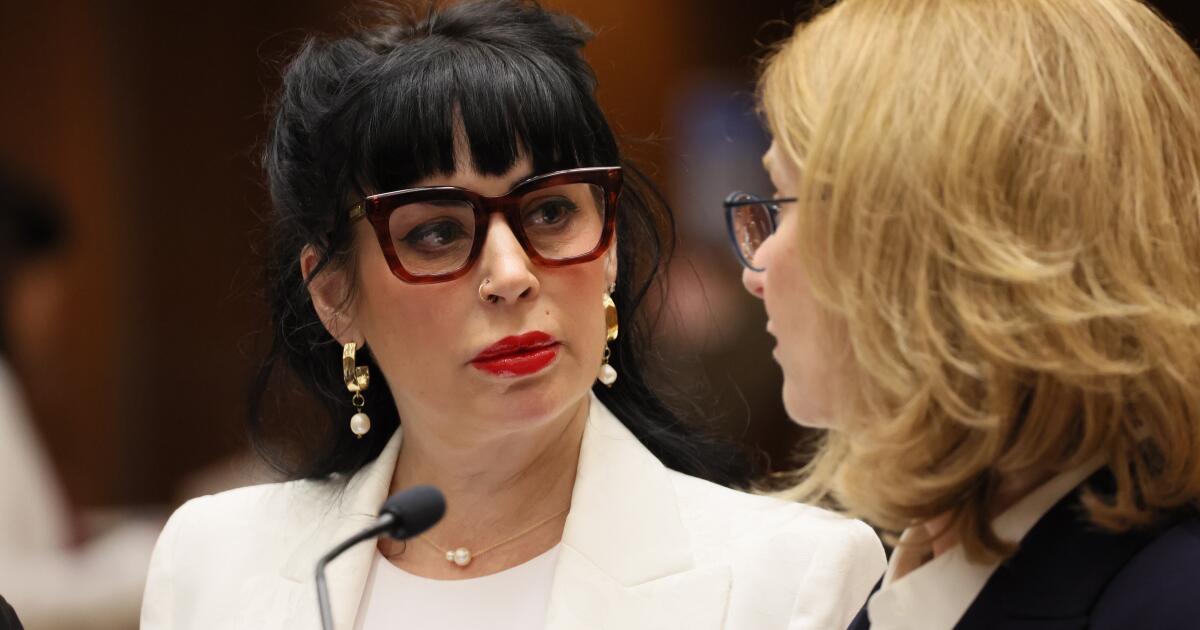
LAPD chief backed cops who shot at author, Weezer bassist’s ex; commission overruled him

Florida High School Football Rankings: Top 25 teams – Oct. 21

How old is Bo Nix? What to know about Oregon quarterback ahead of 2024 NFL Draft

Cleary's 21 help Le Moyne down Central Connecticut State 69-64 in OT

99th annual Pony Swim held in Virginia

Indiana Members Credit Union announced as new anchor tenant at Bottleworks District

Rubio joins crucial G7 talks as Iran war set to dominate second day

A surprise resignation could open the door for an independent to win a Montana Senate seat

Video: Savannah Guthrie Says She Believes Her Mother Was Taken for Ransom

Stefanik grills University of Michigan leader on lack of audit after string of Chinese national arrests

Photos: More than one million displaced by Israel’s evacuations in Lebanon
-

 Detroit, MI1 week ago
Drummer Brian Pastoria, longtime Detroit music advocate, dies at 68
-

 Science1 week ago
How a Melting Glacier in Antarctica Could Affect Tens of Millions Around the Globe
-

 Movie Reviews1 week ago
‘Youth’ Twitter review: Ken Karunaas impresses audiences; Suraj Venjaramoodu adds charm; music wins praise | – The Times of India
-
 Science1 week ago
I had to man up and get a mammogram
-

 Sports6 days ago
IOC addresses execution of 19-year-old Iranian wrestler Saleh Mohammadi
-

 New Mexico4 days ago
Clovis shooting leaves one dead, four injured
-

 Texas7 days ago
How to buy Houston vs. Texas A&M 2026 March Madness tickets
-

 Tennessee3 days ago
Tennessee Police Investigating Alleged Assault Involving ‘Reacher’ Star Alan Ritchson