Washington
The homeless in Washington state scatter as cities ban them from public spaces


Every morning, John Parke packs up his tent and sleeping bag, piles them onto his wagon, and hauls all of his belongings off the grass at Foster Park, before the sprinklers go off at 8 a.m.
Whitney Bryen / InvestigateWest
John Parke, known as “Cowboy,” is always ready to pack up and move. He stacks his black and blue tent, foam sleeping pad, and flannel-lined sleeping bag on top of a wagon that he hauls away every day at 7 a.m. before police arrive and order him and the other unhoused people of “camp town” to leave.
Moving has become part of Parke’s morning routine. He had to move when officials in Clarkston, a small town in southeastern Washington on the Idaho border, closed the park where he was living in October. He moved days later when the city erected fences around another park where he was preparing his shelter for winter. And he moved again when the mayor declared 75 people at an encampment behind Walmart a “state of emergency.”
Now, the 45-year-old has to move every day so police won’t ticket him.
“They’re making it harder to get a job and improve our situation,” Parke said. “They’re acting like bullies at school, and I’m not going to let them do that, so I’m standing up for the homeless community.”
Washington state leaders highlight progress on homelessness, worry about cleanup funding
The city of about 7,000 recently restricted tents and other make-shift shelters used by unhoused people like Parke to one city park between the hours of 9 p.m. and 7 a.m. and prohibited personal belongings that are “not essential to living.” Parke is part of an ongoing lawsuit against Clarkston arguing the ordinance is unconstitutional.
Smaller Washington cities like Clarkston are increasingly confronting the housing crisis more commonly associated with densely populated, urban areas.
That could be a preview of what’s to come, not just in Washington but nationwide, following a U.S. Supreme Court decision expected in June. Justices are considering whether to overturn lower-court rulings in Oregon and Idaho that protect homeless people from being ticketed, charged or arrested for sleeping on public property when there is no shelter available.
In the past year, at least five Washington cities and two counties responded to increased homeless populations with camping bans. In addition to Clarkston, the Northwest Justice Project, which provides free civil legal assistance to low-income people in Washington, recently sued two other cities, challenging the constitutionality of homeless restrictions.
Cities contend that these laws are necessary to control encampments, which are unsafe for inhabitants, the general public and the environment. In a petition asking the U.S. Supreme Court to weigh in, cities said they’re paralyzed by federal court rulings in Boise, Idaho, and Grants Pass, Oregon, that presume “temporary shelter beds are the solution to homelessness, channeling local resources away from longer-term solutions like permanent supportive housing, mental healthcare, drug rehabilitation, and low-income housing support.”
Civil rights attorneys said barring people from using tents or shelters on public property isn’t the answer either.
Those laws have forced unhoused people to scatter across the state. Where there are camping bans, constant movement becomes overwhelming for people without permanent shelter. Many seek refuge on public lands outside city borders and in nearby communities causing homelessness to spike there, often overnight. That’s what happened when the city of Lewiston, Idaho, banned camping in 2022, sending many of its unhoused residents across the bridge and into Clarkston.
John Parke and Tiffany Deen are among about 20 unhoused people who regularly sleep at Foster Park, the small space in the center of Clarkston that the city designated for camping.
Whitney Bryen / InvestigateWest

Howard Belodoff, the Idaho Legal Aid attorney who won the case against Boise, said a reversal would unleash cities to pass and enforce homeless bans.
“If they reverse it, every podunk town is going to take these ordinances criminalizing the homeless and adopt them,” said Belodoff. “These smaller cities have been trying to fly under the radar, but a reversal, well, they’re going to feel empowered to do it out in the open.”
Martin vs. Boise fallout
Since confining camping to a small park in the center of town in February, Clarkston’s “camp town” dwindled from 75 to about 20 people. One group set up a new camp in a wooded area about 20 miles northwest of town. Some walked back across the bridge to Lewiston. Others haven’t been seen in months.
A similar pattern has been playing out across the Northwest since the 2018 Martin vs. Boise ruling sided with homeless people who were cited by police in Idaho’s capital city when there were no shelter beds available. It was deemed cruel and unusual punishment.
Since then, cities have sought new ways to regulate homelessness, restricting when and where people could camp, sleep, lie or sit. Homeless advocates argue the restrictions make it more difficult for unhoused people to survive. Grants Pass, a city of fewer than 40,000, fined homeless residents for having blankets and pillows in public parks despite a shortage of shelter beds. A group of unhoused residents sued the city and, in 2022, an appellate court expanded protections for homeless people to include civil penalties.
Last year, Seattle and Spokane joined more than 20 cities, counties and organizations asking the U.S. Supreme Court to overrule those verdicts and give municipalities more authority to decide how to respond to homelessness. The Supreme Court heard arguments last week and is expected to make a ruling this summer.
Vancouver’s homeless shelter ambitions hit roadblocks with Clark College
Some cities have ignored the rulings, citing and arresting people even when there was no available shelter. Others, instead, ticketed homeless people for disorderly conduct or urinating in public. Some identified loopholes like environmental protections to support prohibitions.
With a Supreme Court decision still pending, Washington cities have continued to pass restrictions. Yakima County in south-central Washington has been removing abandoned encampments along the Yakima and Naches rivers for years. In July, commissioners adopted a policy against the advice of the county prosecutor allowing for the removal of inhabited camps, too.
Last summer, council members in Everett, 30 miles north of Seattle, banned resting or placing items such as a blanket within two blocks of behavioral health, addiction or emergency housing services.
In November, the Vancouver City Council closed an additional 48 acres of public property to camping. The following day, the Clark County Council banned camping near bodies of water, in parks and natural areas, prohibited daytime camping, and restricted storage of personal property.
As these homeless bans spread into the suburbs or smaller cities in Washington like Clarkston, civil rights attorneys said some are violations of the Martin vs. Boise ruling.
Many of those smaller cities don’t have overnight shelters. And those that do can’t keep up with the need. In Washington, people in temporary or emergency housing or without shelter have increased 52% in a decade, according to state estimates. In 2023, on a single night, that number exceeded 28,000, which is generally considered an undercount.
Rents are rising in every corner of the state, not just in the Puget Sound region, pricing low-income residents out, said Tedd Kelleher, housing policy director for the Washington State Department of Commerce.
“For people in the margins, the math that worked for them five years ago doesn’t work for them anymore,” Kelleher said. “It’s making it harder and harder for them to stay inside.”
Unhoused residents of Burien are challenging an ordinance passed in March by City Council members banning daytime camping in the Seattle suburb. The ban on daytime shelters also is part of Parke’s claim against Clarkston.
One of Clarkston’s City Council members refused requests from InvestigateWest for an interview. The others did not respond. In its ordinance, city officials justified the restrictions by citing “unsafe and unsanitary conditions” at encampments that pose a threat to the community.
Jennifer Graham, who grew up in Clarkston in a small, white house kitty-corner from Foster Park, said her daughter’s family, who now live there, can no longer enjoy the playground across the street at Foster Park. That’s the half-acre park where residents of “camp town” were forced to move in February after City Council members made it illegal to camp anywhere else.
“None of the kids in the neighborhood can play in the park because we’re not sure if there are needles lying in the grass,” Graham said. “And the kids that have gone over to try to play, they get hollered at by the homeless people.”
Graham started a Facebook group in March where she posts calls to Clarkston police about Foster Park, arrest reports, pictures and videos meant to persuade city leaders to bar camping from all parks. Rather than a shelter, she supports a community court system that would offer beds at mental health and addiction treatment centers for those who need it. And jail for those who refuse to comply.
An ordinance passed in February designated Foster Park as the only place for overnight camping in Clarkston and made it illegal to have a tent or temporary shelter set up between the hours of 7 a.m. and 9 p.m. Since then, police have issued 11 citations for trespassing at the park.
Whitney Bryen / InvestigateWest
John Wolff, an attorney with the Northwest Justice Project who represents Parke and three other unhoused people, said Clarkston has as much of an obligation to his clients as it does to other residents. Attorneys on both sides are gathering evidence before arguing their case.
“My clients are all from Clarkston. They have families from there, and they deserve to be there, too,” Wolff said. “All they’re trying to do is assert their rights to basic survival that any human has the right to.”
A shrinking map
Parke’s breath turned to fog as he tugged on the strap that secures his tent to the top of his wagon on April 19. A nearby voice yelled, “Seven a.m. Everybody better get up!”
People sleeping in Foster Park have been cited by police if their shelters aren’t taken down by 7 a.m. Clarkston police have issued 11 trespassing citations at the park since the restrictions were passed, according to police records. Police cited seven people at 7:18 a.m. on March 11 — the day after clocks rolled forward one hour for daylight savings.
Even worse for some is the 8 a.m. deadline. That’s when the sprinklers come on. The park remains closed until noon, and tents and other temporary shelters are prohibited until 9 p.m.
But the city had some suggestions about where members of the encampment could relocate outside city limits: Hard-to-read black-and-white maps were handed out to residents, housed and unhoused, at a Feb. 6 meeting where the city acknowledged its lack of shelters. Hand-drawn black lines and barely visible computer-generated shapes encircled areas that the city said were available for camping. Many were along the river and managed by the U.S. Army Corps of Engineers, which quickly closed those areas to prevent overnight camping.
“We’ve identified multiple public properties in the area that we believe also fall under the auspices of Martin vs. Boise,” City Administrator Steve Austin said at the meeting. “Those are properties in Idaho, properties in Washington that anybody that does not have a home is able to reside on without criminal prosecution.”
Parke has been cited twice for trespassing. Both times, he said he overslept. Both of Parke’s citations are misdemeanors that could carry up to 90 days in jail and a $1,000 fine, a major setback as Parke works toward financial and housing stability. He won’t know the consequence until he goes back to court next month. He worries he will end up back behind bars due to his past mistakes.
Since camping and shelter restrictions were passed, Clarkston’s homeless encampment has dwindled from 75 people to about 20. Those who remain are forced to move their belongings, creating piles of supplies in an alleyway near Foster Park.
Whitney Bryen / InvestigateWest
In the late ‘90s, Parke began using methamphetamine to dull the symptoms of his undiagnosed mental illnesses, contributing to 20 years of criminal charges for bounced checks, driving violations, drug possession, failing to appear in court, unpaid fines and felony domestic abuse.
Parke said his mental health took a dive about two years ago, and he again turned to drugs. He lost his job and his home and ended up on the streets. He’s sober now and receiving treatment for borderline personality disorder, post-traumatic stress disorder and manic depression.
“I let my mental health get the best of me. Hell, I let life get the best of me,” Parke said. “I’m trying to get back up and do the right thing and make it work, and it’s just, they’re making it harder and harder to improve my situation. Sometimes it’s hard not to give up.”
Clarkston’s ban sent some searching for a place to sleep across the river in Lewiston, Idaho, which barred sleeping in public more than a year before. Clarkston’s homeless population rose “drastically” after that, the mayor stated as part of the emergency proclamation adopted at the February meeting.
Vancouver, Washington, opens 3rd Safe Stay village for unhoused residents
Emergency shelter in the Lewis Clark valley is limited to youth and women who are victims of domestic abuse, volunteers said. Weeks after Clarkston’s restrictions went into effect, the Union Gospel Mission broke ground on a homeless shelter in Lewiston. But rules require residents to be sober and complete daily chores, and they prohibit co-ed housing, excluding many in need. Other attempts to build a shelter in Lewiston have failed due to public opposition.
On a corner overlooking Foster Park is First Christian Church, home of the Red Door Kitchen, which serves seven free meals a week. Its pastor, David Carringer, said he invited the mayor, City Council members and police to attend one of the meals. No one accepted the invitation.
“No one wants these people, so someone complains and they’re passed on to the next, and then they complain and they’re passed on again, and it’s a cycle,” Carringer said. “Instead of trying to come together and compromise, we’re pitted against one another, and the poorest always lose.”
Waiting for a decision
City camping bans, legal challenges, and the fate of people like Parke hinge on the decision of nine Supreme Court justices.
Last week, the court heard from both sides. Asking for a reversal of the Grants Pass decision, the city’s attorney argued that the previous ruling was too vague and hampered cities that need camping laws to protect public health and safety. The opposing attorney argued that those laws punish people for being homeless and “turn the city’s homelessness problem into someone else’s problem” by forcing them into other jurisdictions.
Justices are expected to rule in late June, near the end of the session.
Like the U.S. constitution, Washington’s constitution protects people against cruel and unusual punishment. It also contains a provision protecting people’s right to travel. Carrie Graf, an attorney with the Northwest Justice Project, argued to the Washington Supreme Court in October that the town of Lacey violated that provision when it passed a law requiring vehicles being used as shelter to move every four hours. The court has not yet ruled on the case.
An ordinance passed in February designated Foster Park as the only place in Clarkston where people who are homeless can sleep at night, but people must move all of their belongings every morning before the sprinklers go off, or risk being ticketed by police.
Whitney Bryen / InvestigateWest
Graf said these and other provisions of the state constitution could insulate Washington from the fallout if the U.S. Supreme Court dismantles the 9th Circuit decisions.
While he waits for a local judge to decide his fate, Parke is applying for disability income. If that’s approved, he’ll apply for housing assistance. Until then, he’ll continue sleeping at Foster Park as long as the city permits.
“None of us want to be here, to be pointed at and laughed at and yelled at by people driving by,” Parke said. “The city put us front and center on purpose to create a circus and put us on display.”
Parke pulls his wagon toward an alleyway across from the park. The plastic tires on Parke’s wagon scrape against the gravel as he pushes it against a garage in an alleyway across from the park.
He makes three more trips from the park to the alley and back, each time with an armful of someone else’s belongings. Only a couple of tents remain when Parke glances up at the sun and mutters, “I hope it warms up soon.”
Surveying the grounds one more time, he crosses the street and takes a sip of Mountain Dew from a bottle he’d been toting around since the day before. He starts walking. He doesn’t know where he’s going, just that he can’t be there.
InvestigateWest (invw.org) is an independent news nonprofit dedicated to investigative journalism in the Pacific Northwest. Reach reporter Whitney Bryen at whitney@invw.org.


BISMARCK — About 60 North Dakota Army National Guard Soldiers will be sent to help the District of Columbia National Guard under a joint task force starting in April.
Most soldiers are from the 131st Military Police Battalion, which is headquartered in Bismarck, according to a release.
The support will be given as part of the effort that began on Aug. 11, when several states activated members of their National Guard to support local and federal law enforcement in Washington under the President Donald Trump’s
executive order 14333,
which declared a crime emergency in the nation’s capital.
The support is a federal mission under the command of the D.C. National Guard, which supports civilian agencies and local law enforcement to reduce crime and minimize property damage.
“Safeguarding the citizens, federal workers and elected leaders in our nation’s capital is a matter of national security, and we appreciate these Soldiers volunteering for this important mission,” said North Dakota Gov. Kelly Armstrong in a release. “We know they will represent our state with the skill and professionalism that military leaders everywhere have come to expect from the North Dakota National Guard.”
The battalion is expected to be in Washington for about three months.
Our newsroom occasionally reports stories under a byline of “staff.” Often, the “staff” byline is used when rewriting basic news briefs that originate from official sources, such as a city press release about a road closure, and which require little or no reporting. At times, this byline is used when a news story includes numerous authors or when the story is formed by aggregating previously reported news from various sources. If outside sources are used, it is noted within the story.

Charging documents reveal the U.S. Park Police officer who was shot Monday in Southeast D.C. had arrested one of the suspects the day before and was following that suspect at the time.
The suspects are brothers, 22-year-old Asheile Foster and 21-year-old Darren Foster, of Southeast. They appeared in federal court Wednesday afternoon.
Court documents state the Park Police officer who was shot had arrested Asheile Foster on Sunday on suspicion of dealing drugs. The officer said he followed Foster after he was released from jail on Monday and came to Park Police headquarters to get his personal belongings.
According to prosecutors, Foster told police he knew he was being followed by a white Tesla, and he confronted the officer on Queens Stroll Place SE, jumping out in front of the Tesla before the officer swerved around him.
Then, dozens of gunshots went off, the officer told police. He said in charging documents he was shot in the shoulder as he kept driving several blocks to the intersection of Benning Road and Southern Avenue SE, where police found him. A helicopter then took him to a hospital. According to charging documents, the officer was treated and released the same night as the shooting.
A U.S. Park Police officer who was shot in Southeast D.C. on Monday is recovering from what authorities say was likely a targeted attack. Multiple law enforcement sources tell News4’s Mark Segraves that when the officer was shot, he was investigating a shooting that occurred in Anacostia Park on Friday.
Photos in the charging documents show the brothers firing at the officer’s Tesla, according to prosecutors.
The shooting drew a massive police presence to the Southeast neighborhood near the D.C-Maryland border Monday night.
Shell casings littered the middle of the street. Police said they recovered two weapons: a Glock 9 with an extended magazine and an AR-15.
Prosecutors said that when the officer was shot, he was investigating a shooting that occurred in Anacostia Park on Friday. No one was injured in that shooting.
Darren Foster was located and stopped shortly after the shooting, D.C. police said. Asheile Foster was found on Tuesday.
The brothers were charged with assault on a federal officer, assault with intent to kill and weapons charges. They could face up to 60 years in prison if they’re convicted.
News4 sends breaking news stories by email. Go here to sign up to get breaking news alerts in your inbox.

Washington just became the latest state to regulate artificial intelligence.
Under a pair of bills signed by Gov. Bob Ferguson Tuesday, companies like OpenAI and Anthropic will have to include new disclosures in their popular chatbots for Washington users.
Ferguson asked legislators to craft House Bill 1170 to crack down on AI-generated misinformation. When content is substantially modified using generative AI, that information will now have to be traceable using watermarks or metadata. The new law applies to large AI companies more than 1 million monthly subscribers.
“ I’m confident I’m not the only Washingtonian who often sees something on my phone and wondering to myself, ‘Is that AI or is it real?’ And I feel like I’m a reasonably discerning person,” Ferguson said during the bill signing. “It is virtually impossible these days.”
RELATED: WA Gov. Bob Ferguson calls for regulations on AI chatbot companions
House Bill 2225 establishes new guard rails for AI chatbots that act like friends or companions. It applies to services like ChatGPT and Claude, but excludes more narrowly tailored chatbots, like the customer service windows that pop up when visiting a corporate website.
Chatbots that fit the bill will have to disclose to users that they are not human at the start of every conversation, and every three hours in an ongoing chat. The tools will also be barred from pretending to be human in conversation with users.
The rules go further if the user is a minor. Companies that operate chatbots will have to disclose that the tools are not human every hour, rather than every three hours, if the user is under 18. The bill forbids AI companions from having sexually explicit conversations with underage users. It also bans “manipulative engagement techniques.” For example, a chatbot is not allowed to guilt or pressure a minor into staying in a conversation or keeping information from parents.
“AI has incredible potential to transform society,” Ferguson said. “At the same time, of course, there are risks that we must mitigate as a state, especially to young people. So I speak partly as a governor, but also as the father of teenage twins who grapple with this as a lot of parents do every single day.”
Under the law, AI chatbots will not be allowed to encourage or provide information on suicide or self-harm, including eating disorders. The companies behind these tools will be required to come up with a protocol for flagging conversations that reference self-harm and connecting users with mental health services.
The regulations come in the wake of several high-profile instances of teenage suicide following prolonged interactions with AI companions that showed warning signs. Many more AI users of all ages have reported mental health issues and psychosis after heavy use of the technology.
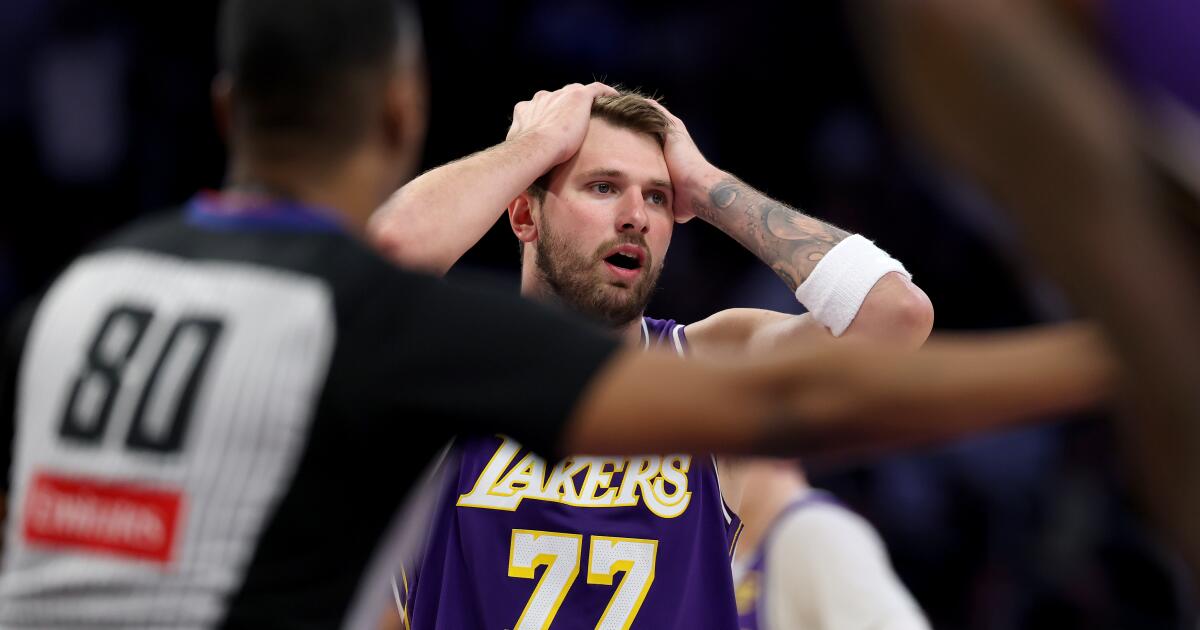
Lakers beat Nets, but Luka Doncic is facing suspension again after 16th technical

EU Parliament unblocks key political hurdle in digital euro talks

Man arrested in plot to firebomb Palestinian activist’s home after undercover op

Video: We Analyzed the Deadly Crash at LaGuardia

PWHL players bond with women’s hockey pioneers at Detroit clinic | NHL.com

Florida High School Football Rankings: Top 25 teams – Oct. 21

How old is Bo Nix? What to know about Oregon quarterback ahead of 2024 NFL Draft

Cleary's 21 help Le Moyne down Central Connecticut State 69-64 in OT

99th annual Pony Swim held in Virginia

Indiana Members Credit Union announced as new anchor tenant at Bottleworks District
EU Parliament unblocks key political hurdle in digital euro talks
Man arrested in plot to firebomb Palestinian activist’s home after undercover op

WATCH: Senate hearing goes silent after Angel Father confronts top Dem over daughter’s death

US diplomat Marco Rubio denounces settler violence, tolls in Hormuz strait

Iran-linked hackers have breached FBI Director Kash Patel’s personal emails | CNN Politics
-

 Detroit, MI1 week ago
Drummer Brian Pastoria, longtime Detroit music advocate, dies at 68
-

 Movie Reviews1 week ago
‘Youth’ Twitter review: Ken Karunaas impresses audiences; Suraj Venjaramoodu adds charm; music wins praise | – The Times of India
-

 Sports7 days ago
IOC addresses execution of 19-year-old Iranian wrestler Saleh Mohammadi
-

 New Mexico5 days ago
Clovis shooting leaves one dead, four injured
-
 Business1 week ago
Disney’s new CEO says his focus is on storytelling and creativity
-

 Technology6 days ago
YouTube job scam text: How to spot it fast
-

 Tennessee4 days ago
Tennessee Police Investigating Alleged Assault Involving ‘Reacher’ Star Alan Ritchson
-

 Texas1 week ago
How to buy Houston vs. Texas A&M 2026 March Madness tickets