Washington
Only a ‘macho man’ makes it big in Trump’s Washington


I was sitting in the waiting room of the hospital reading the newspaper while my wife, Marianne, was having a routine outpatient procedure.
When a nurse finally came in to tell me the procedure was over and that we would soon be free to leave, she smiled and added, “Nice purse you have there.”
The purse was turquoise with dark blue, swirly images of palm trees, which was, I admit, appealing.
She, of course, was proffering a well-worn joke about a man and a purse, which, by custom in our country, is exclusive to women. It was Marianne’s, and I didn’t give a thought to holding it for her, a fact the nurse likely registered from my equanimous smile.
I have no anxiety about manhood or how I am perceived based on superficial manifestations, whether it’s a colorful purse or a pink suitcase, which I do happen to use since pink was the American Tourister selection discounted 40% on Amazon.
I also must confess to having taken pleasure, in my 20s, in upsetting stereotypes held by friends on the right about liberal, socially conscious English teachers, when I bested them in football and softball, and then afterward in the sports bar at arm wrestling.
I wasn’t always so confident. At 16, I practiced wearing an intimidating scowl in the bedroom mirror, rolled up my sleeves to accentuate my budding biceps, and suffered frostbite rather than wear the mittens my mother bought me for Christmas.
If any of that seems familiar, it’s similar to what Donald Trump, Pete Hegseth, Josh Hawley, Robert F. Kennedy Jr. and other Republican males have been doing to burnish their MAGA credentials. Hegseth, in particular, has been criticized for sophomoric bravado, though his arrogance more often comes off as whining.
Hypermasculinity is all the rage
Of course, these are not 16-year-old boys insecure about their testosterone levels. Instead, this is an administration trying to compensate for mistakes and an absence of vision and of policy successes with appeals of hypermasculinity.
Can’t come up with a health care plan, a peace deal for Ukraine, or a defense for endangering American troops by divulging classified information to your relatives? Let’s do pushups on TV, announce plans to build the biggest warships in history, and blow up 35 boats in the Caribbean and Pacific that may or may not have been carrying drugs.
Can’t fix rising prices at home or bury incriminating Epstein files? Instead, let’s unleash swarms of armed, masked enforcers into American cities and launch a massive invasion of hapless Venezuela.
The GOP saw that the macho man appeal worked in getting 55% of male voters to elect Trump over female candidate Kamala Harris in 2024, including double the percentage of Black males who voted for him in 2020, and 54% of Hispanic men.
But Trump’s blatant bait and switch, promising peace and affordability on Day 1, but then goosing prices even higher with tariffs, and starting a needless war, is less likely to fool them twice.
When I became an adult, I learned that using common sense and being true to your principles are more important and less embarrassing than trying to mimic synthetic standards of manliness cooked up by Hollywood, Marvel Comics, or professional wrestling. I credit my perspective to my father, whose life-navigating ease I admired.
Charles McGrath Sr. was an accomplished and athletic Army captain during World War II. Later, when he became a father, he would not have been mistaken for a macho man with his “dad bod” and hobby jeans. But he impressed upon me and my brothers that respecting his wife and our mother, caring about other people, especially those less fortunate, and solving problems with listening and logic and compromise, instead of tough talk, intransigence and violence, were the gold standards of manhood and leadership.
Rather than preach those truths, he taught by example, one of which I wrote about in 2023, when he showed how intellect and empathy inspire more confidence than machismo and braggadocio.
So, when President Trump has talked tough, threatened allies, belittled women, mocked the disabled, denigrated minorities and “s- – -hole countries,” and boasted about his power and cognitive tests, was he demonstrating authentic manhood? Or was he, instead, throwing up a smoke screen to occlude his broken promises, past and present failures, and future fears and insecurities?
I’d be less inclined to complain, were he not doing so at the expense of our country’s soldiers and the American taxpayer.
David McGrath is an emeritus English professor at College of DuPage and author of “Far Enough Away,” a collection of Chicago area stories.


Over the course of the next few weeks, we will be taking an in-depth look at the Bengals’ 2026 opponents. The Bengals play in Washington on Monday Night Football in Week 11 against the Commanders.
2025
The Commanders went 5-12 last season, finishing third in the NFC East a year after making a run to the NFC Championship Game. QB Jayden Daniels played in just seven games due to injury after winning NFC Offensive Rookie of the Year in 2024. Veteran Marcus Mariota started eight games, going 2-6, while now-Bengal Josh Johnson logged two starts under center.
Washington’s offense averaged 20.9 points per game last season, ranking 22nd in the league. Without their second overall pick quarterback, the Commanders struggled to pass the ball, averaging 184.1 passing yards per game, good for 24th in the league. The team’s top receiver Terry McLaurin played in 10 games as he too struggled with injuries. As a result, former San Francisco 49er Deebo Samuel led Washington with 72 receptions for 727 yards and five touchdowns.
The Commanders were more effective on the ground, ranking fourth in yards per carry (4.7) and yards per game (134.7). Washington primarily featured two backs: rookie Jacory Croskey-Merritt and Chris Rodriguez. Croskey-Merritt paced the team in attempts (175), yards (805) and touchdowns (eight) while Rodriguez added 112 carries for 500 yards and six scores.
On the other side of the ball, the Commanders allowed 26.5 points per game, the sixth most in the NFL, and 384.3 yards per game, the most in the league. Washington allowed the third-most rushing yards per game (141.8) and fifth-most yards per carry (4.8). The defense allowed 242.5 yards per game through the air, the fifth most. The unit struggled to force turnovers as well, notching the second-fewest takeaways in the NFL with 10.
Offseason Changes
Head coach Dan Quinn had to replace both coordinators this offseason, as the team decided to mutually part ways with former offensive coordinator Kliff Kingsbury and let go of defensive coordinator Joe Whitt Jr. The Commanders hired two first-time coordinators in David Blough (OC) and Daronte Jones (DC).
Washington overhauled its defense this offseason, starting with the defensive line. The Commanders signed former Ravens and Chargers DE Odafe Oweh to a four-year deal, former Texans DT Tim Settle Jr. to a three-year deal and former Jaguars and Patriots DE K’Lavon Chaisson to a one-year deal. They also drafted DE Joshua Josephs from Tennessee in the third round of the 2026 NFL Draft.
The team added LB Leo Chenal from the Chiefs in free agency and spent the seventh overall pick in the draft on LB Sonny Styles Jr. from Ohio State. On the back end, Washington signed S Nick Cross and CB Amik Robertson.
On the offensive side of the ball, Washington let Rodriguez walk in free agency and signed former Browns RB Jerome Ford and former Buccaneers RB Rachaad White instead. It added depth to the receiver room with one-year deals for Dyami Brown and Van Jefferson and used a second-round pick on Clemson WR Antonio Williams. The Commanders also signed TE Chig Okonkwo to a three-year contract from the Titans.

Donald Trump’s plans to build a skyline-altering arch in the nation’s capital won initial approval Thursday from a key federal commission, but its members put off a decision on whether a federal law that limits building heights should be applied to this project.
Despite overwhelming public opposition, the National Capital Planning Commission voted to approve preliminary site and building plans for the 250ft (76m) arch the Republican president wants to build on a traffic circle at the Virginia end of the Memorial Bridge from Washington.
The project, one of several being pursued by Trump in his quest to reshape parts of the nation’s capital to his liking, moved a step closer to reality with the vote.
Staff had recommended in its report on the project that the commission grant such approval and request a series of changes so the arch would comply with the Height of Buildings Act. The suggested changes included redistributing the heights among the main structure of the arch, the habitable roof, where an observation deck is planned, and the statues that would top it.
But commissioners, led by chair Will Scharf, voted to continue deliberations on whether the law indeed applies.
The staff report said the commission has long applied the law in its approval process. Scharf said the applicant, which is the interior department, had, as requested, provided a legal analysis that he said makes a “compelling argument” that the law “is not binding on the federal government”.
The interior department oversees the federal land where the arch would be built.
Eight of the 12 commissioners, including Scharf and two others appointed by Trump, voted for preliminary approval. One was against, and the remaining three commissioners voted present.
“This is a complex project,” Scharf said before the vote. He said a vote on final approval could come at the agency’s next meeting, in September.
All 12 commissioners listened to a summary of the staff report and its recommendations, and heard from several dozen people who had signed up to testify about the project.
As the commissioners met, construction continued at the White House on a $400m ballroom Trump is building there and crews draped tarps over the stone columns at the north entrance to the mansion, where work is being done to scrape off layers of paint.
Some of those who testified against Trump’s project opposed building a celebratory arch so close to Arlington national cemetery. Others suggested it would be more appropriate for a neighborhood near the Capitol and sporting venues.
Opponents say the arch is too big and would disrupt the carefully designed view between the Lincoln Memorial and Arlington national cemetery that was meant to symbolize the reunification of the north and the south after the civil war.
The arch would be more than twice as tall as the Lincoln Memorial, which is 99ft (30m) tall, and close to half the height of the Washington Monument, at about 555ft (169m) tall.
Concerns about vehicular traffic and pedestrian safety also were expressed on Thursday. Others insisted that Congress must approve the arch – a position Trump disagrees with.
The US Commission of Fine Arts, a separate federal agency, approved the design for the arch in May. The National Capital Planning Commission oversees construction on federal land in the city and began reviewing the arch plan in June.
Trump had said last year that the arch could be paid for with unused funds from the hundreds of millions of dollars he said he has raised from corporations, donors and other wealthy people to pay to build a new $400m ballroom at the White House.
But, as it turns out, some public money will be used for the ballroom project, as well as the arch. The White House has not released a cost estimate for the arch.

The Washington Commanders are retiring John Riggins’ No. 44 during the upcoming NFL season, the team announced Thursday.
The Hall of Fame running back will be honored in a ceremony at halftime of the team’s game against the Los Angeles Rams on Nov. 8.
“There are certain players whose impact goes far beyond statistics, championships and accolades: They become woven into the identity of a franchise,” controlling owner Josh Harris said in a statement. “John Riggins is one of those players. …Our fans not only admired him, they identified with him. He is authentic, unapologetically himself and deeply connected to the people around him. John has meant so much to this franchise, our fans and the game of football.”
Riggins is the organization’s all-time leading rusher with 7,472 yards and 79 touchdowns on 1,988 carries and helped the team win the Super Bowl in the 1982 season.
The fan favorite nicknamed “Riggo” was the MVP of that Super Bowl for his performance best known for his memorable 43-yard TD run in the fourth quarter that put Washington ahead of the Miami Dolphins. He was inducted into the Pro Football Hall of Fame in 1992.
Riggins is the seventh player to have his number retired by the team, joining Sammy Baugh, Bobby Mitchell, Sean Taylor, Sonny Jurgensen, Darrell Green and Art Monk. Green, Monk and Riggins have all happened since Harris’ group took over from longtime owner Dan Snyder.
-

 Technology4 minutes ago
No, Flock isn’t threatening people for debating surveillance
-

 World7 minutes ago
Israel signals readiness for another Iran strike as Trump declares ceasefire over
-

 Politics12 minutes ago
Kelley Paul: America’s Founders were the ‘first civil rights heroes’
-

 Health19 minutes ago
Your resting heart rate could reveal more about your health than you think, doctors say
-

 Sports22 minutes ago
Shohei Ohtani ruled out of MLB All-Star Game as Dodgers plan to manage nagging injury
-

 Technology34 minutes ago
Fake VA shoe offer targets veterans
-
 Business37 minutes ago
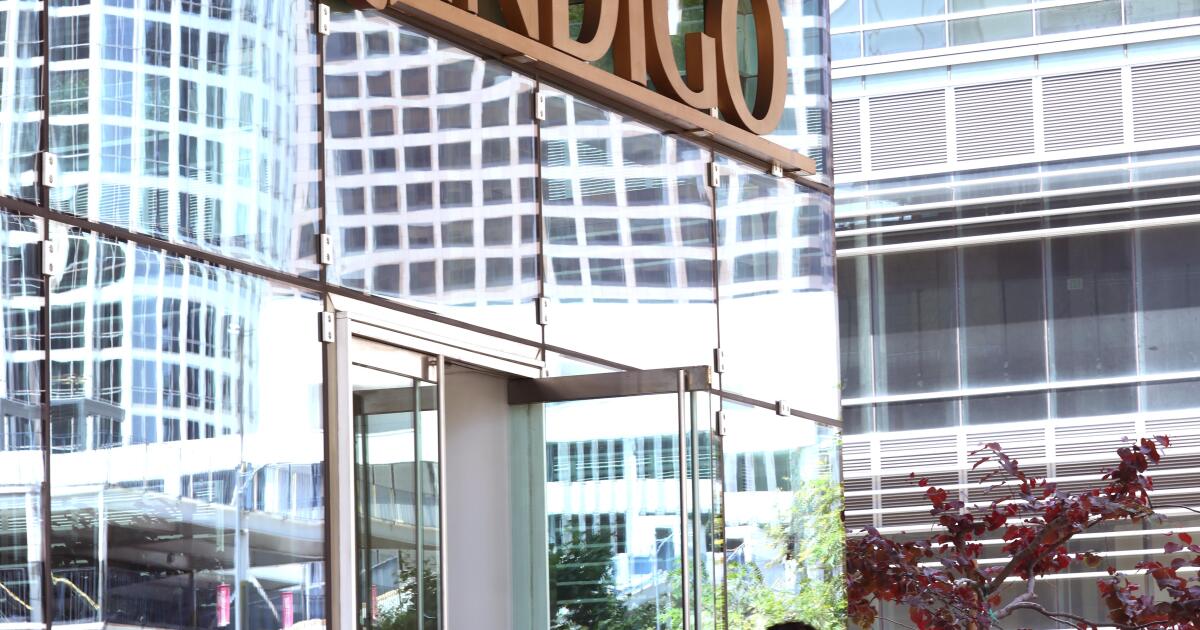
Los Angeles hotels saved by last-minute surge in World Cup bookings
-
 Entertainment42 minutes ago
Emily Ratajkowski’s viral essay on sex life as a single mom scores her a seven-figure book deal

