Utah
Utah Jazz Season Preview: What is Jordan Clarkson’s value with the Jazz?


Veterans and rebuilding basketball teams—it’s not always the most natural fit. For the Utah Jazz, a team knee-deep into an all-out tank job, discovering the proper role for each player on the depth chart is essential for both player development and creating a strong team culture to build from when the team has (in theory) developed into a championship contender.
The Jazz have struggled to find the proper balance for their roster since blowing up their all-star core of Mitchell and Gobert, with ruins of that era littering the locker room with no real direction. Now, with Utah’s ship veering into the vicious waves of the NBA lottery chase, signing talented veterans can feel like stuffing a square peg into a round hole—even a toddler knows that’s a bad idea.
I present the Jordan Clarkson dilemma. Clarkson is a flamethrower scorer, capable of offensive fireworks at a moment’s notice. With the contending Jazz, he was the perfect sparkplug scorer off the bench for offensive lulls. Now, as the roster is populated with young and developing talent, Clarkson’s value has become somewhat uncertain.
Now 31 years old, Clarkson is a former 6th Man of the Year who averaged 17 points per night during the 2023-24 season. He’s expanded his game with the Jazz—especially in regards to playmaking and rebounding. Don’t you remember when he earned the first triple-double the Jazz have seen in over a decade?
But if he’s such a valuable asset, why hasn’t he been picked up by a serious championship contender ready to go all-in for a title run?
Good question, and one that’s sort of tricky to really stake down as we don’t have a solid answer. My thoughts boil down to a trio of roadblocks (some less easily ignored than others).
Finding Clarkson’s trade value is like a classic game of Pitfall. Obtaining the prize goes deeper than simply going through the motions. Swinging from vines, vaulting bottomless pits, and clearing crocodile-infested ponds, making a Jordan Clarkson Trade is no walk in the park. We have to explore beyond why teams would want to add the scoring machine, and instead shift toward the pitfalls of spending valuable assets on a player with his skill set.
So let’s journey deeper into the jungle of roster manipulation and better understand what may stand in the way for teams hoping to bolster their team into a championship-ready squad.
Obstacle 1: Defensive Disability
It’s no secret that Clarkson brings very little on the defensive end of the floor.
Not that he doesn’t bring effort and hustle to that half of the game—he takes great pride in his performance when taking the court, but one physical aspect of his resume leaves Clarkson at a disadvantage.
To be blunt: he’s small. And unlike Ash from Fantastic Mr. Fox, he doesn’t utilize that attribute much to his advantage. When protecting the basket, Jordan is frequently outmuscled and overpowered by larger opponents. Too small to be a shooting guard, but without the natural point guard repertoire, Clarkson is in positional limbo, and that’s a serious negative for teams that may want to add the Filipino to their active list.
How can a playoff team keep Clarkson on the floor while understanding full well that he’s likely to become the target of the strategy known as the Grayson Allen treatment? If he’s on the floor, attack him on defense!
Defense wins championships. It may be a cliche, but you can’t deny that defense is a vital aspect of championship contention. Any team looking to transplant the flamethrower into their delicate ecosystem may get burned come playoff time, and Clarkson is likely too deep into his career to change who he is.
Obstacle 2: Mo’ Money, Mo’ Problems
:no_upscale()/cdn.vox-cdn.com/uploads/chorus_asset/file/25614357/2099733780.jpg)
In this money-driven age of player empowerment, installing the Jordan Clarkson firmware onto your bench will be an expensive undertaking. After signing a contract extension with Utah last summer, he inked a contract for $55 million from that date until the 2026-27 season.
The good news? For the next two years, Clarkson’s salary will dip to $15 million per year for the next two seasons, a significant discount when taking his $25 million 2023-24 season into account.
A team pushing their chips to the center of the table should be more than willing to add $15 million to their payroll, but is Clarkson available enough to make this premium worth the pain?
Last season, Clarkson was a bit of a hobbled cheerleader—often injured, rarely playing, and only earning time off the bench when he was available. Jordan appeared in 55 games with the Jazz last season, which was his lowest mark since his 2017-18 season in Cleveland.
If he were on a championship contender—think New York or Boston—it’s not hard to imagine Clarkson bragging about his Mark Breen-flavored highlight reel in the same way Nick Kroll celebrated his new hairstyle: “I GOT BANGS!” His scoring ability is phenomenal at his size, and he would bring real value to any team that adds him.
But what you see is what you get, and for some teams, it may not be enough to justify flirting with the aprons of the salary cap.
Obstacle 3: Never Ever Ever Trade With Danny Ainge
:no_upscale()/cdn.vox-cdn.com/uploads/chorus_asset/file/25614373/1749116100.jpg)
In the ancient lore of the National Basketball Association, a prophecy describes a man capable of creating a masterpiece and destroying a nation in one effortless motion. Capable of trading a washed-up Kevin Garnett and Paul Pierce for the Nets’ entire future and trading down from the number one pick just to select the best draft prospect a few spots later.
This man, nay, this myth, is Danny Ainge, and you don’t trade with him.
After building the Boston Celtics’ championship core, the former BYU basketball star turned NBA champion left his comfy position in Boston’s front office in favor of leading a rebuild in Utah. Tearing down the foundation and replacing cherished family heirlooms with draft capital and a new generation of residents, Ainge has taken control of the Jazz and has a stranglehold on any who feel bold enough to engage in trade negotiations.
Ainge ripped 5 first-round picks from the Timberwolves for Rudy Gobert, 3 for Donovan Mitchell, and a plethora (yes, I said a plethora) of young talented players who have become beloved figures across the Salt Lake Valley.
Though his offerings are enticing, trading with Danny Ainge has proven to only lead to pain and heartache down the road, as the players and draft picks that were once your own become players you would do anything to get your hands on.
Never trade with Danny Ainge. Not even for something as innocent as Jordan Clarkson.
Does Clarkson bring value to the Jazz? As a veteran presence in the locker room, young players look up to him and follow his example as they weave their way through the dizzying tapestry of their NBA careers. That’s the whole reason why the Jazz signed aging point guard Patty Mills this offseason—Utah’s roster is full of young players who will need to develop into serious NBA-level contributors if this rebuild will ever be successful.
By all indications, Clarkson loves living in Utah and loves his role with the Jazz—we aren’t likely to see Jordan demand a trade any time soon. How long will it be until Clarkson’s trade value falls, though? As he grows older, league-wide interest will decrease.
He isn’t a one-man wrecking crew capable of carrying the Jazz on his back, so his presence is far from a detriment to Utah’s rebuild. I just can’t help but wonder what his purpose with this Jazz team will be moving forward, and if both parties may be better off if they were to part ways.
For the 2024-25 season, I say keep the phone lines open and listen to every offer that may come your way, but don’t settle for a trade that’s “good enough” (that’s never been the Ainge way, so why start now?). This may be one of the last opportunities to get value in return for Clarkson, but maybe the Jazz are comfortable where they stand.



It has been a long time since the Jazz last played a meaningful game I desperately wanted them to win, and it is unhealthy how excited I am for this matchup. After a solid three games in the SLC Summer League, the Jazz head south to Las Vegas, and as hot as the desert sun is sure to be outside, on the court, the Thursday night primetime game featuring the top two picks in the draft will be much hotter.
How to Watch the Las Vegas Summer League?
Who: Utah Jazz vs Washington Wizards
When: Thursday, July 9, 2026 | 7:00 MT
Where: Thomas & Mack Center, Las Vegas, NV
How to watch: ESPN, Jazz+
Darryn Peterson and AJ Dybantsa
Summer league games do not matter in the record books, but this game is a statement-making opportunity for both AJ Dybantsa and Darryn Peterson. Given the historical nature of this draft class, especially at the top, there is some real juice to this game that is atypical of most Summer League games. AJ has the chance to silence the noise that has swelled after Darryn’s remarkable performances in the SLC Summer League. Meanwhile, Darryn has the chance to ratchet up the noise and take the NBA world by storm with another solid performance against the Wizards. Can you imagine the narratives if Darryn were to come out and dominate AJ as he has through high school and college? In the words of the great Charles Barkley, I have two words for you… Darryn Peterson, AJ Dybantsa, must-see TV.
Ace Bailey looked really impressive in his 2.5 quarters of play in Salt Lake before missing games with back spasms. It is unknown whether or not he will be ready to go for the Vegas opener, but if he is available, he will probably be the one checking AJ Dybantsa on defense. His combination of length and athleticism could not only make things difficult for AJ on the defensive end but also expose his lackadaisical defense on the offensive end. If Ace is able to go, he will be looking to show the Jazz and the NBA that he is ready to take a leap in year two.
Which Jazz Big Man Will Stand Out?
Which big man will step up this game? In Game 1, we saw a lot of Kylor Kelley, who was a little less than impressive. Against Memphis, Jaxon Kohler, the Utah native, showed up and showed out against Cam Boozer. In game three, although the number of NBA-level players was few and far between, Jonas Aidoo stole the show with his rebounding and ability to play his role. Will we see one of those same three guys seize their opportunity, or will another guy like Micah Handlogten or Eric Dixon steal the show? We saw how vital a big that can roll and catch passes is for Darryn Peterson as a lead guard, playmaking-wise. It will be interesting to see who steps up to the plate to relieve pressure when he is blitzed and double-teamed.
SIDE NOTE: Adam Silver is LAME
No one should ASPIRE to be as boring as Adam Silver. After much excitement was made about Keyonte George making his unofficial coaching debut on Thursday night, according to Sarah Todd, the league has nixed that excitement and won’t allow Keyonte to be coaching on the sideline because who knows why…? I guess they were worried about the Jazz circumventing the salary cap to pay Keyonte or something. Anyways, I guess Will Hardy’s coaching TREE will have to wait for more branches to grow. Adam Silver remains evil in my book.

SALT LAKE CITY, UT (Good Things Utah) – A Park City charitable foundation is challenging outdoor athletes to turn their miles into meals for hungry kids. Terrence Moorehead is the co-founder of the non-profit RipLine Foundation. He says the RipLine Foundation seeks to channel the energy of Utah’s outdoor athletes, adventurers, and enthusiasts into the fight against childhood hunger. RipLine’s mission: Fight Hunger Feed the Future. It’s delivered through three peer‑to‑peer leader challenges across the year that turn movement into meals for children in need. 100% of funds raised go directly to vetted giving partners, including No Kid Hungry, Feeding America, Feed the Children, and Vitamin Angels.
The challenge is to turn every mile walked, run, biked, or hiked, and every hole of golf played into meals for kids facing food insecurity. Terrence says ‘Outdoor athletes are the most generous, motivated, and passionate community in the state and we’re done pretending we can’t do something to help our kids. Every mile is a meal. Every climb is a meal. Every round of golf is a meal. If you’re already moving, you’re already qualified.’
He says this summer they have Miles in the Wild™ – walking, running, biking, and hiking – which currently runs through September, and Balls Out™ which is our summer golf challenge. They are encouraging athletes in their preferred sport to rally networks of family, friends, coworkers, and crews to sponsor their effort.
Terrence says ‘Childhood hunger is unacceptable in a country this abundant — and it’s an area where we can have a real and meaningful impact. What’s been missing is a model that scales — that turns individual effort into measurable, repeatable impact. RipLine is built to do exactly that. Every Leader brings a network. Every dollar reaches a child. The math works. The Foundation has committed to providing one million meals in 2026 alone — its first year of fundraising — with a 2030 target of four million meals and one million children nourished.’
To sign up go to riplinefoundation.org

SALT LAKE CITY — Rep. Mike Kennedy, R-Utah, views liberty as a driving force in American history, which is why he’s thrilled about a 60-foot-long and 36-foot-tall arch planned for a space near the Utah Capitol.
The Grand Liberty Arch, designed by renowned artist Sabin Howard, is expected to become one of the largest bronze sculptures in the West by the time it’s completed over the next seven years. Kennedy believes it will highlight the effort to gain liberty over the past 250 years.
“For two and a half centuries, liberty has been an active ingredient in the background of American history, and the driving engine of our national progress,” he said on Monday, as a 6-foot model of Howard’s piece rotated within the Utah Capitol rotunda next to him. “It is the vital spark that transformed a collection of colonies into a beacon of global innovation and human potential.”
However, those who live near its planned location are less excited by the state’s plan, not by the sculpture as much as the spot the state has in mind and the process by which it was selected. They believe it will drastically alter a longstanding open space, and question why the project was voted on quickly without much public feedback.
The Grand Liberty Arch
The Capitol Preservation Board signed off on the project in May, with the expectation that the estimated $55 million cost will be raised privately. Former Zions Bank CEO Scott Anderson was working with JLL Salt Lake City Real Estate to raise the funds, meeting with family foundations and large corporations, officials said during the meeting.
Utah Gov. Spencer Cox penned a letter in support of the project in February, saying that he believes in the “significance of this legacy piece.” Howard, who recently completed a World War I memorial in Washington, D.C., had his latest vision on display at the Utah Capitol over Fourth of July weekend, so people could better view his vision.
The sculpture depicts many elements of the past 250 years in the U.S., from the Revolutionary War and the signing of the Declaration of Independence to the building of the country and its westward expansion. An unveiling ceremony was held Monday, where Howard and others were able to describe it and its importance for now and the next 250 years.
“America is dynamic. … Americans do not stand still,” he said. “The Grand Liberty Arch is a celebration of liberty that has transformed our nation.”
It’s expected to be built in phases over the next seven years, completed in time for the 2034 Winter Olympics and Paralympics. Over 100 people showed up for the ceremony, making sure to snag a photo of the model by the end of it.
A neighborhood’s concern
The sculpture is to be located at 17 W. 500 North, on a parcel across the street from the Utah Capitol, informally known by some as the Capitol triangle. Utah owns the land, but it’s also not considered part of the primary Capitol Complex, meaning it’s not subject to some of the same Capitol grounds rules, Cox said.
Utah House Speaker Mike Schultz, R-Hooper, called it the “perfect location” during the board’s May meeting. Renderings show a plan to remove some of the park’s longstanding trees, replacing them with cherry trees around the arch that essentially adds to the Capitol’s walkway.
The location has also created a stir within its neighborhood. The Capitol Hill Neighborhood Council ended a June 17 meeting by debating several options to respond to the state’s decision.
There were some concerns raised about some of the depictions, but most are concerned about potential impacts to the current open space, which is used for an annual gathering, but also smaller park space since it’s located right next to homes, said Jonathan Bruns, chairman of the Capitol Hill Neighborhood Council.
“It’s off the main (path), so it’s a little … removed from the main grounds. It’s usually a quieter spot,” he explained.
With thousands of people projected to cross the street to view the piece, they said it could snarl traffic along Capitol and Columbus streets. Others were concerned by the size and scale of the project and the quick process to select a design, which appeared to include little to no public feedback.
Salt Lake City Councilman Chris Wharton, whose district includes the area, pointed out that the state is exempt from local processes, meaning there’s nothing the city or county could do to intervene. As a resident and lawyer, he suggested a formal complaint to the Capitol Preservation Board over the monument process around the Capitol complex, which the neighborhood council plans to do.
The council agreed to submit a formal complaint to the board and Utah Attorney General’s Office to make sure that the board followed Utah’s Open and Public Meetings Act and normal processes for a monument. It also agreed to submit a public records request on the project for a “comprehensive report of community feedback.”
Part of the complaint centers around a discussion of a 100-year monument project for which there were two options discussed in May, separate from the arch. One celebrated the golden spike, while the other highlighted women’s suffrage in Utah, but the project was placed on hold over logistics.
Board members didn’t abandon the project, but said the arch could ultimately serve as the selection. That made the neighborhood question if it followed the correct process for monuments, Bruns explained.
“It kind of seems like this went around the rules in an odd way. … We are obviously doing work to make sure it was done by the right processes,” he said.
The attorney general’s complaint has since been filed, while the rest are in the works, he told KSL. He’s unsure if the council would file a lawsuit over the time and money that would strain a volunteer group of residents.
Bruns credited Howard for being responsive, adding that he’s hopeful the state can also be understanding of the neighborhood’s concerns, whether that’s project adjustments or a new location.
The Key Takeaways for this article were generated with the assistance of large language models and reviewed by our editorial team. The article, itself, is solely human-written.
-
 Business6 minutes ago
California soccer fans sue StubHub after it fails to deliver expensive World Cup tickets
-
 Entertainment9 minutes ago
Lucas Museum to give free annual passes to South L.A. neighbors, host community preview day
-
 Lifestyle14 minutes ago
Meow Wolf taps famed L.A. animation house for its new Los Angeles venue
-
Politics21 minutes ago
Column: Trump decries ‘communism’ while his government takes ownership of companies
-
 Science24 minutes ago
‘I’d rather my house burn down than get cancer’: Herbicide use upends California’s fight to save forests
-
 Sports29 minutes ago
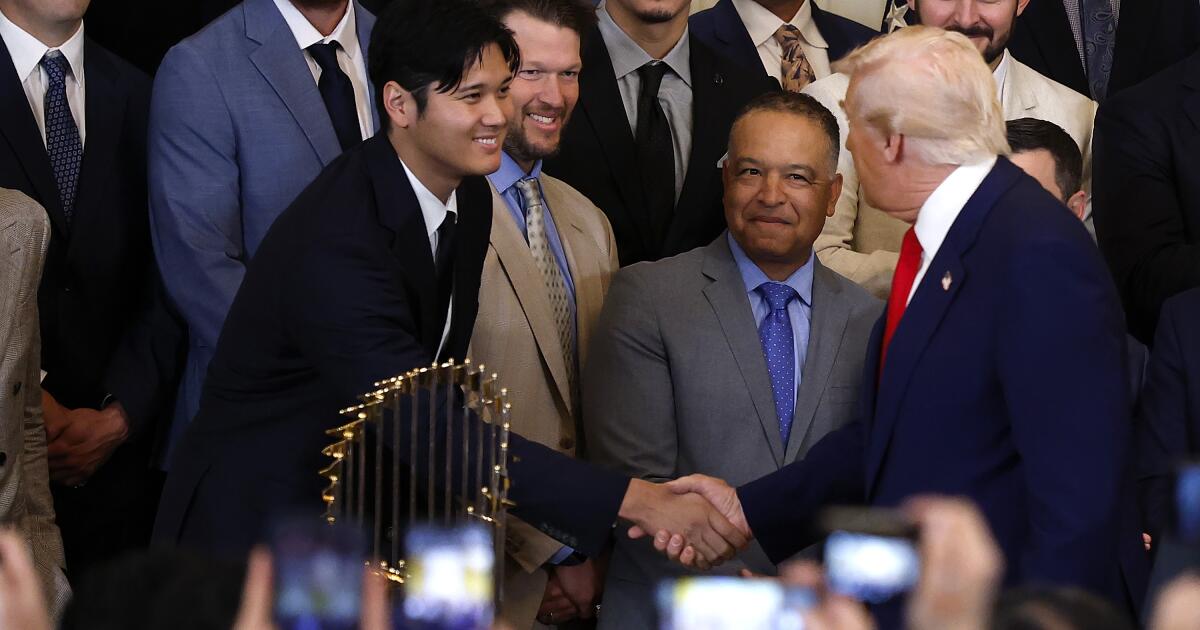
Dodgers scheduled to visit White House in late July to celebrate 2025 World Series win
-

 World39 minutes ago
Former US Olympian pleads not guilty in DC reflecting pool vandalism case
-
 News1 hour ago
Former Olympian pleads not guilty in reflecting pool vandalism charges


