Utah
NBA Rumors: New lottery rule helps Utah, hurts Grizzlies


The top-five pick rule will date back to 2025. The Utah Jazz picked fifth in 2025 and second in 2026. Under the new rule, they can’t land in the top five in 2027.
But the Jazz traded that pick to the Memphis Grizzlies in February for Jaren Jackson Jr., which means Memphis won’t be able to receive it since streaks will be triggered by the original team, not the team holding the pick. Two issues here.
First, the framework. The NBA explains this rule under a section titled “Pick Restrictions For Repeat Lottery Winners.” Is landing the fifth pick really a winner? One year ago, the Jazz were distraught when their pick landed fifth, because the true franchise-changers that teams want to win are commonly landed with the first or second pick. In the future, if a team ends up fifth one year, then fourth the next, should they really be punished for landing first in the third year? Or even fifth again? I would argue no, that the top-five rule reaches too far.
I am understanding of wanting to prevent a team from picking first in consecutive years. But anything beyond that feels like a massive overreach that could cause more problems than intended when the goal is supposed to be to eliminate tanking.
Second, there’s the reality that the Jazz did trade that pick. Now the Grizzlies have it — through the rights of a pick-swap structure. But if this rule passes, Memphis wouldn’t be able to receive an unprotected pick. Grizzlies fans would obviously be crushed by the news. This pick was the most valuable of the assets Memphis got back for one of its stars, and it happened under a set of rules that didn’t include a three-year streak cap. That Jazz-to-Grizzlies pick is being retroactively devalued because of a league’s arbitrary decision to start the clock in 2025, but it also gives us an example of what could happen in future years to any team.



BEAVER, Utah — While firefighters have been hard at work fighting what’s been called the state’s “most destructive fire in history”, what will be left after the final embers have been put out?
For Tucker High Adventure Tours co-owner Lane Tucker, it’s been a quiet day to catch up on some repairs.
Along with his father and brother, they offer backcountry skiing, rock climbing, backpacking trips and more.
Or they normally would before things came to a sudden halt after losing five of the nine condos they own to the Cottonwood Fire.
Several trip offerings have been cancelled as well, along with the popular local races like the “Crusher in the Tushar”. He estimates they’ll lose between $ 30,000 and $ 50,000 in revenue.
Despite the overwhelming uncertainty, Tucker is hopeful they can breathe new life into exploring these mountains once again.
“Some of those really thick tree stands and stuff…if the soil holds and if the snow comes in and holds well – there’s going to be some really sweet skiing,” he said. “If we just forget about it and it’s, ‘oh, that place got burned. It’s not going to be anything,’ – you’re going to be missing out.”
Businesses he’s worked with throughout the years have also been feeling the impact, Eagle Point in particular.

AMERICAN FORK, Utah (KUTV) — With students returning to classrooms next month, school districts across Utah are still working to fill hundreds of teaching positions, particularly in elementary and special education.
While Utah has one of the nation’s strongest teacher retention rates, staffing shortages remain a challenge as districts prepare for the start of the school year.
Parent Brenda Petroff said she believes low teacher pay continues to be one of the biggest factors contributing to the shortage.
MORE | Education
“Utah in general has a teacher shortage,” Petroff said. “They can get paid a lot more in other states.”
She said increasing teacher salaries could help attract and keep more educators in Utah classrooms.
“I just feel like they need to be paid more,” Petroff said. “I feel like they need to teach them things that they’re going to use in life.”
According to state data, hundreds of teaching positions remain open statewide, with elementary education among the areas experiencing the greatest need. State data also reports that about 11% of Utah teachers are considered underqualified or not fully qualified for the positions they currently hold.
Cami Harper, a former teacher turned executive director of human resources for the Alpine School District, said an underqualified teacher is someone who has not yet earned the appropriate license for the subject or grade level they are teaching.
“Luckily, the state has made it very easy and is willing to work with teachers to get a license to allow them to be qualified,” Harper said.
The Alpine School District is looking to hire about 22 teachers before the school year begins.
Harper said the district’s greatest staffing needs are in special education and certain specialized secondary subjects, where applicant pools tend to be smaller.
“For us and the state, special education is a very high-need area,” Harper said. “We’ve been blessed to have great candidates apply, but we don’t have as many applicants applying for those positions.”
Harper said Alpine has fewer vacancies than in previous years, in part because of declining enrollment — a trend affecting several districts across the state.
KUTV contacted nearly a dozen Utah school districts for updated vacancy numbers and information about their hiring efforts. Many district officials were unavailable because of the holiday week. This story will be updated as additional information becomes available.
_____

The move gives the Aggies “instant credibility” on the recruiting trail, Bronco Mendenhall says.
(Francisco Kjolseth | The Salt Lake Tribune) The Old Main building at Utah State University in Logan on Monday, Nov. 17, 2025.
-
 Lifestyle3 minutes ago
L.A. Affairs: He wanted L.A. I wanted New York. A panic attack changed everything
-
 Politics7 minutes ago
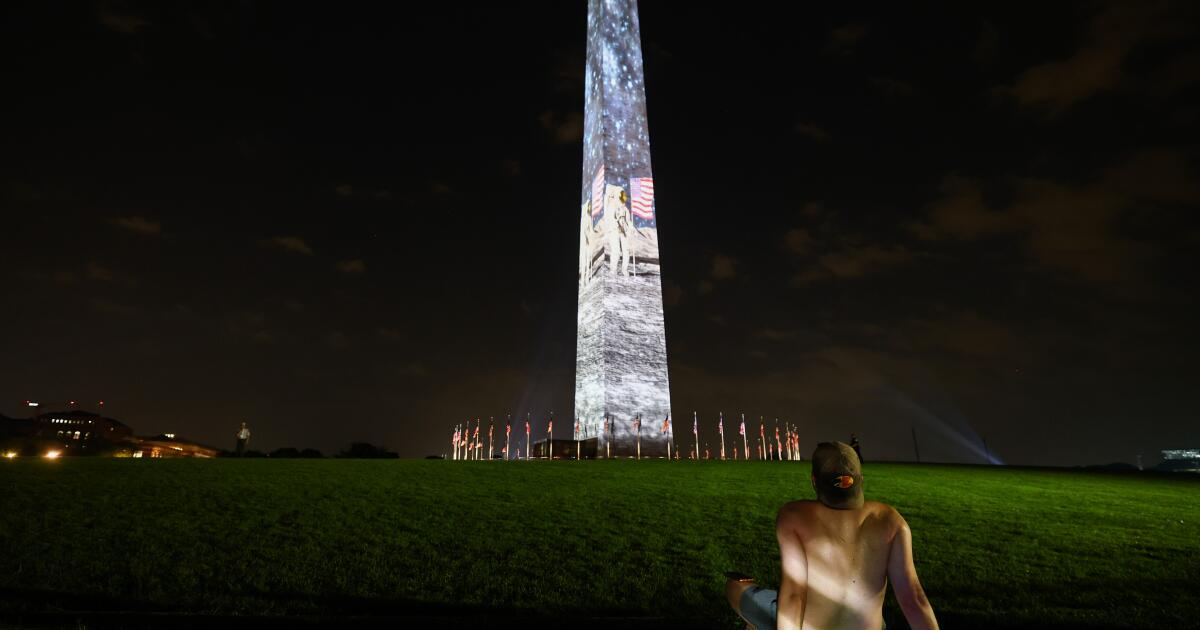
Trump refashions America’s 250th as a celebration of himself
-
 Sports22 minutes ago
How Dodgers’ Max Muncy, vying for his third All-Star selection, continues to evolve
-

 World34 minutes ago
Germany’s Merz defends NATO spending after Trump calls it ‘ridiculous’
-
 News57 minutes ago
Oregon ER doctors win a ‘David and Goliath’ battle against a national company
-

 Videos2 hours ago
Iran gets ready for Khamenei’s funeral • FRANCE 24 English
-

 Los Angeles, Ca2 hours ago
2 arrested after 3 LASD deputies injured during East L.A. World Cup celebration
-

 Detroit, MI3 hours ago
Ex-girlfriend in custody after Taylor man found fatally stabbed, police say

