Utah
Major TRAX delays are expected for a month beginning this weekend


SALT LAKE CITY — A project to repair light-rail lines near the Salt Lake City-South Salt Lake border could create significant delays across Utah Transit Authority’s TRAX system for about a month.
Delays of 30 minutes or more are expected to begin on Sunday while crews rebuild the 2100 South grade crossing and perform rail replacement and infrastructure upgrades in the area. It’s a section where UTA’s blue, green and red lines all cross, meaning that service will be impacted across most of the system.
All southbound trains will stop at Ballpark Station, and a bus bridge will take riders either to Meadowbrook Station (3900 South) for people planning to continue along the red or blue lines, or to River Trail Station (2340 S. 1070 West) for people traveling along the green line. The bus will also connect riders to any stations between the closure area, such as the Central Pointe and Millcreek stations.
The Meadowbrook and River Trail stations will also serve as the northernmost points for southbound trails, for anyone traveling to Salt Lake City from Draper, South Jordan, or West Valley City, until the project wraps up, which isn’t expected until June 20.
UTA’s TRAX system attracted nearly 40,000 average weekday riders in March, according to agency data.
Garna Meija, KSL
A “full lane closure” of 2100 South at 200 West will begin at 9 p.m. and continue through midnight on May 31, leading to headaches for drivers, as well. Drivers are urged to take alternate routes at that time.
It’s one of a few projects UTA has planned for this summer:
- UTA also plans to rebuild the track at the 600 South intersection in Salt Lake City, which will require a bus bridge for all three lines from July 5-11. That will run between the Ballpark and Gallivan Plaza stations for green and blue-line trains, and the Library Station for red-line trains. Delays of 15 to 30 minutes are possible at the time.
- Crews will also replace worn-down rails between the Fashion Place Station in Midvale and Historic Gardner Station in West Jordan, between July 25 and Aug. 15. That will also create delays of up to 15 to 30 minutes.
S-Line extension construction begins
Meanwhile, construction is also slated to begin next week on the long-awaited extension of the S-Line streetcar in Salt Lake City’s Sugar House neighborhood.
UTA’s plan calls to extend the line’s current terminus at Fairmont Station, 2216 S. McClelland Street, to the western end of the Sugar House Shopping Center near 2227 S. Highland Drive. Salt Lake City leaders signed off on an interlocal agreement in March that finalized planning for the $43.6 million project, setting up construction that will continue into 2027.
“This extension may seem short, but its impact is huge and part of a long-term effort making it easier to choose transit, reduce traffic and support local businesses at the heart of Sugar House,” said Salt Lake City Councilwoman Sarah Young at the time.
The extended service is expected to be available to riders beginning in August 2027.
The Key Takeaways for this article were generated with the assistance of large language models and reviewed by our editorial team. The article, itself, is solely human-written.



SALT LAKE CITY — The Huntsman Center was a sleeping giant on Saturday afternoon as Cam Boozer and the Memphis Grizzlies crushed the Oklahoma City Thunder.
As that game concluded, empty seats began to fill and anticipation grew in the Utes’ home arena.
That anticipation culminated in an explosion of cheers as the Utah Jazz took the court, led by none other than rookie guard Darryn Peterson.
Darryn Peterson Shows Out In Salt Lake City Summer League Debut
Peterson’s first game with Utah draped across his chest was all that fans and the front office could’ve hoped for, and then some.
The first possession of the game for the Jazz ended with a layup from Peterson, and the points seemingly never stopped rolling in. The rookie was the team’s leading scorer at the end of each quarter.
The positive signs weren’t only when he had the ball in his hands, though. He finished with two blocks, but his defensive impact extended far past the box score. He often matched up with Atlanta guard Kingston Flemings, who finished the night shooting 4/16 from the field.
Darryn Peterson and Cody Williams each with a big block early. Good defensive activity from both.
— Chandler Holt (@CHoltSports) July 4, 2026
What was maybe most impressive was his efforts in the fourth quarter and in overtime. He scored 10 points in his last 8:35 on the court, and willed the Jazz to a win with some big plays late.
Peterson finished with 28 points, five rebounds, two assists, and two blocks. He shot 52 percent from the floor and 57 percent from three.
The only real blemish on his performance was eight turnovers. However, many of those are shared fault, if not totally on teammates for dropping well-placed passes.
Peterson is the first Jazzman since Donovan Mitchell to score 20+ points in his SLC Summer League debut, eclipsing Mitchell’s 23-point mark from the 2017 event.
Ace Bailey, Cody Williams Shine Against Atlanta Hawks
The performances of Cody Williams and Ace Bailey almost went under the radar as a result of the hype built around Peterson. But they still came to play. That trio of Jazz players were likely the three best players on either side in Saturday’s contest.
Bailey only played 20 minutes, but still finished with 10 points, six rebounds and two stocks. The sophomore forward was ruled out for the rest of the game early in the second half with back spasms.
Williams played the most minutes on the team at 34 and finished with 17 points, five rebounds, one assist, and three stocks.
Both of the forwards looked to have added noticeable weight so far in the offseason and used it to their advantage to generate easy looks. Williams specifically threw down a pair of poster dunks that caused fans in the arena to jump to their feet.
Easily the dunk of the day.pic.twitter.com/vVxNEMKMQQ https://t.co/7DirAGYUz8
— Chandler Holt (@CHoltSports) July 4, 2026
About Darryn Peterson
Peterson, born in Northeast Ohio, quickly rose through the ranks as one of the best basketball prospects in the country.
He played prep basketball at Cuyahoga Valley Christian Academy in his home state before moving to West Virginia and then California for his junior and senior years.
On November 1, 2024, Peterson made his commitment to the University of Kansas.
In his lone year with the Jayhawks, Peterson averaged 20.2 points, 4.2 rebounds, and 1.6 assists on 43.8/38.2/82.6 shooting splits.
Austin Ainge, Utah Jazz unfazed by Darryn Peterson injury history
In 2026, the Utah Jazz selected Peterson with the No. 2 overall pick, tied for the highest selection in the franchises history.
Salt Lake City Summer League History
The annual showcase of both rookies and young talent in the NBA is returning to Utah for the 11th time.
The modern iteration of the event debuted in 2015 with the Rocky Mountain Revue moniker, a nod to the pro-am roots of a similar event that was held in the late 1980s, 1990s, and into the 2000s.
The event was rebranded to the Utah Jazz Summer League in 2017, and changed once again in 2019 to the Salt Lake City Summer League.
Memphis has competed in the event for seven straight years. 2026 will make it eight in a row. OKC will reach its fifth year in a row this summer.
The list of notable names to hoop in Utah in early July is a long one. Aside from the obvious Jazz stars over the last decade, Jaren Jackson Jr., Ben Simmons, Trae Young, Jayson Tatum, Chet Holmgren, and more have all competed in the SLC Summer League.
Chandler Holt is the Utah Jazz insider for KSLSports.com and co-host of the Jazz Notes podcast. Follow Chandler on X for Jazz and NBA updates.
Take us with you, wherever you go.
Download the new & improved KSL Sports app from Utah’s sports leader. You can stream live radio, video and stay up to date on all of your favorite teams.

MONTICELLO, Utah (KUTV) — The second-largest wildfire in the nation has burned more than 87,500 acres and destroyed five structures in southeastern Utah.
The Babylon Fire reached a total of 87,554 acres in San Juan County, officials with the U.S. Forest Service said in a Saturday morning update.
More resources arrived in the area, with 730 firefighters now working to control the wildfire, which remains at 0% containment.
The cause of the fire, which ignited on June 26, has not yet been determined.
MORE | Utah Wildfires:
Utah has the two largest wildfires in the nation, with the Babylon Fire about 9,000 acres smaller than the Cottonwood Fire. The Cottonwood Fire has burned 94,417 acres in Beaver and Piute Counties and is 25% contained.
While the fires both saw little growth overnight, officials said hot, dry weekend temperatures could potentially lead to increased fire activity. They said a Fire and Fuels Advisory has been issued for the state of Utah.
“This extreme dryness, combined with an unstable atmosphere, will naturally increase the potential for the fire to flare up and create large smoke columns,” officials said.
BE THE FIRST TO COMMENT
___

According to Shams Charania, the Utah Jazz signed Josh Okogie to a 2-year $12M deal.
Okogie shot 38.5% from three last season in Houston, as Charania mentions, and fills a need for the Jazz, who are looking for defensive help on the perimeter.
It’s a clear sign that Utah is in the business now of building its roster to compete next season for a playoff spot. After the Walker Kessler trade, the starting lineup will likely be Keyonte George, Darryn Peterson, Lauri Markkanen, Jaren Jackson Jr., and Jusuf Nurkic. But Utah needs depth and defense. With Okogie on the roster, the team gains a veteran presence and a defense-first player who can also shoot. It’s likely to be a trend for Utah going forward that they bring on players with size who defend but are also capable shooters and scorers on offense. At this point, Utah is not in the business of taking on project players but is looking to fill needs on its roster. Okogie does just that.
At this point, the most likely potential signings, or trade, could be more center depth after the Kessler trade, and possibly another ball-handling guard. It’s not clear if Utah is done with the roster but this signing will add nice depth.
-

 Politics5 minutes ago
Expert who fled Cuba warns of ‘vicious cycle’ that will lead to ‘communists in double digits’ in Congress
-

 Health12 minutes ago
July 4 heat delays America 250 celebration as State Fair guests share love of USA
-

 Sports15 minutes ago
Toronto Maple Leafs top pick Gavin McKenna reveals that he’s changing his jersey number
-

 Technology20 minutes ago
China’s robot-run hotel opens to public in 2027
-
 Business27 minutes ago
China-backed AI tool behind fake Brad Pitt fight making Hollywood inroads
-
 Entertainment30 minutes ago
Don Was produced the Rolling Stones, Bob Dylan and Ozzy. At 73, he found his voice in Detroit — and the Dead
-
 Politics42 minutes ago
Commentary: Happy Birthday, America! You’ve weathered another rough year
-
 Sports50 minutes ago
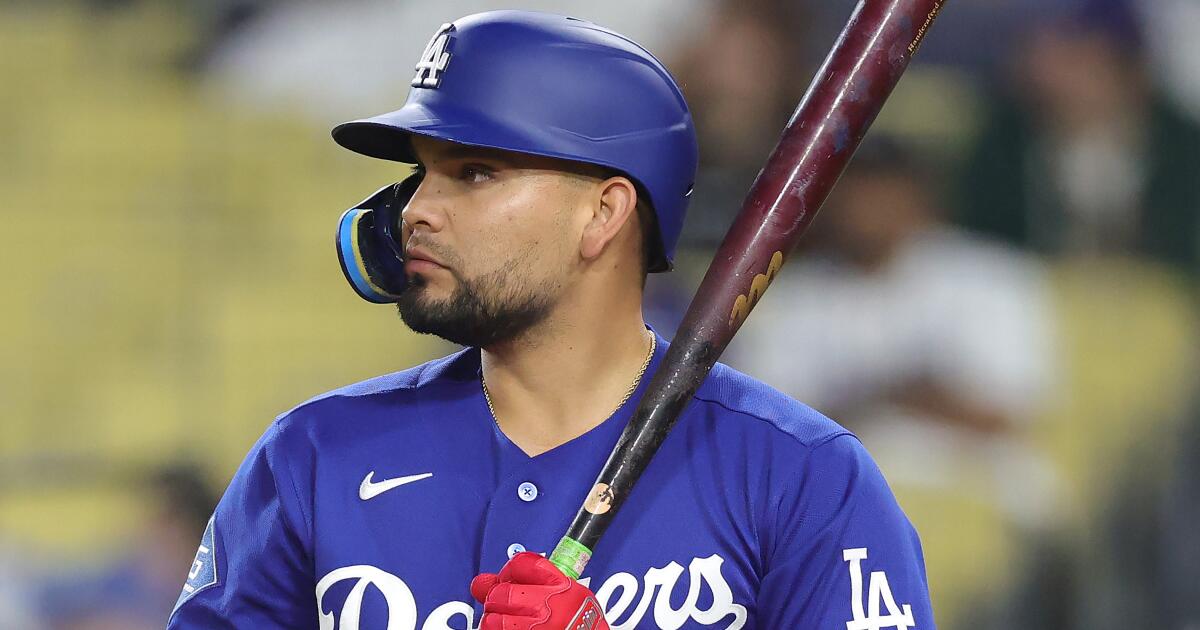
Dodgers’ Eliezer Alfonzo praying his sister and stepmother will be found in Venezuela

