Utah
How this Utah dance studio became a factory for ‘Dancing With the Stars’ pros


It was a no-brainer.
Kim DelGrosso did not want to fly her daughter, Ashly DelGrosso, to Los Angeles. Money was tight. She could hardly cover the cost of a plane ticket out of Utah. And besides, DelGrosso considered the LA audition a dead-end opportunity.
All six of her daughters had grown into highly skilled dancers, and the older girls were thinking about moving to England. This was in 2005, and Europe was the place to build a successful dance career, not the new celebrity competition show, “Dancing With the Stars.”
DelGrosso had co-opened Center Stage Performing Arts in Orem, Utah, just over a decade earlier.
Any reality dance competition series featuring non-dancers was a foolish idea. DelGrosso was certain it would tank.
“That is the dumbest thing I’ve ever heard in my life,” DelGrosso recalled saying when she heard the concept for the series from a friend who urged her to send Ashly for an audition. “That show will not go anywhere.”
Begrudgingly, she flew Ashly to LA for the audition, where she received a spot on the cast. And then “Dancing With the Stars” erupted.
The series debuted with an audience of 13.5 million viewers. The Season 1 finale attracted more than 22 million viewers, pulling average viewership to 17 million people per episode. It was the most-watched summer debut ever for an American reality series at the time.
“It didn’t just explode. It exploded on the scene in such a way that none of us were ready. … And the rest is history.”
— Kim Delgrosso, on the “Dancing With the Stars” phenomenon
In spite of DelGrosso’s skepticism, the out-of-the-box dance series, pairing professional dancers with celebrity contestants performing weekly for audience votes and judges’ scores, proved a massive success.
“It didn’t just explode,” DelGrosso said. “It exploded on the scene in such a way that none of us were ready. … And the rest is history. (Ashly) did four seasons.”
A long-standing relationship between DelGrosso’s studio, Center Stage Performing Arts, and ABC’s “DWTS” followed. So did a reputation for Utah dancers’ renowned talent and discipline. Motivated solely by her love of dance, DelGrosso had inadvertently produced the versatile, camera-friendly dancers the series demanded.
Eight of the professional dancers on the current season of “DWTS” trained at her studio. Dozens more DelGrosso-trained dancers — including Derek and Julianne Hough — have starred on the series.
When “DWTS” producers need a new pro, they call her.
But DelGrosso is reluctant to take credit for her studio’s reputation. She insists it’s taken a “village” to build the studio into the Utah stronghold it is today. Trusted coaches shaped the culture. Generations of disciplined dancers set the bar.
As the studio’s artistic director, DelGrosso always carried an optimistic vision for what Center Stage could be, but it has grown into something greater than she could imagine.
Reflecting on that success is an emotional experience for DelGrosso. Sometimes — particularly when she watches “DWTS” live at Television City Studios — she has to catch her breath and dry tears off her cheeks. It’s overwhelming.

It’s 20 years old — and the trendiest show on television
Two decades on, “Dancing With the Stars” has maintained momentum. The 34th season of the series is currently airing with historic numbers — viewership increased for six consecutive weeks, a feat no fall TV show has pulled off since the modern Nielsen-measurement era began in 1991.
It’s also the most talked about broadcast/cable show on social media right now, drawing an average of 2.9 million social interactions for every episode, per ABC.
Like several previous seasons, No. 34 is Utah-heavy.

Every one of the Utah pros featured on Season 34 — Jenna Johnson, Ezra Sosa, Rylee Arnold, Brandon Armstrong, Witney Carson, Carter Williams, Jaxon Willard and Hailey Bills — spent countless hours under DelGrosso’s direction at Center Stage Performing Arts.
The Hough siblings, who previously competed on the series and now serve as judge and co-host, also trained at her studio.

Longtime choreographer and producer for “DWTS” Mandy Moore — who choreographed Taylor Swift’s Era’s Tour — was trained by DelGrosso at a previous studio in Colorado.
Previous “DWTS” pros Alexis Warr, Lindsay Arnold, Chelsie Hightower, Stephanie Sosa, Brittany Cherry and Lacey Schwimmer also trained at Center Stage Performing Arts.

The list goes on. And on.
“The reason that we’re hired, the reason that Utah has this culture … is that these are cross-trained dancers. They put in the work. They are ready for the auditions, and they can do anything.”
— Center Stage Performing Arts’ Kim Delgrosso
DelGrosso chalks up some of the “DWTS” success to good timing. “We were just positioned beautifully when ‘Dancing With the Stars’ opened,” she said.
But her dancers’ overwhelming presence on “DWTS” has far more to do with training, and a supportive culture that prioritizes hard work.
“The reason that we’re hired, the reason that Utah has this culture … is that these are cross-trained dancers,” DelGrosso said, meaning they are trained in a variety of dance styles. “They put in the work. They are ready for the auditions, and they can do anything.”

Finding home in Utah
DelGrosso walks barefoot through the studio. She is comfortable in her kingdom. “The bottom of my feet are like shoes,” she explained while standing on cold asphalt. “I can’t feel anything.”
Maybe it’s the dancer in her. Maybe it’s a symptom of her personable, gentle nature.
Preschool-aged students race to give DelGrosso hugs when she peeks in on their class. While making her way around the studio, she offers to share her snack-size bag of chips with every student she interacts with. She greets each of them with a warm embrace.
There are hundreds of students, and DelGrosso knows every one of them by name. She knows their stories, their families, their challenges. When she talks about a student, you can sense her pride. In DelGrosso’s eyes, she sees endless potential in every dancer.
“I literally have the best job in the world,” she says. “It’s so much fun.”

DelGrosso opened her first dance studio in the mid-1980s. Her husband had lost his job, and, anxious to help cover the expenses of raising a family, she opened Summit School of Dance in Breckenridge, Colorado, with their $10,000 cash savings.
On opening day, DelGrosso had 500 students. She ran the studio for 11 years before selling it and relocating her family to Utah — where she came with no intentions of opening another studio.
When she got to Utah, DelGrosso shopped around for a dance studio where she could send her daughters, but couldn’t find a good fit. None of the local studios offered ballroom programs for young dancers, so DelGrosso bought a little studio and named it Center Stage Performing Arts.
Rick Robinson, a ballroom instructor from BYU, began training her daughters. Marriann Hough caught wind of the burgeoning ballroom haven and came to the studio with her two youngest children, Derek and Julianne, requesting that DelGrosso train them to dance.
A small group of promising young ballroom dancers formed, and they quickly outgrew what Utah had to offer.
“We had to travel to Europe to train,” DelGrosso said. “I would take my girls to Europe because I wanted them trained correctly.”
“I put everything I had into it,” she added. “It was really hard on our family, because it’s a very expensive sport. We didn’t even have dresses.”
She knew her daughters would eventually return to the studio and train the next generation of dancers. It was an investment.

Center Stage gradually built a reputation for training skilled dancers, particularly in ballroom. It drew dance instructors from around the world to Utah — a place where they could train hungry young dancers in a range of styles.
Sasha Altukhov, who was raised in Ukraine, came to the U.S. in 2007. For a few years, he trained ballroom dancers in New York City and later Boston.
He was asked several times to join “DWTS,” so he flew from the East Coast to California to practice with his partner, who was also offered a spot on the show. While flying back and forth, Altukhov would stop in Utah to teach.

Impressed with the state’s dance scene, Altukhov bought an apartment in Utah and started training ballroom dancers at Center Stage in 2011. All the while, he turned down every offer to be on “DWTS,” because he prefers teaching to performing.
“When I moved (to Utah), there was not a lot of group training in Utah in ballroom. There was a lot of jazz, contemporary ballet, but there was not Latin ballroom. But there was a lot of good dancers,” Altukhov said. “Now Utah has become one of the top states in ballroom, that’s one of the reasons I moved.”
Altukhov’s first group of students included “DWTS” veterans Lindsay Arnold, Jenna Johnson and Witney Carson. He has since trained Brandon Armstrong, Rylee Arnold, Ezra Sosa, Hailey Bills, Carter Williams and Jaxon Willard — all of whom are currently pros on “DWTS.”
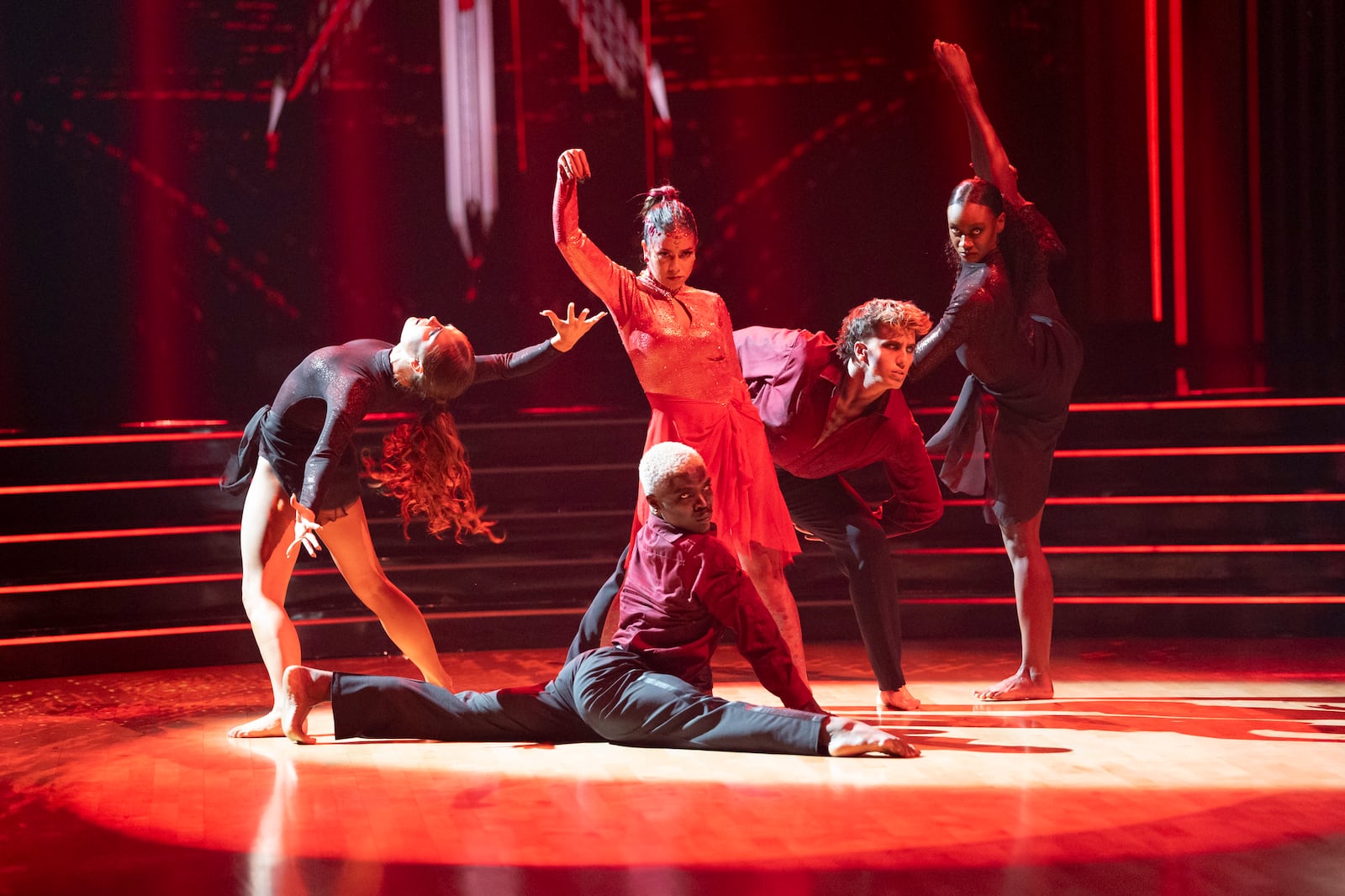
“Utah is the best thing for me because I like the work ethic of the kids and their ability,” Altukhov said. “A lot of teachers are getting drawn in to come here and teach now too, because they can see there’s a lot of talent in Utah.”
He added, “Center Stage is one of the best studios in the United States. And they set such a high standard for the rest of the country.”
What it takes to be a ‘DWTS’ pro
It’s hard for DelGrosso to define what it takes to be a professional dancer. But she can take a single look at a dancer and tell you if they have it, and if they want it enough.
For some of the most talented dancers, she says, the skills come too easy. These dancers won’t make it — they will get bored. They never had to fight for it.
The dancers who have what it takes learn to handle criticism, push through the strain on their bodies, endure the emotional toll and get tough. As a professional dancer, you are guaranteed to get beat up, DelGrosso said, so you have to be resilient.

“It takes a lot of discipline. I think a lot of people only see the highlight reels, but these dancers are there because of what they put in. A lot of them spent their whole lives being cross-trained in ballet, jazz, hip-hop, ballroom, contemporary, and that takes a lot of time,” said Stacey Bills, the head coach of the BYU Cougarettes, who previously coached at Center Stage for several years.
Bills’ daughter, Hailey Bills, trained at Center Stage and is currently on “DWTS.” Her sister, Jenna Johnson, also trained at the studio and has been a pro on the series for 10 seasons.
“These aren’t your average humans who just kind of fell into it,” she added. “It was a conscious choice to put in the time and work.”
Bills saw her own daughter, Hailey, make profound sacrifices from a young age so she could dance at the level she does.
“Ever since she was little, she wanted to do it all,” Bills said. “And that comes at a cost.”
Those sacrifices don’t end once dancers are cast on “DWTS.” Performing weekly on a public platform is both mentally and physically exhausting, Bills said. The stress of being in a position of public scrutiny is emotionally taxing.
Training is rigorous, and a lot of the dancers are discreetly suffering from injuries and other ailments they have learned to push through.
Rehearsal hours are grueling. At times, dancers will be called on a whim to show up for a 5 a.m. rehearsal with limited breaks. “You have to be physically ready for those kind of hours,” Altukhov said.
Utah-trained dancers’ ability to handle marathon-length rehearsals is part of what makes them appealing to the show, because “they have trained like this since they were 5, 6 years old,” Altukhov said.

Dancers also need to know how to train a celebrity — some of whom might have zero dance experience or skill. Some of the celebrities are uncooperative. Tolerating these difficulties, and still putting on a good show, is an additional skill that requires “years of experience,” he said.
Getting cast on the show is another hurdle. Earning a spot on “DWTS” is largely influenced by word-of-mouth, a longstanding good reputation and knowing important people, both DelGrosso and Bills shared.
In this process, Utah dancers might have an edge, DelGrosso explained, because Center Stage has a longstanding relationship with the series. Utah dance juggernauts like Derek Hough, Julianne Hough and Jenna Johnson preserved Utah’s dance reputation and are still linked to Center Stage.
So leading choreographers, like the ones who work for “DWTS,” will work with these young dancers at conventions or competitions — opportunities facilitated by Center Stage — and see their talent. And it’s likely their opinions get back to production, Bills said.

“There’s no real audition process,” Bills said. “They track some of these dancers for years. They know who’s competing in ballroom and who’s having success. And they also look to see who’s part of the jazz and contemporary circuit and who’s having success.”
Oftentimes, dancers have no idea if they are on the producers’ radars or not. They just continue competing and performing at high levels, hoping to generate interest.
“Over long periods of time, they’re watching, learning,” she added, and then if your efforts meet the right opportunity, you get the long-awaited call.
A balancing act
Establishing a reputation as a tough, versatile dancer is a process that demands extreme commitment from an elementary school age.
Still, excessive training can trigger burnout and other issues. Through decades of experience, DelGrosso has learned training these young, impressionable dancers requires a delicate balance between the hard-core, competitive nature of dance and the need for a steady, family-focused childhood.

Fostering a healthy, balanced environment in the studio is a “heavy responsibility,” DelGrosso said.
“Dance can go way overboard, and I have a real caution on this,” she said. “Many parents can go way overboard, too many solos, too many privates, and the children’s childhood can be taken away. I’m a big advocate of making sure that these young children have time with their families and are raised by their families and not by the studio.”
Aside from a select few, professional-bound dancers who train at Center Stage typically start as young as 3 years old. By the time they are elementary school age, dancers will take multiple classes every day. Senior-level students train around 30 hours every week.

A bulk of weekends are filled with competitions, most of which require travel.
It’s a big commitment for a young person, and the intensity can make dancers vulnerable to certain pitfalls, particularly identifying too heavily with the sport.
“If you break your leg and dancing was the only thing that you ever prioritized, you’re going to go through a really hard transition. It can’t be your only identity,” warned Bills.
In Bills’ experience, the majority of instructors at Center Stage emphasize the importance of being a good person, family member and friend — an attitude already emphasized by Utah’s family-oriented culture.
Dancers who adopt this mindset have more confidence, which manifests itself on stage.
“Be a good community member and a good citizen, because those are the things that will last,” Bills said she tries to instill in young dancers. “This just happens to be your talent that hopefully you have a lot of opportunities with. But at the end of the day, if that were taken away, you’re a lot of other things to a lot of different people too.”

Utah’s unique dance culture
When asked what distinguishes Utah dancers from the rest, DelGrosso responds simply, “We just love to dance. We love this art, and it’s infectious.”
The contagious love of dance has embedded itself into Utah communities and culture, making it a hub for talented dancers and coaches.
“In Utah alone, there’s a different dance studio every few blocks — and some of them are nationally recognized,” Bills said. She likened Utah’s passion for dance to Texas’ obsession with football.
“A lot of the best dance teachers move here because they want to be teaching the best,” Bills added. “The caliber of training that they’re receiving at some of these studios is just so top notch and and high level.”

Altukhov, who previously trained ballroom students in New York and Boston, noted that Utah parents offer a unique level of support for their young dancers. This support was a major drive in his decision to coach in the Beehive State.
The students he trained on the East Coast viewed dance as a hobby — dance was never considered a potential career path. As these students got older, their schedules would become overrun with tutors, music lessons, school sports and other activities, leaving limited time for dance.
Utah parents, many of whom trained in dance themselves, expect the long training hours and encourage a focus on dance. Young Utah dancers have “no distractions,” Altukhov said.
“The biggest difference is that the (Utah) parents understand why they invest in that time and money to give their kids the opportunity,” he added. “They have the goal (to dance professionally) from a young age … which is very unique for this country.”

Utah school systems provide the infrastructure to sustain rigorous dance training. Dancers who spend long hours in the studio and frequently travel to compete benefit from Utah’s flexible school attendance options, such as the Online Education Program.
“Utah in particular is very open for the dancers to go to online school or (miss) school,” Altukhov explained. “It’s a little bit more open for you to train and become good at dancing.”
Dance studios in Utah, particularly Center Stage, cross-train their students. This means rather than placing a single focus on one dance style, Utah studios produce well-rounded dancers who master a range of styles.
An ability to alternate between tap, jazz, ballet, contemporary, ballroom and hip-hop is “more uncommon than it is common,” Bills said.
“They can pick up choreography so quickly. They’re able to switch performance styles pretty seamlessly. … They’re able to transform into a completely different character every time they enter the stage,” she added. “They produce dancers that are electric to watch.”

How ‘DWTS’ has changed dance careers
Two decades ago, dance was largely overlooked by non-dancers, and opportunities to see dance were mostly confined to concerts or competitions. Television shows like “DWTS” brought dance into people’s living rooms for the first time, sparking widespread interest in the art form.
“(Dance) is so entertaining to watch. It’s beautiful. It’s emotion-provoking. It encompasses a lot of different, beautiful things. People that are completely non-dancers are so invested in some of these shows now.”
— BYU Cougarettes coach Stacey Bills
“(Dance) is so entertaining to watch. It’s beautiful. It’s emotion-provoking. It encompasses a lot of different, beautiful things,” Bills said. “People that are completely non-dancers are so invested in some of these shows now.”
As audiences come to know the professional dancers, they elevate them to celebrity status, opening doors to social media success.
Dance careers used to have a quick expiration date, but being featured on these shows gives dancers more “control over their careers,” DelGrosso said.

Former Utah “DWTS” pro Lindsay Arnold, who competed on the show for 10 seasons, left the series to focus on raising her two young daughters. But the fanbase Arnold built on the series followed her to social media, where she boasts more than 1.7 million followers on Instagram and 1.3 million on TikTok.
Arnold has since launched her own brand, The Movement Club, and demonstrates how dancers who step away from performing can still earn a good living through social media, leveraging brand deals and sponsored content.
“It’s a phenomenal thing,” DelGrosso said. “They have amazing careers.”
DelGrosso won’t claim the credit she’s earned for her role in building Utah’s “Dancing With the Stars” kingdom, though; she gives that to a universal love of dance.
“The beautiful thing about dance and art is it takes everybody away from their problems for one second,” DelGrosso said. “They are all tied together, in their opinion, their liking, their joy, their music, it brings people together, and that is what ‘Dancing With the Stars’ has done.”




It’s on nights like these that I’m reminded of the ravine that divides the NBA from all other levels of basketball. This Summer League tilt was sloppy on both sides, and not many fringe players earned an NBA contract tonight, by the looks of it.
This matchup has always been about the number-one pick AJ Dybantsa and the number-two pick Darryn Peterson. Rivals since high school, these two are in an eternal struggle for the designation of being “number-one”. They wanted to be the best in their high school class. They wanted to be the first off the board in the NBA Draft. Rest assured, these two will be battling for Rookie of the Year honors by the season’s end.
Advertisement
Both stars were fully aware of the magnitude of this game, and both wanted to be the first to strike in the Thomas and Mack Center.
Dybantsa took his first touch all the way to the basket and forced up an off-kilter shot that missed everything.
Peterson took the ball the other way and forced up a top-of-the-key three-pointer that missed badly.
Dybantsa quickly picked up the slack, flipping an under-and-around lay-in and following that up with a good leading bounce pass through traffic to find a cutting teammate.
From there, the 1-2 combo settled in and let the game flow around them.
For the first time in a Utah Jazz uniform, Darryn Peterson walked among mortal men as a commoner. He had a very slow start in his Las Vegas debut, opening the night 0-for-3 from the floor and even whiffing on his first all-or-nothing foul shot. His steps were hurried, and he stood unstable before his first trip to the bench. Not quite so infallible outside of the mountain air in Salt Lake City.
Advertisement
AJ claimed the first quarter, dicing up the defense with fadeaways, dribble chains, and this vicious, inhumane slam that will dominate your social media feed for the next day or so.
Washington set the tone for some — should we say physical — defense out on the perimeter, and the officials gave the Wizards liberty to reside in Peterson’s chest for the majority of the game. The number-two pick couldn’t get himself into a rhythm as he’d step out of bounds, dribble off his foot, and sputter under the heat of the Wizards’ aggressive double-team scheme.
They were incredibly handsy from end to end, frustrating Jazz ball handlers as the whistles piled up at the other end.
Advertisement
AJ Dybantsa lives at the foul stripe — that’s his superpower — and he has since his days at BYU, where he led the nation in foul shots taken per game. Perfectly within his idiom, Dybantsa was 6-of-7 from the foul stripe — keeping in mind the experimental do-or-die free throw rule. Considering how much more physical the Wizards played at the defensive end, it’s a mystery how the Wizards managed to reside in the comfort of the bonus for the entire first half.
Neither player was efficient from the floor, but Dybantsa won the first half of this marquee matchup.
Dybantsa finished the first half with 19 points on 4-of-12 shooting.
Peterson lagged behind with 11 points on 3-of-9 shooting and a pair of dimes.
The lead shrank to single digits, and what appeared to be a blowout in the first half — Washington led by as much as 20 — rapidly drew tighter in the second half. It had become a two-possession game before the clock hit 0:00 in the third quarter.
Advertisement
Both stars lived up to the bill in this one, clearly displaying their individual talents despite their efficiency not leaping off the box score.
Peterson’s tendency to cough up possession has to get straightened out. He’ll be a target for his whole career, so learning to handle and exploit on-ball pressure will be critical to maximize his effectiveness and keep his teammates involved.
Cody Williams stole the show a bit for the Jazz, despite a rocky opening to the night. Though he struggled to stop Dybantsa on the defensive end, he notched 16 points on great efficiency (6-11, 2-3 3PT) plus 5 rebounds. He’s not a ball-handler, despite the Jazz’s wishes, but thrived on a newly added stepback mid-range jumper tonight.
Dybantsa had a strong night, finishing with 27 points on 7-for-18 shooting, 7 rebounds, and 2 steals.
Advertisement
The Wizards ultimately won this game behind the strength of their NBA guys, Tre Johnson and Will Reily, who combined for 41 to pair with Dybantsa’s 27. They also strongly benefited from Jamir Watkins, Darryn Peterson’s assignment fouling a grand total of 9 times (not a typo).
Peterson likewise fouled 9 times in this one, an ugly blemish on what was an unsteady night for the rookie. He finished with 24 points on 6-18 shooting and 2-7 from three-point land (thanks to a bank-shot heave at the final horn). Dybantsa will be crowned the winner of this head-to-head with Peterson thanks to better highlights and the team win, but neither player dominated, despite what X will likely tell you.
Washington defeats Utah with a final score of 92-88.
Calvin Barrett is the Associate Editor for SLC Dunk. Originally from Springville, Utah, he currently lives in Japan and has covered the NBA and college athletics since 2024.

LAS VEGAS (KSNV) — The man arrested for murder in the 2006 death of his wife at a Utah national park left behind a suicide note in his Las Vegas jail cell, according to a police report.
Las Vegas Metropolitan Police released a public report on the death of David Vander Meer, 49, who was in custody on an out-of-state warrant.
The Washington County District Attorney’s Office said in an affidavit that Vander Meer, a former youth pastor, was a suspect in the death of his then-wife, 28-year-old Bernadette Vander Meer, 20 years ago.
Bernadette fell to her death at Angels Landing in Zion National Park. Prosecutors said in their affidavit that they received new information implicating David, alleing that he began having a close relationship with a young girl when she was 14 and he was her youth pastor.
A fugitive task force took Vander Meer into custody in Summerlin, according to an arrest report, and he was booked into Clark County Detention Center on June 22.
In the report on his death, LVMPD said a corrections officer was conducting visual checks at about 9:30 p.m. June 24 when he noticed Vander Meer lying face down on the ground and unresponsive.
Several sections are redacted, but police wrote that the officer performed chest compressions until medical personnel arrived. Vander Meer was taken to UMC, where he was pronounced dead just after 2:36 a.m. June 25.
Investigators wrote that because of “the nature of his case,” Vander Meer was placed into protective custody. He was seen sitting upright and awake at 9 p.m., and he had no known medical conditions. He also did not mention being suicidal during a mental health screening.
Inside the cell, police wrote that Vander Meer “left a hand written suicide letter and a hand written will in his cell which has been photographed and impounded.” The following paragraph of the report was redacted, and no further details on Vander Meer’s death were disclosed.
The Clark County Coroner’s Office has not yet released its official rulings on his cause and manner of death.
Bernadette’s parents, Richard and Laura Gudenkauf, told News 3 they long suspected Vander Meer played a role in her death.
“Because of the girlfriend,” said Laura. “I found insurance policies months later that he had, lots of them.”

It has been a long time since the Jazz last played a meaningful game I desperately wanted them to win, and it is unhealthy how excited I am for this matchup. After a solid three games in the SLC Summer League, the Jazz head south to Las Vegas, and as hot as the desert sun is sure to be outside, on the court, the Thursday night primetime game featuring the top two picks in the draft will be much hotter.
How to Watch the Las Vegas Summer League?
Who: Utah Jazz vs Washington Wizards
When: Thursday, July 9, 2026 | 7:00 MT
Where: Thomas & Mack Center, Las Vegas, NV
How to watch: ESPN, Jazz+
Darryn Peterson and AJ Dybantsa
Summer league games do not matter in the record books, but this game is a statement-making opportunity for both AJ Dybantsa and Darryn Peterson. Given the historical nature of this draft class, especially at the top, there is some real juice to this game that is atypical of most Summer League games. AJ has the chance to silence the noise that has swelled after Darryn’s remarkable performances in the SLC Summer League. Meanwhile, Darryn has the chance to ratchet up the noise and take the NBA world by storm with another solid performance against the Wizards. Can you imagine the narratives if Darryn were to come out and dominate AJ as he has through high school and college? In the words of the great Charles Barkley, I have two words for you… Darryn Peterson, AJ Dybantsa, must-see TV.
Ace Bailey looked really impressive in his 2.5 quarters of play in Salt Lake before missing games with back spasms. It is unknown whether or not he will be ready to go for the Vegas opener, but if he is available, he will probably be the one checking AJ Dybantsa on defense. His combination of length and athleticism could not only make things difficult for AJ on the defensive end but also expose his lackadaisical defense on the offensive end. If Ace is able to go, he will be looking to show the Jazz and the NBA that he is ready to take a leap in year two.
Which Jazz Big Man Will Stand Out?
Which big man will step up this game? In Game 1, we saw a lot of Kylor Kelley, who was a little less than impressive. Against Memphis, Jaxon Kohler, the Utah native, showed up and showed out against Cam Boozer. In game three, although the number of NBA-level players was few and far between, Jonas Aidoo stole the show with his rebounding and ability to play his role. Will we see one of those same three guys seize their opportunity, or will another guy like Micah Handlogten or Eric Dixon steal the show? We saw how vital a big that can roll and catch passes is for Darryn Peterson as a lead guard, playmaking-wise. It will be interesting to see who steps up to the plate to relieve pressure when he is blitzed and double-teamed.
SIDE NOTE: Adam Silver is LAME
No one should ASPIRE to be as boring as Adam Silver. After much excitement was made about Keyonte George making his unofficial coaching debut on Thursday night, according to Sarah Todd, the league has nixed that excitement and won’t allow Keyonte to be coaching on the sideline because who knows why…? I guess they were worried about the Jazz circumventing the salary cap to pay Keyonte or something. Anyways, I guess Will Hardy’s coaching TREE will have to wait for more branches to grow. Adam Silver remains evil in my book.
-

 Movie Reviews10 minutes ago
‘Gail Daughtry and the Celebrity Sex Pass’ Review: We’re Off to Hump the Wizard
-

 World18 minutes ago
Backlash on ethanol-blend fuel intensifies in India, puts carmakers in the dock
-
Politics28 minutes ago
Crews Drape Tarp Over White House in Latest Trump Restoration
-

 Health43 minutes ago
GLP-1 Users’ Guide to Protein Snacks: Here’s What a Dietitian Actually Recommends
-
 Lifestyle58 minutes ago
‘The Invite’ is a marriage comedy with sex and heart
-

 Technology1 hour ago
I spent a week using the Trump phone — it sucks
-

 World1 hour ago
With US unleashing attacks, Iranian official threatens that the Islamic Republic will deliver a ‘hard slap’
-

 Politics1 hour ago
WATCH: Trump’s Energy chief reveals what escalating Iran tensions could mean for gas prices

