West
Ted Bundy 50 years later: How investigators took down infamous serial killer who terrorized country for years

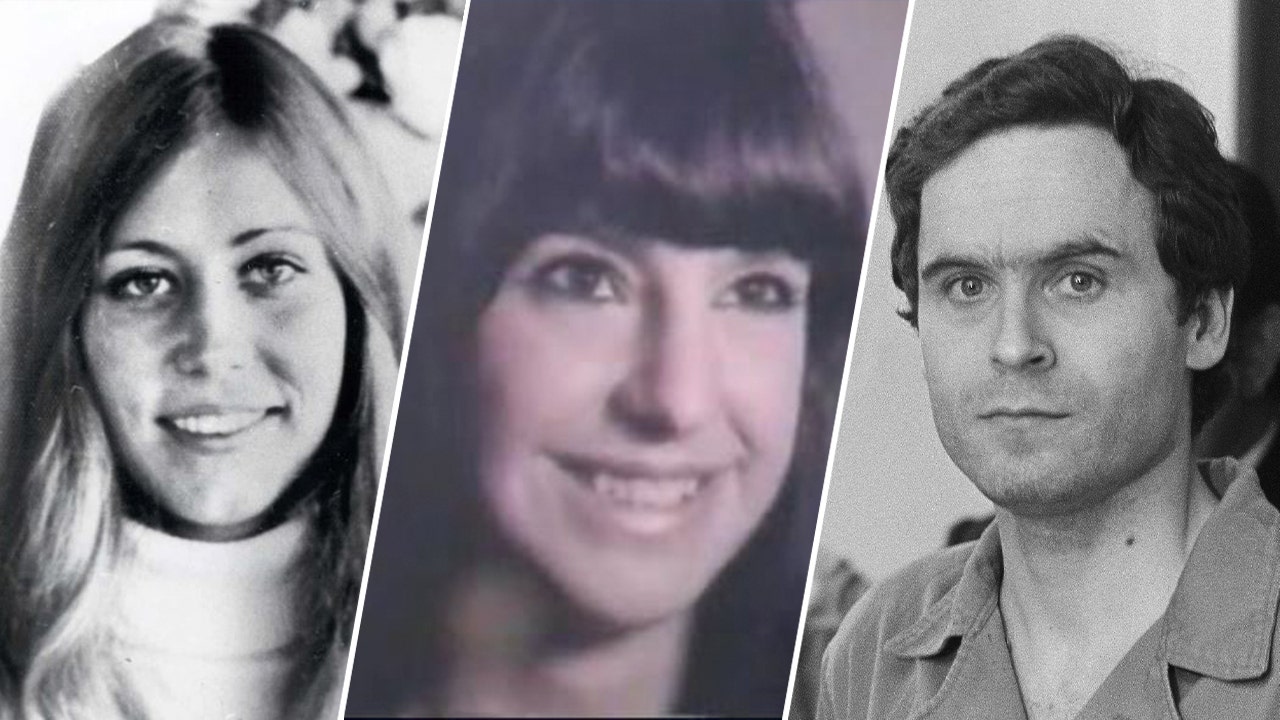
Sunday marks 50 years since Ted Bundy, one of America’s most infamous serial killers, abducted two young women on the same day from the same crowded Washington state beach.
Although it was not the first time Bundy struck twice in one day, snatching the two women in a four-hour timeframe was among the most brazen acts of his years-long cross-country crime spree.
Although Bundy confessed to 28 murders, some estimate that he was responsible for the deaths of hundreds of women between 1974 and 1978.
TED BUNDY SURVIVOR REVEALS WHAT SAVED HER FROM SERIAL KILLER’S SORORITY-HOUSE RAMPAGE
Ted Bundy, pictured during his 1979 murder trial at the Miami-Dade County Metro Justice Building, killed at least 28 women and girls between 1974 and 1978. (Getty Images)
Janice Ann Ott, 23, and Denise Marie Naslund, 19, both disappeared from Lake Sammamish State Park, about 15 miles from Seattle, on July 14, 1974.
Bundy killed both women that day, The Seattle Times reported, but their bodies weren’t discovered for another two months.
FOLLOW THE FOX TRUE CRIME TEAM ON X
Bundy approached various women at the park, asking them to help him unhook his boat from his tan Volkswagen bug. Four female witnesses would later describe an attractive man wearing a white tennis outfit with his left arm in a sling who spoke in a slight, possibly Canadian accent and was overheard introducing himself as “Ted.”
Three of the women refused; a fourth accompanied Bundy to his car, then ran after seeing that there was no sailboat.
TED BUNDY’S EX-GIRLFRIEND RECALLS HORRIFYING ENCOUNTER WITH THE SERIAL KILLER: ‘HE JUST LAUGHED’
Denise Naslund, right, was abducted by Ted Bundy four hours after Janice Ott, left, on July 17, 1974. Skeletal remains of both women were found about two miles away on Sept. 6 of that year. (Kings County Sheriff’s Department)
Ott, a juvenile caseworker at the nearby King County Juvenile Court, was seen by three witnesses leaving the park’s beach with the man. Before she left her home on her yellow bicycle that day, Ott put a note on her door to tell her roommate that she was going sunbathing, drawing a doodle of the sun on her note, according to Friends of Lake Sammamish State Park. Her husband, James, was in California attending medical school.
SIGN UP TO GET TRUE CRIME NEWSLETTER
Naslund, who was studying to become a computer programmer, never returned from the restroom on a picnic with her boyfriend and another couple. Her mother would tell The Seattle Times that Naslund had the sort of helpful nature that could place her in danger.
King County police distributed a composite sketch based on descriptions of the man and his car, which was printed in area newspapers and broadcast on local television stations.
‘PARALLELS OF EVIL’: TED BUNDY SURVIVORS SPEAK OUT, LINKING THEIR GRUESOME ATTACKS TO BRYAN KOHBERGER’S
Ott and Naslund were lured off the crowded beach at Lake Sammamish State Park by Bundy, who wore a sling on his arm and claimed he needed help unhooking his sailboat from the trailer hitch of his vehicle. The park is pictured in 2020. (Chona Kasinger/Bloomberg via Getty Images)
Bundy’s girlfriend Elizabeth Kloepfer, his friend Ann Rule and one of Bundy’s psychology professors from the University of Washington all recognized the composite and contacted police, according to King County Detective Robert Keppel’s book, “The Riverman: Ted Bundy and I Hunt for the Green River Killer.” But at the time, Rule wrote in her own book, detectives thought it was unlikely that the clean-cut law student was their suspect.
GET REAL TIME UPDATES DIRECTLY ON THE TRUE CRIME HUB
Based on the description of the vehicle and the suspect, Keppel pored over thousands of automobile registration documents, The Seattle Times reported. Bundy was on the final list of potential suspects.
On Sept. 6 of that year, grouse hunters found skeletal remains near a service road in Issaquah, about two miles away – dental records showed that most of them belonged to Ott and Naslund, The Bulletin reported at the time.
Bundy was put to death on Jan. 24, 1989, at Florida State Prison. (Bettmann via Getty Images)
Bundy later identified an extra femur and vertebrae found at that scene as those of Georgann Hawkins, an 18-year-old University of Washington student who went missing in the early hours of June 11 of that year while walking from her boyfriend’s dormitory to her own, Keppel wrote.
Bundy later told journalist Stephen Michaud and FBI agent William Hagmaier that Ott was still alive when he kidnapped Naslund, and that he forced one woman to watch while he assaulted, then murdered the other. He later recanted that claim, along with others, in an interview on the night of his execution in 1989.
Before his capture, Bundy struck twice in one day once more on Nov. 8, 1974, first posing as a police officer and luring 18-year-old Carol DaRonch to his tan Volkswagen Beetle from a mall in Bountiful, Utah.
Ted Bundy’s image on a television screen on the lawn of the Florida State Prison. (Getty Images)
Bundy attempted to snap handcuffs onto the teen, but DaRonch was able to escape. A key that fit the lock to those cuffs was found in a high school parking lot where 17-year-old Debra Kent was last seen leaving a high school play to pick up her younger brother.
In 2015, a patella bone found in 1989 at the site where Bundy told investigators he’d left Kent’s body was positively identified as the teen, Wired reported. After 40 years, her family finally got closure and a death certificate.
On Aug. 18, 1975, Highway Patrol Sgt. Bob Hayward stopped Bundy’s tan Volkswagen, which was lingering outside a home in Granger, Utah.
After finding a ski mask, a crowbar, an ice pick and handcuffs in the car, the officer placed Bundy under arrest – but he was soon released.
In October of that year, DaRonch and two other women pointed Bundy out in a police lineup, leading to his arrest on attempted kidnapping charges, according to the Los Angeles Times. He was convicted of aggravated kidnapping in March 1976, The Deseret News reported at the time.
In October of the next year, while Bundy was serving that prison sentence, investigators were able to link Bundy to the January 1975 disappearance of Caryn Eileen Campbell with the discovery of her hair in his Volkswagen, The New York Times reported.
Campbell, a 23-year-old registered nurse, was last seen walking down a well-lit hallway between the elevator and her room at a Colorado hotel in January of that year; her nude body was found a month later next to a dirt road just outside the resort.
After he was charged with first-degree murder in Campbell’s death, Bundy infamously escaped a law library at Aspen’s Pitkin County Courthouse in June 1977, leading police on a six-day manhunt before his capture, ABC reported. He would escape a second time after losing enough weight to slip through a ceiling duct in his Colorado prison cell.
Before he was captured for good, Bundy killed two Florida State University sorority sisters and injured three more in January 1978, then killed 12-year-old Kimberly Leach.
Bundy was apprehended in February 1978, and his nationally televised trial began in June 1979. He was convicted in the deaths of the Florida State students on July 24, 1979, then for Leach’s death in January 1980.
Bundy was put to death on Jan. 24, 1989 at Florida State Prison – the declaration of the killer’s death at 7:16 a.m. drew cheers from the estimated 200 people in attendance, the Times reported.
Read the full article from Here


The U.S. military has released new details about the massive Fightertown Recapitalization (FTR) program at Joint Base Elmendorf-Richardson (JBER), in Anchorage, southeastern Alaska. This is a huge effort valued at approximately $7 billion that would effectively create an entirely new fighter hub to support future Air Force operations in the strategically important Arctic and Pacific regions.
The details emerged in a special notice announcing an upcoming virtual industry day, where government officials plan to brief contractors on the scope of the program and gather feedback on construction risks, industry capabilities, and acquisition strategies before moving toward a formal procurement process.
While the notice, from the U.S. Army Corps of Engineers, is intended primarily as market research, it offers one of the clearest looks yet at the scale and ambition of the Fightertown recapitalization effort.
According to the notice, existing airfield facilities cannot support the program’s requirements, prompting the selection of a new site to expand the current airfield infrastructure. Rather than a collection of isolated projects, the government describes the effort as a “complete campus approach” intended to synchronize facility construction with aircraft procurement, personnel movements, and logistical requirements.
The envisioned campus would include aircraft hangars, squadron operations facilities, corrosion control facilities, maintenance shops, and other aviation support infrastructure. Extensive airfield improvements are also planned, including new taxiways, aprons, shoulders, and specialized aircraft operating surfaces.

Highly likely to be included in the recapitalization efforts will be measures to help reduce vulnerability and ensure critical operations could continue in wartime. After all, in a potential fight against China or Russia, JBER would be high on the list of priority targets in the opening phases of a large-scale conflict. As we have repeatedly outlined in the past, aircraft shelters with varying degrees of hardening are suddenly very much back on the agenda in response to growing drone and missile threats.
Beyond flight-line infrastructure, the project encompasses a substantial support ecosystem. Plans call for a munitions complex, petroleum operations facilities, warehousing and supply functions, dining facilities, visitor control infrastructure, firefighting facilities, training centers, simulators, and housing for unaccompanied airmen.
The government also notes that the campus design remains flexible and could ultimately involve modifications to, or demolition of, existing facilities as planning progresses.
Rather than relying solely on traditional military construction contracting approaches, the Army Corps of Engineers says the program intends to leverage authorities provided in the Fiscal Year 2026 National Defense Authorization Act. Those authorities could allow the use of Other Transaction Authority (OTA), Progressive Design-Build (PDB), and other alternative execution methods.

The notice explicitly states that the government intends to capitalize on private-sector innovation while avoiding what it describes as costly and time-consuming federal contracting burdens. It also emphasizes that the execution strategy will encourage industry partners to propose novel technical and construction solutions.
The scale of the investment underscores Alaska’s growing importance as a hub for U.S. airpower. JBER already serves as one of the Air Force’s premier fighter installations and occupies a critical geographic position between North America, the Arctic, a part of the world that has only grown in strategic significance in recent years, and the Indo-Pacific theater, where strategic planning is highly focused on a potential future conflict with China.
Joint Base Elmendorf-Richardson hosts the headquarters of the 11th Air Force, the service’s top command in Alaska, and its 3rd Wing, which operates a mix of F-22 Raptor stealth fighters, E-3 Sentry Airborne Warning Control System (AWACS) radar planes, C-17 Globemaster III airlifters, and C-12 light utility aircraft. It is also home to the Alaska Air National Guard’s 176th Wing, which has additional C-17s, as well as HC-130 Combat King rescue aircraft and HH-60 rescue helicopters.

In addition, in 2023, the Air Force announced the creation of the 55th Operations Group, Detachment 1 at the base, as a detachment of the 55th Wing at Offutt Air Force Base in Nebraska.
“The new detachment will… serve as a strategic launch and recovery point for RC-135V/W Rivet Joint operations and exercises in the region,” according to the Air Force.
The move reflected increased demand for RC-135V/W Rivet Joint spy plane sorties in the Pacific, with JBER being well-positioned for these aircraft to gather intelligence on areas of interest in the northern end of the Pacific and the increasingly strategic Arctic region.
The arrival of the Rivet Joint prompted a previous reconstruction effort at JBER. In what the Air Force described as a “mega-project,” one of the two runways there was extended to help it better support operations involving larger aircraft like these.

In the future, the strategic location of JBER, as well as its current status as one of the few F-22 bases, suggests that it could well eventually host the F-47 sixth-generation stealth fighter, the first of which is expected to make its first flight sometime in 2028. The F-47 could therefore well end up as the centerpiece of the Alaskan Fightertown, in keeping with the vision for the jet serving as a critical force multiplier that can bring together other crewed and uncrewed assets. With that in mind, at least some of the Fightertown Recapitalization program may be specifically tailored to the requirements of the F-47.
Importantly, JBER also serves as the focal point for the Red Flag-Alaska and Northern Edge exercises.
The Red Flag-Alaska exercises can take place up to four times a year and mirror those flown over the Nellis Range Complex in Nevada, with some differences. Namely, the ranges in Alaska, many of which are instrumented, are enormous, and can include a more varied array of assets.

From JBER and other bases in the region, Red Flag-Alaska participants have access to the Joint Pacific Alaska Range Complex (JPARC). Covering an area of more than 67,000 square miles and providing 77,000 square miles of airspace above, JPARC is the “largest instrumented air, ground and electronic combat training range in the world,” according to the Air Force. It is regularly used to provide a realistic training environment for full-spectrum engagements, ranging from individual skills to large-scale joint engagements.
JPARC’s role could grow further in the coming years as the Air Force pushes large-scale exercises further and further out into the broad expanses of the Pacific. Other range complexes further down along the West Coast are seeing increasing use, as well. Even very large overland ranges, such as the sprawling Nevada Test and Training Range (NTTR) adjacent to Nellis Air Force Base, are increasingly constrained when attempting to replicate modern scenarios based on ever-growing adversary anti-access and aerial denial (A2/AD) bubbles.
Meanwhile, Northern Edge also occurs in and around Alaska every two years, with these large-scale events being used to test and evaluate new systems and capabilities from across the U.S. military.

In the past, the Air Force has described Northern Edge as a demonstration of “the U.S. commitment to the region by building interoperability, advancing common interests and a commitment to our allies and partners in ensuring a free and open Indo-Pacific,” as well as showcasing U.S. ability to defend the homeland from and throughout Alaska.
As planning advances, we will learn more about what this new Alaskan Fightertown will look like. What is already clear is that the Air Force and the Pentagon are preparing for a long-term expansion and modernization effort on a scale rarely seen at an operational fighter base.
More details could emerge during the industry day scheduled for June 30, when government officials will provide a comprehensive update on the program and solicit feedback from industry partners on how to execute one of the Air Force’s biggest military infrastructure projects.
Update: 3:45 PM ET –
“We are deliberately investing in Pacific Air Force’s critical infrastructure by replacing and upgrading operations and maintenance facilities in addition to making repairs to existing buildings and funding mission-ready materiel, storage, and sustainment necessary for homeland defense and Agile Combat Employment operations,” a U.S. Air Force official has now told us in response to our queries for more information about the Fightertown plan. “We are also extending the runway and building a Joint Integrated Test and Training Center at JBER.”
“We are in the design stage now and will have a better idea of timelines once we receive an appropriation,” they added.
Contact the author: thomas@thewarzone.com
Arizona
Arizona man convicted for role in bringing cocaine to Cincinnati, other US locations for over 5 years

CINCINNATI — An Arizona man has been found guilty of supplying dozens of kilograms of cocaine to multiple U.S. locations, including Cincinnati, bi-weekly for more than five years.
Tucson resident Cesar Cervantes, 52, was convicted of participating in drug trafficking and money laundering conspiracies in a jury trial after the government seized more than 160 kilograms of cocaine, three kilograms of fentanyl and $1.4 million in cash from him.
According to court documents, Cervantes would use a network to deliver drugs that originated in Mexico to multiple locations across the country, including designated couriers in Cincinnati, between at least July 2018 and August 2023. Officials said he would supply between 25 and 50 kilograms biweekly to his coconspirators.
Cervantes would then use money launderers to funnel money back to Mexico. In one instance, court documents said he had coconspirators deliver around $300,000 to two separate money launderers — one based in China and another in Colombia.
The jury found Cervantes guilty on all counts for his role in the conspiracies following a trial before U.S. District Judge Matthew W. McFarland in the Southern District of Ohio. He faces at least 10 years and up to life in prison.

The IPOs of SpaceX, OpenAI and Anthropic could deliver billions of dollars to California’s coffers.
We’ve seen this movie before.
In 2022, California recorded a nearly $100 billion surplus, saved just $10 billion in its rainy day fund and then spent the rest. Two years later, a $56 billion deficit loomed.
Now, with the state facing ongoing operating deficits of more than $10 billion, we’re back in familiar territory.
The coming IPO windfall is a rare second chance. But we’ll only benefit from it if we first fix the structural flaw that’s caused us to squander every previous boom — a budget reserve that isn’t built to hold what we put in it.
The stakes this time are higher than ever. The war in Iran raised recession risk, and the federal government is systematically dismantling the funding streams California has depended on for decades.
When Washington retreats, Sacramento has to choose: cut services, raise taxes or have enough saved to bridge the gap. Right now, we don’t have enough saved.
We’re not outside observers wringing our hands. We helped shape the fiscal architecture the state is now straining against, and we’re here to say: It needs to be rebuilt.
As California state controller, one of us campaigned alongside Gov. Arnold Schwarzenegger to pass Proposition 58 in 2004 — creating California’s first Budget Stabilization Account. The other authored the Assembly Constitutional Amendment that became Proposition 2 in 2014 — the stronger, harder-to-raid replacement that voters approved with 69% support.
California’s tax system is the envy of progressive states and the nightmare of budget directors. We tax the wealthy at high rates, capture enormous capital gains revenue in boom years and then discover — every single time — that the peak doesn’t last.
If California treats the IPO windfall from SpaceX, Anthropic and OpenAI as permanent revenue, our state would repeat exactly the mistake we made four years ago.
Gov. Gavin Newsom and Assemblymember Avelino Valencia have each proposed important reforms to strengthen the fund. First, they call for requiring the state to make deposits until the fund reaches 20% of the general fund total, rather than the current 10%. Second, they propose changing an arcane accounting rule that treats saving for future downturns as spending.
We see one additional opportunity to make the rainy day fund even stronger.
If we want a larger budget reserve, we have to do more than merely allow it — we need to require it. Proposition 58 taught us everything we need to know on this front: Between 2004 and 2014, with that proposition fund in place, only two deposits were made. If we want consistent deposits during the boom times, they can’t be optional.
These reforms should be a win-win for the California Legislature. A larger reserve is the most durable protection that public sector workers, social service recipients and education advocates have against the kind of emergency cuts that have repeatedly gutted programs during downturns.
It’s also the strongest argument against tax increases in a recession because you don’t need to raise taxes if you actually save during the booms.
Building a stronger rainy day fund isn’t the cautious choice. It’s the visionary one — the closest thing we have to investing in the next generation of Californians.
We built the last rainy day fund because we’d lived through the consequences of not having one. We’re making the same argument again, for the same reason except now the stakes are higher. This time, the federal backstop is weaker, and the next storm is closer than it looks.
Fix the fund this year. The next generation of Californians will thank us for it.
Mike Gatto served in the state Assembly between 2010 and 2016, and he authored the measure that created California’s current rainy day fund. Steve Westly served as state controller between 2003 and 2007, and he co-championed Proposition 58, California’s original rainy day fund. Westly chairs the 21st Century Alliance, a nonpartisan organization focused on solutions to the state’s most pressing challenges.
-

 Augusta, GA6 minutes ago
Richmond County school board member Walter H. Eubanks dies
-

 Washington, D.C9 minutes ago
First Nebraska civics bee champion crowned, will head to Washington, D.C. for national competition
-

 Cleveland, OH14 minutes ago
Max McEnelly Lands High-Profile Matchup With Bo Nickal at RAF
-

 Austin, TX21 minutes ago
National Hockey League seeking expansion in Houston and Austin as potential targets
-
 Alabama23 minutes ago
Alabama hits home with plans for Tuscaloosa 2027 Edge on official visit
-

 Alaska29 minutes ago
Air Force’s Fightertown Alaska Plan Takes Shape
-
Arizona36 minutes ago
Arizona man convicted for role in bringing cocaine to Cincinnati, other US locations for over 5 years
-

 Arkansas39 minutes ago
Registration opens for Arkansas urban deer hunts

