West
‘Serial Killer Whisperer’ reveals how he cracked America’s most prolific murderer and unlocked 93 confessions

NEWYou can now listen to Fox News articles!
James Holland, the Texas Ranger who helped crack “the most prolific serial killer in U.S. history,” is breaking his silence on how he finally got the murderer to confess.
Samuel Little was interviewed repeatedly by Holland, dubbed the “serial killer whisperer,” from June 2018 until shortly before Little’s death in December 2020, according to the Texas Department of Public Safety. During those sessions, Little confessed to killing 93 people between 1970 and 2005.
More than 60 of those confessions have since been matched to victims through DNA evidence and corroborating interviews, authorities said.
JOURNALIST’S DANGEROUS OBSESSION WITH A FORGOTTEN SERIAL KILLER UNRAVELED HER REALITY
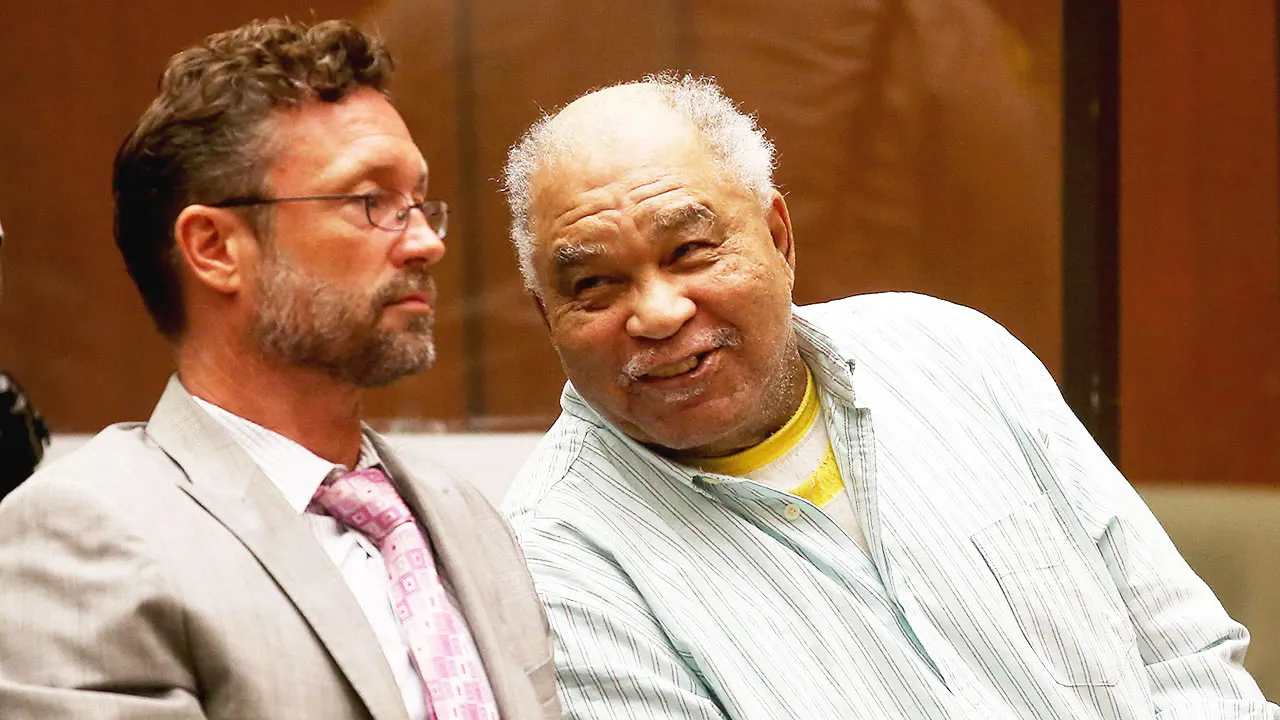
Samuel Little, right, appears unfazed after being convicted on three counts of first-degree murder Sept. 2, 2014, in Los Angeles Superior Court. (Luis Sinco/Los Angeles Times via Getty Images)
Now retired, Holland is hosting a new true-crime series on Investigation Discovery (ID), “Killer Confessions,” which examines the interrogation tactics and pivotal moments that defined his career.
Holland was initially asked to question Little about a killing he didn’t commit. During more than 700 hours of interviews, Little revealed details of dozens of other slayings only the real perpetrator could have known.
Georgia’s “Macon Jane Doe” has been identified as Yvonne Pless, a victim of Samuel Little (pictured) who was about 20 when he killed her in 1977. Little confessed to 93 murders before his death in 2020. (California Department of Corrections via AP)
“Samuel Little was the epitome of evil,” Holland told Fox News Digital. “He was a mean, horrible person. He was the ultimate predator — a killing machine. He was really smart and had a very distinct photographic memory.”
WATCH: FBI SAYS SAMUEL LITTLE IS WORST SERIAL KILLER IN US HISTORY AFTER HE CONFESSED TO 93 MURDERS
“Some people would have falsely looked at him and said he was just primarily picking up prostitutes,” Holland shared. “But that’s not necessarily true. A vast number of these victims were not prostitutes. They were people he met every day.
“His ability to win people over with his persona, one that manipulated and controlled them? I don’t know how to describe him other than as an ultimate apex predator because he wasn’t bothered by anything.”
This combination of undated sketches provided by the FBI shows drawings made by admitted serial killer Samuel Little, based on his memories of some of his victims. (FBI via AP)
Little was in failing health while serving a life sentence in a California prison when Holland was asked to interview him. The former boxer, who used a wheelchair to get around, had refused to speak with other authorities and initially reacted the same way to Holland.
Retired Texas Ranger James Holland, who interviewed serial killer Samuel Little for hundreds of hours, is the host of the new true-crime series “Killer Confessions: Case Files of a Texas Ranger.” (ID)
“The first time I stepped into that room, he was not happy to see me,” Holland recalled. “He’d get information from you, then send you packing, overwhelming you with anger and threatening tones. He was automatically that way with law enforcement.”
Despite Little’s attempts to assert dominance, Holland never flinched. Little tested the veteran investigator by describing in graphic detail how he killed a woman while locking eyes with him. Holland remained stone-faced, listening.
James Holland told Fox News Digital he refused to flinch as Samuel Little tested him. (ID)
“The first part of dealing with him was getting through the shock in that room with him,” Holland explained. “You couldn’t react to his negativity. When you deal with a serial killer, there’s no remorse. If you start talking to them about remorse, they think you’re speaking Martian. They don’t understand that, can’t comprehend it. They’ll immediately shut down.
FOLLOW THE FOX TRUE CRIME TEAM ON X
In this handout photo provided by the FBI, serial killer Samuel Little is seen in multiple mugshots/booking photos from 1966-1995. The FBI described Little as the most prolific serial killer in U.S. history. (FBI via Getty Images)
“Little treated it all like a game,” Holland continued. “Was he going to try to scare the hell out of me or recant the murder he’d just confessed to? He wanted to shock me. He’d throw things and study my face to see how I’d react, deciding whether I was ‘worthy’ of hearing more and whether I thought horribly of him. It was the ultimate acting job for me because I had to keep a completely blank face. He would just stare at me.
“He used the word ‘monster’ all the time. He didn’t want me to think he was a monster, which obviously he was. But I just couldn’t let him know what I was thinking.”
Serial killer Sam Little admitted to killing a Jackson woman in Pascagoula decades ago and dumping her body in a washout in an overgrown area off Greenwich Road in Moss Point. Little produced a photo of the victim, center, and said a police composite sketch (right) was the woman he killed. (Imagn)
Food played a role in Holland’s strategy, according to The Associated Press. During hundreds of hours of interviews, he brought pizza, Dr Pepper and grits — Little’s favorite snacks — and talked sports as Little ate. He also assured Little he wouldn’t be executed and addressed him by his childhood nickname, “Sammy.”
Samuel Little, who was indicted on charges he murdered three women in Los Angeles in the 1980s, listens to opening statements as his trial begins on Aug. 18, 2014. (Bob Chamberlin/Los Angeles Times via Getty Images)
Little, who called Holland “Jimmy,” began to open up.
“When I found something that entertained him, he was intrigued,” Holland said. “That would open the door. The strange thing is, if you blocked out who he was, you could almost enjoy talking to him. He was insightful and funny, and he told great stories. It was easy to forget, at times, how evil he really was. But he was a monster who had no remorse for his killings. You always had to keep that in the back of your mind.
SIGN UP TO GET THE TRUE CRIME NEWSLETTER
In this photo dated Oct. 10, 2019, Tonya Maslar holds an old photograph of her mother, Roberta Tandarich, taken before her death in 1991 in Ravenna, Ohio. Tandarich’s body was found dumped at Firestone Metro Park in 1991 and has been confirmed as one of the victims of serial killer Samuel Little. (Jeff Lange/Beacon Journal/USA Today Network)
“He was always trying to get into your head,” Holland recalled. “For me, it was the ultimate game of Sudoku because I was always thinking ahead and putting myself one step ahead of him.
“These serial killers like Little are convincing and manipulative. That’s why they get away with it. And they’re smart. With Little, he was already thinking about DNA before the technology existed. He was careful in what he did and where he left his victims.”
During their conversations, Holland said he was careful never to bring up remorse or discuss the victims as actual victims, and the tactic worked.
Some of Samuel Little’s drawings, according to the FBI. (Imagn)
“If you break that rule, step over that boundary, you can never go back into the room with them,” he said.
“I think, so often, detectives step into the room and lean in on remorse, their moral psyche. That’s generally how confessions occur. You talk about the victim, you talk about the lack of sleep from remorse. But if you take that into a room with a serial killer, you’re done. You can’t come back from that.”
Little was a career criminal who had spent decades in and out of jail. When he wasn’t behind bars for larceny, assault, drug offenses or other crimes, he traveled the country, according to the AP.
GET REAL-TIME UPDATES DIRECTLY ON THE TRUE CRIME HUB
Pascagoula Police Lt. Darren Versiga looks over crime photos to determine where an unidentified woman’s remains were dumped years ago off Greenwich Road in Moss Point, Miss. Versiga believes the woman was murdered by serial killer Samuel Little. (Imagn)
Little said he committed his first killing on New Year’s Eve 1970 in Miami and his last in 2005 in Mississippi. According to the AP, he also killed victims in Tennessee, Texas, Ohio, Kentucky, Nevada and Arkansas, among other states.
In 2012, Little was arrested on drug charges, and his DNA linked him to three killings in California.
In “Killer Confessions,” James Holland details the cases that defined his career. (ID)
As Little opened up to Holland, he provided dozens of paintings and drawings of his victims, sometimes scribbling their names and details such as the year they were killed and where he left their bodies.
Pascagoula police Lt. Darren Versiga believes the body of a woman found off Greenwich Road in Moss Point decades ago could be a victim of serial killer Samuel Little. (IMAGN)
“He always remembered where he met the person, the moment he killed them and what their last words were,” said Holland. “He always remembered where he dumped the bodies. And this is 40-plus years later, someone who’s using drugs and alcohol at different points in time. The majority of these crimes were matched up by his descriptions of the crime scene.
“The way he described where he left the bodies and then looked at these crime scene photos,” Holland paused. “It’s mind-numbing. He relived these crimes through his memories. We were able to match so many of those cases because he described the crime scene. And when you looked at the case files and read the reports, there were descriptions of Samuel Little in a witness account.”
Almost all of Samuel Little’s victims were women, many of them prostitutes, drug addicts or poor people living on the edges of society, The Associated Press reported. (Imagn)
As Little kept talking, authorities across the country rushed to reopen cold cases, relying on DNA evidence to prove his guilt. With his health failing, the clock was ticking. Investigators tracked down relatives and brought long-awaited closure to many families. Little later told the Los Angeles Times he had “found a friend in a Texas Ranger.”
CLICK HERE TO DOWNLOAD THE FOX NEWS APP
James Holland described Samuel Little as a “monster” and “master manipulator.” (ID)
Little died in 2020 at a California hospital. He was 80. He was serving a life sentence for multiple counts of murder.
“He had no remorse,” said Holland. “I had to convince him I was OK with that, which is still a very difficult thing to talk about. But I had to convince him he wasn’t destroying my mind. I just needed him to talk. And that’s what he did.”
“Killer Confessions: Case Files of a Texas Ranger” airs Tuesdays at 10 p.m. and streams the next day on HBO Max.
Read the full article from Here



SALT LAKE CITY (KUTV) — A little mid-level moisture will drift across Utah this weekend, but most areas will stay dry.
A few very isolated mountain showers are possible, mainly in the afternoons, but nothing widespread.
The big story is the heat. High pressure will build in, pushing temperatures 15–20 degrees above normal.
It will feel more like late spring, with many areas nearing or breaking March records, especially across central and southern Utah.
Overall, expect a warm, mostly dry weekend, with just a small chance for a quick mountain shower. Rain chances increase significantly later next week.
_______


A 6-inch megalodon shark tooth was found by a Wyoming teen during a dive trip off Manasota Key, Florida earlier this week.
Sixteen-year-old Aiden Andrews and his father Brian were on a guided dive with Fossil Junkies, a local fossil-hunting tour company.
Captain John Kreatsoulas told FOX 13 Tampa Bay reporter Kimberly Kuizon that while finding small megalodon teeth isn’t uncommon, finding one that size is quite rare.
Video captured the moments when Aiden and his father celebrated underwater after making the remarkable discovery.
Popularized by Hollywood monster movies, the Carcharocles megalodon was the largest shark to have ever lived, according to the Smithsonian Institution.

Scientists believe the largest megalodon reached up to 60 feet in length and weighed up to 50 tons.
And as Andrews can attest — they possessed teeth the size of a human hand.
According to the Smithsonian, megalodon lived between 23 and 3.6 million years ago across all of Earth’s oceans.

Pa. House committee advances bill to require radon testing and mitigation in schools

Think you’re middle class in Rhode Island? Here’s the income range

Where to watch South Carolina vs. Oklahoma in March Madness Sweet 16: Time, TV Channel

Coaches select all-state boys basketball players from Class AA, A & B

What are the Titans’ top remaining needs ahead of 2026 NFL Draft?

Florida High School Football Rankings: Top 25 teams – Oct. 21

How old is Bo Nix? What to know about Oregon quarterback ahead of 2024 NFL Draft

Cleary's 21 help Le Moyne down Central Connecticut State 69-64 in OT

99th annual Pony Swim held in Virginia

Indiana Members Credit Union announced as new anchor tenant at Bottleworks District

Dem senators dodge crucial question on illegal alien accused of killing Chicago college student

EU Parliament unblocks key political hurdle in digital euro talks

Man arrested in plot to firebomb Palestinian activist’s home after undercover op

WATCH: Senate hearing goes silent after Angel Father confronts top Dem over daughter’s death

US diplomat Marco Rubio denounces settler violence, tolls in Hormuz strait
-

 Detroit, MI1 week ago
Drummer Brian Pastoria, longtime Detroit music advocate, dies at 68
-

 Movie Reviews1 week ago
‘Youth’ Twitter review: Ken Karunaas impresses audiences; Suraj Venjaramoodu adds charm; music wins praise | – The Times of India
-

 Sports7 days ago
IOC addresses execution of 19-year-old Iranian wrestler Saleh Mohammadi
-

 New Mexico6 days ago
Clovis shooting leaves one dead, four injured
-
 Business1 week ago
Disney’s new CEO says his focus is on storytelling and creativity
-

 Tennessee5 days ago
Tennessee Police Investigating Alleged Assault Involving ‘Reacher’ Star Alan Ritchson
-

 Technology6 days ago
YouTube job scam text: How to spot it fast
-

 Texas1 week ago
How to buy Houston vs. Texas A&M 2026 March Madness tickets