Seattle, WA
VIDEO: One less station? Two less, for now? Sound Transit’s possible light-rail cost-cutting options floated at full-house West Seattle forum
By Tracy Record
West Seattle Blog editor
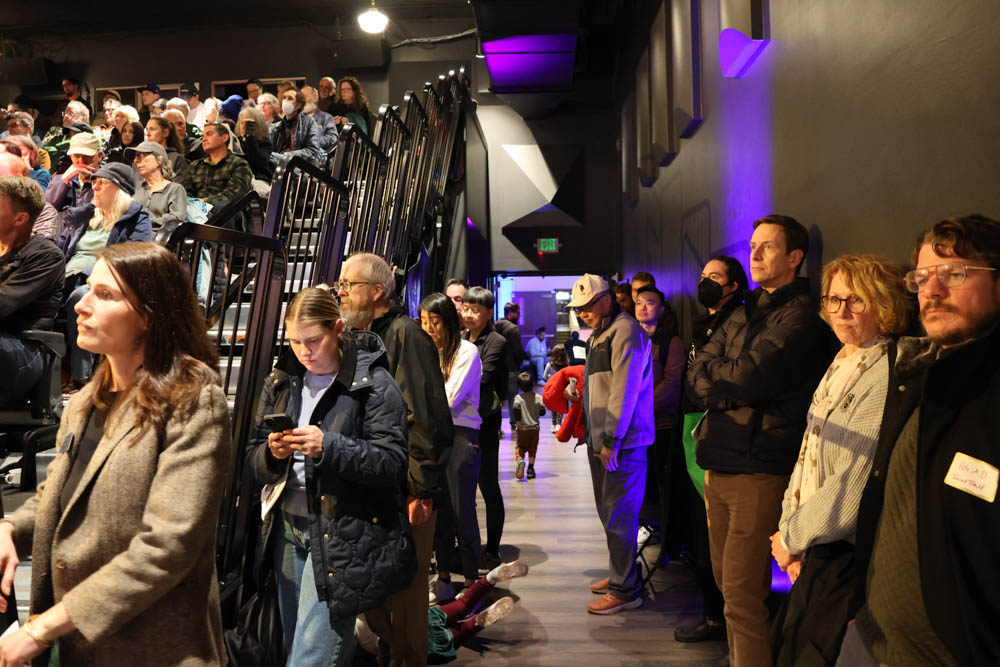
The event that brought a standing-room-only crowd to Youngstown Cultural Arts Center‘s Thelma Dewitty Theater tonight was announced as a “light-rail visioning forum,” but “floating forum” would have been more accurate: At the heart of it were Sound Transit managers floating their most promising options for getting West Seattle light rail cost back into “affordable” range.
The biggest potential changes: “Phasing” West Seattle light rail – build between SODO and Delridge first, extend to The Junction sometime later – or dropping the Avalon station entirely. The latter has already been more extensively discussed than the former – both were presented at a board committee meeting we covered in September – and the way that ST’s Brad Owen and Jason Hampton discussed it tonight, it sounded almost like a done deal.
Nothing, however, has been decided, or is on the brink of decision, but it’s just a matter of months before the Sound Transit Board starts making decisions as part of its “Enterprise Initiative.” Before we talk more about what was shown tonight, here’s our full video of the hour-and-a-half forum, introduced by our area’s King Countu Councilmember Teresa Mosqueda, who mentioned she’s hoping to join the ST Board (which will have vacancies soon, such as King County Council chair Girmay Zahilay vacating his seat as he moves up to the one guaranteed for his new job as KC Executive):

The first half-hour was spent mostly in acknowledgments and preface; then came the heart of the presentation, followed by about 20 minutes for questions.
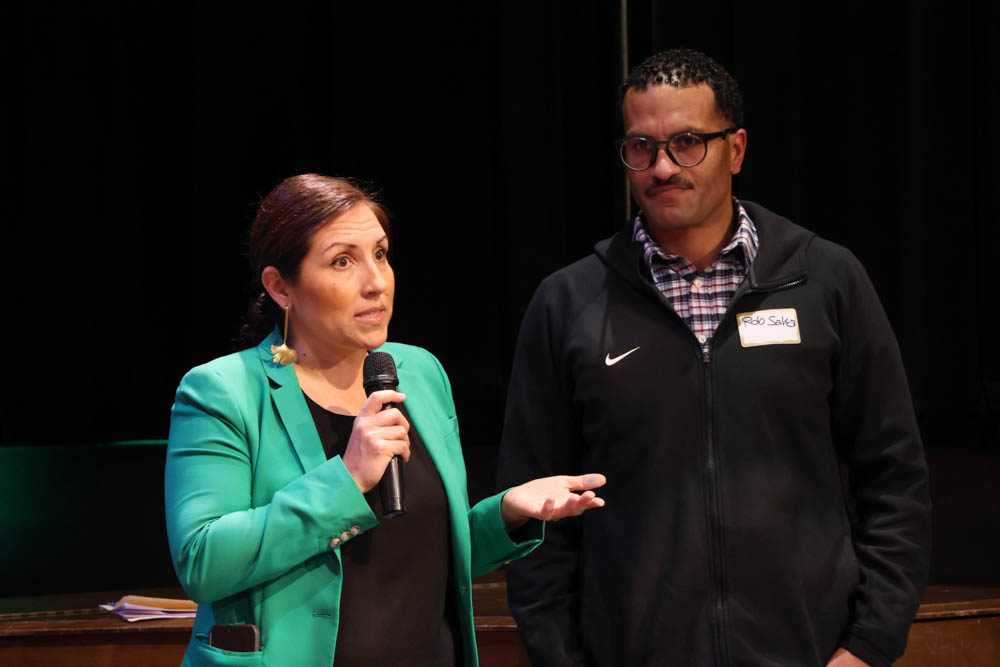

During her introduction, Mosqueda said the forum was important because “West Seattleites like details.” She is one herself, a North Delridge resident, as is the other local elected official she introduced, City Councilmember Rob Saka, who otherwise did not speak. Second speaker was ST CEO Dow Constantine, who championed West Seattle light rail during the years he was on the board as county executive (and noted tonight that his first swearing-in was exactly 16 years ago).
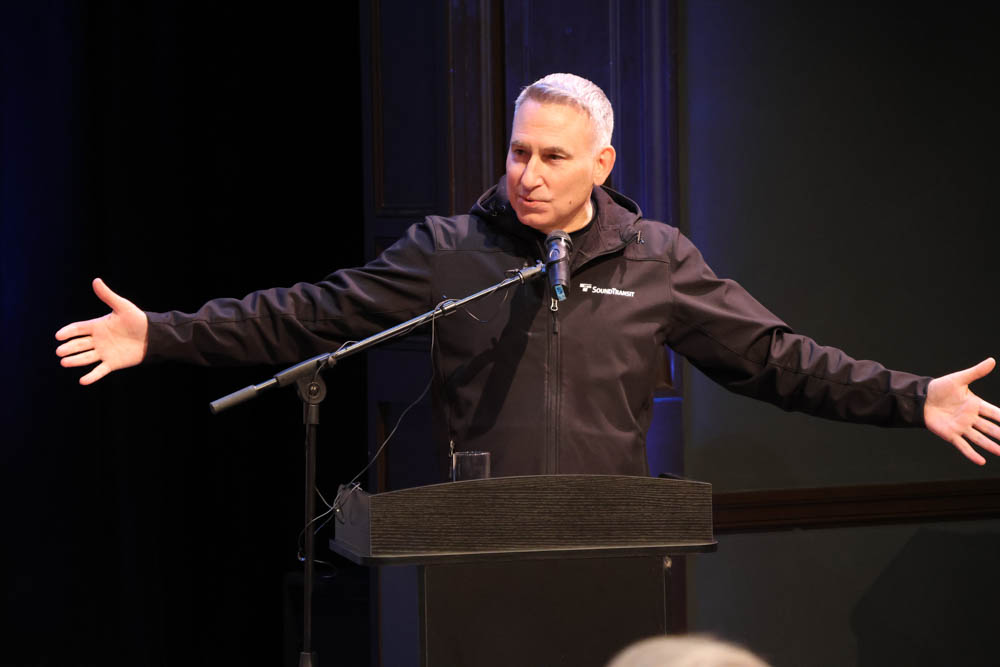
He said the “Enterprise Initiative” is all about trying to make the agency sustainable, explaining that it has evolved from a “capital construction fir” to a “substantial transit agency,” serving “up to 150,000 people a day” while building one of the nation’s longest light-rail lines – and figuring out how to close a $34 billion, 20-year budget deficit. In the big picture, Constantine said, by the time the FIFA World Cup games come here next year, ST will have built 63 miles in less than 17 years, pronouncing that a “history of success” that should offer hope “we can solve today’s problems.”
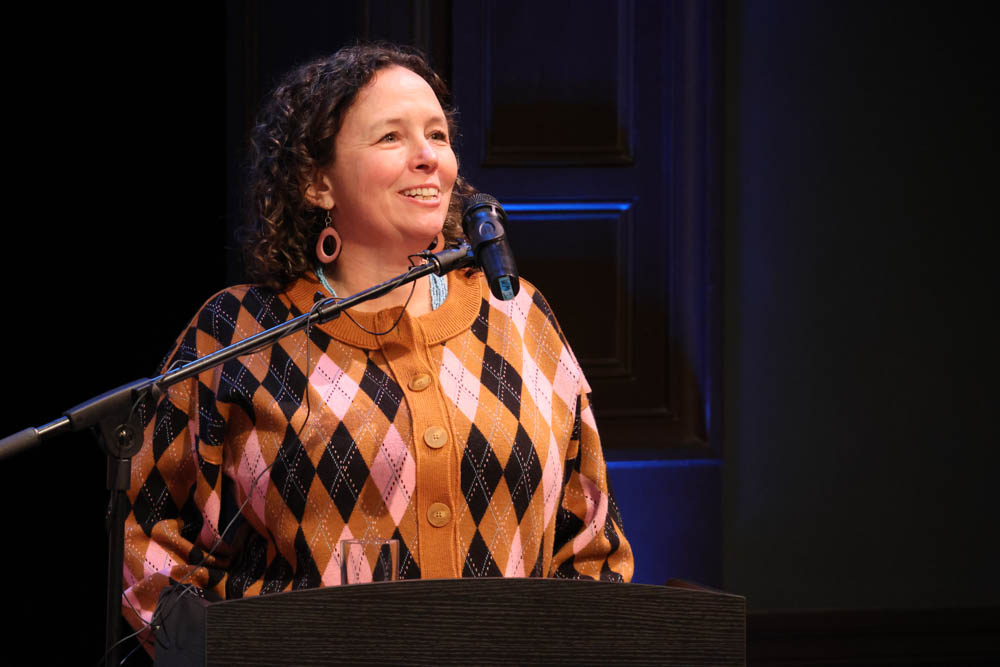
More optimism was offered by Carrie Avila-Mooney, representing outgoing County Executive Shannon Braddock (who had been billed as a forum speaker), reminding those present that the project already had its Federal Record of Decision and therefore hope for the federal funding it would need. She said Braddock – a West Seattleite who had served as Constantine’s deputy executive – is a “huge, huge fan of building” West Seattle light raill
When Owen and Hampton from ST finally began their presentation, one of the early slides was notable for added rationale points arguing for the West Seattle line, including that it would be a travel alternative “if the West Seattle Bridge is congested or closed for repairs” and that it “facilitates future expansion to the south” such as White Center and the airport.
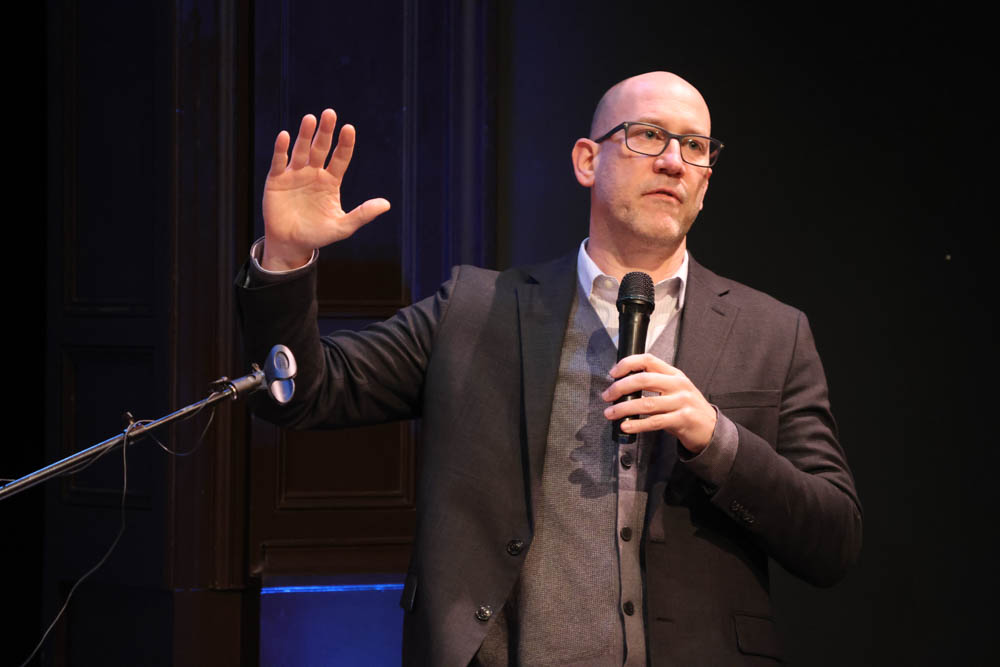
Owen said West Seattle is now about a third of the way through design – 30 percent – meaning they are getting “cost clarity.” That’s led to the previous reporting about the three-stop West Seattle line potentially costing up to $7.9 billion, while current financing would cover about $4.2 billion.
So that gap called for some “project-specific things we think we can move the needle on. Station optimization for SODO and The Junction would save some money, but not as much as eliminating the Avalon station or “phasing” by stopping at Delridge for an undetermined while.
ST describes potential savings in terms of “levers”:
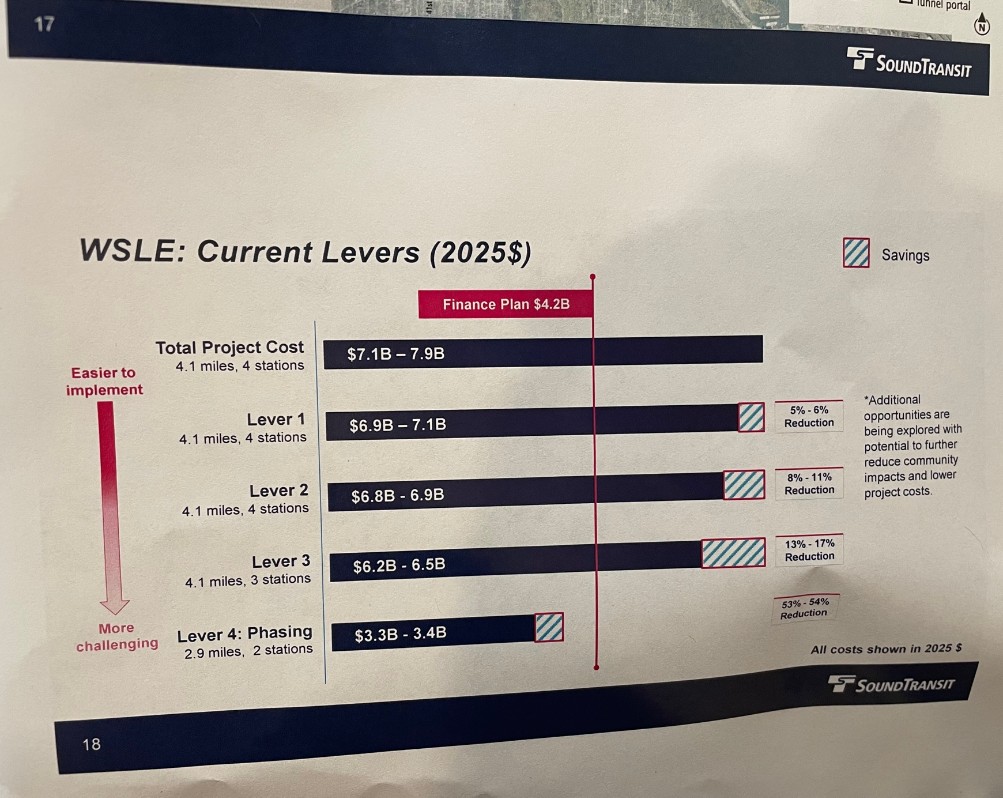

The highest level “lever” would be phasing. If they stopped at Delridge for now, they project it would cost just over $3 billion, within the range of affordability, and that’s a “conservative” estimate, Owen said.
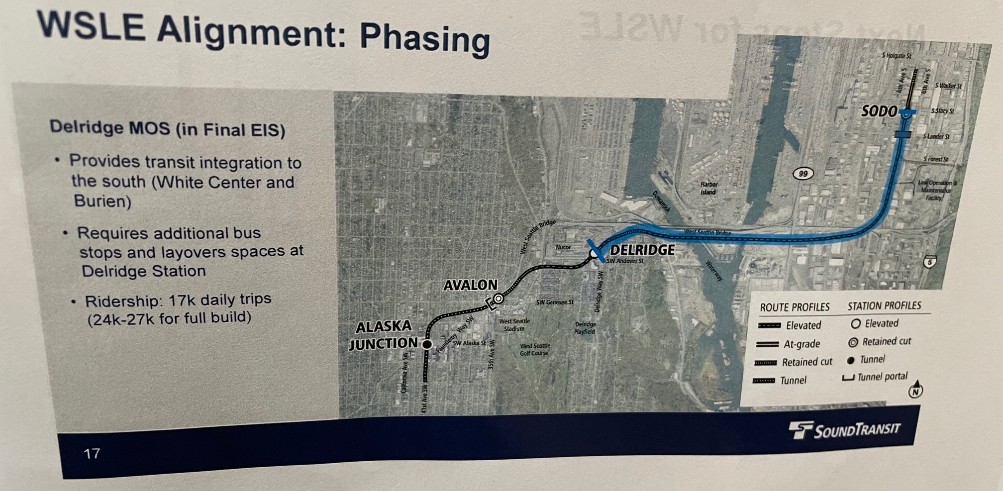

“Phasing is a very typical thing for these projects,” he insisted.
The next level of “lever” would apply to dropping the Avalon station, though that would only drop the cost into the $6 billion rang, still more money than the agency could cover.
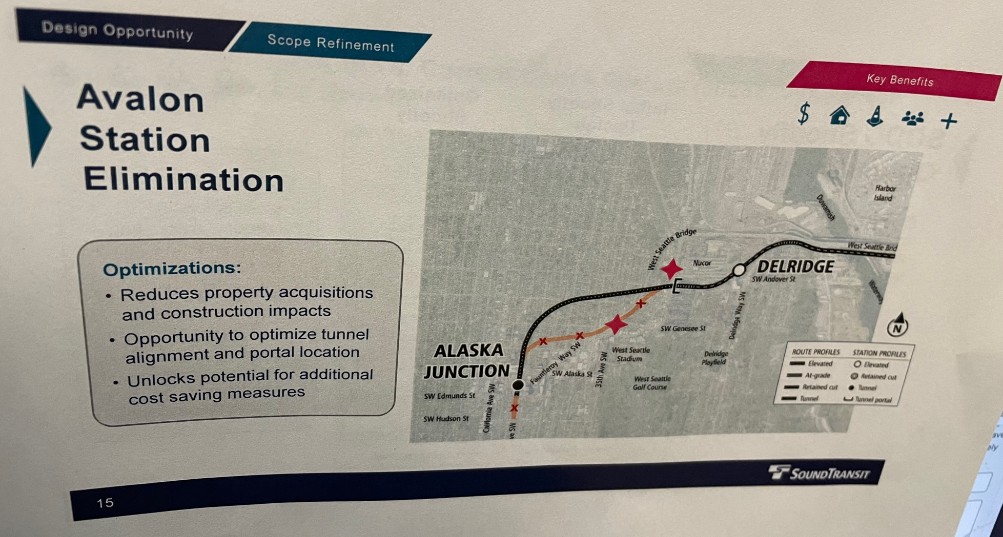

Skipping the Avalon station also could enable a different entrance for the tunnel to The Junction, possibly sparing the West Seattle Health Club (among other properties) and reducing the impact to Longfellow Creek, the ST reps said.
They also briefly discussed possible optimization for the Junction station – a previously reported design change that would remove the plan for “tail tracks” south of the station – and changes to the Duwamish River light-rail-only bridge as well as the SODO station.
After the brief review of these possibilities, the podium was given to Kurt Hovenkotter of the Transportation Choices Coalition, a light-rail booster who explained his group’s recently announced Build the Damn Trains campaign.
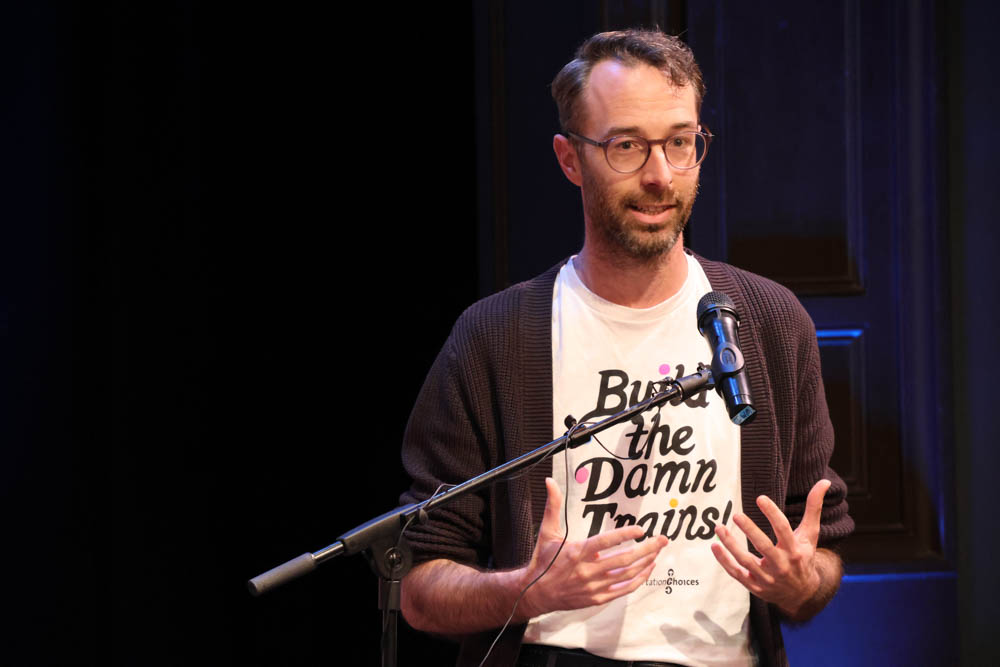
He said that instead of cutting back on projects like this, ST should look at “creative” ways to turn the plan into reality. (We asked him afterward if he was suggesting a search for new revenue; he said no,
they don’t want to see ST cut back on projects like this; instead, he said he supports ST’s quest for legislative approval to issue 75-year bonds without voter approval.
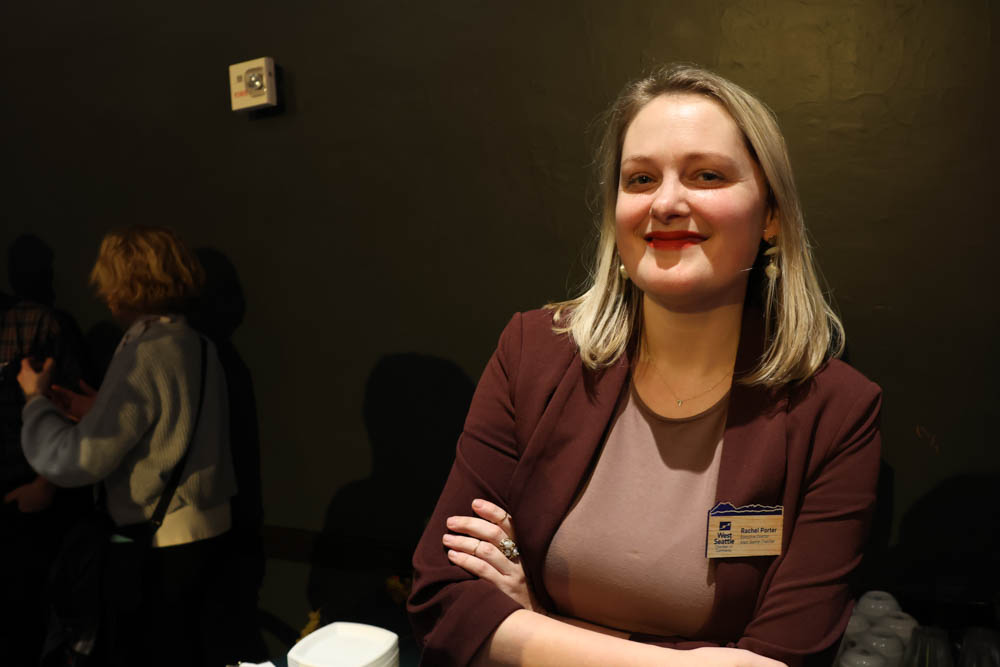
Less than half an hour remained when they started taking audience questions – both written ones collected from the crowd by people including Rachel Porter, executive director of the co-sponsoring strong>West Seattle Chamber of Commerce:
Those included a request for more information on what the “no Avalon station” concept might mean:
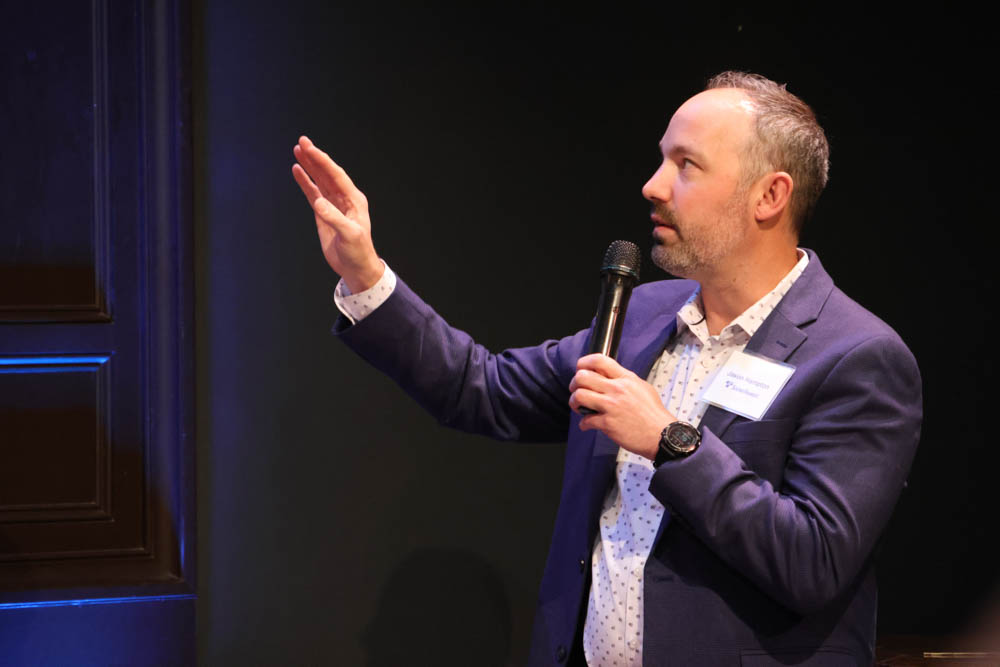
Hampton said the West Seattle extension wouldn’t see much of an overall ridership drop if Avalon was scratched – most of its prospective users would go to one of the other stations. Meantime, Owen acknowledged that they’re slowing the pursuit of properties until this is all figured out. Hampton acknowledged that they had acquired three homes, not because they needed the property quickly but because the owners requested early action due to life circumstances (as reported here in July). The ST reps said that if it ultimately turns out those properties aren’t needed for the project, they’ll “work with the property acquisition team” to determine what to do with them.
A few questions were asked via open microphone. One was whether there would be a “real town hall” devoted to people’s questions. Mosqueda said she hopes to have more events like this but in the meantime, all the officials and managers who were there are accessible for one-on-one questioning. Another attendee asked how to build the light-rail extension faster; Owen suggested the “phasing” was one answer – “when you have to build less, you could build faster.”
But while it’s decided whether they will build less, or make other changes, some residents and business owners remain in limbo, like Erin Rubin of Mode Music Studios and nonprofit Mode Music and Performing Arts, still likely to have to move no matter what changes are made in the plan, as their building remains in the Delridge station footprint, whether the project is “phased,” trimmed dow, or changed in some other way.
WHAT’S NEXT: The ST Board’s work on the “Enterprise Initiative” is expected to take another year or so, but decisions on plan changes and project changes are expected sooner, likely in the first half of next year. Until then, ST says it wants “feedback on design refinements,” so if you have thoughts on what was floated tonight – and/or other ideas – you can email westseattlelink@soundtransit.org.