San Diego, CA
My wife and I used our military benefits to buy a $1M property in San Diego. It kickstarted my real-estate business.


- Erwin Jacob Miciano left the Navy in 2021 to focus on his real estate business full-time.
- Miciano and his wife used VA loans to buy a triplex and start their business, Semi Homes.
- Semi Homes helps homeowners avoid foreclosure and launched Miciano’s real estate career.
This as-told-to essay is based on a conversation with Erwin Jacob Miciano, a 27-year-old real-estate investor and the owner of Semi Homes in South El Monte, California. It has been edited for length and clarity.
I’m a dedicated dad, a committed husband, a real-estate investor, and the co-owner of Semi Homes, a real-estate company specializing in direct-to-seller transactions and marketing strategies. I co-own the company with my wife, Theressa.
I don’t have a college degree. I graduated from high school in 2015 and first worked at Wetzel’s Pretzels. I decided to join the Navy to support my family abroad in the Philippines and my mom and brother in the US.
In March 2016, after three months of boot camp, I completed the basic training to become a photojournalist. Until September 2021, I served as a mass communication specialist, with most of my overseas years based in Japan, stationed on the USS Ronald Reagan.
I separated from the military in 2021 to pursue real estate full-time
My Navy job included writing press releases, aerial photography, videography, and printing. In later years, I was stationed at the Naval Hospital Balboa in San Diego, where we covered COVID-19, and I was deployed with USNS Mercy to San Pedro in Los Angeles during the pandemic.
I was presented with an “early out” program because of overmanning in my job, and it allowed me to complete my contract a couple of years early. I had already started my business, but leaving the military allowed me to pursue it full-time.
I also wanted to spend more time with my young family. My eldest was born in January 2020.
My wife and I met on the day I arrived on the USS Ronald Reagan in 2016
We became friends through the first-response/firefighting team, where she worked as an electrician. We also noticed each other at church services, and she invited me to her baptism ceremony, where she was baptized inside an open jet fuel tank.
Early in our relationship, we lived together in a small Japanese apartment. Then, we spent about a year doing long-distance, with me still deploying on the carrier and her based in San Diego.
After a year of dating, we got married, and soon after some vacation in the US, we discovered we were expecting our first child. During most of her pregnancy, Theressa lived alone until I got stationed in San Diego around her seventh month.
That same year, I became deeply interested in personal finance and real-estate investing, inspired by stories of blue-collar workers achieving financial freedom through real estate. I learned the most from the BiggerPockets podcasts.
We were motivated to become first-time homebuyers
We were eager to apply what we had learned and planned to use the VA loan entitlement from our military service. VA entitlement is how much lenders can lend to a veteran or active duty member without providing a down payment.
We aimed to buy a multifamily property — ideally a duplex, triplex, or fourplex — so we could live in one unit and rent the others to offset our mortgage. Today, this strategy is known as house hacking.
Being stationed in San Diego gave us a few key advantages
The housing allowance we received as military members was higher than in most US locations, boosting our household income to about $10,000-$12,000 monthly. This allowance was discontinued once we both left the military. Theressa left the Navy almost a year before I did at the end of 2020.
Second, the VA loan allowed us to buy a multifamily property with zero down payment.
Third, we included 75% of the gross rental income from the property in our loan application, increasing our approved loan amount. On paper, our monthly gross increased to $15,000-$17,000.
Finally, new legislation removed local VA loan limits for first-time users, giving us more purchasing power.
After months of searching, we found a triplex listed for $1.2 million
We offered $1 million and settled at $1.1 million. By March 2020, we had moved into a three-bedroom unit while renting out the other two for about $4,000 a month, reducing our housing costs to less than what one-bedroom rentals were going for at the time. This was the start of Semi Homes.
After living in the triplex for two years, we moved in with my mom and brother in September 2021 in the San Gabriel Valley. The triplex is now fully a rental property generating $1,500 to $2,000 monthly profit.
My day-to-day work involves meeting with homeowners who are looking for support in selling their properties
We now buy properties and resell them for a profit. We also help sellers in deep foreclosure and save them from it. My role is to get my team in front of our target audience and guide clients through the entire process, all the way to the closing table.
There are also late-night administrative hours and business-building, which I work on three to four nights a week. The biggest change from my Navy days is that I’m no longer away from my family for long periods — a small freedom I cherish.
I feel both fulfilled and successful
While Semi Homes started as a way to build wealth and achieve financial freedom for my family, it’s grown into something more.
We stay in this tough business because we truly believe in the value we provide to the individuals we work with. I’m focused on building our online presence and spreading the word that foreclosing is not the only option.
I see myself in real estate for the rest of my life.
Want to share your story about getting on the property ladder? Email Lauryn Haas at lhaas@businessinsider.com.



San Diego, CA
Elite California city set for mass illegal street vendor expansion as judge issues stunning verdict

San Diego seems to have no solution to its illegal street vendor problem and it’s only getting worse in many areas including the popular Balboa Park and Gaslamp Quarter.
Local business leaders are frustrated following the January 2026 California appeals court ruling, which forced the city officials to entirely halt the crackdown on street vendors.
“It’s a disaster,” Denny Knox, executive director of the Ocean Beach Main Street Association, told the San Diego Union Tribune last week.
An increasing number of street vendors are exploiting the court’s ruling and many don’t even bother to get a permit.
Executive Director of Gaslamp Quarter Association, Michael Trimble, said that street vendors block the sidewalks, making it difficult for the businesses in the area to function.
“The lack of action has also led to an escalation of activity, including new vendors setting up tents and selling goods without permits, health approvals or accountability,” said Trimble, the Union-Tribune reports.
Organized groups of hot dog vendors have returned to the Gaslamp Quarter—bringing associated hazards like open fires, blocked walkways, and the dumping of grease into storm drains.
“It’s so much of a slap in the face to merchants that have done things the legal way, the right way,” said Ruth-Ann Thorn, owner of Native Star boutique and Exclusive Collections Gallery in the Gaslamp Quarter, reports inewsource.
Officers can no longer impound vending carts and law enforcement in Ballpark District is restricted, SDPD’s Ashley Nicholes said in a statement, according to the Union-Tribune.
“Recent court rulings involving the city’s street vending ordinance have limited what police officers can do to enforce street vending laws,” Nicholes said.
San Diego’s tug-of-war with street vendors started in 2018 when the state law decriminalized aspects of street vending. The task to draft a vendor law fell into the laps of then-Mayor Kevin Faulconer in 2019, then passed on to Mayor Todd Gloria in 2021 and then Councilmember Jennifer Campbell.
The law, approved by the City Council in May 2022, banned vendors in Balboa Park, Little Italy, Ocean Beach and some beach areas during summer months. But, the merchants kept complaining about the lack of law enforcement and that led to the revision of the law in 2024.
The revised law made it easier for officials to impound vendors’ carts, limited free-speech protections, which didn’t include yoga classes on the beach and selling food.
After an immediate backlash, a federal appeals court ruling in June 2025 said the city’s ban on beach yoga classes is unconstitutional as they are protected under the First Amendment.
A California appeals court in the case of Imhotep Mustaqeem earlier this year ruled that San Diego’s revised 2024 street vendor law violated state law by establishing “overly restrictive” geographic no-vendor zones and restricted operating hours.
Imhotep Mustaqeem, a licensed vendor who had sold snacks outside Petco Park since 2009, sued the city after police impounded his cart under San Diego’s revised 2024 ordinance. While a lower court initially ruled against him, the Fourth District Court of Appeal ultimately vindicated Mustaqeem and quashed the 2024 street vendor law.

A California yoga instructor known as “Namasteve” is leveling up his warrior pose as he battles San Diego’s efforts to end his popular beachfront classes.
Steven Hubbard recently filed his third lawsuit over a 2024 city ordinance that prohibits teaching yoga to four or more people at local beaches and parks.
Hubbard, who’s been teaching yoga by the Pacific Ocean shoreline for 17 years, contends the local law violates his right to free speech because he doesn’t charge his students and instead accepts voluntary donations.
“It does set a dangerous precedent for government to be passing bans on specific types of speech that, for whatever reason, it doesn’t like,” Hubbard’s lawyer, Bryan Pease, told The Independent. “We don’t know why they decided yoga is something they want to target. They’ve never explained it, but it is concerning from a First Amendment perspective.”
Neither the San Diego mayor’s office nor the city attorney’s office replied to inquiries from The Independent.

The yoga ban is buried in a subsection of the San Diego Municipal Code that defines the “services” that are regulated at beaches and parks.
“Examples include massage, yoga, dog training, fitness classes, equipment rental, and staging for picnics, bonfires or other activities,” it says, marking the only time yoga is mentioned.
At the time the ordinance was introduced, Pease said, it was “put on the city council agenda as a sidewalk vending ordinance.”
“There was no public notice that they would be targeting the free and donation-based teaching of yoga in parks and beaches,” the lawyer said. “ I don’t even know that the city council members themselves knew what they were voting on.”
Videos posted on Hubbard’s “Namasteve Yoga” page on YouTube show scores of students following his instructions as they face the water in the Southern California sunshine.
San Diego park rangers issued Hubbard a total of 10 citations under the 2024 law, Pease said.
Some were for leading classes from his backyard while livestreaming on YouTube as students apparently watched on their devices by the beach, Pease said.
After Hubbard first challenged the 2024 ordinance in federal court, the judge overseeing the case denied a motion to block its enforcement, saying the First Amendment didn’t protect the teaching of yoga.
But that decision was reversed last year by the U.S. Court of Appeals for the Ninth Circuit, which ruled that Hubbard and fellow yoga teacher Amy Baack were “likely to succeed” in challenging the legality of San Diego’s public yoga ban.

“Teaching yoga is protected speech. The City’s prohibition on teaching yoga in shoreline parks is content-based and fails strict scrutiny,” according to the unanimous decision written by U.S. Circuit Judge Holly Thomas.
Hubbard has also filed two lawsuits in state court, with the most recent on June 22. It was first reported by the Times of San Diego.
It seeks unspecified damages for three tickets he received in May 2025, all of which charged him with giving a lecture without a permit.
The accusation came despite a ruling in the federal case that said requiring a permit to give a lecture “substantially overburdens” the right to free speech, according to Hubbard’s lawsuit.
All the citations issued against Hubbard were dismissed in April when the city attorney’s office didn’t appear in court to prosecute, Pease said.
Meanwhile, city lawyers have issued a series of subpoenas that seek “detailed GPS tracking information, all social media posts from all time and complete financial records for all financial transactions” involving Hubbard and Baack, Pease said.
Pease characterized the move as “pure harassment,” saying it seemed “calculated to have a chilling effect on people’s participation if they think their personal information is going to be obtained through these channels.”
“All that the city attorney has said to me about it is that it’s to prove that this is commercial activity, and they’re going to hire a financial expert to go through all these records,” he said.
A hearing on a motion to quash the subpoenas is scheduled for July 17 in state court, and pretrial discovery in the federal case is pending, with a deadline of August 28.
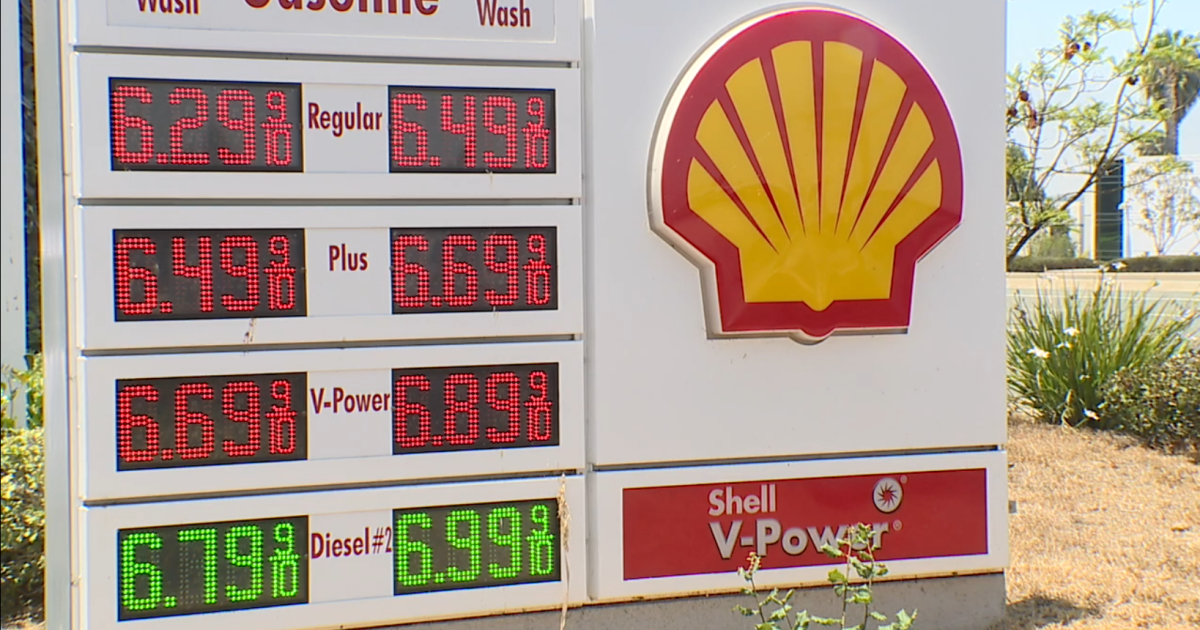
SAN DIEGO (CNS) — The average price of a gallon of self-serve regular gasoline in San Diego County dropped for the 44th time in 45 days today, falling eight-tenths of a cent to $5.42, its lowest amount since March 12. The average price has fallen 74.9 cents over the past 45 days, including eight-tenths of a cent Saturday, according to figures from the AAA and Oil Price Information Service. It is 9.8 cents less than one week ago and 53.2 cents less than one month ago, but 80 cents more than one year ago. The national average price dropped for the 43rd time in 45 days, falling six-tenths of a cent to $3.804, its lowest amount since March 17.
It has decreased 76 cents over the past 45 days, including 1.3 cents Saturday. The national average price is 6.3 cents less than one week ago and 41.6 cents less than one month ago, but 65.6 cents more than one year ago. “Crude oil prices have fallen to their lowest levels in months, dropping to the $60 a barrel range,” the AAA said Thursday. “Overall, gas prices remain the highest they’ve been in 4 years, but the downward trend since late May is welcome news during the busy summer driving season.”
Copyright 2026, City News Service, Inc.
-

 Boston, MA5 minutes ago
Where to watch Boston Red Sox vs Chicago White Sox: TV channel, start time, streaming for July 7
-

 Denver, CO8 minutes ago
House fire in Denver fully engulfs power pole, detached garage mostly destroyed
-

 Seattle, WA8 minutes ago
WEST SEATTLE SCENE: Stranded dog’s rocky rescue
-

 Milwaukee, WI23 minutes ago
College wasn’t on his radar. This nonprofit helped him — and hundreds more
-

 Atlanta, GA28 minutes ago
Atlanta man killed in SE Georgia shooting, GBI investigating
-

 Minneapolis, MN35 minutes ago
MPD allegations under spotlight
-

 Indianapolis, IN38 minutes ago
Council Approves Increase in Indy Vehicle Tax
-

 Pittsburg, PA43 minutes ago
Overturned truck spills hazardous materials on the 62nd Street Bridge

