San Diego, CA
Bad Break For Bogaerts Hurts San Diego’s Bid For First Flag Since 1998


San Diego second baseman Xander Bogaerts leaps to avoid sliding Luis Arraez, then with the Miami … [+]
San Diego’s bid for its first pennant since 1998 took a major hit when Xander Bogaerts broke his shoulder during a dive in the infield this week.
Bogaerts, whose adjusted payroll salary is listed by Spotrac at $25,454,545, is the highest-paid player on the Padres.
Now the team will have to play without him for at least two months, according to Kevin Acee of the San Diego Union Tribune.
His spot will probably be taken by recently-acquired Luis Arraez, a two-time batting champion who had been serving as designated hitter because his defense at second base is undependable.
Officially, the roster spot occupied by Bogaerts went to David Peralta, a 36-year-old outfielder most recently with the Cubs. Pitcher Luis Patino transferred to the 60-day injured list to make room for Bogaerts on the 10-day list.
Even before the Bogaerts injury, which came while trying to field a hard grounder from Atlanta’s Ronald Acuña Jr., the Padres faced a difficult if not impossible path to a division title in the National League West.
With a 26-26 record entering play Friday, the team is seven games behind the front-running Dodgers and barely hanging on to a wild-card spot in the post-season tournament that includes six teams per league.
First medical reports indicate Bogaerts won’t need surgery but will require considerable time for the shoulder to heal. More tests are planned but a return before late summer is unlikely, team sources said.
The initial imaging was negative but subsequent tests revealed a fracture.
San Diego infielder Xander Bogaerts winces in pain after injuring his shoulder while attempting a … [+]
The Padres had hoped Bogaerts would boost his atypical .219 batting average – 66 points below his 2023 mark of .285. He is a .289 lifetime hitter.
A four-time All-Star and four-time .300 hitter with the Boston Red Sox before signing with San Diego as a free agent, Bogaerts shifted from shortstop to second base this season. His power seemingly evaporated at the same time.
The 6-2, 180-pound native of Aruba had personal peaks of 33 home runs and 117 runs batted in for the Red Sox in 2019 but had only four home runs in 200 plate appearances this year.
He joined the Padres during the baseball winter meetings on Dec. 8, 2022, when he signed an 11-year contract for $280 million, according to ESPN.
The deal surprised the baseball world because San Diego already had established shortstops in Fernando Tatís, Jr. and Ha-Seong Kim.
Tatís moved to right field to make room in the infield for Bogaerts. The Padres, an expansion team that began play in 1969, are the oldest team that has never won a World Series. They lost twice, in 1984 and 1998, to the Detroit Tigers and New York Yankees, respectively.
Bogaerts brought World Series experience from Boston, where he won two world championship rings, but so far, that hasn’t helped.



So Justin Verlander is calling it quits, effective at the season’s end.
There’s Padres-related history to explore with Verlander, 43.
With it comes many groans.
San Diego passed on Verlander as part of the infamous, franchise-rocking decision to draft Mission Bay High School’s Matt Bush with the first overall pick in 2004.
Had the Padres chosen Verlander and tweaked the Old Dominion alum’s delivery, as the Tigers did soon after selecting him No. 2 overall, the best innings-eater of his generation could’ve headed San Diego’s rotation for many years.
As a National Leaguer, Verlander would’ve pitched against pitchers, rather than designated hitters. His annual ERA would’ve fallen by about a half run, per DH and no-DH data of that time.
The Padres would’ve boasted a generational monster atop their rotation as soon as 2006, when Verlander won the American League rookie of the year award with Detroit, while the San Diego rotation featured next year’s NL Cy Young winner, Jake Peavy.
Recall also that Petco Park, from its opening in 2004 until its remodel in 2012, played as big as Yellowstone National Park.
Not that the DH rule greatly impeded Verlander, a nine-time All-Star.
Many times over, the ace rewarded Tigers general manager Dave Dombrowski and scouting director Greg Smith for drafting him one spot after Kevin Towers and Bill Gayton — their options reduced by Padres owner John Moores’ stated opposition to drafting Scott Boras-assisted prospects Jered Weaver and Stephen Drew — selected Bush, the easy-to-sign but troubled shortstop turned pitcher.
Verlander helped Detroit reach its first two World Series in decades. He led the league in innings three times as part of chewing up 200-plus innings in eight consecutive seasons.
Dombrowski had displayed an unwavering faith in betting big on hard throwers.
Unfazed by power-righty Kyle Sleeth breaking down soon after he took him third overall in 2003, Dombrowski and Smith, a former Padres scout, became dead set on taking Verlander if the Padres didn’t.
Why didn’t Towers and Gayton choose Verlander?
Foremost, the Padres generally didn’t like him as much as the Tigers did.
In fact, they preferred Weaver and Drew.
But Moores all but blocked his scouts there. He was openly critical of their adviser, Boras, saying he didn’t trust him. The two had clashed in the Kevin Brown talks that ended with Brown joining the Dodgers, months after Brown had led the Padres to the 1998 World Series.
Moores was subjected to other kinds of pressure, too. Legal complaints had delayed Petco’s construction. Those complaints all failed in court. But in the interim, the price of steel rose. Padres ownership bore that cost.
Even though Moores’ baseball staffers whiffed on Verlander and failed miserably in choosing Bush, Moores put them in a tough spot. He in effect removed two players who would both pan out as big leaguers.
Someone with the Tigers correctly foresaw that shortening Verlander’s stride would sharpen his control. Untroubled by his 21-18 college record and bursts of subpar accuracy, the Tigers’ duo touted the 6-foot-5, 240-pounder’s “electric” combination of size, velocity and a powerful curveball.
Signing Verlander wasn’t easy.
David Verlander, the pitcher’s father and a union organizer with experience in sticky negotiations, said a contractual impasse led him to negotiate directly with Smith, leading to a deal, per CWA-Union.org.
The sides agreed on a $3.12 million signing bonus, which was less than the $3.15 million bonus the Padres paid to Bush, who was advised by Jeff Moorad.
The Boras-advised Weaver and Drew, who went 12th and 15th to the Angels and Diamondbacks, respectively, got $4 million apiece — but they and Verlander each got major league contracts, increasing the value of all three deals.
It wasn’t until close to the 2005 draft that Weaver was signed. He nonetheless returned great value to the Angels.
Verlander went on to pitch for the Astros after GM Jeff Luhnow obtained him at age 34 from Detroit.
Verlander became a better pitcher with Houston, benefiting from the tech-and-data-driven edges the Astros provided him. Verlander embraced high-speed camera data, eventually dropping his two-seam fastball and limiting his rising fastball to high in the zone. Prodded by high-speed imagery, he adjusted his slider grip.
He won his second and third Cy Youngs with the Astros, and now stands 266-159 with a 3.33 career ERA in nearly 3,600 innings.
For baseball’s hungriest fanbase, he represents a case of what might have been.
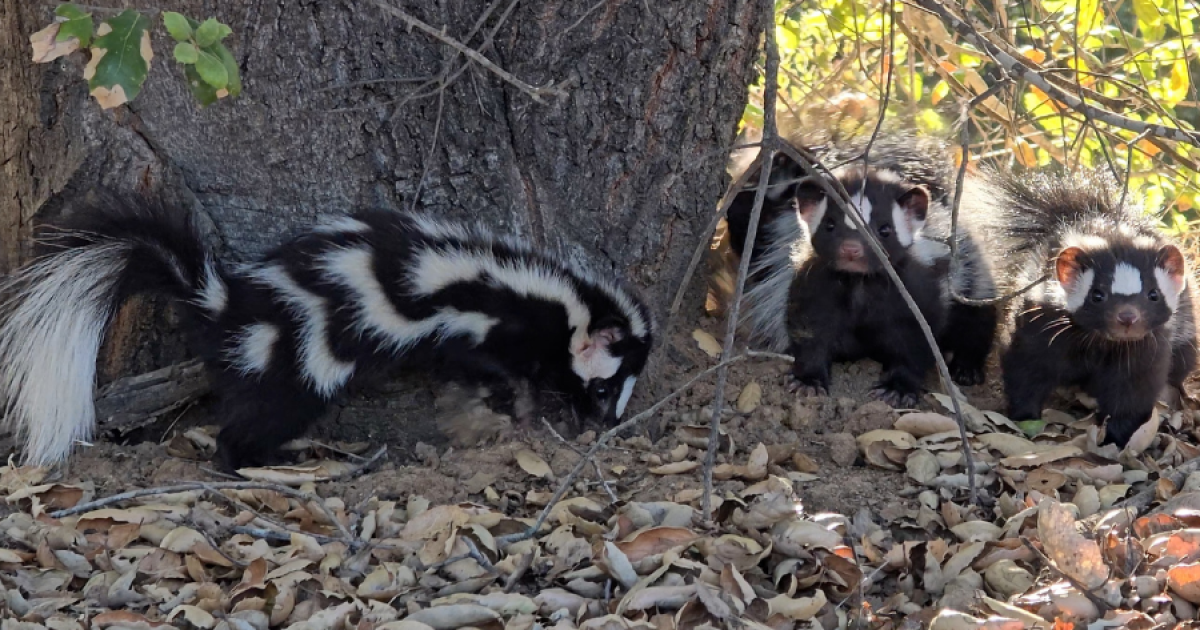
RAMONA (CNS) – Four rare western spotted skunks were released back in the wild after weeks of rehabilitation and socialization at the San Diego Humane Society’s Ramona Wildlife Center, officials announced Wednesday.
The successful release marks a major milestone for a species rarely seen in wildlife rehabilitation. The group included one orphaned skunk that was flown more than 400 miles by Flying Tails Animal Rescue from Sierra Wildlife Rescue in Northern California to join an orphaned group in Ramona, according to the SDHS.
The four skunks were returned to a carefully selected, remote habitat in Valley Center after reaching the necessary weight and developmental milestones to thrive on their own.
Western spotted skunks are a rare sight for the Humane Society’s Project Wildlife team. While the wildlife center typically handles hundreds of striped skunks each year, admitting six spotted skunks from different litters in one season is unusual. Spotted skunks are generally found in remote forested areas and are not as common in urban neighborhoods, officials said.
“We have never seen this many western spotted skunks in a single season before,” said Autumn Welch, wildlife operations manager at the Ramona Wildlife Center. “Because they are more reclusive than striped skunks, they require very specific care and even more secluded release sites to ensure they can stay wild.”
Socialization is critical for orphaned spotted skunks. During their stay at the Ramona Wildlife Center, the group became a bonded unit — exploring, digging and sleeping together, according to SDHS officials. Experts say these social cues prevent habituation to humans and teach the orphans natural skunk behaviors.
While four members of the group have returned to the wild, two spotted skunks remain in care at the facility. The smallest skunk was moved to an outside pre-release habitat and introduced to a slightly older skunk in late June.
Wildlife officials said by keeping the pair together, the wildlife team ensures the younger skunk will have a companion to learn from until they are both ready to be released, likely within the next month or two.
Anyone who finds an injured, sick or orphaned wild animal is encouraged to visit sdhumane.org/wildlifehelp or call 619-299-7012.
Copyright 2026, City News Service, Inc.

SAN DIEGO (FOX 5/KUSI) — A 33-year-old man was sentenced Tuesday to 325 years to life in prison for sexually abusing two 6-year-old girls, in addition to a slew of other felony sex abuse charges, according to the San Diego County District Attorney’s Office.
Christopher T. Gardner was convicted of 15 felony sex abuse charges, which included molesting the two girls, who were relatives of his, over a five-year period.
The abuse reportedly first came to light when one of the victims told a friend in confidence during a sleepover that she had been touched inappropriately. The friend then told her mother, who contacted law enforcement.
After Gardner was arrested, a third victim came forward, who was also a relative. Now a young adult, the victim said that when she was 7-8 years old, Gardner sexually assaulted her.
During the nine-day trial, the first two victims reportedly testified to multiple vulgar acts of sexual abuse by Gardner.
“Predators who rob children of their innocence and inflict lifelong trauma do not belong in our communities,” DA Summer Stephan said. “This sentence sends an unmistakable message to abusers: you will be held accountable. I am deeply grateful to our specialized sexual abuse prosecution team for their dedication in bringing a measure of justice to the survivors.”
-

 Connecticut2 minutes ago
This Underrated Connecticut Town Is Getting National Recognition as One of the Best Places to Live
-

 Delaware9 minutes ago
Plans advance for Delaware city’s first Chick-fil-A restaurant
-

 Florida12 minutes ago
Summer Scheming ‘26: Florida State Seminoles
-

 Georgia18 minutes ago
Travel and Leisure listed unique experiences in each state, including GA
-

 Hawaii24 minutes ago
Three West Hawaii sex offenders arrested – West Hawaii Today
-

 Idaho28 minutes ago
Idaho Power crews respond to outage affecting 2,163 customers in Canyon County
-
 Illinois40 minutes ago
As Illinois enters 10th year under Evidence-Based Funding model, equity remains an elusive goal
-

 Indiana42 minutes ago
FAIRFIELD NATIVE AND HIS WIFE FOUND DEAD IN THEIR NEWBURGH, INDIANA HOME

