Oregon
Oregon gets more than $30 million from federal government to build overpass wildlife crossing on I-5


This undated artist’s rendering from the Oregon Department of Transportation shows the design of an overpass crossing for wildlife spanning above four lanes of traffic on I-5, looking southeast. ODOT is expected to begin construction on the crossing in 2028 in the Cascade-Siskiyou National Monument, less than two miles north of the California border.
Oregon Department of Transportation
The Oregon Department of Transportation recently learned it will receive a $33 million grant from the federal government to build a wildlife crossing overpass on I-5 in Southern Oregon.
It will be the first overcrossing built to reduce wildlife and vehicle collisions along I-5, which spans nearly 1,400 miles from the Washington-Canada border to the California-Mexico border.
ODOT, which is providing nearly $4 million in matching funds for the project, removes about 6,000 deer carcasses struck by motorists each year in Oregon.
Wildlife corridors can not only prevent fatalities but also save motorists thousands of dollars in vehicle repairs – on average, $9,000 for a collision with a deer and $24,000 for elk, according to the agency.
In December 2024, the Oregon Department of Transportation announced it had received a $33 million federal grant to build the first overpass wildlife crossing on I-5. This undated photo shows the proposed location for the overpass which is expected to begin construction in 2028 in Southern Oregon, less than two miles north of the California border.
Oregon Department of Transportation

Karen Mager, an associate professor of environmental science, policy, and sustainability at Southern Oregon University in Ashland, has led a team of undergraduate students to set up camera traps and collect more than a million videos and photos of the diverse wildlife that live along the I-5 corridor south of Ashland, in the Cascade-Siskiyou National Monument.
“We have mountain lions, coyotes, bears, bobcats, Pacific fishers. We’re at the northern edge of the ringtail, which is this really cool kind of raccoon relative, and so we have a lot of diversity here,” she said.
The images Mager and her students captured were critical to identifying the future location of the overpass within the Mariposa Preserve of the Cascade-Siskiyou National Monument, less than two miles from the California border.
The crossing will essentially be a wide bridge arching above the north and southbound lanes of the freeway, designed with natural features such as native vegetation and high walls to dampen the roar from traffic passing below while keeping animals safe.
This undated artist’s rendering from the Oregon Department of Transportation shows the design of an overpass crossing for wildlife spanning above four lanes of traffic on I-5, looking southwest. ODOT is expected to begin construction on the crossing in 2028 in the Cascade-Siskiyou National Monument, less than two miles north of the California border.
Oregon Department of Transportation
“The bridge itself is actually going to be connected to a couple miles of fencing to the north and to the south that help funnel animals towards the wildlife crossing. …. It’s got these jump outs on it so that if an animal accidentally ends up in the freeway, they can easily jump out to the safe side of the fence, but animals on the safe side of the fence won’t be able to easily get into the highway,” Mager said.
Construction of the wildlife crossing is expected to begin in early 2028.
“The overpass will be kind of an amazing, beautiful ‘Welcome to Oregon’ statement as you drive in from California, and it’s going to have artwork on it,” Mager said.
Karen Mager spoke to “Think Out Loud” host Dave Miller. Click play to listen to the full conversation:


SCOTUS upholds state bans on transgender athletes in female sports
The Supreme Court ruled that states can bar transgender women and girls from competing on female sports teams.
States can ban transgender women and girls from competing on female sports teams, the U.S. Supreme Court decided in a June 30 ruling celebrated by Oregon’s Republican candidate for governor and criticized by Democrats.
The decision is another setback for the LGBTQ+ community from the high court, which has issued a series of recent rulings against transgender Americans.
The court said West Virginia’s and Idaho’s bans on female transgender athletes do not violate either the Constitution or a federal law barring sex discrimination in education.
Writing for the majority, Justice Brett Kavanaugh said schools “may determine eligibility for women’s and girls’ sports based on biological sex.”
“Separate sports teams for biological males and biological females are reasonable,” he wrote.
In a partial dissent that was joined by her two liberal colleagues, Justice Sonia Sotomayor said she would have given the student challenging West Virginia’s law a chance to show that the ban should not apply to her.
“In opting otherwise, the majority extends great sympathy to those it favors: the young cisgender girls and women who play sports,” she wrote. “Because the majority, however, inflicts a hardship on those it disfavors without giving them the fair and full opportunity the Constitution requires to litigate their contentions, I respectfully dissent.”
Twenty-seven states have passed similar bans, saying they are trying to ensure fairness and address safety concerns for non-transgender women. Similar proposals have not been successful in Oregon.
The transgender students who challenged the laws said hormone therapy and other medical treatments they’ve taken have blocked any physiological advantages from being born male. The laws, they said, should not apply to them for that reason.
The students were also banking on a landmark 2020 Supreme Court decision protecting transgender employees from workplace discrimination.
But since that unexpected 6-3 decision by a conservative court, the justices have often ruled against transgender Americans. That includes their 2025 decision that states can ban gender-affirming care for transgender minors.
Sen. Christine Drazan, Oregon Republican gubernatorial candidate, celebrates ruling
Oregon Republicans have proposed legislation to ban transgender students’ participation in sports.
Sen. Christine Drazan, R-Canby, who will face off against Gov. Tina Kotek in November, raised the issue during an April Republican gubernatorial debate.
“We’ve got to get politics off of our sports fields. No more boys in girls’ sports, no more men in girls’ locker rooms,” Drazan said.
Rep. Ed Diehl, R-Scio, and Chris Dudley, who unsuccessfully ran for the Republican Party’s gubernatorial nomination, promoted similar stances while campaigning.
Drazan issued a statement June 30 in support of the Supreme Court’s ruling.
“This ruling is a victory for fairness, common sense and for the progress achieved by generations of women who fought for and earned the right to compete,” Drazan said. “Girls and young women across Oregon are still competing on an unfair and unsafe playing field.”
Drazan said she’s always supported women’s right to compete and as governor would do everything she could to ensure girls can have a chance to compete.
Diehl also thanked the court for the ruling on social media, saying in part, “this ruling upholds Equal Protection and clarifies Title IX does not force male athletes onto girls’ teams.”
OSAA reviewing ruling, Oregon Democrats speak against court decision
The Oregon School Activities Association, which oversees high school sports and other extracurriculars in Oregon, said it was reviewing the ruling with its legal team.
OSAA’s policies allow students to participate on the team that aligns with their gender identity.
“The association will work with the Oregon Department of Education on the ruling’s impacts on state law and OSAA policy in order to provide updated guidance to member schools as needed,” a spokesperson said in a statement to the Statesman Journal. “The OSAA remains committed to ensuring interscholastic activities remain a safe and welcoming environment for all student-athletes.”
Kotek’s office did not provide comment by deadline.
Two Democratic state representatives issued statements against the justices’ decision.
“Today’s ruling is a devastating departure from decades of civil rights progress. By inviting discrimination, the court has empowered a coordinated effort to push transgender people out of public life altogether. We cannot go backwards on the road to inclusivity,” Rep. Jules Walters, D-West Linn, said.
Rep. April Dobson, D-Happy Valley, similarly criticized the ruling and said she would fight to defend Oregon’s laws.
Kyndall Mason, executive director of Basic Rights Oregon, a nonprofit group that advocates for LGBTQ rights, said in part the group wants to “assure Oregonians that trans kids are still allowed to play in our state.”
Anastasia Mason covers state government for the Statesman Journal. Reach her at acmason@statesmanjournal.com or 971-208-5615.

Baker County was 1st official jurisdiction in Eastern Oregon
Published 9:00 pm Monday, June 29, 2026
Although Native Americans had lived in what became Northeastern Oregon for millennia, when the Declaration of Independence was signed on July 4, 1776, the better part of a century would pass before settlers began to start towns in the region.
Tens of thousands of immigrants rolled through the area, following the Oregon Trail, starting in the 1840s.
Although their destination was the trail’s end at Oregon City, and ultimately a farm in the Willamette Valley, eventually some retraced the ruts to the northeast corner of Oregon, which became the nation’s 33rd state on Feb. 14, 1859, while others halted their wagons in the valley of the Powder or Grande Ronde river, or in the Columbia Basin on the west side of the Blue Mountains.
The first post office in Eastern Oregon actually predates the state. The Umatilla post office was established on Sept. 26, 1851, although it was closer to present-day Echo than to the city of Umatilla. The post office closed just a year later.
The region’s first official jurisdiction was Baker County, which the Oregon Legislature carved out of Wasco County on Sept. 22, 1862.
That was prompted by the region’s first gold rush, which followed Henry Griffin’s discovery of gold in a gulch, a few miles southwest of what would become Baker City, on Oct. 23, 1861.
Just five days after designating Baker County, on Sept. 27, 1862, lawmakers shrunk Wasco County even more by creating Umatilla County.
Two years later, on Oct. 14, 1864 — apparently a busy day in Salem — the legislature added two more counties in Grant and Union.
Grant County was made of parts of Umatilla and Wasco counties, while Union County was originally part of Baker County.
On Oct. 14, 1887 — it’s not clear why Oct. 14 seems to have been 19th century lawmakers’ favorite day to create counties — the legislature designated a chunk of eastern Union County as Wallowa County.
In many cases, such as Umatilla, post offices were started before towns were incorporated.
And most cities in the region were settled years, or even decades, before they were incorporated.
People were living in what became Baker City, for instance, in 1863, but the city was platted in 1865 and incorporated in 1874, eight years after the post office was established.
La Grande was already a town when it was incorporated in 1865.
And two cities — Umatilla and Canyon City — were incorporated even earlier, in 1864.
Incorporation dates for other cities in the region:
Pendleton: 1880
Hermiston: 1907
Heppner: 1887
Boardman: 1921
Milton-Freewater: 1950 (Milton, 1873; Freewater, 1890)
Enterprise: 1889
Elgin: 1891
Echo: 1904
Haines: 1909
Halfway: 1909
Huntington: 1891
Imbler: 1922
Ione: 1903
Irrigon: 1957
Island City: 1904
John Day: 1901
Joseph: 1887
La Grande: 1865
Lexington: 1903
Long Creek: 1891
Mount Vernon: 1948
North Powder: 1903
Pilot Rock: 1911
Prairie City: 1891
Richland: 1917
Stanfield: 1910
Sumpter: 1901
Summerville: 1885
Union: 1878
Unity: 1972
Wallowa: 1899
Weston: 1878
Athena: 1904

2020 Labor Day wildfire survivor talks blaze’s five-year anniversary
Hear from 2020 wildfire victim Christine Grom as she talks about the results of a class action lawsuit against PacifiCorp.
The Oregon Supreme Court has agreed to hear arguments in the billion dollar class action lawsuit between survivors of four 2020 Labor Day Fires and PacifiCorp.
The state’s high court will hear arguments at 1:30 p.m. on Nov. 3 in Salem, in a case with billions on the line for thousands of victims impacted by one of the worst disasters in state history.
The review represents a win for wildfire survivors, many of whom live in the Santiam Canyon and lost everything in the fires, and who stood to lose billions in jury awards following an April decision by the Oregon Court of Appeals.
How did we get here?
In June 2023, a Multnomah County jury found PacifiCorp at fault for causing the Santiam, Echo Mountain, 242 and South Obenchain fires and liable to a class of roughly 2,000 victims.
In the years since the verdict, juries have awarded more than $1.2 billion to 189 wildfire survivors, over the course of 18 “mini trials” designed to determine awards to fire victims.
On April 8, the Oregon Court of Appeals ruled the 2023 verdict was flawed, writing that instructions to the jury were “prejudicial to PacifiCorp.”
The appeals court reversed and remanded the case, which would have wiped out all awards and previous legal decisions.
Lawyers for the wildfire victims filed an appeal to the Oregon Supreme Court, also in April, and the high court granted certiorari on June 25.
The timeline for Oregon’s high court hearing the case appears swifter than normal, perhaps representing the need to bring some resolution for a case that’s been ongoing for five years.
“The thousands of Oregonians whose homes PacifiCorp burned are grateful that the Oregon Supreme Court will hear their case quickly,” lead council for the wildfire victims said in a statement.
PacifiCorp issued a statement saying they expected the court of appeals decision to be upheld.
“We respect the Oregon Supreme Court’s decision to review the case and will continue to participate fully in the process, presenting our position through the Court’s established briefing schedule,” a statement from PacifiCorp said. “We look forward to the Court’s consideration of the key issues and to the Court affirming the unanimous Oregon Court of Appeals decision.”
What will the court decide?
In reversing the original verdict, the Court of Appeals ruled that a set of instructions given to the jury, in the 2023 case, was in error and prejudicial to PacifiCorp.
The offending instruction, the ruling said, centered on the trial court telling the jury that it could “assume that the evidence at the trial applies to all class members.”
“We conclude … that instruction was legally erroneous, because certain evidence at trial, particularly related to causation, did not necessarily apply to every class member,” the appeals court wrote.
Lawyers for the plaintiffs argued that “the challenged instruction was appropriate” and that the Court of Appeals ruling “rests on a misinterpretation that no party held at trial and no juror adopted,” they wrote in their appeal to the Supreme Court.
In a news release announcing it would take up the case, the Supreme Court said it would examine the jury instructions and ruling by the appeals court.
Zach Urness has been an outdoors reporter in Oregon for 18 years and is host of the Explore Oregon Podcast. He can be reached at zurness@StatesmanJournal.com or 503-399-6801. Find him on X at @ZachsORoutdoors and BlueSky at oregonoutdoors.bsky.social
-
 Politics6 minutes ago
Newsom signs off on 100% California tax for money from Trump’s $1.8-billion ‘slush fund’
-
 Science9 minutes ago
After bold pledge, EPA shelves microplastics testing in U.S. drinking water
-
 Sports14 minutes ago
Walter Alston, Dave Roberts and everyone in between: The 10 managers in L.A. Dodgers history
-

 World24 minutes ago
World’s oceans experience hottest June ever, scientists say more heat ahead
-
 News51 minutes ago
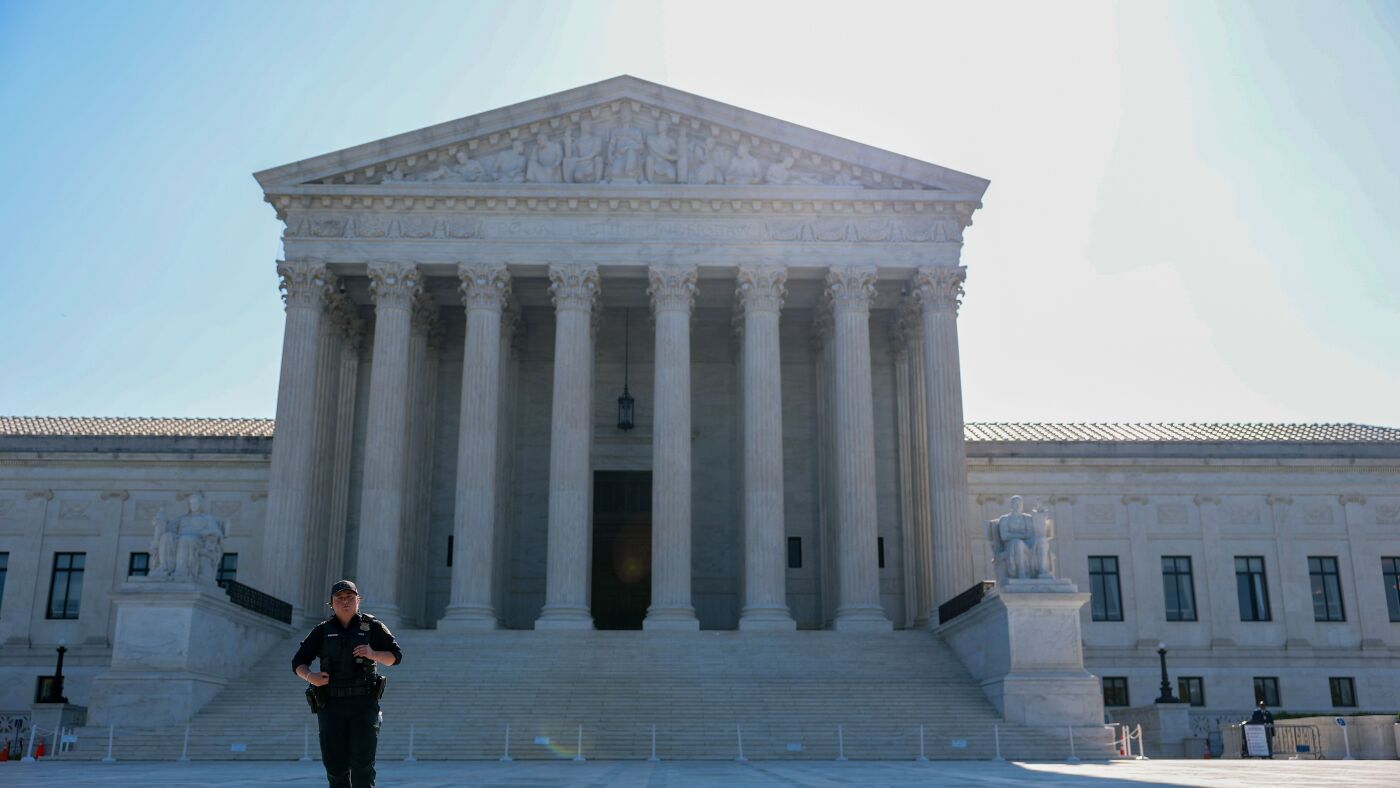
What the Supreme Court did on the final day of its term
-

 Los Angeles, Ca2 hours ago
Los Angeles County man convicted of sex trafficking, abusing woman he was dating
-

 Detroit, MI2 hours ago
Detroit Tigers tee off on New York Yankees with 5 homers in win
-

 San Francisco, CA3 hours ago
Popular brewery shutters San Francisco location amid industry woes

