Oregon
Family of security guard shot and killed at Portland, Oregon, hospital sues facility for $35M


The family of a security guard who was shot and killed at a hospital in Portland, Oregon, sued the facility for $35 million on Tuesday, accusing it of negligence and failing to respond to the dangers that the gunman posed to hospital staff over multiple days.
In a wrongful death complaint filed Tuesday, the estate of Bobby Smallwood argued that Legacy Good Samaritan Medical Center failed to enforce its policies against violence and weapons in the workplace by not barring the shooter from the facility, despite staff reporting threats and aggression toward them in the days before the shooting.
“The repeated failures of Legacy Good Samaritan to follow their own safety protocols directly led to the tragically preventable death of Bobby Smallwood,” Tom D’Amore, the attorney representing the family, said in a statement. “Despite documented threats and abusive behavior that required immediate removal under hospital policy, Legacy allowed a dangerous individual to remain on the premises for three days until those threats escalated to violence.”
In an email, Legacy Health said it was unable to comment on pending litigation.
The shooting at Legacy Good Samaritan Medical Center in Portland was part of a wave of gun violence sweeping through U.S. hospitals and medical centers, which have struggled to adapt to the growing threats. Such attacks have helped make health care one of the nation’s most violent fields. Health care workers racked up 73% of all nonfatal workplace violence injuries in 2018, the most recent year for which figures are available, according to the U.S. Bureau of Labor Statistics.
The gunman at the Portland hospital, PoniaX Calles, first visited the facility on July 19, 2023, as his partner was about to give birth. On July 20 and July 21, nursing staff and security guards filed multiple incident reports describing outbursts, violent behavior and threats, but they weren’t accessible or provided to workers who were interacting with him, according to the complaint.
On July 22, nurse supervisors decided to remove Calles from his partner’s room, and Smallwood accompanied him to the waiting room area outside the maternity ward. Other security guards searching the room found two loaded firearms in a duffel bag, and his partner told them he likely had a third gun on his person, the complaint said.
According to the complaint, over 40 minutes passed between the discovery of the duffel bag and Smallwood’s death. Two minutes before he was shot, a security guard used hand gestures through glass doors to notify him that Calles was armed. Smallwood then told Calles he would pat him down, but Calles said he would leave instead. Smallwood began escorting him out of the hospital, and as other staff members approached them, Calles shot Smallwood in the neck.
The hospital did not call a “code silver,” the emergency code for an active shooter, until after Smallwood had been shot, the complaint said.
Smallwood’s family said his death has profoundly impacted them.
“Every day we grieve the loss of our son and all the years ahead that should have been his to live,” his parents, Walter “Bob” and Tammy Smallwood, said in the statement released by their attorney. “Nothing can bring Bobby back, but we will not stop fighting until Legacy is held fully responsible for what they took from our family.”
After the shooting, Legacy said it planned to install additional metal detectors; require bag searches at every hospital; equip more security officers with stun guns; and apply bullet-slowing film to some interior glass and at main entrances.
Around 40 states have passed laws creating or increasing penalties for violence against health care workers, according to the American Nurses Association. Hospitals have armed security officers with batons, stun guns or handguns, while some states allow hospitals to create their own police forces.


WILSONVILLE, Ore. (CNN) – Under the cover of the night sky, a bear took a jaunt around an Oregon town. Its presumed search for a snack was interrupted by a police officer’s bright spotlight.
For the next few minutes, the officer followed the bear as it sauntered down the road, even making sure the animal didn’t dart into the road.
Eventually, video shows the officer corralled the black bear and escorted it to a nearby river where it would be safer.
Copyright 2026 CNN Newsource. All rights reserved.

PORTLAND, Ore. (KATU) — The summer solstice, which marks the astronomical beginning of Summer, is also considered the longest day of the year– meaning daytime hours are longer while nighttime hours are shorter.
WEATHER | Latest Storm Tracker 2 Forecast
This is because the summer solstice marks when the Northern Hemisphere is closest to the sun.
In Washington and Oregon, we will lose about 50 minutes by the end of July. But in the southern United States, that change is reduced.
For example, in Florida, they will lose about 20 minutes by the end of the month.
As Earth continues to orbit around the sun while rotating on its axis, the Northern Hemisphere will eventually be faced away from the sun as we approach winter solstice on December 21, 2026.
While we are losing daylight, we will not be losing any sunshine. High temperatures on Sunday will end in the lower 80s and Tuesday’s high could be closer to 90.

Start Date: July 4, 1628
Location: Approximately 1 mile West of Hole in the Ground Vista Point
Jurisdiction: Deschutes Forest Service
Fire Size: 10 acres
Cause: Under investigation
Fuels: Mixed timber and sage
Containment: 0%
Structures at risk: Nearest structure is 1/4 mile
Fire Crews/Resources: Interagency resources are suppressing fire with 2 engines, 1 dozer, 1 water tender, and one air attack.
The BLM is working with the newly established U.S. Wildland Fire Service to coordinate with Central Oregon Fire Management Service (COFMS). Visitors and locals may notice multiple agency logos posted and interagency COFMS prevention patrols by federal wildland fire apparatus throughout Central Oregon, reflecting a unified effort to suppress wildland fires.
Visit the official source for wildfire information in Central Oregon at centraloregonfire.org for wildfire updates or follow fire information on X/Twitter @CentralORfire. Call 9-1-1 to report a wildfire. For smoke and air quality information visit fire.airnow.gov.
Discover more from Central Oregon Fire Information
Subscribe to get the latest posts sent to your email.
-

 Florida3 minutes ago
Why the Red Sox are sending Roman Anthony to Florida (and to another doctor) – The Boston Globe
-

 Georgia4 minutes ago
324 impaired drivers arrested in Georgia during holiday weekend
-

 Hawaii11 minutes ago
PHOTOS: 4 ways locals celebrated July 4 this year
-
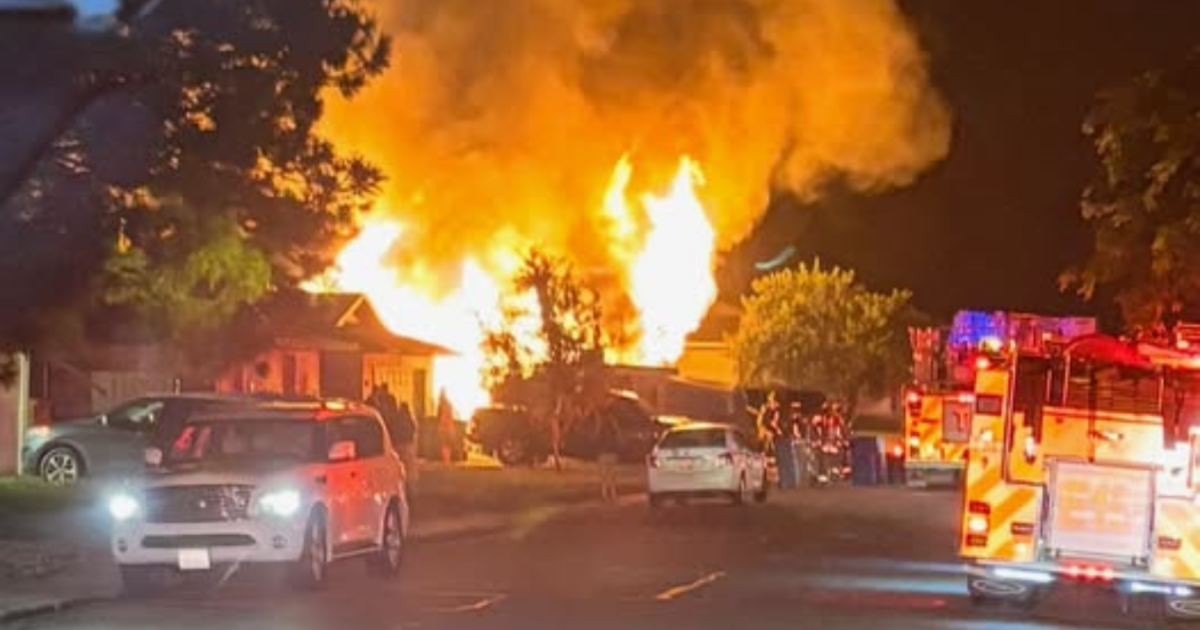 Idaho18 minutes ago
Residents displaced after Boise home found fully engulfed in flames, fire officials say
-

 Illinois21 minutes ago
26-Year-Old Woman Killed In I-55 Crash, Coroner Says
-

 Indiana26 minutes ago
Fever take down Aces 84-68, led by Kelsey Mitchell’s 27 points
-

 Iowa33 minutes ago
14-year-old Dyersville girl dies in July 4 Clear Lake watercraft crash
-
 Kansas36 minutes ago
Police in Kansas City, Missouri, investigate Sunday night homicide

