New Mexico
New Mexico QB Devon Dampier transfers to Utah


Utah has found its new quarterback in Devon Dampier, a dual-threat playmaker from New Mexico. Following offensive coordinator Jason Beck to Salt Lake City, Dampier is set to bring his electrifying skillset to a revamped Utes offense. As a sophomore at New Mexico, Dampier was the centerpiece of a high-powered attack that ranked among the nation’s best, averaging 484.2 yards and 33.5 points per game. His dual-threat abilities generated an impressive 3,934 total yards in 2024, split between 2,768 passing and 1,166 rushing yards, alongside 19 rushing touchdowns.
Dampier’s arrival signals a shift in Utah’s offensive philosophy. Under Beck, the Utes will implement a run-pass option (RPO)-heavy scheme designed to maximize the quarterback’s running ability. At New Mexico, this approach produced the fifth-best rushing offense in the nation, and Dampier excelled as a dynamic runner, forcing 51 missed tackles and showcasing elite speed and agility. His ability to make plays with his legs will provide Utah with an offensive dimension it hasn’t seen since Alex Smith’s 2004 season in Urban Meyer’s spread system.
Despite his success on the ground, Dampier’s passing remains a work in progress. His 57.9% completion rate and 1:1 touchdown-to-interception ratio (12 touchdowns and 12 interceptions) highlight areas for improvement. Beck’s guidance and an offseason to refine his mechanics could help Dampier address these weaknesses and adapt to the increased competition in the Power Four conferences. With 2,768 passing yards in 2024 and flashes of brilliance, including two 300-yard games, Dampier has the tools to develop into a more balanced quarterback.
Dampier is poised to step into the starting role immediately, given Utah’s current quarterback situation. Following the departures of Isaac Wilson, Brandon Rose, and Luke Bottari, the Utes are left with only incoming freshmen Wyatt Becker and Jamarian Ficklin on the roster. Cam Rising’s reported departure would further clear the path for Dampier to lead the offense in 2025. While Utah may seek another quarterback through the transfer portal, Dampier’s familiarity with Beck’s system gives him a significant advantage as the Utes transition to a new offensive identity.
With Dampier’s dual-threat capabilities and Beck’s proven system, Utah’s offense has the potential to reach new heights. However, the success of this pairing will hinge on Dampier’s ability to improve as a passer and adapt to the challenges of competing at a higher level.



The Downtown Growers’ Market opened its season at Robinson Park, drawing people out for fresh produce, local goods and breakfast food.
ALBUQUERQUE, N.M. – The Downtown Growers’ Market opened its season at Robinson Park, drawing people out for fresh produce, local goods and breakfast food.
The first event of the season happened Saturday morning at Robinson Park in downtown Albuquerque.
The market will return every Saturday morning for the next several months.
Vendors include local farms selling fresh produce, pottery makers and people selling breakfast burritos, bagels, local honey and more.
The market gives people more chances to bring a picnic blanket and enjoy the weather in Albuquerque.

A stretch of of the US-Mexico border near Sunland Park, New Mexico, is being cleared to make way for an extension of Trump’s border wall.Gaby Velasquez/Puente News Collaborative
This story was originally published by Inside Climate News in partnership with Puente News Collaborative and is reproduced here as part of the Climate Desk collaboration.
On a Saturday morning in March, high school students, mountain bikers and soldiers from a nearby Army base climbed the winding path up Mount Cristo Rey. From the summit, they could see most of El Paso, the sprawling city that dominates a stretch of desert where New Mexico, Texas and the Mexican state of Chihuahua meet.
They paused to trace the line of the Rio Grande, where it divides Mexico and the United States, and then touched the smooth tiles lining the base of the Christ the King statue, a cherished monument that gives the mountain its name.
Two days later, on a Monday morning, explosions rattled the same site. Contractors were blasting the south side of Mount Cristo Rey to prepare the terrain for construction of the border wall President Donald Trump has long promised would run from San Diego in California to Brownsville in Texas.
After the explosions, US Customs and Border Protection (CBP) uploaded a video of the blasts to social media. One earlier post boasted the mountain was getting a “face lift” to “secure a historically challenging terrain.”
The sarcasm didn’t sit well with thousands of residents from both sides of the border, who looked forward to the annual Good Friday pilgrimage to the mountain summit. This year, they would be walking above an active construction zone.
Walls have long separated El Paso and Sunland Park, New Mexico, from the Mexican metropolis of Ciudad Juárez. But building a wall on the rugged slopes of Mount Cristo Rey was long considered impractical. Eventually, the mountain’s slopes became the only significant gap without an imposing border fence in the binational metro area of more than 2.5 million people.

In recent years, Sunland Park and the area around Mount Cristo Rey saw high numbers of unauthorized crossings. Migrant deaths in the nearby desert soared. In lieu of a wall, Border Patrol agents blanketed the mountain and stationed themselves, along with surveillance equipment, on nearby roads.
Border crossings in the El Paso sector slowed during the final year of the Biden administration and have plummeted since Trump returned to office. The second Trump administration is intent on sealing every border gap.
SLSCO, a Texas company based in Galveston, has a $95 million contract to build a 1.3-mile wall on Mount Cristo Rey and two other barriers near El Paso. CBP waived environmental and historical preservation laws in June 2025, clearing the way for a border wall on the mountain. Over the objections of the local Catholic diocese, which owns most of the mountain, work began at the site in January.
Robert Ardovino, a business owner in Sunland Park, is no stranger to the traffic of Border Patrol vehicles and undocumented migrants crossing into New Mexico. But he was appalled to see the side of the mountain being shaved off. “Electronics would have made more sense than destroying a whole mountain,” Ardovino said on a recent afternoon. “But they’re doing what they’re doing.”
He predicted that when the Good Friday pilgrims ascended the mountain, many would be shaking their heads at the destruction. “There is no accountability,” he said. “And the damage will be irreparable.”
“CBP has environmental monitors present during these activities to ensure construction best management practices are being followed and implemented by the construction contractor,” an agency spokesperson said.
An environmental summary report, completed in lieu of an environmental impact assessment, is not available to the public, the spokesperson said.
Mount Cristo Rey is where the land border between the US and Mexico ends and the Rio Grande becomes the dividing line. This point, for centuries called Paso del Norte—the northern pass—has been a crossroads for Indigenous peoples, Spanish colonizers and later settlers traveling west on the early transcontinental railroads.
Once the railroad reached El Paso in 1881, the city grew quickly. A brick company opened on the flanks of Mount Cristo Rey, and a quarry was carved into the mountainside. Later, a copper smelter rose in its shadow. Mexican American workers lived nearby in a company town called Smeltertown.
A priest at Smeltertown’s Catholic church first proposed building a statue on the mountaintop. The 29-foot limestone statue of Christ was dedicated in 1939. The mountain, previously known as Cerro de los Muleros, or Mule Driver’s Mountain, was renamed Mount Cristo Rey.
Smeltertown was demolished in the 1970s. But descendants of several families who lived there still volunteer with the Mount Cristo Rey Restoration Committee, which maintains the trail and monument. They keep a watchful eye on the thousands of people, the religious and the secular, who join the Good Friday walk.

During the first Trump administration, in 2019, a group called We Build the Wall, that included Steve Bannon, tapped private donations to build a half-mile wall on the eastern side of Mount Cristo Rey. Fisher Sand and Gravel, which has received billions of dollars in border wall construction contracts under the Trump administration, built this section of wall on private property. CBP cut a dirt road across the south side of the mountain.
Bannon later pleaded guilty to defrauding donors. Lights illuminating the wall, which separates Mexico from the United States and El Paso from New Mexico, were turned off when the builders’ bank accounts were frozen.
Border wall construction largely stopped during the Biden administration. But once Trump returned to office, Mount Cristo Rey became a priority. Then-Homeland Security Secretary Kristi Noem waived more than two dozen laws on June 3 to expedite construction of the wall across the mountain. The REAL ID Act of 2005 granted DHS the authority to “waive all legal requirements” necessary to expedite construction of border barriers. Among the laws waived were the National Environmental Policy Act and the National Historic Preservation Act.
Geologist Eric Kappus considers Mount Cristo Rey one of the premier sites anywhere for geology education.
CBP announced plans for a 30-foot-high barrier that would run along the south side of the mountain and loom over the Anapra neighborhood in Ciudad Juárez. Agency plans state the wall will consist of steel bollards spaced four inches apart. It will require drainage gates and access roads.
Funding for CBP’s El Paso Anapra 16-4 Wall Project, which includes Mount Cristo Rey, dates back to DHS 2020 border wall appropriations. Since then, the agency has received 224 written statements about the proposal. According to the summary, 211 comments opposed the wall.
Notably, the Roman Catholic Diocese of Las Cruces urged the agency to exclude Mount Cristo Rey from its barrier plans. In its comments, the diocese referred to the mountain as a place “where faith transcends borders.”
“A grant of entry onto land [the diocese] owns for CBP purposes, whether temporary or permanent, would deter those pilgrims and migrants from exercising their religion as they have done for almost one hundred years,” wrote the Diocese’s general counsel, Kathryn Brack Morrow. “A place of hope, faith, and communion would become a place of fear, exclusion and division.”
Morrow wrote that the Diocese had received multiple requests for access to its property from the Department of Justice, which were denied.
The trail to the summit has not been disturbed by construction. But last year, the area along the border in Sunland Park and at Mount Cristo Rey was designated a National Defense Area, part of the US Army’s Fort Huachuca. People who enter a National Defense Area can be charged with trespassing.
Contractors are blasting the mountain along a 60-mile strip of federal property known as the Roosevelt Reservation. The City of Sunland Park also owns property on the mountain. A city spokesperson said Sunland Park has no jurisdiction over the area where construction is occurring.
The construction company JOBE also owns property on the mountain and declined to comment.

To the untrained eye, Mount Cristo Rey, like many Chihuahuan Desert locales, can appear desolate. A local CBP spokesperson compared it to a “moonscape” in a local news interview. “It’s just rock and sand.”
But for geologists like Eric Kappus, Mount Cristo Rey is a “treasure.”
Kappus discovered a series of dinosaur footprints at Mount Cristo Rey in 2002 while he was a graduate student at the University of Texas at El Paso. The prints were formed between 80 and 100 million years ago when Iguanodons and theropods plodded through mud on the edge of what was then a vast sea.
Kappus said he spent thousands of hours exploring Mount Cristo Rey, looking for fossils and prints. After working as an exploratory geologist and teaching across the country, he still considers it one of the premier sites anywhere for geology education.
“I could teach 75 to 80 percent of an introductory geology class in the field at Mount Cristo Rey,” he said. “It’s like a giant chalkboard.”
“The border wall is quite disrespectful to a lot of work that’s been undertaken by numerous government agencies.”
The prints, preserved in sandstone, were exposed during excavation for the brick yard. The site was later donated to the non-profit INSIGHTS El Paso Science Center. The dinosaur tracks site is not threatened by border wall construction.
William Lukefahr, an INSIGHTS tour guide, led a group down a rocky trail to the dinosaur tracks on a warm March morning. He slowed down to look for plants and animals. He pointed out a Black-spined prickly pear cactus and a Mormon Tea shrub. Then he spotted a spider web encasing a cocoon-like structure made of debris—the home of a desert shrub spider. “This mountain is very unique,” he said. “But there hasn’t been a lot of scientific research done here.”
Other creatures commonly seen on Mount Cristo Rey include coyotes, canyon wrens, and the greater earless lizard. Scruffy sotol and creosote shrubs dot the mountainside. Lukefahr explained that Mount Cristo Rey creates a corridor connecting the mountains in Juárez with those on the western and northern flanks of El Paso.
In their public comments to CBP, more than 80 people expressed concern for Mount Cristo Rey’s prized environment. The agency’s summary statement, in response, explained that a biological survey yielded no federally listed threatened or endangered species. The survey deemed that the habitat has a “low to moderate” suitability for wildlife.
“CBP has also determined there is minimal impact to vegetation and behavioral patterns of wildlife since the project area is flanked by existing barrier and an active patrol road,” the agency wrote.
Ardovino, the local business owner, said that wildlife activity in Sunland Park diminished after Border Patrol was “unleashed” to drive across the desert and carve new roads.

Years ago, he said, there were 18 pairs of burrowing owls, a diminutive variety, on his property. That was until Border Patrol vehicles repeatedly disrupted their habitat. “They’re gone now,” he said. “Concern for the environment is last on [the CBP] list.”
Myles Traphagen coordinates the borderlands project of the Wildlands Network, a nonprofit advocacy group. He said building the border wall will counteract federal efforts to foster endangered species, including the Mexican gray wolf.
US and Mexican government biologists collaborate on wolf reintroduction, with pups from New Mexico transported to Northern Mexico to grow the population and increase genetic diversity. “The border wall is quite disrespectful to a lot of work that’s been undertaken by numerous government agencies,” he said.
In 2017, Traphagen tracked the movements of a Mexican gray wolf outfitted with a GPS collar. The wolf traveled north from Chihuahua into New Mexico, then followed the Rio Grande to Mount Cristo Rey, where it crossed back into Mexico.
He said the border wall will close off this wildlife crossing point.
Ardovino owns property less than a half mile from the blast site. He said his interactions with local Border Patrol agents have always been respectful, although he was not notified before the blasting began. The boom of an unexpected explosion signaled that construction was underway.
The neighborhood of Anapra in Juárez is just feet away from the blast site. Warning signs were posted in the neighborhood in January.
Morrow, the attorney for the Diocese, said she has yet to receive notification from federal agencies of the blasting. Neither has Ruben Escandon Jr., spokesperson for the Mount Cristo Rey Restoration Committee. “Hopefully,” blasting would not occur during the Good Friday walk, he said.

The CBP spokesperson said landowners would be notified, but that there are no landowners in the blast zone.
The Wildlands Network’s Traphagen said that contractors at Mount Cristo Rey are defying common blasting protocols. Blast impact goes well beyond the thin strip of land where construction is underway, he said, and nearby residents and landowners should be notified for safety.
Construction activities are so far limited to the government’s Roosevelt Reservation. But it is unlikely the wall can be built without access to the diocese’s property on the mountain. The Diocese’s attorney was adamant the church will not sell.
The CBP spokesperson said that if the agency is unable to purchase property for border wall construction through voluntary sales, the Department of Justice can use eminent domain.
In public comments, the diocese attorney said attempts to seize the land would violate religious freedom and the right to worship, protected by the First Amendment and the Religious Freedom Restoration Act.
For now, the diocese is holding on to its sacred space. On Good Friday, thousands of people would climb Mount Cristo Rey, as they have every year going back almost a century.
But blast by blast, border wall construction is coming for Mount Cristo Rey.

Local children at the Albuquerque Museum got cameras to keep and used them to capture their hopes and dreams.
ALBUQUERQUE, N.M. – Local children at the Albuquerque Museum got cameras to keep and used them to capture their hopes and dreams.
Saranam teamed up with Pictures of Hope for the event at the Albuquerque Museum. KOB 4 was there as children shared what they want in life and got a surprise.
“My dream is to be a farmer, go to college, a crazy cat lady, a crazy dog lady,” Janise said.
Linda Solomon said the children focused on goals like college and having a home.
“I don’t think there could be anything more special than having children share their dreams,” Linda Solomon said. “Their dreams are so unselfish, they’re not hoping for iPads or things like that, they’re hoping to go to college, to have a home.”
Janise said dreaming helps children plan for the future.
“You can’t really know what you’re going to do if you don’t have like a dream to do it,” Janise said.
“We surprise them with cameras they get to keep,” Solomon said.
Solomon said parents sometimes learn something new when children describe their goals.
“So often parents say to me, ‘I didn’t know my child was dreaming for this in life, I had no idea,’” Solomon said. “We care about their dreams, we care they can achieve these dreams.”
The children will return to the Albuquerque Museum on May 29 for an exhibition. Their pictures will be printed on greeting cards and proceeds will go back to Saranam.

After the Minnesota surge, ICE is moving to a quieter enforcement approach

Mitch Albom: Detroit Opening Day tradition embraces the local perfectly

San Francisco man missing from Seaside motel under suspicious circumstances

Logan Farrington, Petar Musa stay hot in leading Dallas to 4-0 victory over D.C. United – WTOP News

Nu Stadium party! Inter Miami host epic home opener | MLSSoccer.com

Florida High School Football Rankings: Top 25 teams – Oct. 21

How old is Bo Nix? What to know about Oregon quarterback ahead of 2024 NFL Draft

Cleary's 21 help Le Moyne down Central Connecticut State 69-64 in OT

99th annual Pony Swim held in Virginia

Indiana Members Credit Union announced as new anchor tenant at Bottleworks District
After the Minnesota surge, ICE is moving to a quieter enforcement approach

FBI’s Patel delivers blunt warning to law enforcement attackers: ‘We’re going to put you down’

Indonesia receives bodies of peacekeepers killed in southern Lebanon
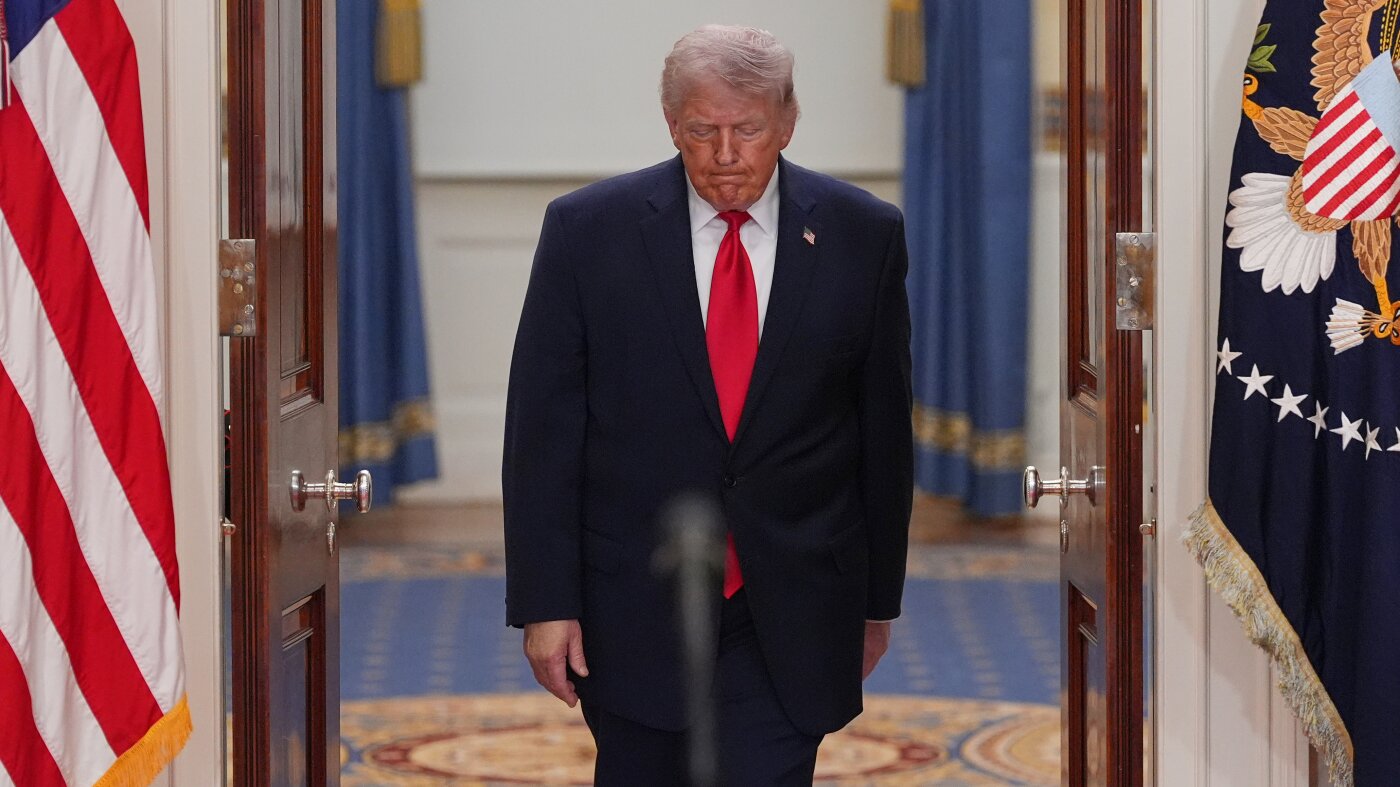
Judge halts Trump effort requiring colleges to show they don’t consider race in admissions

Trump says ‘America needs God’ in Good Friday message touting ‘resurgence of religion’
-

 South-Carolina7 days ago
South Carolina vs TCU predictions for Elite Eight game in March Madness
-

 Education1 week ago
Video: Transgender Athletes Barred From Women’s Olympic Events
-

 Miami, FL1 week ago
Jannik Sinner’s Girlfriend Laila Hasanovic Stuns in Ab-Revealing Post Amid Miami Open
-

 Minneapolis, MN1 week ago
Boy who shielded classmate during school shooting receives Medal of Honor
-

 Vermont7 days ago
Skier dies after fall at Sugarbush Resort
-

 Politics7 days ago
Trump’s Ballroom Design Has Barely Been Scrutinized
-

 Atlanta, GA7 days ago
Fetishist ‘No Kings’ protester in mask drags ‘Trump’ and ‘JD Vance’ behind her wheelchair
-
 Entertainment3 days ago
Inside Ye’s first comeback show at SoFi Stadium