West
New Idaho judge in Bryan Kohberger trial no stranger to brutal murder cases

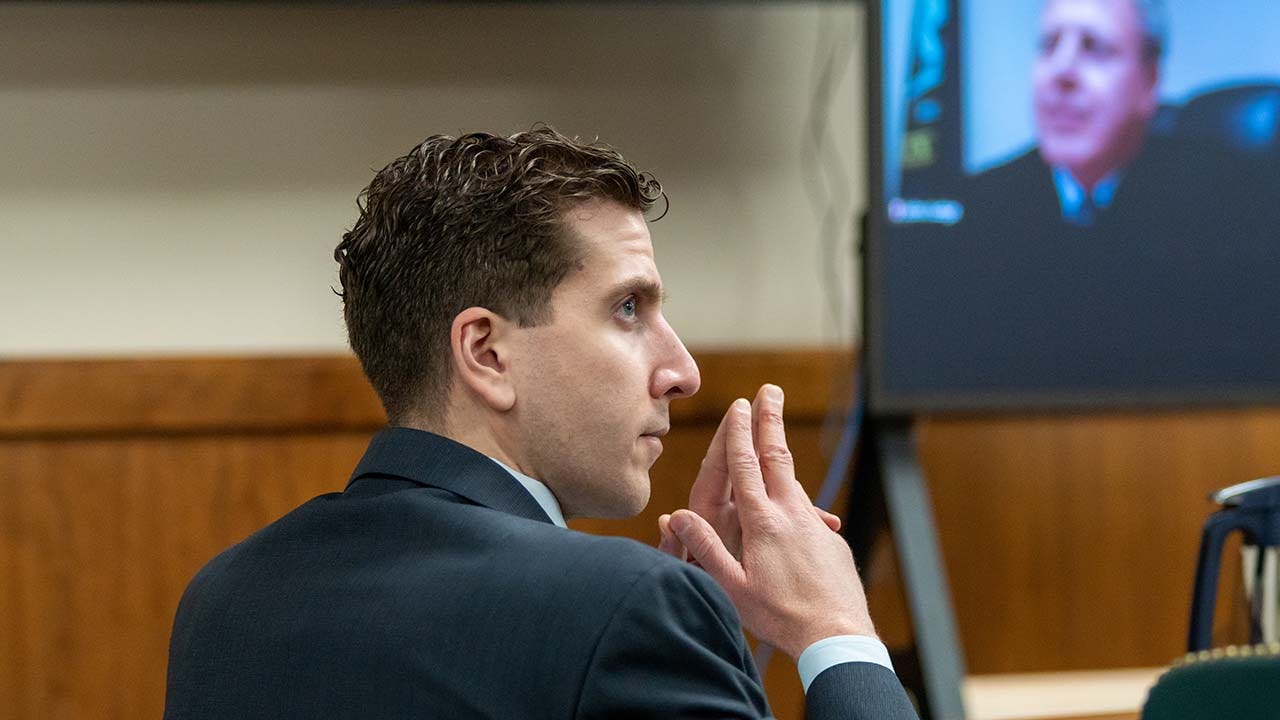
Bryan Kohberger, the 29-year-old criminologist accused of a quadruple home invasion murder, will soon get a change of scenery after more than 18 months behind bars in the Latah County Jail in Moscow, Idaho.
In a one-page order signed by Idaho’s Chief Justice Richard Bevan, the state’s high court chose Ada County for Kohberger’s trial, assigned District Judge Steven Hippler to the case and ordered Kohberger’s transfer to a jail closer to the Boise courthouse.
Ada County has a larger courthouse to accommodate more members of the public and what is expected to be a large gallery of reporters for Kohberger’s trial, which was scheduled to begin next year. And Hippler is no stranger to high-profile murder cases.
“Judge Hippler appears to be an experienced trial judge who handles serious cases,” said David Gelman, a New Jersey-based defense attorney who has been following the saga. “This case, of course, will be an entirely different animal given the national interest it has generated.”
BRYAN KOHBERGER GETS NEW JUDGE IN CHANGE OF VENUE FOR STUDENT STABBINGS TRIAL
Bryan Kohberger is now in the custody of the Ada County Sheriff’s Office, according to online jail records. (Ada County Sheriff’s Office)
Last month, he oversaw the trial of a brutal prison beating that was so severe the victim died from his injuries while in the hospital. In March, Hippler handed down a life sentence to a drunken driver who intentionally struck two pedestrians, one fatally, noting at sentencing that “[the defendant] has shown that the community is not safe with him in it at this time – and for a long time.”
Last year, Hippler oversaw the conclusion of the murder case against David Randall, who tortured and beat his ex-girlfriend before stabbing her to death when she stopped by to pick up some belongings.
Bryan Kohberger is led to an awaiting Ada County Sheriff vehicle at Boise Airport in Boise, ID on Sunday, September 15, 2024. Kohberger, who is accused in the murder of four University of Idaho Students in 2022 has had his trial moved from Latah County to Ada County. (Derek Shook for Fox News Digital)
The killer initially pleaded guilty in a plea deal to avoid the death penalty, but then he tried to take it back. Hippler rejected his arguments and ultimately sentenced him to life in prison with a change for parole after 25 years.
The victim in that case, Darla Fletcher, was stabbed more than 50 times with a screwdriver and a drumstick, the Idaho Statesman reported at the time.
Madison Mogen, top left, smiles on the shoulders of her best friend, Kaylee Goncalves, as they pose with Ethan Chapin, Xana Kernodle and two other housemates in Goncalves’ final Instagram post, shared the day before the four students were stabbed to death. (@kayleegoncalves/Instagram)
And back in 2022, Hippler sentenced both parents of 9-year-old Emrik Osuna to life without parole for killing their son. He was tortured, beaten and starved to death, and police were able to recover evidence from a “nanny cam” running in their apartment. He also imposed a 100-year no-contact order barring the parents from speaking with their other children.
While Hippler has often agreed to prosecutors’ sentencing requests, he hasn’t imposed a death penalty. Records show he took the bench in 2013, and Idaho’s last execution was carried out a year earlier.
Bryan Christopher Kohberger arrives at the Monroe County Courthouse in Stroudsburg, Pa., Jan. 3, 2023, before waiving extradition to Idaho to face murder charges in the stabbing deaths of four university students. (The Image Direct for Fox News Digital)
Prosecutors in Kohberger’s case have already said they plan to seek the death penalty if he is convicted. The defense is trying to have it taken off the table.
BRYAN KOHBERGER’S DEFENSE CITES IDAHO TOWN’S ‘MOB MENTALITY’ IN BID FOR VENUE CHANGE
Ada County is Idaho’s most populous and includes the city of Boise, which is both the county seat and state capital. There are nearly 500,000 residents, compared to less than 40,000 in Latah County.
Investigators set up outside the home where four University of Idaho students were slain in November 2022 in Moscow, Idaho, Oct. 31, 2023. (Derek Shook for Fox News Digital)
Latah County District Judge John Judge agreed to the defense’s request for a change of venue last week. In his order, he wrote that the state’s Supreme Court would make a final determination about where the trial would be moved.
Some Boise legal experts had anticipated Hippler’s selection, according to Edwina Elcox, a defense attorney based in the city who once represented “cult mom” killer Lori Vallow, whose trial also took place in Ada County after a change of venue.
She said she expects the trial to be held as scheduled in June 2025, but the judge will likely make his presence known right away.
Bryan Kohberger appears in court in Moscow, Idaho, Oct. 26, 2023. (Kai Eiselein/Pool)
SIGN UP TO GET TRUE CRIME NEWSLETTER
“I think they will want to get things moving and established,” she told Fox News Digital. “Judge Hippler will want his own timelines and deadlines set and strictly adhered to.”
Prosecutors sought to have the trial held at the courthouse in Moscow, next to the jail where the 29-year-old Kohberger had been held without bail since shortly after his arrest in Pennsylvania at his parents’ house, roughly seven weeks after the Nov. 13, 2022, slayings. He was transferred to Ada County over the weekend.
The Ada County Sheriff’s office in Boise, Idaho, Sept. 13, 2024. (Fox News Digital)
FOLLOW THE FOX TRUE CRIME TEAM ON X
The defense complained the local community and media coverage were too biased for him to get a fair trial in Latah County, claiming he could face a lynch mob if acquitted. Ada County was on a list of three larger counties the defense said it would “gladly agree to” for a change of venue.
Defense attorney Elisa Massoth talks to fellow counsel Anne Taylor during Bryan Kohberger’s hearing Aug. 18, 2023, at the Latah County Courthouse in Moscow. (August Frank/Lewiston Tribune/Pool)
Kohberger is accused of entering a six-bedroom rental home at 4 a.m. Nov. 13, 2022, and killing four students inside with a large knife.
They were Madison Mogen, 21, Kaylee Goncalves, 21, Xana Kernodle, 20 and Ethan Chapin, also 20.
All four were attending the University of Idaho, and the house, which has since been torn down, was just steps off campus.
The Ada County Jail in Boise, Idaho, Friday, Sept. 13, 2024. (Fox News Digital)
Kohberger was studying for a Ph.D. in criminology at neighboring Washington State University, about 10 miles away across the state line.
Judge entered not guilty pleas on Kohberger’s behalf at his arraignment in May 2023. Kohberger faces four charges of first-degree murder and another of felony burglary.
Read the full article from Here


LAS VEGAS (KSNV) — Reno and Las Vegas are the two fastest-warming cities in the entire country.
Tonight we take a look at what neighboring Arizona is doing to address similar heat challenges, and whether those steps can work in Nevada.
Las Vegas has several areas called urban heat islands, which are hotter than the surrounding areas because of less vegetation, such as trees, and more concrete development.
Residents in East Las Vegas, one of the areas considered an urban heat island, say they’re not surprised that temperatures continue to rise, especially in their part of town.
“Definitely, when you go more to outskirts, there’s definitely more shade, more trees everywhere, but more in the center of town it’s very much less,” said Anthony Flores.
He believes there could be more relief from the heat.
“More water accessibility, more shade overall,” said Flores, whose line of work causes him to be outside every day. “I usually drink over two gallons of water a day just to keep not getting heat stroke.”
Charlie Ponce agrees with him.
“Definitely more trees that are useful, not like palm trees or anything like that. Parks that have like the water parks in them,” said Ponce. “Yeah, splash pads.”
Valley cities and Clark County have implemented steps like having cooling stations and tree-planting campaigns to help address heat challenges.
Phoenix and other parts of Arizona are also experiencing extreme heat every summer, as well as drought issues.
UNLV Public Policy Professor Dr. Ben Leffel says there are steps in the neighboring state that can be useful here in Nevada, where temperatures historically continue to be on the rise.
“For example, Phoenix has an ordinance that says that tenants must have rooms that are coolable to at least 86 degrees Fahrenheit,” said Dr. Leffel. “And that’s then also that first responders are equipped with chilled IV therapy and cold water immersion and things like that.”
News 3 spoke with heat mitigation and management experts in Arizona to see what they believe has been working for them.
One thing they mentioned was that Arizona has the first state-level chief heat officer.
“We have much better and much more accurate numbers now about who’s actually getting sick and who’s dying from heat-related deaths, and what the causes and kind of contributing factors are. So, if you don’t track something, you can’t understand what’s going on with it,” said Dr. Ladd Keith, Heat Resilience Initiative Director at the University of Arizona.
Ponce thinks it would help in Las Vegas.
“Like, let them know to tell the public like, hey, in these areas it’s getting out of hand, and this is what we can do as a community, or just have someone like regulated or watch over it,” she said.
And the city of Phoenix also has an entire heat office, something that can be beneficial on a local level, like being able to coordinate between different groups like homeless outreach, the hospitals, etcetera.
“Statewide coordination of cooling centers, lessons learned that are shared across different working groups, and so just a lot of cooperation that really creates a lot of efficiency too, and so I think that’s an important thing to note, is there is a cost to this, but the efforts are saving lives, and I think it’s making government more efficient,” said Keith.
Amy Scoville-Weaver, the Healthy Cities Program Director in Arizona for The Nature Conservancy, says the Phoenix Metro has done well with increasing vegetation, including in areas where there’s drought.
“So we’re looking at supporting and planting hardy trees, drought-tolerant trees, trees that are already designed, designed to live and thrive in water-scarce environments,” said Scoville-Weaver.
She says they also look at improving infrastructure to support it.
“So when it does rain, the water doesn’t just go down asphalt, get polluted, and go through a storm drain; rather, that water is being diverted to vegetation that needs it,” said Scoville-Weaver.
Leffel says another thing to keep in mind is heat safety can also come from indoor policies.
“For example, Phoenix has an ordinance that says that tenants must have rooms that are coolable to at least 86 degrees Fahrenheit,” he said.
A new Nevada law that went into effect last week requires larger jurisdictions to come up with heat mitigation plans.

A California bill would let insurers monitor customers’ driving data in exchange for discounted premiums.
Assemblymember Tina McKinnor, the author of AB 311, said the digital monitoring, known as telematics, rewards good driving and would improve safety. In real time, telematics technology would track data such as speed, location and how a vehicle is being driven.
“We have to slow people down,” McKinnor said. “That is the whole purpose for this bill, is driver safety.”
A voter-approved law from 1988, Prop 103, required insurance rates to be based mainly on driving record, miles driven and experience. It made California the only state in the country to prohibit telematics.
McKinnor believes the law is outdated. She argued that her bill would also help good drivers who pay higher rates because of where they live.
“Where I live definitely brings my insurance up,” McKinnor said. “If we both drive the same way, we’ll get charged the same way, instead of by our ZIP code.”
California’s Department of Insurance and consumer groups oppose the bill, citing privacy concerns.
“We can’t look behind the algorithm and see what weight it’s giving to different criteria, which is a big problem,” said Jamie Court, president of Consumer Watchdog. “Auto insurance, otherwise, is transparent. This is why the Department of Insurance is opposed, because of the lack of transparency in the algorithm.”
The proposed savings in exchange for good driving might not be guaranteed. Telematics data from the Maryland Insurance Administration showed that 31% of drivers who opted into the program saw a drop in rates, 24% saw an increase and 45% saw no change to their premiums.
“This collects an awful lot of data about people, more than they know, and it’s like having Big Brother in your back seat,” Court said.
McKinnor insisted that drivers will not be forced to enroll in the program.
“It’s still opt-in in the other 49 states,” she said. “We’re not going to make this mandatory. It’ll be a per-volunteer situation.”
McKinnor’s bill passed through the legislature’s insurance committee. It’s expected to be presented to the full Senate in August.
Colorado
Colorado reports 90 cases of Cyclospora this year: Here’s what health officials want you to know

As health officials investigate a growing multistate Cyclospora outbreak, Colorado public health leaders say there is no evidence of an increased risk from produce sold in Colorado.
The Colorado Department of Public Health and Environment (CDPHE) has recorded about 90 Cyclospora cases so far this year, according to State Epidemiologist Dr. Rachel Herlihy.
“We typically annually see about 167 cases of this infection in the state,” Herlihy said. “We do typically see more infections due to Cyclospora in the spring and summertime.”
Cyclospora is a parasite that causes an intestinal infection known as cyclosporiasis. Symptoms typically begin about a week after exposure and commonly include watery diarrhea, stomach cramps and nausea.
“It is not pleasant, that’s for sure,” Herlihy said. “But we don’t see high hospitalization rates associated with this particular infection.”
The parasite is most often spread through contaminated food or water. Produce such as leafy greens, herbs and berries has been linked to previous outbreaks.

“This particular parasite can be difficult to wash off of produce,” Herlihy said. “It can stay attached to greens or herbs or berries, even after you wash them.”
The warning comes as federal investigators work to identify the source of a growing outbreak affecting several Midwestern states. While the CDC’s public dashboard currently lists only 1 to 10 Colorado cases, Herlihy said those numbers are outdated because they only include reports through the middle of June.
“The outbreak that is occurring outside of Colorado really appears to have started to increase significantly in late June,” she said. “We certainly expect the CDC numbers to go up because the state health department numbers that are not yet reported on the CDC website are much higher.”
Reba Pousma, who lives in the Denver area, has been suffering from symptoms like the parasite for a week. A doctor she spoke with believes Cyclospora could be the cause of her illness, though her source of exposure has not been confirmed.
“It’s definitely different from regular food poisoning,” Pousma said. “I wouldn’t wish this on my worst enemy.”

She believes her symptoms started after eating a salad last week. She’s still battling stomach cramps, exhaustion and relentless trips to the bathroom.
“I’m on day five now of going to the bathroom over 40 times a day, and nothing has been solid,” she said.
She posted about her experience online, and the video has drawn thousands of comments, many from people who say they’re experiencing similar symptoms.
“There’s a lot of people commenting that they’re experiencing the same symptoms,” Pousma said. “I think some people are worried, and some people are like, ‘Oh my gosh, this is me too. Thankfully, somebody’s talking about it.’”
Unlike the Midwest outbreak, Herlihy said most Colorado cases reported so far this year have been linked to international travel, not food purchased or consumed in Colorado.
When someone tests positive, CDPHE investigators conduct detailed interviews about where they traveled, what they ate, restaurants they visited and grocery stores where they shopped to help identify possible sources of exposure.
Testing for Cyclospora requires a stool sample, typically using a PCR test that detects the parasite’s DNA.
Most people recover without treatment, but Herlihy said symptoms can linger for weeks and may come and go. Antibiotics can shorten the illness, particularly for people at higher risk, including young children, older adults and those with weakened immune systems.

For now, CDPHE says Coloradans don’t need to avoid fresh produce but should continue to follow safe food-handling practices by washing produce under cold water, washing their hands before and after handling food, scrubbing firm fruits and vegetables when possible, and refrigerating cut or cooked produce promptly.
“There is no reason to believe that there’s any increased risk of exposure to Cyclospora from eating produce in Colorado,” Herlihy said. “But it is always a good idea to thoroughly wash produce.”
For more information, visit the CDC website.
-

 Arizona13 seconds ago
Arizona tackling heat mitigation, could their efforts translate to Nevada
-

 California5 minutes ago
California bill would let insurers monitor driving data for discounts
-

 Arkansas7 minutes ago
ROBERT STEINBUCH: DEI deja vu | Northwest Arkansas Democrat-Gazette
-

 Colorado15 minutes ago
Colorado reports 90 cases of Cyclospora this year: Here’s what health officials want you to know
-

 Connecticut22 minutes ago
Marian Katz Obituary
-

 Delaware25 minutes ago
DE health officials ‘on pins and needles’ after measles cases in PA
-

 Florida30 minutes ago
Florida man accused of driving drunk, causing head-on crash and seriously injuring 2
-

 Georgia37 minutes ago
Georgia cops’ alleged misuse of Flock license plate tracking data fuels privacy concerns

