Montana
Sheehy said gunshot records don't exist, as conservative talk show host calls incident 'confusing' • Daily Montanan


A national conservative talk show host gave Montana Senate candidate Tim Sheehy a chance to address a gunshot wound records suggest happened in Glacier National Park, but the Republican businessman-turned-politician said happened because of friendly fire overseas during his Navy SEAL career.
Sheehy’s appearance left the host commenting, “so confusing.”
On Friday, Sheehy appeared on the Megyn Kelly Show with Kelly asking about the gunshot incident, which has drawn both state and national media attention as one of the defining issues that could also determine which political party controls the U.S. Senate. Sheehy is running against three-term incumbent U.S. Sen. Jon Tester, a Democrat from Big Sandy.
Sheehy has insisted that a bullet in his arm is the result of “friendly fire” overseas, and that he didn’t report the incident to commanders for fears of getting in trouble or having to leave combat.
However, a ticket and interview from former Glacier Park ranger Kim Peach in 2015 detailed that Sheehy was instead cited for discharging a firearm in the park, and was treated at an area hospital for the wound. Sheehy himself wrote a handwritten statement at the time admitting the improperly stored firearm fell and discharged into his arm. Sheehy later paid the fine and the gun, a .45-caliber revolver, was returned to him.
On Saturday, Sheehy was asked repeatedly about the wound, and Kelly told him the interview was an opportunity to clarify what happened as the issue has been repeatedly at the center of the campaign. The Democrats have used it to make their case he’s lying and not to be trusted.
Sheehy said on the program that the friendly fire likely happened because of foreign forces that the U.S. military was helping in Afghanistan, without giving details about when and where the incident happened.
“You’d have Afghans who, either intentionally or unintentionally, would end up shooting friendly forces. You know, sometimes they just start putting their weapons on full auto and start, you know, shooting whatever direction they felt like,” Sheehy said.
In his memoir, Sheehy said he was hit by friendly fire from “a total stud who went on to a successful career as a SEAL.”
In the interview with Kelly, he said that he didn’t report the incident to commanders because it could break up their team with investigations, and also risked him being sent back for medical treatments, something, Sheehy told Kelly, he didn’t want to have happen.
“You know, we were at about half strength this point in our deployment. We’d have many teammates wounded and sent home,” Sheehy said. “And you know me, as a team commander, there was no position to be to be carved off the battlefield. Many of us were injured multiple times. We don’t report that simply because we’re going to stay in the fight, stay with our team. We’re going to finish our deployment and do our job. So unless those injuries are life threatening, of course, you know, if you’ve lost a limb, like some of our teammates had, or there’s a severe injury, you’re going to you’re going to deal with that, because that person has to be cared for, but otherwise you just keep on moving.”
Kelly tried redirecting the conversation several times to the incident itself, but Sheehy sidestepped the question, for example, in this exchange:
“Just to be clear: Did you shoot yourself in the arm?” she asked.
“No, that was never the allegation that. But the point is, you know, it was a friendly fire ricochet downrange that wasn’t reported at the time and after,” Sheehy said.
“I don’t want to harp on this. I just want to give you the chance. I want to give you the chance to explain yourself, because this is their closing message. It’s all about this incident, but voters are confused,” Kelly said.
Instead, Sheehy said that when he was hiking in Glacier, he felt the bullet became dislodged and went to the hospital.
“The point was, at the time, I was injured (in Glacier) and went to the hospital, they required a police report, because any gunshot room requires a police report of any kind. And they said, ‘We have to file this. We have to report this to law enforcement,’” Sheehy said. “And still having active team members, you know, in the service who were involved in at that time, I simply said, ‘Well, this is, this is an old one.’ They said, ‘No, we have to report this as a gunshot wound, you know, to the law enforcement.’ So, yeah, I said, ‘Well, okay, fine. It was an accident.’”
A Montana medical examiner with expertise in gunshot sounds recently said evidence shows it’s possible Sheehy hurt his elbow in a firefight on the battlefield and that he also hurt himself in Glacier Park.
Kelly asked about any medical records that could help clarify or corroborate the incident, but Sheehy said they don’t exist.
“You go in, you check on it, and then you leave. There’s not an extensive medical record for any of this stuff. And unfortunately, that’s the crux of this. Is there’s just not a whole lot to talk about. They decided to take this one report from a park ranger that I gave them,” Sheehy responded.
Sheehy also insisted that he and the campaign have been transparent with voters, satisfying their questions, only to have the Democrats continue to bring it up.
“No, we’ve discussed this at length, repeatedly with every media outlet for the last year. It’s been beat to death,” Sheehy said.
However, both national and state media have reported that Sheehy has ducked interviews and not responded to questions surrounding the bullet incident in Glacier National Park.
On two previous occasions, the Daily Montanan has put in requests to the Sheehy campaign for medical records regarding that incident. The Sheehy campaign did not respond to either of those requests.
The Daily Montanan renewed the requests on Sunday morning.



The Montana Lottery offers multiple draw games for those aiming to win big.
Here’s a look at July 8, 2026, results for each game:
Winning Powerball numbers from July 8 drawing
12-29-37-43-55, Powerball: 18, Power Play: 4
Check Powerball payouts and previous drawings here.
Winning Lotto America numbers from July 8 drawing
17-26-31-32-37, Star Ball: 01, ASB: 02
Check Lotto America payouts and previous drawings here.
Winning Big Sky Bonus numbers from July 8 drawing
03-13-16-17, Bonus: 10
Check Big Sky Bonus payouts and previous drawings here.
Winning Powerball Double Play numbers from July 8 drawing
06-27-33-44-69, Powerball: 23
Check Powerball Double Play payouts and previous drawings here.
Winning Montana Cash numbers from July 8 drawing
08-16-17-22-27
Check Montana Cash payouts and previous drawings here.
Winning Millionaire for Life numbers from July 8 drawing
16-18-43-48-50, Bonus: 01
Check Millionaire for Life payouts and previous drawings here.
Feeling lucky? Explore the latest lottery news & results
When are the Montana Lottery drawings held?
- Powerball: 8:59 p.m. MT on Monday, Wednesday, and Saturday.
- Mega Millions: 9 p.m. MT on Tuesday and Friday.
- Lucky For Life: 8:38 p.m. MT daily.
- Lotto America: 9 p.m. MT on Monday, Wednesday and Saturday.
- Big Sky Bonus: 7:30 p.m. MT daily.
- Powerball Double Play: 8:59 p.m. MT on Monday, Wednesday, and Saturday.
- Montana Cash: 8 p.m. MT on Wednesday and Saturday.
- Millionaire for Life: 9:15 p.m. MT daily.
Missed a draw? Peek at the past week’s winning numbers.
This results page was generated automatically using information from TinBu and a template written and reviewed by a Great Falls Tribune editor. You can send feedback using this form.

HELENA, Mont — Gov. Greg Gianforte is backing a new effort to keep data centers from driving up Montanans’ power bills.
This week, Gianforte announced Montana is signing on to the Ratepayer Protection Pledge — an initiative endorsed by President Trump.
Several major technology companies like Amazon, Google, Meta, Microsoft, OpenAI, Oracle, and XAI first signed the pledge back in March.
The pledge comes as data center development continues to grow — raising questions about how much new energy will be needed and who will pay for it.
NBC Montana spoke with Julia Haggerty, professor of geography and department head of earth sciences at Montana State University, about whether Montana’s power grid is ready for that growth.
“Not without resolution of significant transmission bottlenecks and massive amounts of new generation. So, while our grid is adequately, relatively adequately equipped to serve the needs of our current load base, it’s definitely not equipped to accommodate the new demands without a lot of expansion,” she said.
According to the pledge, data center developers will pay for new power generation, and infrastructure needed to support their operations.
“It does align with ongoing regulatory efforts to ensure that the cost of new generation associated with data centers is borne by the developers of those data centers and not customers,” Haggerty said.
The governor’s office says Gianforte’s support of the pledge is designed to encourage responsible data center investments while protecting Montana ratepayers from long-term costs.

-

 Technology51 seconds ago
Medical identity theft follows you into the doctor’s office
-
 Business8 minutes ago
California soccer fans sue StubHub after it fails to deliver expensive World Cup tickets
-
 Entertainment11 minutes ago
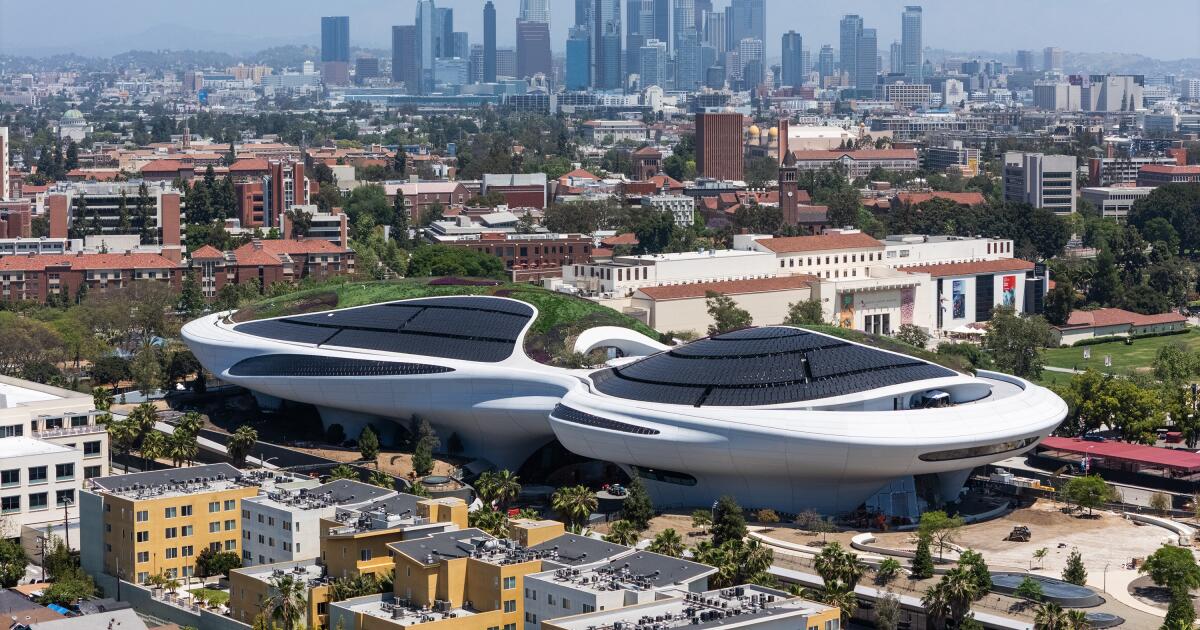
Lucas Museum to give free annual passes to South L.A. neighbors, host community preview day
-
 Lifestyle16 minutes ago
Meow Wolf taps famed L.A. animation house for its new Los Angeles venue
-
Politics23 minutes ago
Column: Trump decries ‘communism’ while his government takes ownership of companies
-
 Science26 minutes ago
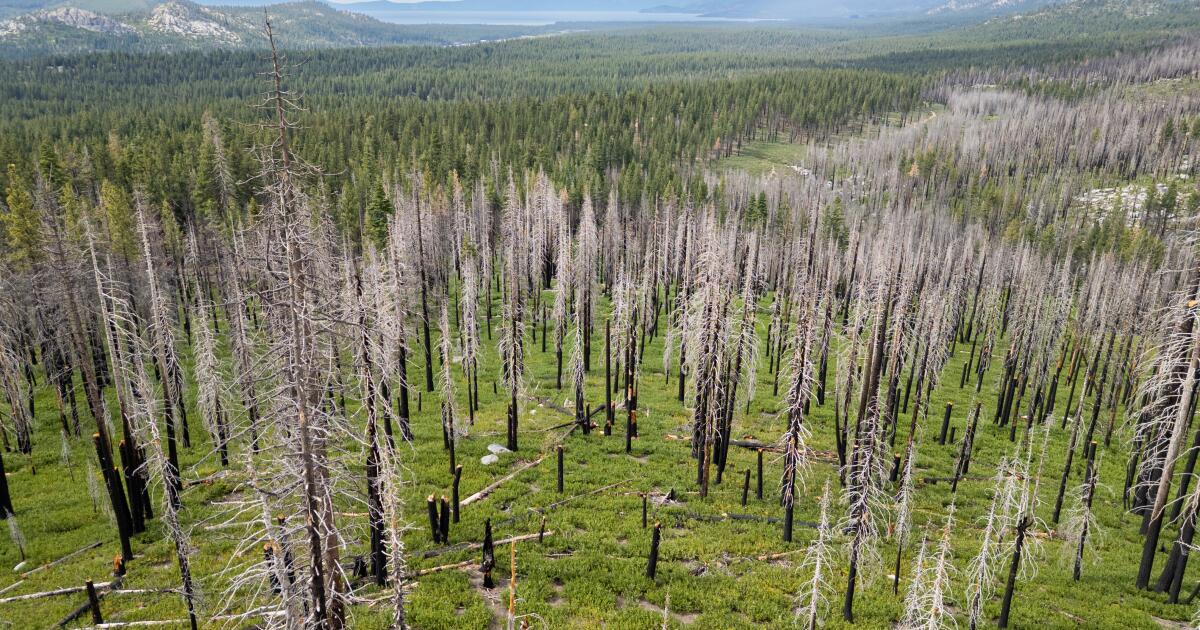
‘I’d rather my house burn down than get cancer’: Herbicide use upends California’s fight to save forests
-
 Sports31 minutes ago
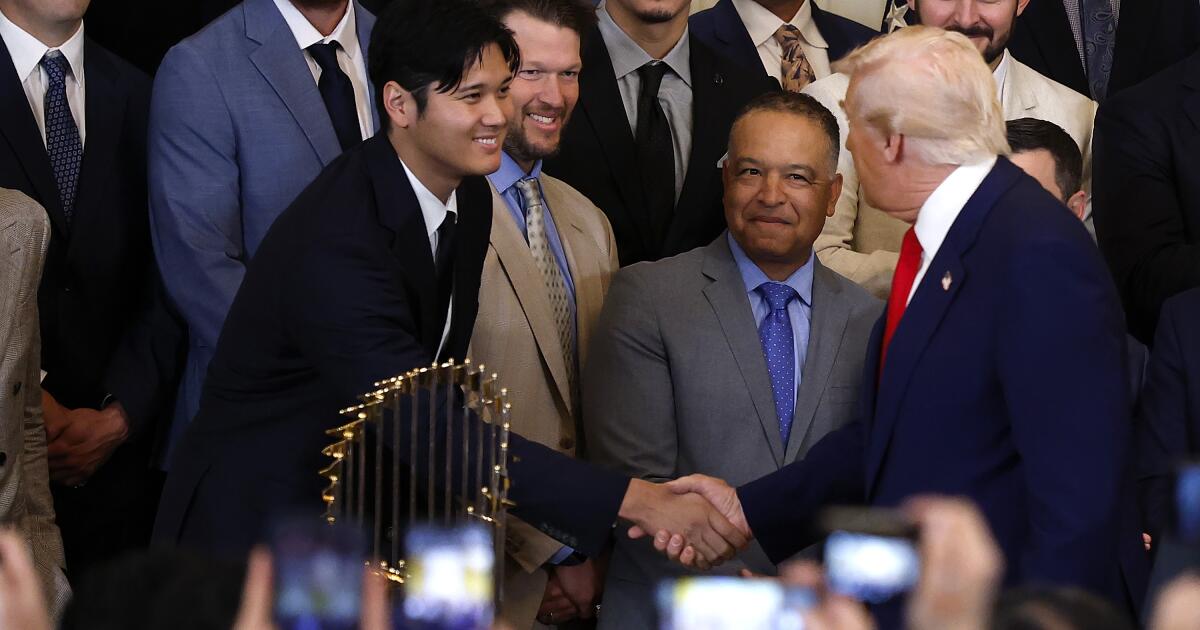
Dodgers scheduled to visit White House in late July to celebrate 2025 World Series win
-

 World41 minutes ago
Former US Olympian pleads not guilty in DC reflecting pool vandalism case


