Connect with us

Montana

Our Favorite Photography of 2024 – Flathead Beacon

Published

on

Our Favorite Photography of 2024 – Flathead Beacon


Anyone who’s lived a reasonable number of solar orbits in Montana knows Big Sky Country is nothing if not dynamic, and 2024 in the Flathead proved no exception. On the climatic front, January delivered lows of -33 in Kalispell, while July brought three weeks of near triple-digit highs, followed by an uncharacteristically, but mercifully, cool and wet August. The remarkable atmospheric conditions even extended to the edge of space in May, with the most powerful aurora in a generation painting the sky every color of the universe. Nor could Montana shield itself against the highs and lows of the general election, which effectively spanned the entire year in our state in light of its critical senate seat up for grabs. Despite all the variability, the mushroomers harvested their morels, the carnival rides spun once again at the Northwest Montana Fair, and sunrise set the still snowy peaks of Glacier ablaze.

Sunlight filters through a foggy tree canopy over the Flathead River near Old Steel Bridge, where temperatures dropped to about -30 on Jan. 13, 2024. Hunter D’Antuono | Flathead Beacon
Two Bear Air Rescue helicopter kicks up clouds of snow as it lifts off from Bassoo Peak south of Marion on Jan. 10, 2024. Hunter D’Antuono | Flathead Beacon
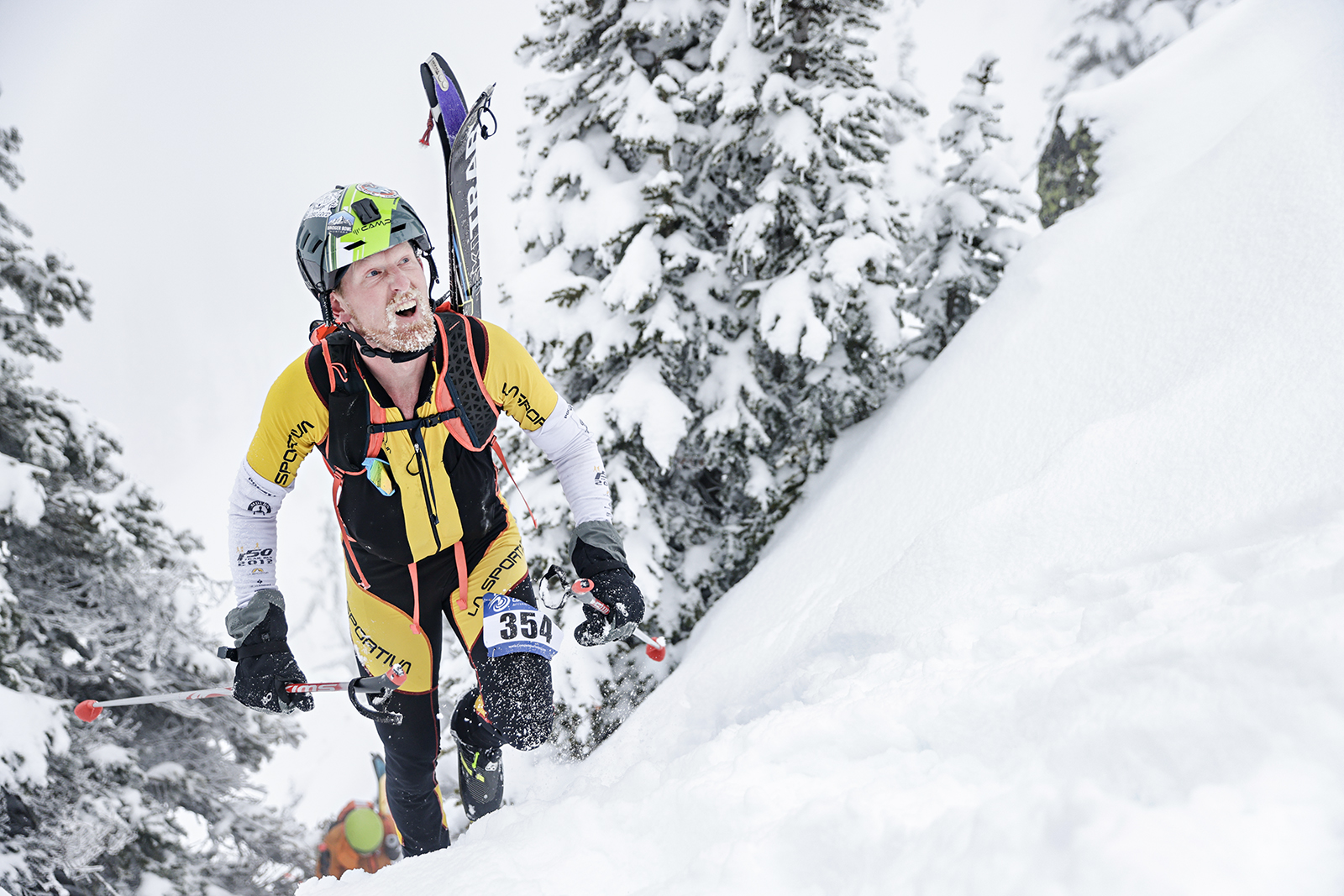
Whitefish Whiteout ski mountaineering racer Tyson Roth ascends the North Bowl at Whitefish Mountain Resort on Feb. 10, 2024. Hunter D’Antuono | Flathead Beacon
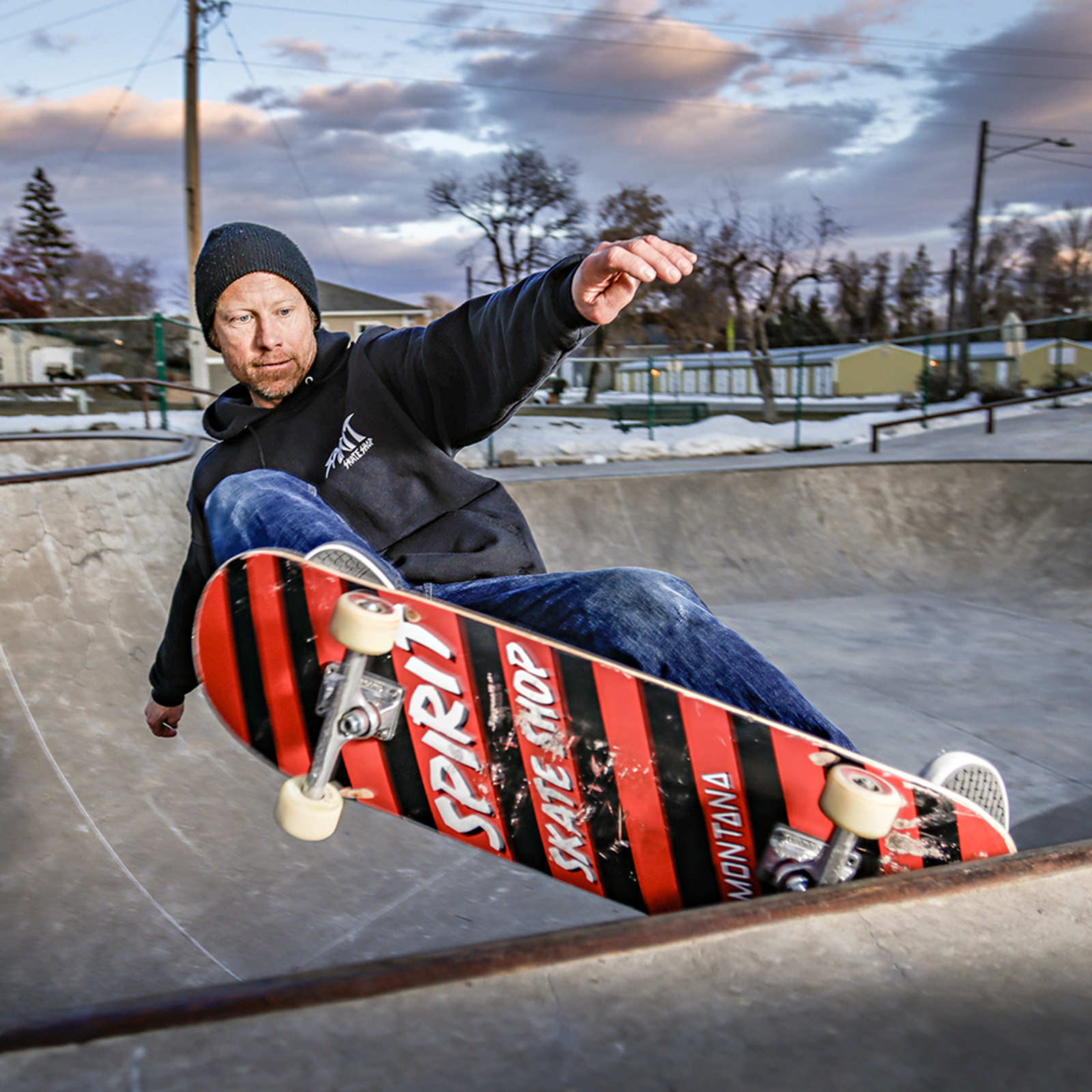
Mark Schurke skates at Kalispell Skatepark on Feb. 23, 2024. Hunter D’Antuono | Flathead Beacon
Maeve Ingelfinger, three-time National Junior Cross Country Skiing Champion, pictured March 20, 2024. Hunter D’Antuono | Flathead Beacon
Actress Lily Gladstone of the Blackfeet Nation is pictured in a standup headdress, which she received from her tribe, the Blackfeet Nation, during a ceremony in her honor in Browning on March 26, 2024. She is the first Native American to receive an Academy Award nomination for best actress. Hunter D’Antuono | Flathead Beacon
Traditional Finnish peat treatment and sauna at Sauna 60° in Columbia Falls on April 3, 2024. Hunter D’Antuono | Flathead Beacon
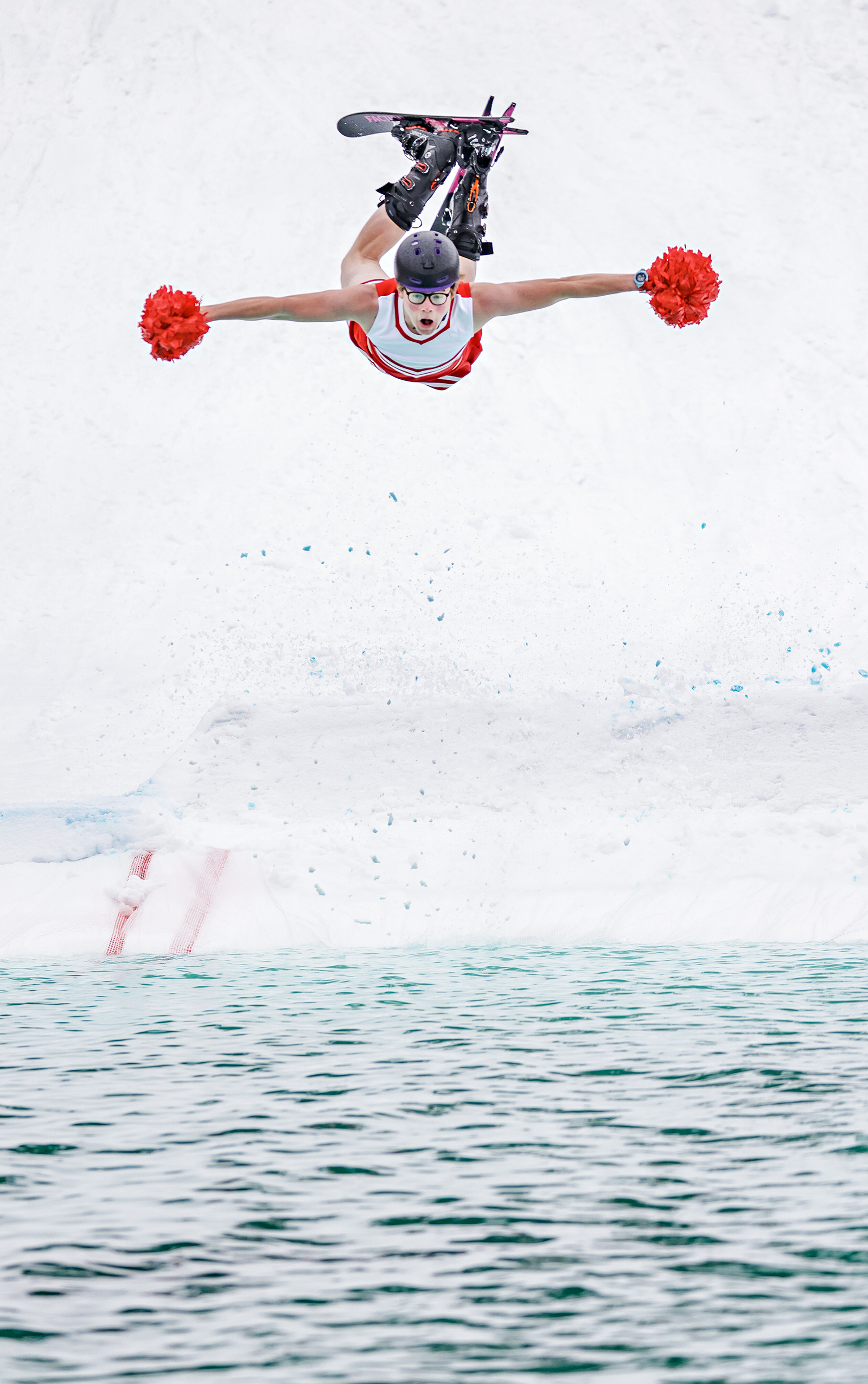
The annual Whitefish Mountain Resort Pond Skim on April 6, 2024. Hunter D’Antuono | Flathead Beacon
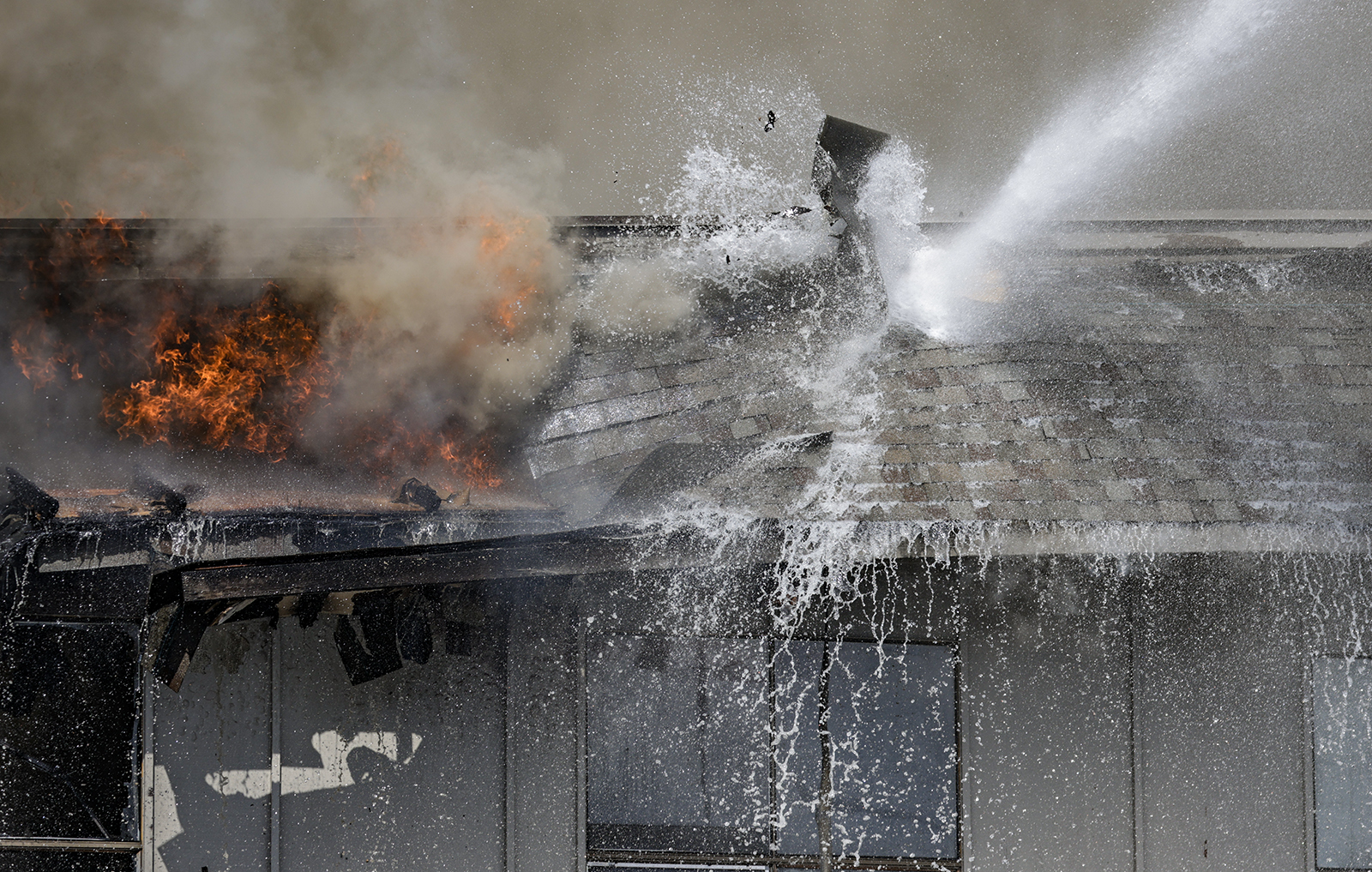
Firefighters blast water onto the roof of the Quality Inn as it burns in Kalispell on April 10, 2024. Hunter D’Antuono | Flathead Beacon
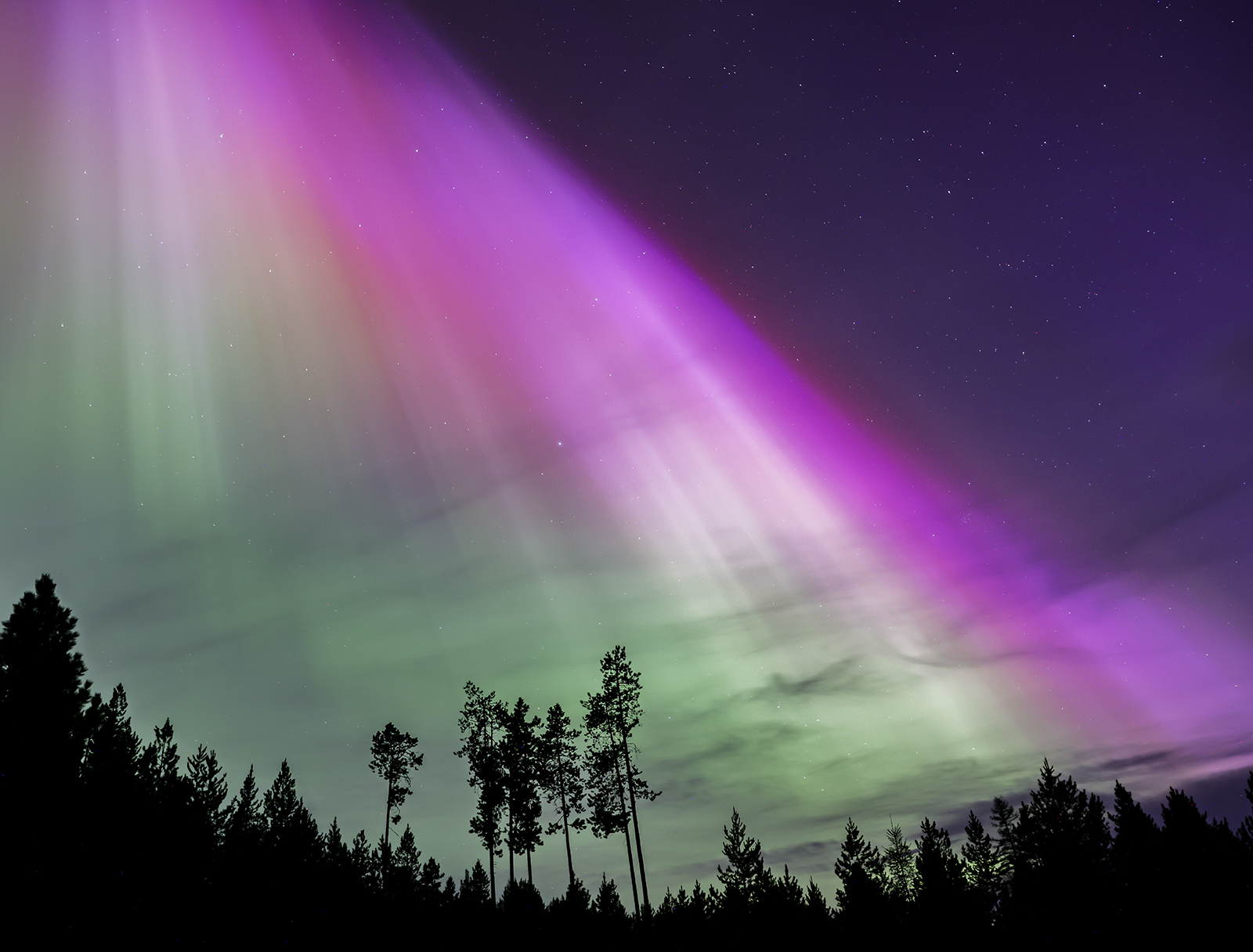
An exceptionally powerful aurora borealis lights up the skies over McGregor Lake near Marion on May 11, 2024. Photo by Hunter D’Antuono
Dan Moe harvests morel mushrooms in the Flathead National Forest on May 11, 2024. Hunter D’Antuono | Flathead Beacon
A bull rider at Hell’s Half Acre Mother’s Day Rodeo on the Blackfeet Indian Reservation on May 12, 2024. Hunter D’Antuono | Flathead Beacon
Children wrangle wild prairie dogs from around the arena with baling twine during the Hell’s Half Acre Mother’s Day Rodeo on the Blackfeet Indian Reservation on May 12, 2024. Hunter D’Antuono | Flathead Beacon
Pioneering skydiver and James Bond films stuntman BJ Worth, pictured with his parachute and jumpsuit in Kalispell on May 28, 2024. Hunter D’Antuono | Flathead Beacon
Backside of a balsamroot blossom in Herron Park on June 6, 2024. Hunter D’Antuono | Flathead Beacon
A curious hoary marmot on Scenic Point in Glacier National Park on June 8, 2024. Hunter D’Antuono | Flathead Beacon
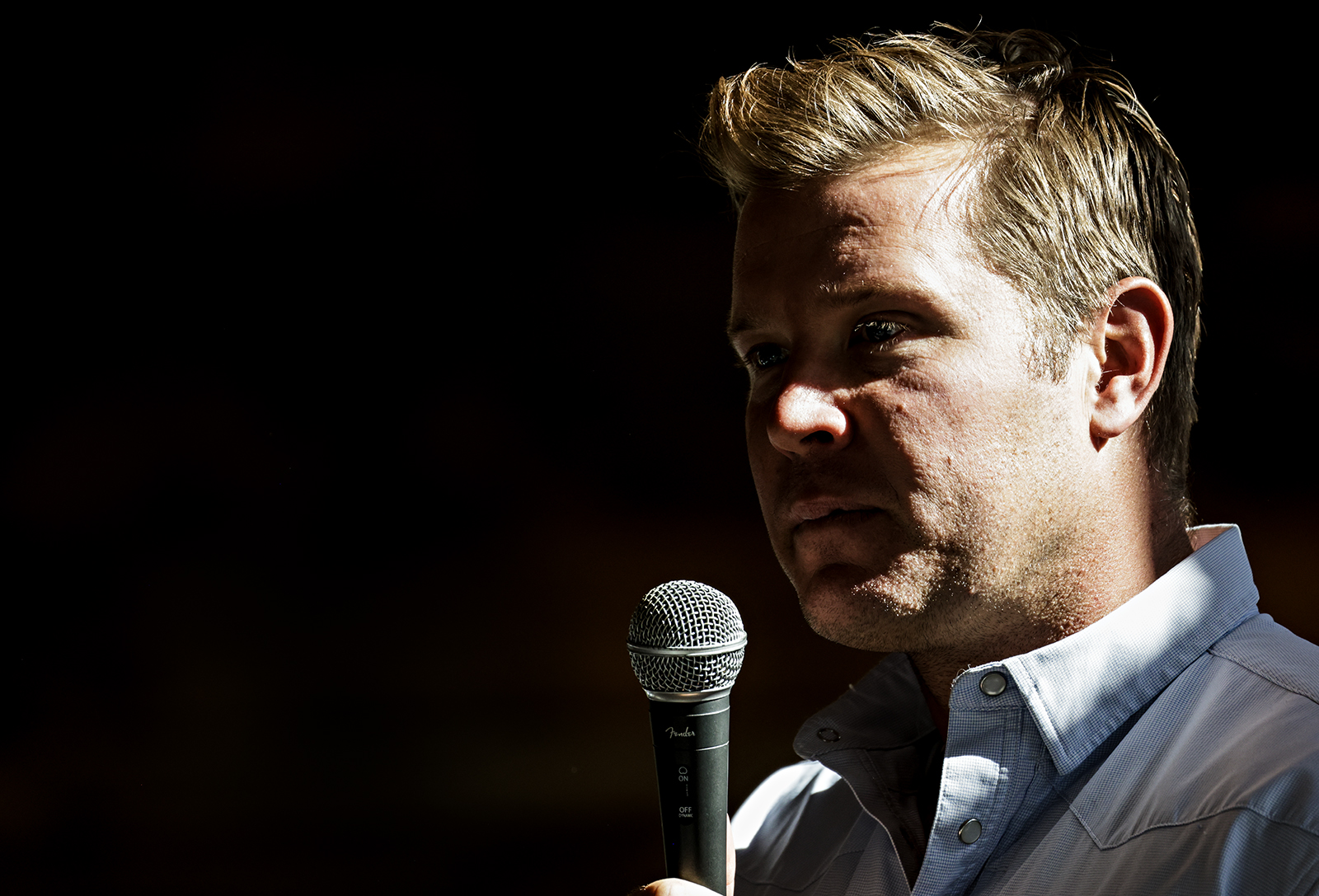
U.S. Senate candidate Tim Sheehy speaks at his “Save America Rally” in Kalispell on June 13, 2024. Hunter D’Antuono | Flathead Beacon
Paddleboarders on the Whitefish River on June 13, 2024. Hunter D’Antuono | Flathead Beacon
A sticky note reserves a seat for U.S. Senator Jon Tester ahead of a roundtable discussion with Flathead Valley veterans in Kalispell on June 21, 2024. Hunter D’Antuono | Flathead Beacon
Mount Kipp, Pyramid Peak, and Cathedral Peak at sunrise as viewed from Cosley Lake in Glacier National Park on June 24, 2024. Hunter D’Antuono | Flathead Beacon
A pro Donald Trump presidential campaign flag hangs from a fence in the Swan Valley near Condon on July 14, 2024. Hunter D’Antuono | Flathead Beacon
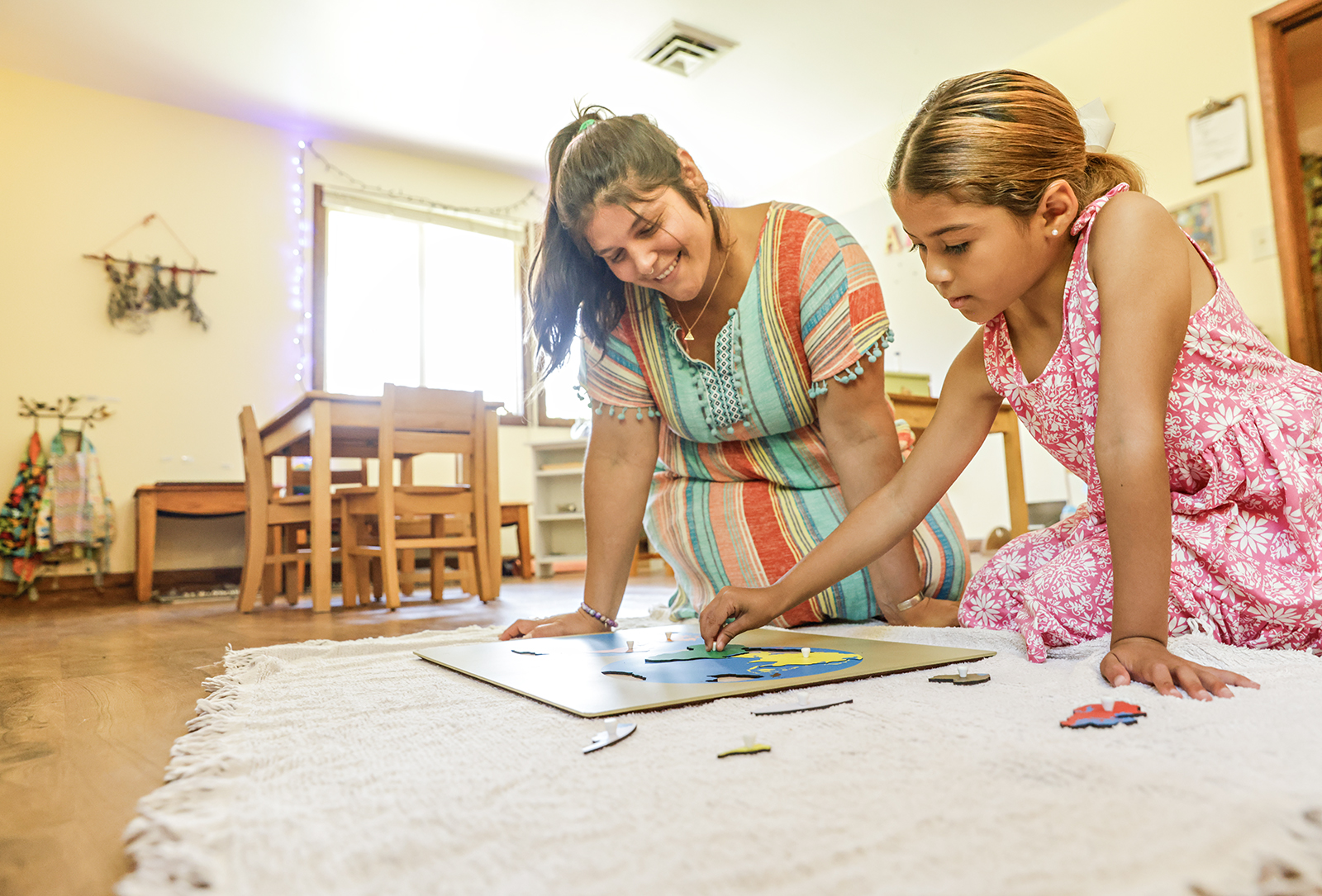
Student Anelisse De Avila puts together a puzzle with her teacher Elena Martinez at Glacier Montessori, a bilingual school for young children in Kalispell on July 16, 2024. Hunter D’Antuono | Flathead Beacon
Sunset and smoke over the Bird Islands of Flathead Lake on a hot evening, July 20, 2024. Hunter D’Antuono | Flathead Beacon
Views of Cracker Lake from the summit of Mount Siyeh in Glacier National Park on July 28, 2024. Hunter D’Antuono | Flathead Beacon
Joanna Ward appears at a Regency era-themed soiree inspired by the television series “Bridgerton” at the Conrad Mansion in Kalispell on July 31, 2024. Hunter D’Antuono | Flathead Beacon
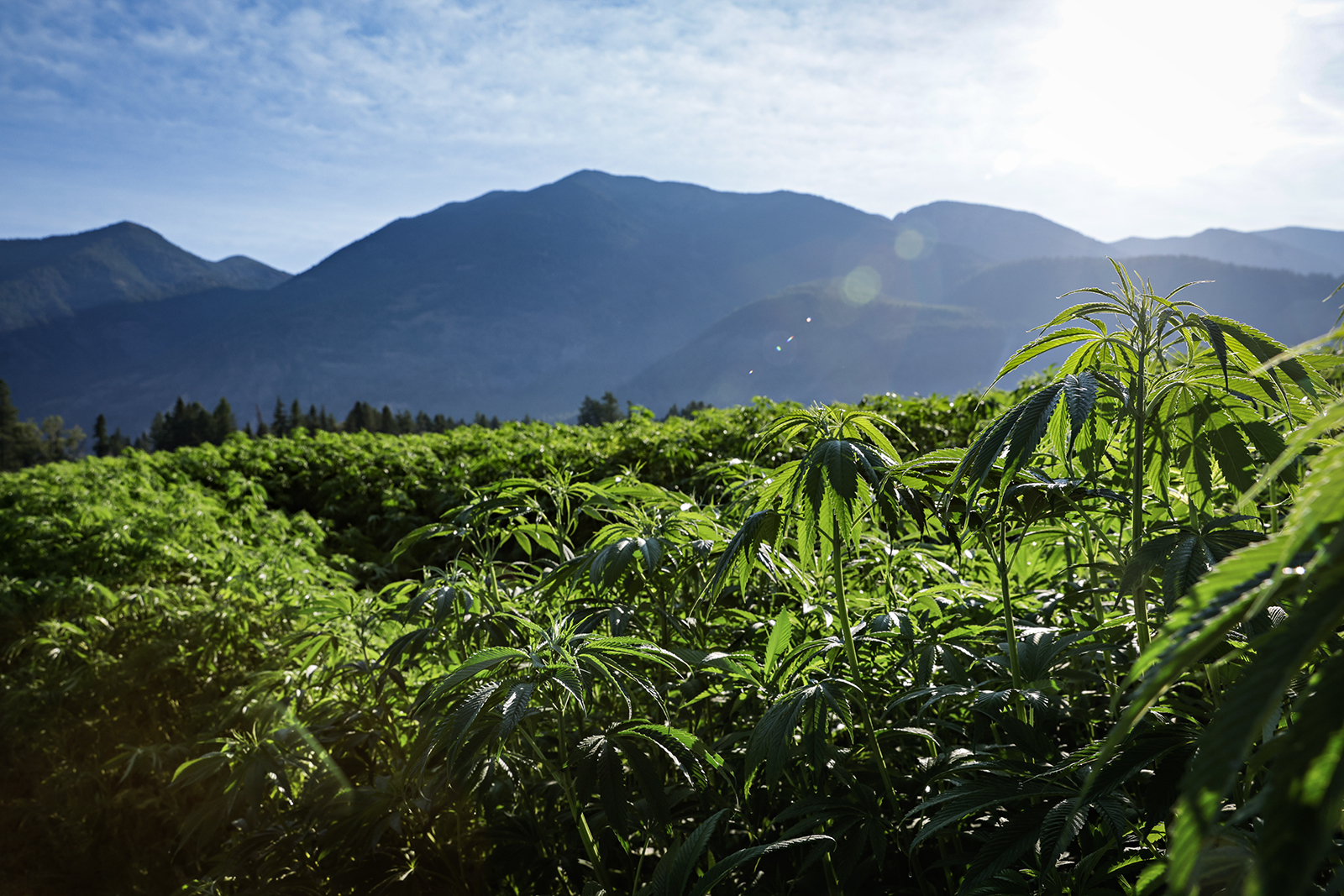
Hemp fields near the foot of the Swan Range in the Creston area on Aug. 2, 2024. Hunter D’Antuono | Flathead Beacon
Montana Cup sailing races on Flathead Lake near Somers in August 2024. Hunter D’Antuono | Flathead Beacon
Carnival riders share a kiss at the Northwest Montana Fair on Aug. 14, 2024. Hunter D’Antuono | Flathead Beacon
Sword swallower Dan Meyer performs at the Northwest Montana Fair in Kalispell on Aug. 15, 2024. Hunter D’Antuono | Flathead Beacon
Lindsey Warner models for the Style section of the Fall 2024 edition of Flathead Living Magazine in an old barn in Dayton on Aug. 21, 2024. Hunter D’Antuono | Flathead Beacon
Flies alight on vegetable scraps in a compost pile at Dirt Rich Compost in Columbia Falls on Sept. 3, 2024. Hunter D’Antuono | Flathead Beacon
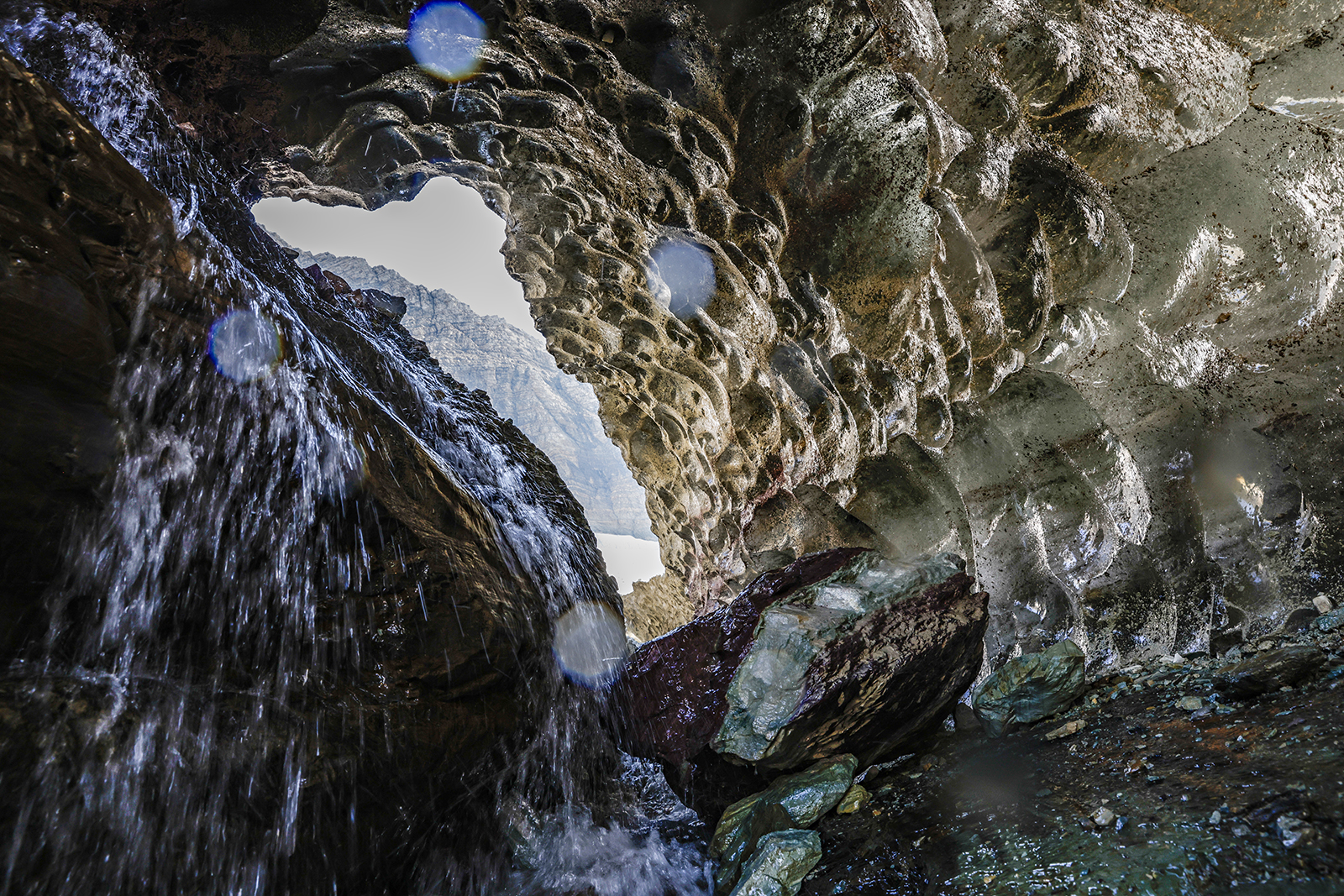
An icy cavern inside Sperry Glacier in Glacier National Park on Sept. 7, 2024. Hunter D’Antuono | Flathead Beacon
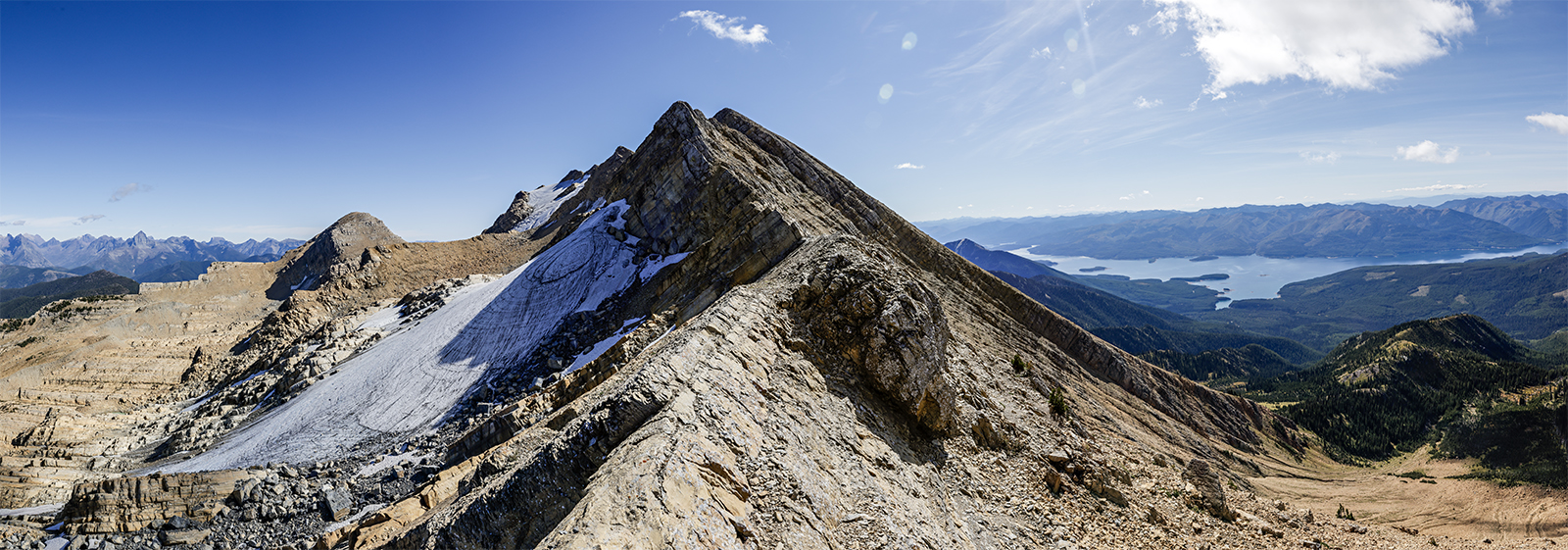
Stanton Glacier on Great Northern Mountain and Hungry Horse Reservoir on Sept. 21, 2024. Hunter D’Antuono | Flathead Beacon
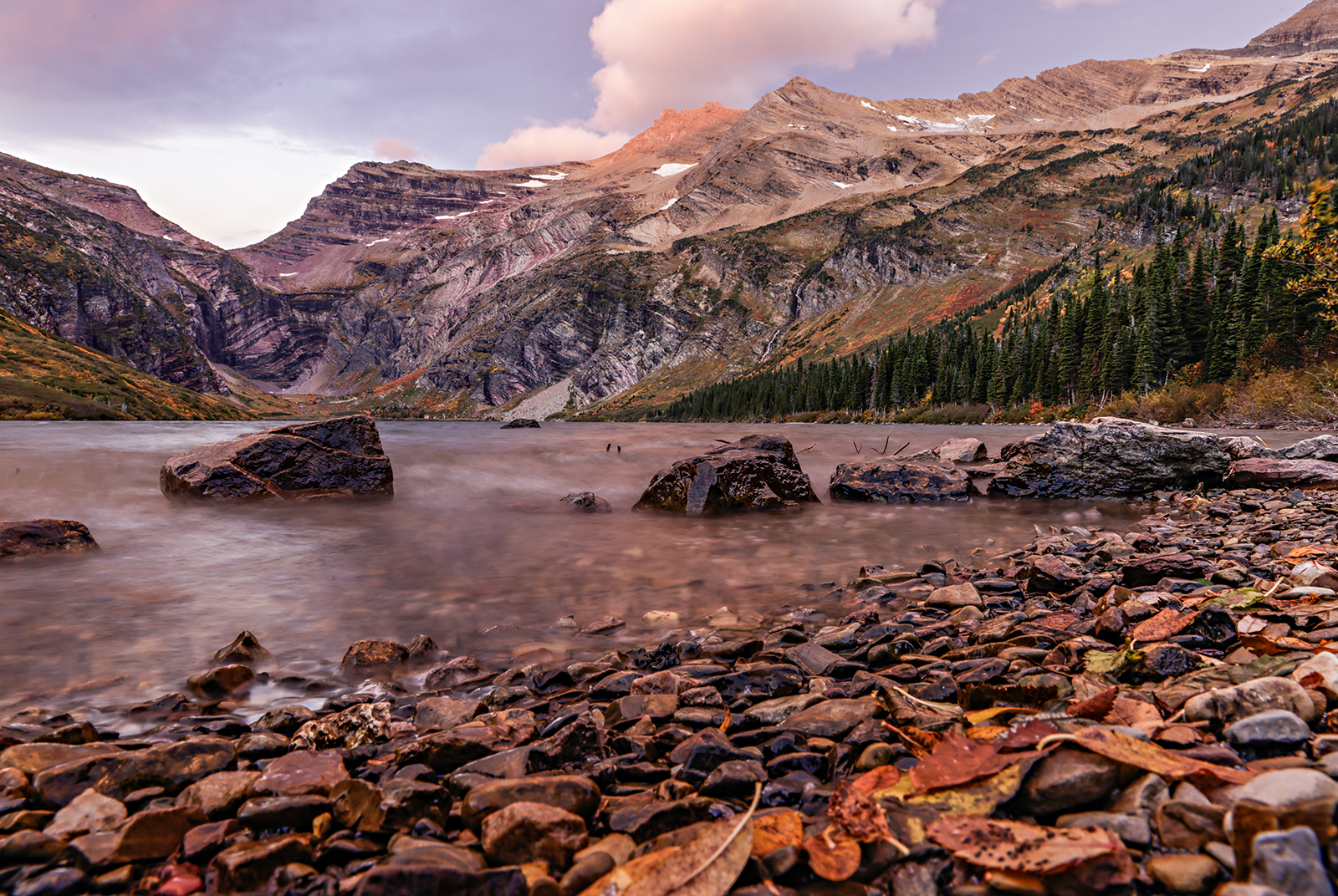
Gunsight Lake at dawn in Glacier National Park on Sept. 29, 2024. Hunter D’Antuono | Flathead Beacon
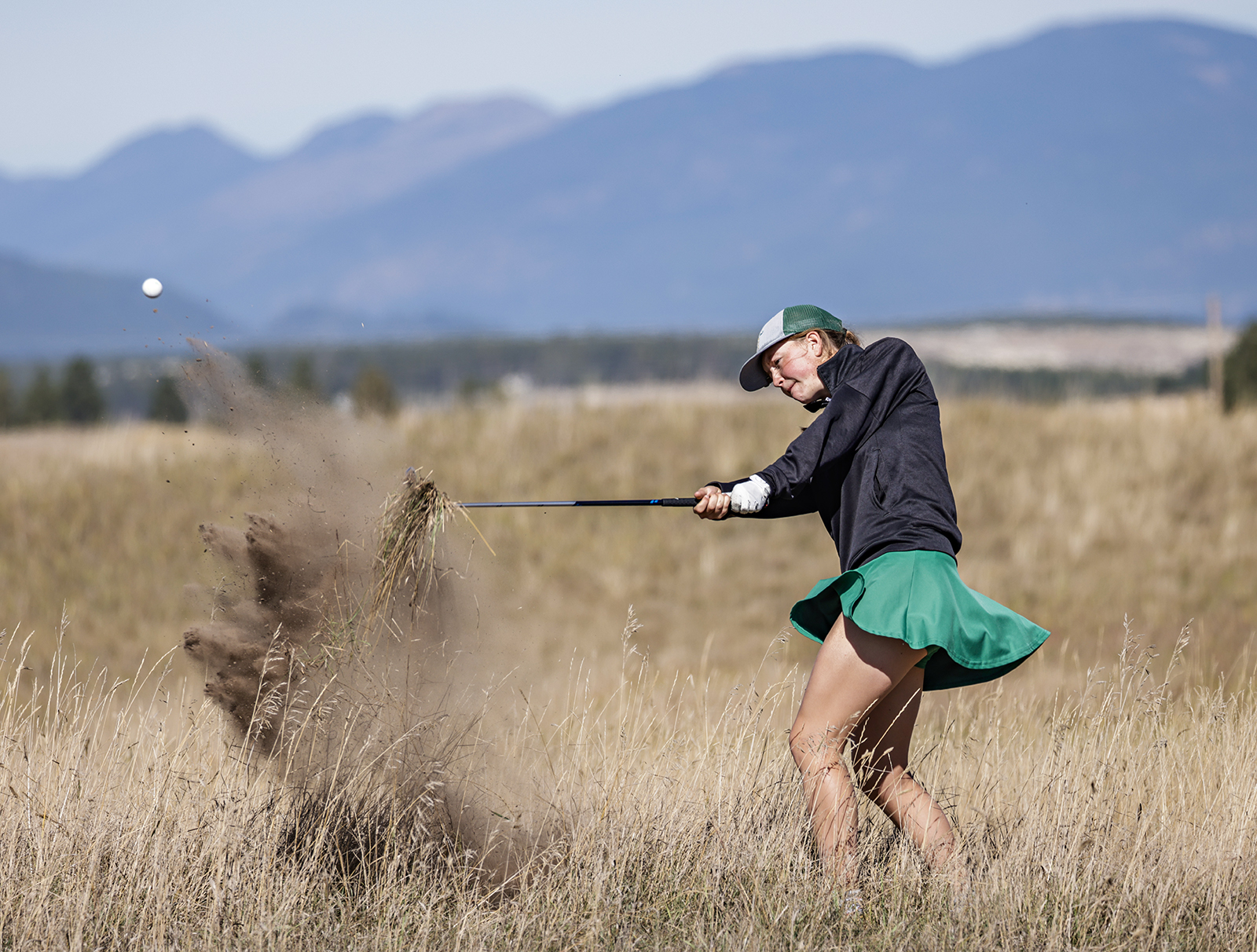
Quincy Weymouth sends her ball out of the rough during the Class AA State Golf Tournament at Northern Pines Golf Club in Kalispell on Oct. 3, 2024. Hunter D’Antuono | Flathead Beacon
A counter protester carrying a cross stands on the periphery of the Pro Choice Pro Freedom Rally, a pro-abortion rights gathering, behind a group of attendees dressed in garb from the novel and television series adaptation “The Handmaid’s Tale” in Baker Park in Whitefish on Oct. 6, 2024. Hunter D’Antuono | Flathead Beacon
Morning mist hangs over Dahl Lake at the Lost Trail National Wildlife Refuge on Oct. 10, 2024. Hunter D’Antuono | Flathead Beacon
Voters fill out their ballots at a polling place at the Smith Valley Fire Department west of Kalispell on Nov. 5, 2024. Hunter D’Antuono | Flathead Beacon
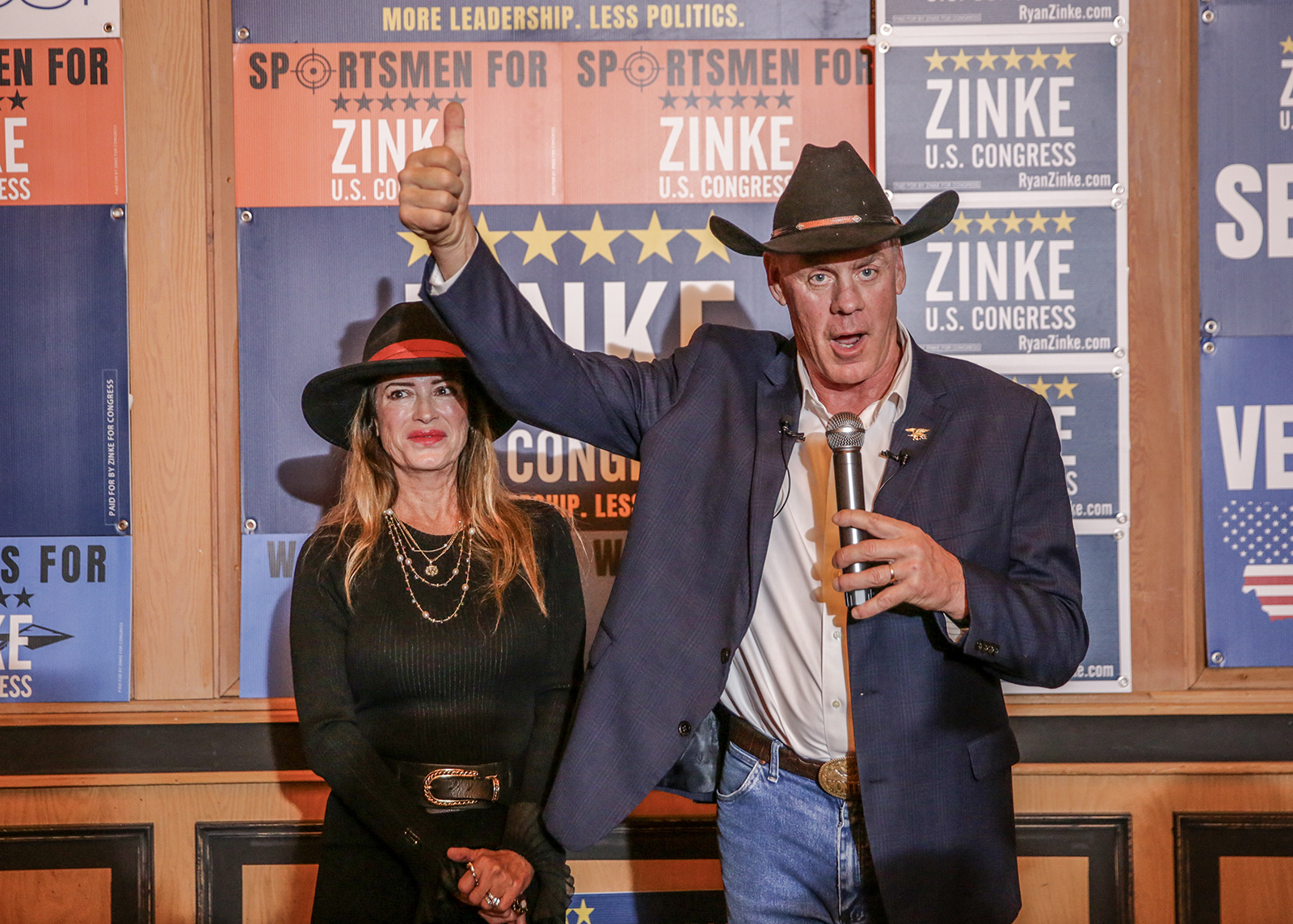
U.S. Rep. Ryan Zinke delivers remarks beside his wife Lolita Hand at his Election Night Party in Whitefish on Nov. 5, 2024. Hunter D’Antuono | Flathead Beacon
Fishermen in the fog on Flathead Lake on Nov. 9, 2024. Hunter D’Antuono | Flathead Beacon
Sunset on snowy Mount Cannon in Glacier National Park as viewed from Lake McDonald on Dec. 1, 2024. Hunter D’Antuono | Flathead Beacon
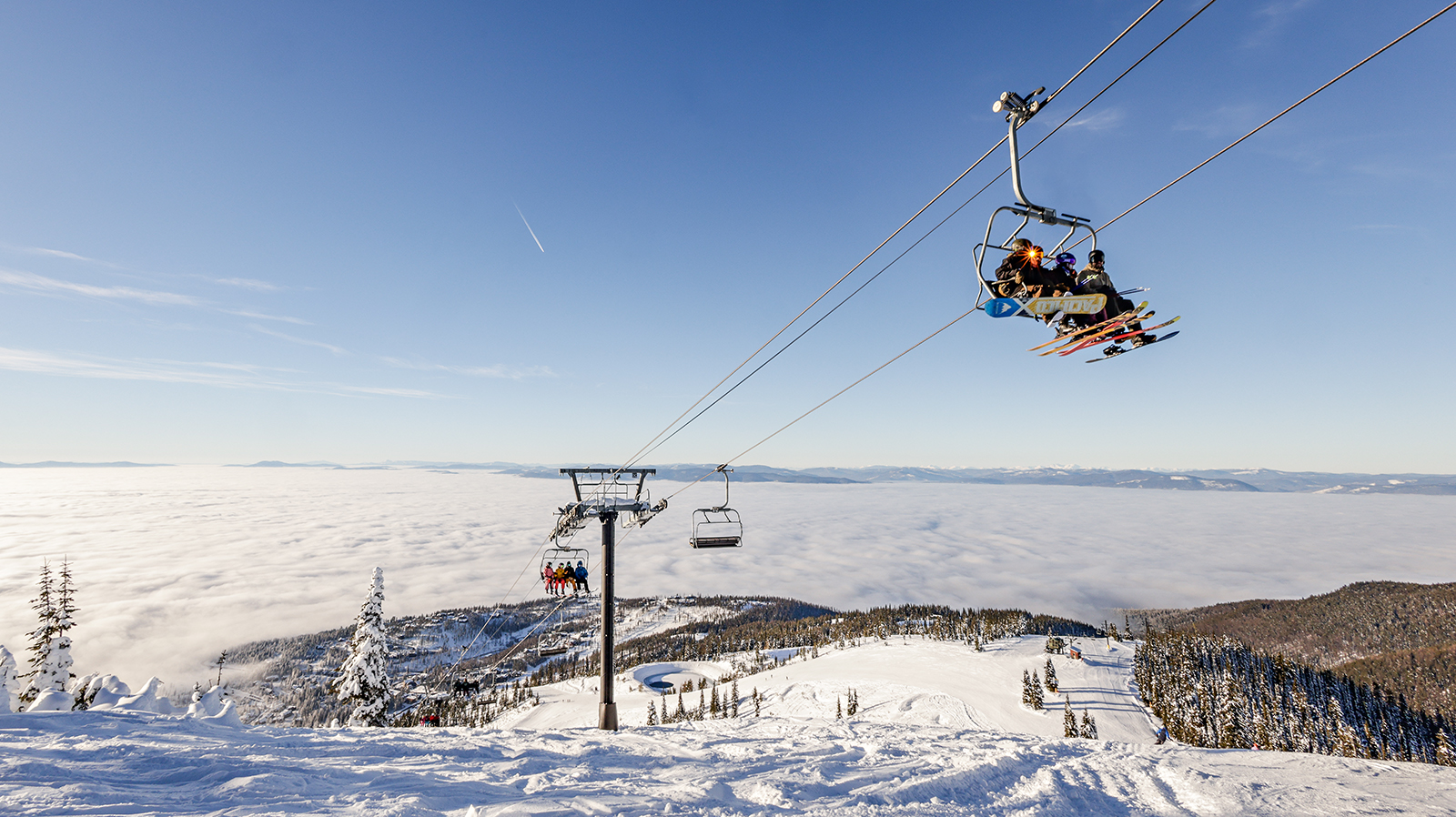
Sunrise over an inversion on opening day at Whitefish Mountain Resort on Dec. 5, 2024. Hunter D’Antuono | Flathead Beacon

[email protected]


Source link

Advertisement

Montana

Montana cowboys help build trauma ranch for Israeli soldiers

Published

on

Montana cowboys help build trauma ranch for Israeli soldiers


The hills of the northern Judean Desert will soon turn yellow and dry. For now, they are covered in green bloom, dotted with bursts of purple and yellow wildflowers, butterflies hovering above them. From a hilltop in the Binyamin region, where Ruthy and Haim Mann run their therapeutic horse ranch, the view opens wide: the Moab Mountains to the east, the Binyamin hills to the north, Wadi Qelt plunging dramatically toward the Jordan Valley and the northern Dead Sea. At moments, when the haze lifts, Herod’s winter palace can be seen in the distance on the other side of the wadi.

Biblical history feels at home here. Philistines and Crusaders, Babylonians and Hasmoneans, Assyrians, Byzantines and Seleucids all passed through. Joshua, Saul and Jonathan fought nearby. David hid in these hills. On one of the mountains opposite us, the Good Samaritan once passed, refusing to ignore a wounded man lying by the roadside and bandaging his injuries.
The desert has seen much. But a band of real-life cowboys from Montana, pointed boots, wide-brimmed hats and oversized belt buckles, is new even for this landscape. But a band of cowboys who wear Tzitzit (fringed ritual garment), bless bread with the Hebrew “hamotzi,” keep Shabbat and study the weekly Torah portion, though they are devout Christians, is new for me as well.

They define themselves as Christian Zionists. Not an official denomination, more a small, independent current on the margins. They have no church of their own. “But it’s growing,” said Zach Strain.

Advertisement

When I ask Yoss, short for Yosef, Strain and Jedidiah Ellis why they wear blue Tzitzit attached to their belts, Yoss quotes the Book of Numbers, Chapter 15, Verse 39. “That’s the longest I’ve heard him speak since they got here,” Haim Mann jokes.

4 View gallery

רותי וחיים מן, בעלי החווה

Ruthy and Haim Mann, the ranch owners

(Photo: Alex Kolomoisky)

On a recent Monday morning, the small group of five men and three women is already at work. Bethany Strain and Lily Plucker haul wheelbarrows of stones, Lily’s three-month-old son, Jethro, strapped to her chest. Her husband, John Plucker, the group’s unofficial leader, builds the wooden ceiling of what will soon become a resilience and support center for soldiers coping with PTSD at the edge of the ranch.

Advertisement

Yoss and Jedidiah work on the stone wall of the riding arena. Promise Strain washes laundry by hand facing the desert view. Eliora Ellis saws a wooden beam. Zach, who stands nearly 6-foot-7, reinforces the stable fence. They work in near silence, focused, as if fulfilling a commandment.

By profession, Zach trains horses and riders for the film industry, primarily for Westerns, and has appeared in some of them himself. He worked on the TV series “Yellowstone.” When I try to draw him into Hollywood gossip about Kevin Costner, but since there is a biblical injunction against gossip, all I can get out of him is that the horses on the series were the finest and most expensive available. They are reserved, almost shy. They speak sparingly. They appear unaccustomed to social company. Montana is about 18 times the size of Israel with roughly one-tenth its population. The nearest neighbor can be miles away. In the photos they show me, each home looks like it could have stepped straight out of the cast of “Little House on the Prairie”, except for one detail: a giant Star of David mounted on the Strain family home.

All of them are related. Zach, Yoss and Promise Strain are siblings (the fourth brother, Ezekiel, left yesterday). Jedidiah and Eliora are married. Yoss is married to Bethany, John Plucker’s sister. Plucker is married to Lily. It is their last day in Israel, and they seem determined, more than anything, to make the most of every remaining moment. This is their last day, though not their first visit. For most of them, it is their fourth or fifth trip, and never a vacation. They come to work.

Ruthy and Haim Mann, the ranch owners, are Israeli cowboys in their own right. Boots, hats and wide brims included. Haim, a lawyer by training, also carries a handgun. They live in the settlement of Alon, part of a cluster of three Jewish communities northeast of Jerusalem, which includes mixed, religious and secular residents living side by side. “It works beautifully,” Haim says. The population is largely middle-class.

Indeed, although several flashpoints of the Israeli-Palestinian conflict, including Khan al-Ahmar, lie not far from here, this specific area, located in Area C of the West Bank, is quiet and calm. Not quite Montana, but they manage with what they have.

Advertisement

4 View gallery

רוכבים על רקע מרכז הטיפולים החדשרוכבים על רקע מרכז הטיפולים החדש

Riding against the backdrop of the new treatment center

(Photo: Alex Kolomoisky)

Both are remarried. Together they have two daughters, along with four children from Haim’s previous marriage and two from Ruthy’s, and they are grandparents to five grandchildren. Thirteen years ago, they founded a small therapeutic horse ranch. (“We’ve always loved horses,” they say). Ruthy handles treatment, working with teens with autism, motor and social challenges and trauma. Haim manages the horses. Five years ago, they were told to evacuate their original site. “We gave service to the whole community and got a punch in the stomach in return,” Ruthy said. With assistance from the Settlement Division, they relocated to the current hilltop. Haim closed his law office, Ruthy left her job at the Biblical Zoo in Jerusalem, and they committed fully to the ranch, which officially opened to the public about six months ago. Five dunams, 13 horses and a sweeping biblical landscape. Beyond routine therapy for local youth, the ranch increasingly served teens who had left the ultra-Orthodox community, including girls who were victims of sexual abuse, “even at ages 12 and 13”, sometimes within their own families.

About two years ago, they began hosting a joint Passover Seder for dozens of such teens. “The at-risk girls,” Ruthy says, “taught us a great deal about treating trauma.” That knowledge, regrettably, soon became urgently necessary. When war broke out after the October 7’s Hamas massacre, activity at the ranch halted. Ruthy began treating evacuees from southern Israel housed in Dead Sea hotels. “Everything there was terrible,” she says. At first, the therapy sessions were held in the hotels, without horses, using smaller animals instead. Over time, families began coming to the ranch to ride. “We started with 20 families. Within a month, 150 were coming,” she said.

Advertisement

Soon after, soldiers began arriving, some physically wounded, others psychologically scarred. “It started with soldiers who rode with us as kids,” Haim said. “They enlisted, went to fight and were injured. They came back to us to rehabilitate, to regain control over their lives.”

The Manns speak about the female and male soldiers who came, about the visible and invisible wounds, about trauma and post-traumatic stress. Tears well up in their eyes more than once. In mine, too. The fact that I pushed the subject aside for months does not mean it disappeared. Suddenly, the stories from the war resurface. You can feel the weight pressing on your chest. The word got around. An injured friend brought another wounded friend to the ranch, “until we realized we needed to build something new here,” Haim says. The existing ranch could not meet the scale or the specific needs. The couple decided to establish a separate resilience center for soldiers, to be named after Omer Van Gelder, a former rider from the area who was killed in Gaza in June 2025. The center is steadily taking shape, John Plucker is currently standing on its roof, and they plan to launch a crowdfunding campaign soon to complete the project.

The need, they say, is immense while the supply is limited. Many soldiers from the West Bank have been killed or wounded, disproportionately to their share of the population. “But in all of the West Bank,” Ruthy says, “there isn’t a single ranch like this. There is a resilience center in Binyamin, but not everyone is suited to sitting in a closed room talking to a therapist about their feelings. It’s also a community that is less inclined to ask for help. Still, many people need precisely this kind of therapy, with horses, out in nature.”

4 View gallery

בונים תקרת עץ ביום האחרון בארץבונים תקרת עץ ביום האחרון בארץ

Building a wooden ceiling on their last day in Israel

(Photo: Alex Kolomoisky)

Advertisement

Demand is surging. “We feel the shockwaves of the psychological injuries from the war starting to hit with tremendous force,” Ruthy said. “It’s not just ripples. It’s a tsunami.” Everything mental health experts warned about during the war, that once it ended and there was no longer anything to suppress or conserve strength for, a major wave of psychological casualties would follow, is unfolding before the Manns’ eyes. “You feel it everywhere,” Haim adds. “In rising divorce rates, in pent-up violence. We know that what isn’t treated today will worsen tomorrow. The country has to confront this by building more resilience centers, otherwise we’ll be carrying it for years. “And it’s not like the trauma of October 7 is going to disappear anytime soon. We’ll be living with it for years.”

“There are other injuries that aren’t being talked about enough,” Ruthy says. “For instance, girls who were already in very difficult circumstances before October 7 and had just started to rebuild their lives, only for the war to shift attention elsewhere and leave them sidelined.” There are also many patients with older wounds and traumas that resurfaced, but there isn’t enough time, enough therapists or enough resources to reach them.” The sound of a bell rings out to announce lunch. The group gathers in the ranch’s main building for a modest meal of white rice and a tough steak. They recite a blessing over the food and eat in silence.

Haim Mann says the connection with the Montana Cowboys began in November 2023, less than a month after the October 7 massacre, when a group of Montana ranchers arrived in Israel to help local farmers, more precisely, farmers in the West Bank. The initiative was organized by HaYovel, founded by the Waller family, themselves Christian Zionists, who came to Israel about 20 years ago, settled in the Har Bracha area and began bringing other Christian Zionist volunteers to work in the region.

Word of the group’s arrival reached Haim as well. “I wanted to thank them, in my name and on behalf of the Jewish people. I offered them a day of horseback riding in the area. They came here and fell in love. We fell in love with them, too.” The group stayed at the ranch for three months, building everything by hand. “They were like a miracle for us,” Haim says. “We didn’t have a dime.” This latest visit, about a month long, focused entirely on constructing the new center.

Zach first visited Israel in 2014. This is his fourth trip. “It was very important for me to come help, to build and strengthen Israel,” he said. “Israel is the light of the world, maybe even the foundation of the world. I don’t know how to explain it, but when you’re here, you feel it.”

What does it mean to be a Christian Zionist?
“Some people call us that. Maybe it’s accurate,” he said. “We don’t have definitions.”

Advertisement

How do you define yourself?
“We don’t spend much time defining it. We’re somewhat different. We just go by the Bible. We’re not part of any church. It’s not really a movement. Nobody knows us. It started with our family, and people joined.”

I watch a video of a Shabbat meal at the family home in Montana: Kiddush over wine, Sabbath songs and a reading of the weekly Torah portion. They look a bit like the Amish. “We are not evangelicals”, he insisted. “We’re not trying to convert anyone. And I don’t even understand why I would need to convert anyone.” “We’re not evangelicals,” Bethany says as well, “but we’re fairly close to that.”

Zach, have you noticed a change in Israel compared to your previous visits?
“Since the war, I think people have come to see more clearly how deep and destructive evil can be. In America, it’s created a serious division. Many think Israel shouldn’t exist. That’s what’s being taught in schools today. They don’t know what’s happening here.”

That’s what they’re teaching in schools?
“We didn’t attend public schools,” he says. “Our parents pulled us out because they were teaching us lies.”

Zach also refers to John Plucker as the group’s unofficial leader. “I go where John tells me,” he explains. The fact that Plucker is 12 years younger does not seem to matter. The Strain and Plucker families have known each other for years and are closely connected. Two of the Plucker daughters are married to two of the Strain sons.

Advertisement

“‘Unofficial leader’ is a good definition,” agrees John Plucker, 27.

Are you really a cowboy?
“Yes. That’s how I grew up, on a traditional ranch with horses and cattle and everything. Today I’m an independent contractor and run a construction company. There’s not much money in ranching. It’s more of a lifestyle. I want to work a few more years and buy some land.”

Plucker does not define himself as a Christian Zionist. “I’m just a regular Christian,” he says. “But I see Israel the same way they do, and we believe the same things, so maybe I am a Christian Zionist? I don’t know. Honestly, I don’t really care.”

4 View gallery

הבוקרים בשדות מונטנההבוקרים בשדות מונטנה

The cowboys in Montana fields

Advertisement

(Photo: Courtesy)

So why did you come?
“The Strains have been coming for years, and they convinced me. We all love Israel very much. The first time I was here was after COVID, and it was incredible. HaYovel brought us. They believe God gave this place to the Jewish people. Here I learned a lot about redemption. You can see it happening in real time. It’s powerful. You learn much more here than just by reading the Bible.”

The last time he came was in November 2023. “They brought us to work in Shiloh, harvesting olives. The moment I came to the ranch, I fell in love, even though there was nothing here yet. My background is ranching and horses, so this suited me much more than picking olives, which is a pretty strange job, honestly. We didn’t hesitate to return, even though our baby had just been born.

“I see what they’re doing here with the young men and women who come for therapy. They give them purpose. They turn something negative into positive. It really brings redemption into people’s lives. I’m glad to be part of it. I already want to come back again. Staying in one place for a long time, building relationships, that’s a blessing.”

When I ask about politics, the group responds with puzzled looks, as if they had never even heard of Trump.“We’re simple ranchers,” Plucker said. “These things don’t interest us. We’re aligned with conservative views, but I don’t really understand politics. I’m here for the Jewish people. Politics may be important here, but not for us.”

Advertisement

By midday, the horses are released ahead of the afternoon’s therapy sessions. I meet Aviv, Sinai, Negev, Pele, Pazit, Milky and Moshe, a large black horse. I do not ride, but standing beside them, something shifts. A horse is a wonder. Sinai, a horse, or perhaps a mare, I didn’t check, walks toward me and looks straight into my soul. We share a quiet moment.

What is it about horses?
“A horse is a spiritual animal,” Ruthy said from atop Negev. “Every encounter with a horse exposes the soul. The horse immediately senses your frequency. If you’re tense, it’s tense. If you’re calm, it’s calm.”

“What allowed horses to survive for 80 million years is extreme sensitivity,” Haim said. “They are alert to fear, to anxiety. They feel your heartbeat, your breathing. A horse is a perfect mirror for someone living with PTSD. When a person jumps at the sound of a motorcycle and shifts into survival mode, the horse shifts just as quickly. And when you calm down, the horse calms down with you. It forces you to lead, not with force, but with quiet confidence.”

Ruthy sees symbolism as well. “A horse is an open, unburdened space. The entire archetype of the horse is about strength and success, getting back on the horse, being on top of things. That’s also our therapeutic philosophy: to reconnect with that life force, to climb back into the saddle even after the hardest falls. It restores a sense of control to people who have lost all control over their lives.”


Source link

Advertisement
Continue Reading

Montana

Evacuation orders issued as 5,000-acre wildfire burns near Roundup, Montana

Published

on

Evacuation orders issued as 5,000-acre wildfire burns near Roundup, Montana


The Rehder Creek Fire is burning 16 miles southeast of Roundup has grown to about 5,000 acres, prompting evacuation orders for residents in the Bruner Mountain Area/Subdivision.

The fire started Feb. 26, the cause is unknown and containment was at 0%.

Evacuation orders are in effect for all residents in the Bruner Mountain Area/Subdivision. The Musselshell County Sheriff’s Office is coordinating the evacuation orders, and 911 reverse calls have been sent out to advise people in the area.

A shelter is opening at the Roundup Community Center. Residents were told to contact Musselshell County DES for further information.

Advertisement

Firefighter and public safety remain the top priority. The public is asked to avoid the Fattig Creek and Rehder Road area so emergency personnel can safely and effectively perform their work.

Fire resources assigned to the incident include 40 total personnel, 11 engines, one Type 2 helicopter, three tenders and two dozers.


Source link

Continue Reading

Montana

February 26 recap: Missoula and Western Montana news you may have missed today

Published

on

February 26 recap: Missoula and Western Montana news you may have missed today


Advertisement


Source link

Continue Reading

Trending