Montana
'Old racist stereotypes': Crow Tribe official responds to Tim Sheehy's 'drunk Indian' comments

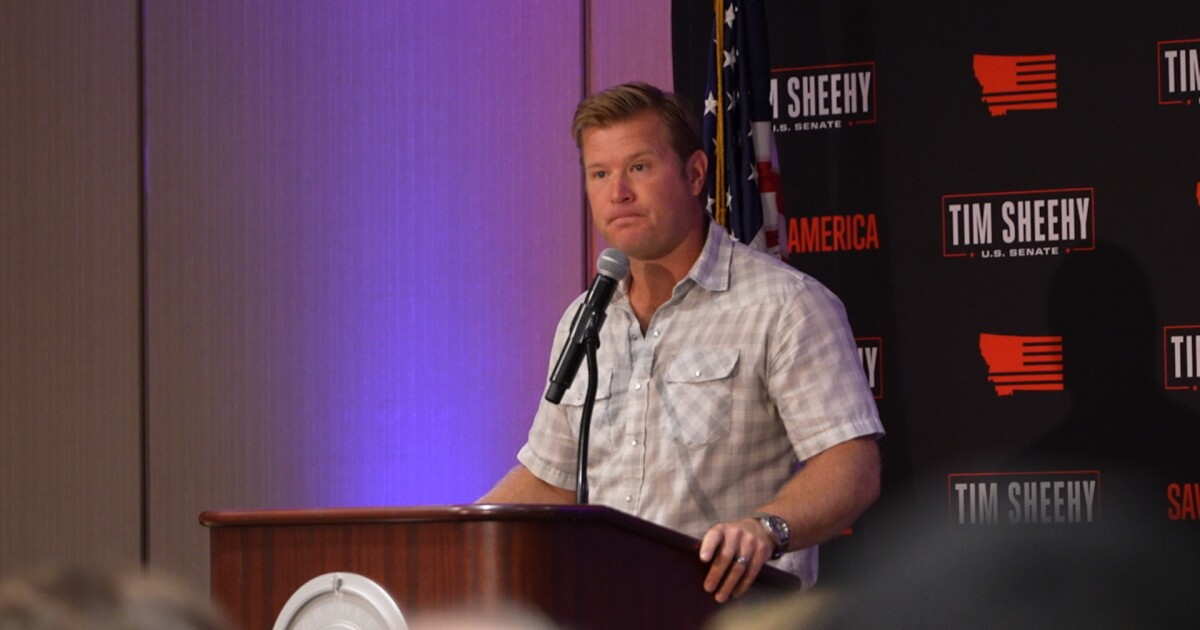
BILLINGS — Representatives of the Crow tribes and other native groups are expressing their displeasure following the release of audio recordings of Montana U.S. Senate Republican candidate Tim Sheehy making racially insensitive comments about Crow tribe members involving alcohol.
“I know that Crows are our community, we’re no stranger to some good-natured ribbing, but I think this is a, I think that it’s a perpetuating old racist stereotypes, that of the outdated idea of the (makes air quotes with his hands) drunken Indian,” the Crow tribe’s secretary for the executive branch, Levi Black Eagle, in Wednesday interview with MTN News.
“I know that all the cattle and ranching families that I know, Crow and ranching families, they’re an upstanding character, they’re strong workers. I know that they don’t start their day with a can of beer,” Black Eagle said.
In the audio clips, taken in 2023 at different fundraising events, Sheehy can be heard saying, “I’m pretty involved down there, rode through their Crow Rez, their annual Crow Fair parade this year. I rope and brand with them every year down there, so it’s a great way to bond with all the Indians being out there while they’re drunk at 8 a.m., and you’re roping together. Every heel shot you miss, you get a Coors Light can upside your head.”
MTN News
Just days later, Sheehy was heard again at another event, accusing tribal members of throwing beer cans at him during the annual Crow Fair Parade.
“Six weeks after I launched the first thing I did was I strapped a Sheehy sign to a horse and rode through the Crow Rez parade and if you want to know a tough crowd, go to the Crow Rez. They let you know whether they like you or not, there’s Coors Light cans flying by your head,” Sheehy said.
MTN News

The Crow tribe has a ban on alcohol sales on the reservation.
“It’s really disheartening, especially from an individual, a candidate running for such a high office, you would expect more from those individuals,” Black Eagle said. “I think it’s a majority of the community that fights hard to negate those stereotypes and to have them perpetuate in such a way is just, it’s really disgusting. And we don’t stand for it.”
Black Eagle said the parade is a time to honor and appreciate their culture and tribal members’ accomplishments.
MTN News

“I don’t think that there’s ever been an instance where one of the spectators threw anything, especially at one of our guests. We treat our guests better than that,” Black Eagle said. “It’s a time for us to show our best versions of ourselves and definitely to have it smeared in such a way is just, it’s really shady.”
Sheehy is seeking to unseat incumbent Democratic Sen. Jon Tester in a race that could determine control of the U.S. Senate. The race has garnered national attention, with millions of dollars flowing into the race that will be decided Nov. 5.
On Wednesday morning, Sheehy held a campaign event in Billings, where the senate hopeful spoke alongside U.S. Sen. Tom Cotton, R-Arkansas. His campaign team was aware that MTN News asked for an interview with Sheehy, but at the immediate conclusion of the event, Sheehy was taken out of the room and interview requests were denied.
Other prominent members of the Native American community in Montana were also upset to hear Sheehy’s words.
Montana state Sen. Shane Morigeau, a Missoula Democrat, said the comments, which he learned about on Tuesday, misrepresent tribal members, and he fears what it could do to the younger generations hearing those words.
“When you’re making jokes about, you know, native people being, you know, alcoholics and violent, well, what does that tell the young native kid that lives in my community or on the Crow reservation?” Morigeau said. “When I was listening to it, what I started thinking about was like, ‘Wow, this is exactly one of the reasons I brought legislation forward last session to essentially have an Indian education for all type of bill for legislators.”
MTN News
Morigeau’s bill failed in 2023, but he still hopes this can be a learning moment for everyone.
“I think these sorts of things are, there’s an underbelly of this kind of stuff in the state of Montana. And it’s unfortunate,” Morigeau said. “I really wish it could be a learning opportunity for the candidate, as well. You know, we expect our elected officials to be people of integrity. And when you do something that’s wrong or hurtful, you own up to it and you apologize.”
Morigeau is a member of the Montana American Indian Caucus, which released a letter to Sheehy Wednesday afternoon saying how “let down” they were by his remarks.
“As a candidate for office in Montana, you have a responsibility to know and respect the Indian communities you are running to represent. You are also responsible for using your platform to advocate for that respect to your political supporters,” a portion of the letter states. “Instead, you have chosen to disrespect the original Montanans as a strategy to pander to the non-Indian vote and political funders. Your remarks have only further alienated the tribal people from your party.”



Miley Cyrus recalls ‘Hannah Montana’ casting journey
Miley Cyrus thanks Disney for taking a “chance” on her in “Hannah Montana” as the show celebrates its 20th anniversary with a new special.
Hannah Montana once sang that “Nobody’s Perfect,” a sentiment fans are echoing regarding Starbucks’ new drink honoring the fictional pop star ahead of her iconic Disney TV show’s 20th anniversary special.
Thought to be a drink that Hannah Montana would order at Starbucks, the coffee chain launched the Secret Popstar Refresher on March 23 as a celebration ahead of the “Hannah Montana 20th Anniversary Special”, set to be released on Disney+ on March 24. The drink consists of a grande Strawberry Acai Refresher with raspberry cold foam, two pumps of raspberry syrup and no strawberry inclusions – the dried strawberries typically in the refresher, according to the Starbucks app.
However, fans were quick to point out that the beloved TV show’s main character, Miley Stewart (Miley Cyrus), who lives a double life as teen pop star Hannah Montana, notoriously hates raspberries. Her disdain for raspberries was established in Season 1 of the show.
Stewart’s disgust is rooted in a childhood experience, during which she got sick after eating too much raspberry pie. Her hate for the fruit is exacerbated when Hannah Montana has to advertise a raspberry-scented perfume.
Now, fans of the show have taken to social media to speculate on Starbucks’ inclusion of raspberry.
Fans react to the raspberry Hannah Montana drink
Fans on social media quickly caught the raspberry reference after the drink’s launch on March 23, which many felt was an oversight by Starbucks, as they seemingly did not take Hannah Montana’s past into account.
Multiple comments on Starbucks’ Instagram post announcing the drink question the product’s flavor, including messages like “Why raspberry tho…didn’t Miley/Hannah hate raspberry,” “but she hates raspberry,” and “brooo there’s an episode in Hannah Montana (the perfume ad) where she doesn’t like raspberry!!!!”
The post’s caption appears to poke fun at the episode, reading: “For the fans who remember the raspberry saga, this one’s for you.”
Other comments under the post from Disney accounts also seem to acknowledge the raspberry inclusion as intentional, with the official Disney+ account commenting, “This completes the circle,” and the official Disney Channel account commenting, “the raspberry lore lives on!”
How to order a Hannah Montana drink at Starbucks
The Secret Popstar Refresher will be available for order through the Starbucks mobile app until April 5, according to a Starbucks statement obtained by USA TODAY.
The drink is a “secret menu exclusive,” meaning it is not on the official Starbucks menu in stores or drive-thru. Customers who know the recipe or use the Starbucks mobile app can order the refresher variation.
However, like any drink variation at the coffee chain, the refresher can be ordered at any time, as long as Starbucks has the required ingredients.
How to watch ‘Hannah Montana 20th Anniversary Special’?
The “Hannah Montana 20th Anniversary Special” became available to stream on Disney+ on March 24.
Reflecting on the past two decades, the special is an intimate sit-down interview with Miley Cyrus and “Call Her Daddy” podcast host Alex Cooper. The interview was filmed in front of a live audience in a recreation of the iconic Stewart ranch-style home.
Contributing: Greta Cross, USA TODAY
Montana
Now a true pop star, Miley Cyrus returns to her ‘Hannah Montana’ roots to fete anniversary special

LOS ANGELES (AP) — Sporting that “Hannah Montana” blonde hair and bangs, Miley Cyrus went back to her roots — celebrating 20 years of the TV show that launched the career of a real-life pop star.
Cyrus reunited with cast members of “Hannah Montana” in Los Angeles Monday evening for the premiere of the “Hannah Montana 20th Anniversary Special.”
Cyrus told The Associated Press that the milestone has given her a chance to see the character and series from “a new perspective.” Cyrus, who began the Disney Channel show at age 13, played Miley Stewart, a tween and middle-schooler hiding her secret life as a famous pop singer.
“Getting to be on the outside now, getting to be grown and be a part of it in a way that I couldn’t when I was in the middle of it before, and all the chaos and the schedule and the performing of it all,” Cyrus said, “now it just gets to be a celebration. So it is a new perspective. I love that.”
The anniversary special, which started streaming Tuesday on Disney+ and Hulu, celebrates 20 years since the show’s premiere. Filmed in front of a live audience, it features music, archival footage and an interview with Cyrus — now 33 and a genuine pop star — conducted by podcast host Alex Cooper.
Addressing the audience at the premiere, Cyrus paid tribute both to fellow cast members and fans. “Without you all, this show would have never been what it is, and I love saying what it is, not what it was,” she said.
“Tonight isn’t about looking back into the past, but it’s about what it means to us still tonight,” she said.
Jason Earles, who played Miley’s brother Jackson, told the AP that watching the show now highlights how much time has passed.
“I think if you go back and you watch the episodes, there’s enough dated references like old flip phones and stuff that you go, ‘Oh no, no, this show was a little while ago,’” he said.
Cody Linley, who played Miley’s on-and-off boyfriend Jake Ryan, reflected on the impact of portraying a teen heartthrob.
“It’s hard to believe that there were girls that had pictures of me with my shirt off in their locker and they would have me sign it,” Linley said. “And it’s hard not to let it go to your head, because you have to remember that it’s an image that they are seeing. It’s not you.”
Also attending the premiere was country singer Lainey Wilson, who recalled working as a “Hannah Montana” impersonator early in her career.
“From 8th grade to 12th grade, five years of my life, I would open up the show as Lainey Wilson, I would run behind a tree and put on my ‘Hannah Montana’ get-up,” the singer said. “I did birthday parties, fairs, festivals … I was hitting the roads.”

New numbers from the Department of Labor and Industry show a slight improvement in workplace safety across Montana.
The data indicates 13,200 nonfatal injuries and illnesses were reported in 2024. This is down slightly from the year before where it was 13,600.
The overall injury rate held steady with retail, manufacturing, and transportation seeing the highest rates.
State leaders say the data helps identify risks and improve safety efforts statewide.
The department says it’s also expanding training programs and keeping workers safe.
The data will continue to guide safety improvements in the years ahead.
The followng press release was sent out by the The Montana Department of Labor & Industry (DLI):
DLI Releases Latest Statistics on Workplace Injuries and Illness in Montana
HELENA, Mont. — The Montana Department of Labor & Industry (DLI) released today the 2024 Montana Occupational Injuries and Illnesses Report, providing an overview of workplace injury and illness trends across the state’s private industry sector.
“This report provides valuable insight into where workplace injuries and illnesses are occurring in Montana and helps guide efforts to improve safety across industries,” said Sarah Swanson, Commissioner of Labor and Industry. “By understanding these trends, employers and workers can take steps to reduce risks and build safer workplaces. This helps fulfill our mission to ensure every worker goes home safe after every shift.”
Key Findings from the 2024 Report
In 2024, employees of Montana businesses reported 13,200 OSHA-recordable nonfatal occupational injuries and illnesses, resulting in an overall incidence rate of 3.4 cases per 100 full-time workers.
The 2024 injury count decreased slightly from 13,600 cases in 2023, while the overall incidence rate remained unchanged.
Industries with higher 2024 incidence rates included retail trade (4.6), manufacturing (4.6), and transportation and warehousing (4.5).
Industries with lower incidence rates included mining, quarrying, and oil and gas extraction (1.6), utilities (1.2), and finance and insurance (0.5).
The report reflects data collected during the 2024 calendar year* through the Survey of Occupational Injuries and Illnesses (SOII), a nationwide program conducted by the U.S. Department of Labor’s Bureau of Labor Statistics in partnership with state agencies. Each year, a sample of Montana employers submits workplace injury and illness data through the survey.
Focus on Prevention and Training
In addition to tracking workplace injuries and illnesses, DLI promotes safety through training and education. The department offers workplace safety training, including OSHA 10-hour courses that help workers recognize hazards and improve jobsite safety. DLI also provides Labor Law Training and Education on topics such as wage and hour laws, prevailing wage requirements, and collective bargaining in the public sector.
Programs such as SafetyFestMT provide free safety training opportunities for workers and employers statewide. The department also supports professional development through the Workers’ Compensation Claims Examiner Certification program, which strengthens expertise in managing workplace injury claims.
Supporting Long-Term Safety Improvements
Montana has participated in the Survey of Occupational Injuries and Illnesses for more than 30 years. The data helps track long-term workplace safety trends and support efforts to reduce job-related injuries and illnesses.
The next survey cycle will collect data for the 2025 reference year, with results expected to be released in 2026.
The full 2024 Montana Occupational Injuries and Illnesses Report is available here.
*Because the survey relies on detailed employer reporting and data analysis, results are released after the survey year to allow time for collection, verification, and analysis.

66 cars stolen since March 20 as MPD warns thieves are using new tech

WISH-TV in San Jose with Purdue basketball

Postgame: Avalanche Get Payback In Pittsburgh, Cruise to 6-2 Victory

Augusta looks to new solutions for old problem of illegal dumping

What to know about the ‘No Kings’ protest in DC this weekend

Florida High School Football Rankings: Top 25 teams – Oct. 21

How old is Bo Nix? What to know about Oregon quarterback ahead of 2024 NFL Draft

Cleary's 21 help Le Moyne down Central Connecticut State 69-64 in OT

99th annual Pony Swim held in Virginia

Indiana Members Credit Union announced as new anchor tenant at Bottleworks District

Video: Passengers Wait in Long Security Lines at LaGuardia After Deadly Crash

King Charles to address Congress in historic first state visit to Washington

Iran names successor to security chief killed in US-Israeli attack

See How the LaGuardia Plane Crash Unfolded

Mullin confirmed as DHS chief as lawmakers near solution on shutdown standoff
-

 Detroit, MI6 days ago
Drummer Brian Pastoria, longtime Detroit music advocate, dies at 68
-

 Georgia1 week ago
How ICE plans for a detention warehouse pushed a Georgia town to fight back | CNN Politics
-

 Movie Reviews6 days ago
‘Youth’ Twitter review: Ken Karunaas impresses audiences; Suraj Venjaramoodu adds charm; music wins praise | – The Times of India
-

 Alaska1 week ago
Police looking for man considered ‘armed and dangerous’
-

 Education1 week ago
Video: Turning Point USA Clubs Expand to High Schools Across America
-
 Science1 week ago
Long COVID leaves thousands of L.A. county residents sick, broke and ignored
-

 Sports3 days ago
IOC addresses execution of 19-year-old Iranian wrestler Saleh Mohammadi
-
 Science1 week ago
Industrial chemicals have reached the middle of the oceans, new study shows