Montana
Numbers crunch: Home dominance the new trend in Cat-Griz rivalry. Will it hold true again?

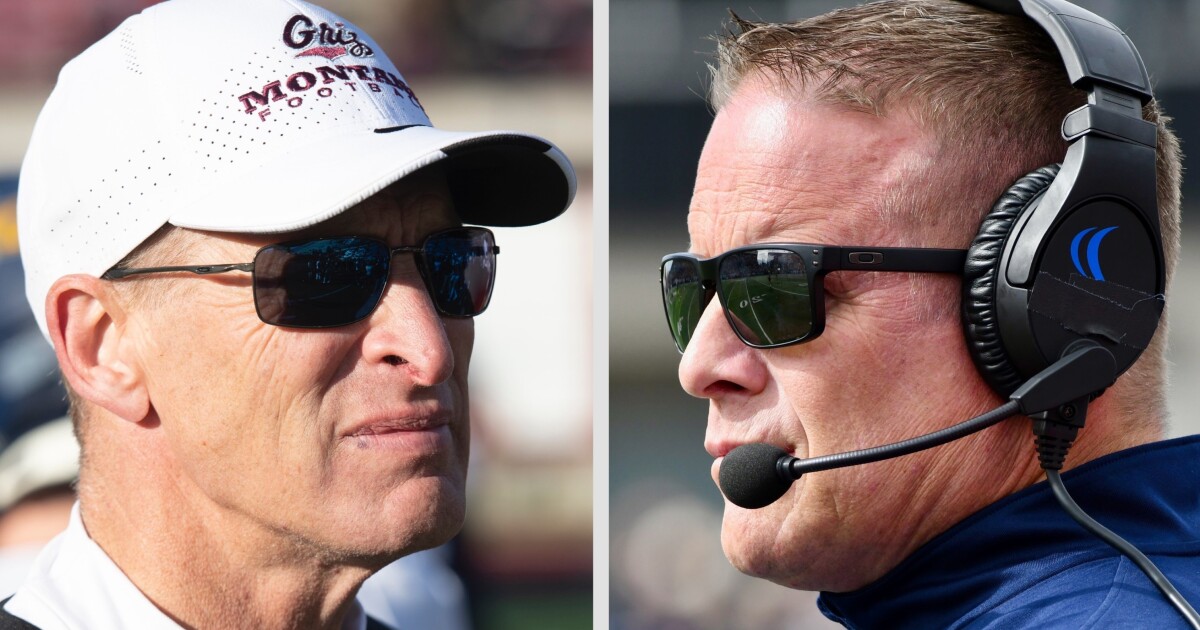
BILLINGS — Last season’s football clash between Montana and Montana State was perhaps the highest-stakes Brawl of them all, with the winner taking home the outright Big Sky Conference title and the league’s automatic bid to the playoffs.
The Grizzlies’ 37-7 blowout victory set them on a course to the FCS national championship game, while the Bobcats dropped their postseason opener at home to North Dakota State.
This year’s matchup doesn’t have quite the same surrounding drama. But it matters. Every year. Always. Regardless of the windfall.
The Cats and Griz — ranked No. 2 and No. 10 respectively entering last week — will kick off the 123rd Brawl of the Wild on Saturday at 12 p.m. at Bobcat Stadium in Bozeman.
Coming in, Montana State (11-0, 7-0 Big Sky) has already wrapped up the league’s automatic bid to the playoffs and clinched at least a share of the conference title thanks to a 30-28 road win at UC Davis. A victory over the Griz this week and MSU will be outright Big Sky champs.
The Bobcats want to stay in position to have the best chance to go where the Grizzlies went last year — Frisco, Texas.
Meanwhile, Montana (8-3, 5-2) has surely played its way into an at-large playoff berth, but a victory in Bozeman would enhance its credentials for positioning within the 24-team bracket, which will be released by the FCS selection committee on Sunday.
When last year’s game ended, Griz coach Bobby Hauck called it an “a** kicking” on live television. He wasn’t wrong. But that’s been the trend in this rivalry for the past five years on both sides.
Montana State dismantled the Griz at home in 2019 (48-14) and 2022 (55-21), an average margin of victory of 34 points in those wins. Montana, meanwhile, blew past the Cats 29-10 in 2021 in Missoula, a game that didn’t seem as close as the score indicated, then dominated last year’s game in Missoula, as Hauck not-so-subtly alluded to.
The Bobcats’ Brent Vigen has put together a glowing resume in four years as MSU’s coach. He’s 43-9 overall (.827) and 28-3 in the Big Sky with two league titles. He has yet to lose a home game to a conference opponent, and has not lost a regular-season home game period.
Vigen is looking to even his record against the Grizzlies at 2-2 on Saturday.
Hauck obviously has a much longer history against the Bobcats — “the neighbors,” as he calls them — in his two separate tenures at Montana.
Hauck is 7-5 all-time versus MSU. Overall, he is 137-39 (.778), 82-21 in Big Sky games and has taken the Grizzlies to four national championship game appearances, including last year’s.
But he doesn’t want to fall to 2-4 against the Bobcats since returning as coach prior to the 2018 season.
From a historical standpoint, Montana has the upper hand in the rivalry with a 74-42-5 series lead, a fact that’s not lost on the Grizzlies or their fans. The primary reasons for that were UM’s 36-3-4 record over the Bobcats from 1909-1955 and a 16-game Griz winning streak from 1986-2001.
But from a more modern perspective, the series sits at 34-32 in favor of UM since 1956. If you drill it down even further, it’s all square at 10-10 since the Bobcats finally got back on the winning side after 16 long seasons in 2002.
That’s what has made this conflict even better in recent years — the fact that both teams are keeping pace with each other head-to-head. That only enhances what is one of the best college football rivalries in the country.
Now it’s a matter of whether the recent trend of home-field advantage rings true again this year. And we’re about to find out.



The buzz over the Miley Cyrus special has also led to a surge of renewed interest in the show’s popular soundtracks
If you purchase an independently reviewed product or service through a link on our website, Rolling Stone may receive an affiliate commission.
Hannah Montana celebrated its 20th anniversary this week with a brand new special on Disney+ that reunited Miley Cyrus and company for a look back at the nostalgic Disney Channel series. While the special unveiled plenty of surprises (including a new song and celebrity cameos), the buzz over Hannah‘s anniversary has also led to a surge of new interest in the show’s popular soundtrack.
Hannah Montana spawned five studio albums, including a soundtrack for Hannah Montana: The Movie. It also led to Best of Both Worlds Concert, a live album that featured Cyrus performing both in character as Hannah and under her own name. All of the albums were originally released on CD, though vinyl pressings of each release came later as well. Three of the albums debuted at number one on the Billboard charts and all of them were later certified gold or higher by the RIAA.
Now, a number of the albums have returned to the bestsellers list, with four Hannah LPs currently sitting in the Top Ten of Amazon’s soundtracks chart. Here’s a look at the trending releases and how to buy them online.
Hannah Montana [Green Splatter LP]
This Hannah Montana vinyl has returned to the top ten of Amazon’s overall soundtracks chart. This is the soundtrack to season one of the Disney Channel show in an Amazon-exclusive “green splatter” colorway. While the original soundtrack was released in October 2006, this vinyl edition was released this past January ahead of the show’s 20th anniversary.
![Best Of Hannah Montana [Clear LP]](https://www.rollingstone.com/wp-content/uploads/2026/03/best-of-hannah-montana-lp.jpg?w=1024)
Best Of Hannah Montana [Clear LP]
Amazon’s bestseller is this “Best Of” LP, which comes in an exclusive limited-edition purple vinyl colorway. First released in 2011, the album was later made available on vinyl in 2019. Hot off the 20th anniversary special, the LP has returned to number one on Amazon’s Disney soundtracks chart.

Hannah Montana: The Movie, Original Motion Picture Soundtrack [Lavender Eco-Mix 2 LP]
This two-LP set features all the songs from Hannah Montana: The Movie, which hit theaters in 2009. The track list includes hit songs from the original film like “The Climb,” “Butterfly Fly Away” and “Hoedown Throwdown.” It also includes the 2009 “movie mix” of “The Best of Both Worlds.” The discs come in a lavender colorway inspired by the colors in the show logo.
![Hannah Montana 2 (Original Soundtrack)[Color Splatter LP]](https://www.rollingstone.com/wp-content/uploads/2026/03/hannah-montana-2.jpg?w=1024)
Hannah Montana 2 [Color Splatter LP]
This LP features songs from season two of the Disney Channel series, including hits like “We Got the Party,” “Nobody’s Perfect” and “Life’s What You Make It.” Amazon has this available on a special “color splatter” vinyl.
All of the above vinyl releases are part of limited-edition drops that are exclusive to Amazon.

Hannah Montana – Hannah Montana 3 LP
Urban Outfitters, meantime, has this tie-dye edition of the Hannah Montana season three soundtrack on vinyl. From Walt Disney Records, the LP gets you 14 songs on a groovy, 70s-inspired disc.
Need somewhere to play your new Hannah Montana vinyl? Amazon has this light pink record player on sale for under $60 right now as part of the site’s Big Spring Sale event.

Victrola Journey II Bluetooth Suitcase Record Player
From popular turntable makers Victrola, the Victrola Journey II is the latest version of the brand’s bestselling suitcase record player, which offers a portable way to take your records on the go. This unit features a three-speed turntable, built-in speakers (with “enhanced bass”) and both Bluetooth capabilities and headphone outputs.
A star-making vehicle for Miley Cyrus, Hannah Montana ran for four seasons from 2006 to 2011. You can stream every Hannah Montana episode and Hannah Montana: The Movie online through Disney+.
The Montana Lottery offers multiple draw games for those aiming to win big.
Here’s a look at March 25, 2026, results for each game:
Winning Powerball numbers from March 25 drawing
07-21-55-56-64, Powerball: 26, Power Play: 4
Check Powerball payouts and previous drawings here.
Winning Lotto America numbers from March 25 drawing
02-04-09-30-43, Star Ball: 04, ASB: 03
Check Lotto America payouts and previous drawings here.
Winning Big Sky Bonus numbers from March 25 drawing
01-07-14-22, Bonus: 12
Check Big Sky Bonus payouts and previous drawings here.
Winning Powerball Double Play numbers from March 25 drawing
35-38-41-43-62, Powerball: 08
Check Powerball Double Play payouts and previous drawings here.
Winning Montana Cash numbers from March 25 drawing
01-16-17-25-30
Check Montana Cash payouts and previous drawings here.
Winning Millionaire for Life numbers from March 25 drawing
01-26-40-46-50, Bonus: 03
Check Millionaire for Life payouts and previous drawings here.
Feeling lucky? Explore the latest lottery news & results
When are the Montana Lottery drawings held?
- Powerball: 8:59 p.m. MT on Monday, Wednesday, and Saturday.
- Mega Millions: 9 p.m. MT on Tuesday and Friday.
- Lucky For Life: 8:38 p.m. MT daily.
- Lotto America: 9 p.m. MT on Monday, Wednesday and Saturday.
- Big Sky Bonus: 7:30 p.m. MT daily.
- Powerball Double Play: 8:59 p.m. MT on Monday, Wednesday, and Saturday.
- Montana Cash: 8 p.m. MT on Wednesday and Saturday.
- Millionaire for Life: 9:15 p.m. MT daily.
Missed a draw? Peek at the past week’s winning numbers.
This results page was generated automatically using information from TinBu and a template written and reviewed by a Great Falls Tribune editor. You can send feedback using this form.

KALISPELL, Mont. — A new Montana license plate is now available at the Kalispell DMV to help support pee wee baseball.
Each plate can be purchased for $30 and will help to boost off season revenue.
The baseball plate was designed by Alexandra Sheneman who helped pitch design ideas to the board.
Proceeds will benefit the youth baseball program by funding new equipment and maintenance upgrades at the Kidsports Complex.
That includes bats, baseballs, nets, and new concrete.
Leftover funding will help families afford the baseball program.
“Once that number starts going up, it will generate some sponsorship funding so that we can help families that need support that can’t afford it,” said Kalispell pee wee baseball president Andy Wilson.
This is a great way to step up to the plate and help keep the youth baseball program strong for future seasons.

Indiana coach Cignetti sends message to star transfer with pre-practice dress code lesson

Drone food delivery launches in New Jersey

FKA twigs sues ex-boyfriend Shia LaBeouf over ‘unlawful’ NDA
LAPD chief backed cops who shot at author, Weezer bassist’s ex; commission overruled him

What European Luxury Can Learn From American Fashion

Florida High School Football Rankings: Top 25 teams – Oct. 21

How old is Bo Nix? What to know about Oregon quarterback ahead of 2024 NFL Draft

Cleary's 21 help Le Moyne down Central Connecticut State 69-64 in OT

99th annual Pony Swim held in Virginia

Indiana Members Credit Union announced as new anchor tenant at Bottleworks District

Rubio joins crucial G7 talks as Iran war set to dominate second day

A surprise resignation could open the door for an independent to win a Montana Senate seat

Video: Savannah Guthrie Says She Believes Her Mother Was Taken for Ransom

Stefanik grills University of Michigan leader on lack of audit after string of Chinese national arrests

Photos: More than one million displaced by Israel’s evacuations in Lebanon
-

 Detroit, MI1 week ago
Drummer Brian Pastoria, longtime Detroit music advocate, dies at 68
-

 Science1 week ago
How a Melting Glacier in Antarctica Could Affect Tens of Millions Around the Globe
-

 Movie Reviews1 week ago
‘Youth’ Twitter review: Ken Karunaas impresses audiences; Suraj Venjaramoodu adds charm; music wins praise | – The Times of India
-
 Science1 week ago
I had to man up and get a mammogram
-

 Sports6 days ago
IOC addresses execution of 19-year-old Iranian wrestler Saleh Mohammadi
-

 New Mexico4 days ago
Clovis shooting leaves one dead, four injured
-

 Texas7 days ago
How to buy Houston vs. Texas A&M 2026 March Madness tickets
-

 Tennessee3 days ago
Tennessee Police Investigating Alleged Assault Involving ‘Reacher’ Star Alan Ritchson