Montana
Montana strikes down 3 pro-life laws; Where abortion stands in the state


In a February 29 ruling, District Court Judge Kurt Krueger struck down three Montana pro-life laws as “unconstitutional” that had been in limbo since a preliminary injunction in 2021.
Montana Governor Greg Gianforte initially signed the three pro-life bills HB 136, HB 171, and HB 140 into law on April 26, 2021. However, on September 30, 2021, just hours before the laws were set to take effect, Yellowstone County District Judge Michael Mose issued a temporary injunction to halt enforcement of the three laws due to a legal challenge filed by Planned Parenthood.
[Click here to subscribe to Pregnancy Help News!]
Analysis of the laws
Here’s a breakdown of what the three pro-life laws would have accomplished if they would have been allowed to stand:
HB 136
The Montana Pain-Capable Unborn Child Protection Act, also known as HB 136, would have prohibited abortions after 20 weeks, the point at which nerves link pain receptors to the baby’s brain and abortion is certain to cause the baby pain. The act reinforced the concept of fetal pain by pointing out that fetal anesthesia is used when operating on unborn children of this age. The only exception to this law would have been in cases of maternal medical emergency where an immediate abortion was necessary to prevent the mother’s death or “serious risk of substantial and irreversible physical impairment of a major bodily function.” The act would have allowed abortionists found guilty of violating the law to be charged with a felony as well as allowed the woman, the father of the unborn child, the woman’s parent or guardian (if the woman was a minor), or the woman’s spouse to sue the abortionist for civil remedies, including damages and attorney fees.
HB 171
The Montana Abortion-Inducing Drug Risk Protocol Act, also known as HB 171, would have implemented strict protocols on how chemical abortions had to be handled to ensure the woman’s safety and informed consent. The act included:
● A 24-hour waiting period for chemical abortions — Under the law, women would have had to sign a consent form 24 hours before undergoing a chemical abortion, except in cases where immediate abortion was necessary to prevent death or “the substantial and irreversible physical impairment of a major bodily function, not including psychological or emotional conditions.”
● An in-person requirement — The law would have prohibited abortion-inducing drugs from being distributed by the “manufacturer, supplier, medical practitioner, qualified medical practitioner, or any other person” “via courier, delivery, or mail service,” requiring a woman to be seen in-person by a qualified medical practitioner in order to receive abortion-inducing drugs. During the in-person visit, the abortionist would have had to verify pregnancy, determine the woman’s blood type and Rh negativity, and inform the woman she could possibly see the remains of her child during the abortion process as well as document gestational age, intrauterine location of the pregnancy, and whether the mother was treated for Rh negativity. The act also stated the abortionist would have to be qualified to manage complications as well as initiate emergency transfer and follow up with the woman again in person 7-14 days after the abortion to ensure complete termination and assess bleeding.
● A prohibition on abortion-inducing drugs in schools or on school grounds — HB 171 would have explicitly prohibited elementary, secondary, or postsecondary schools from providing abortion drugs on school grounds.
● A detailed description of reporting requirements — The law would have required abortionists to follow strict instructions regarding reporting adverse events and complications women face during an abortion.
● A detailed description of informed consent requirements — Under the Montana Abortion-inducing Drug Risk Protocol Act, a consent form would have had to inform the woman of the following:
○ Probable gestational age
○ Steps of the chemical abortion process
○ Risks of the specific abortion-inducing drug(s) being used
○ Risks of the chemical abortion process
○ Abortion will result in the death of the unborn child
○ Information about Rh incompatibility and how it could impact fertility without treatment
○ Information about the possibility of abortion pill reversal, including that time is of the essence when deciding to attempt abortion pill reversal, where to find abortion pill reversal, and that studies suggest there is no greater risk of birth defects or maternal mortality after successful abortion pill reversal
○ She could potentially see remains of the child during the abortion process
○ She has a choice and cannot be forced into an abortion
○ She can withdraw consent at any time
○ She can sue if she feels coerced or misled prior to obtaining an abortion and how to access state resources for help with litigation
The act would have allowed abortionists found guilty of violating the law to be charged with a felony and fined up to $50,000, imprisoned up to 20 years, or both. It would have also allowed civil suits and professional sanctions to be brought against the abortionist.
HB 140
HB 140 would have required that a woman must be given the opportunity to view an active ultrasound and ultrasound images as well as the opportunity to listen to the fetal heart tone before undergoing an abortion. The only exception to this law would have been if an immediate abortion were necessary to save the mother’s life, prevent serious risk of the mother suffering “substantial and irreversible impairment of a bodily function,” or remove an ectopic pregnancy. Had the law gone into effect, any abortionist found guilty in violation of the law would have faced a civil penalty of $1,000.
The ruling
On Thursday, February 29, almost a year-and-a-half since the initial temporary injunction, Judge Kurt Krueger issued a 19-page ruling in the case of Planned Parenthood and Samuel Dick, M.D. v. State of Montana and placed a permanent injunction against all three pro-life laws to ensure they do not go into effect.
In the decision, Krueger claimed the laws violated Montana’s Constitution by infringing on privacy and were not rooted in medical necessity or science.
In response to the Montana Pain-Capable Unborn Child Protection Act, he cited the 1999 Montana Supreme Court decision in the case of Armstrong v. State of Montana, which found pre-viability abortion to be constitutional under the state constitution’s right to privacy. He also claimed there is no medical consensus about fetal pain at 20-24 weeks gestation and that fetal pain alone is not sufficient for intrusions of privacy.
Judge Krueger even went as far to say, “If that were the case, the state might well be justified in banning pregnancy altogether for fear that the mother (or the baby) could experience pain in childbirth.”
Likewise, he found the common sense and informed consent measures in the Montana Abortion-Inducing Drug Risk Protocol Act would place an undue burden on those seeking abortion, stating the law “violates the right to privacy by imposing numerous and severe burdens on patients and providers, which lack a basis in demonstrable medical science and do not apply to any other medical treatment.” For example, Krueger pointed out that “Montana law does not expressly authorize or prohibit telehealth for any other medical provider.”
Furthermore, Krueger claims offering women ultrasounds and listening to the fetal heart tone is not medically necessary or legally necessary for informed consent.
In his conclusion he writes, “The court finds all three laws incompatible with the text of the Montana Constitution and values it recognizes, and therefore deems them void and unenforceable.”
Current state of abortion in Montana
Abortion in Montana currently remains legal up to the vague and outdated viability standard, with the exception of abortion necessary to save the life of the mother or prevent serious risk to the mother’s physical health. Abortion in the state also does not require a waiting period, and due to a ruling from the Montana Supreme Court last year, does not have to be performed by a doctor but rather can be performed by a nurse. However, Montana pregnancy resource centers outnumber abortion clinics 19 to 5 and are ready to help bring real and life-affirming choices to mothers in need.
Tweet This: Pro-life supporters pray for better outcomes in upcoming cases on pro-life laws than that of 3 Montana pro-life laws struck down in February
Upcoming rulings
More Montana pro-life laws are also currently tied up in legal challenges, including:
● HB 7221 — HB 7221 would prohibit D & E, otherwise known as dismemberment, abortion.
● HB 544 — HB 544 would require prior authorization before the state Medicaid program pays for abortions.
● HB 862 — HB 862 would block state funding for abortions except in cases of rape, incest, or when the mother’s life is in danger.
● HB 391 — HB 391 would require anyone under 18 to get notarized written consent from their parent or legal guardian in order to get an abortion.
In fact, the Montana Supreme Court began hearing arguments in the decade-long challenge to the parental consent law HB 391 on Wednesday, March 6, 2024. Pro-lifers pray for better outcomes for all these cases.



The Montana Lottery offers multiple draw games for those aiming to win big.
Here’s a look at March 27, 2026, results for each game:
Winning Mega Millions numbers from March 27 drawing
13-27-28-41-62, Mega Ball: 16
Check Mega Millions payouts and previous drawings here.
Winning Big Sky Bonus numbers from March 27 drawing
04-05-15-16, Bonus: 14
Check Big Sky Bonus payouts and previous drawings here.
Winning Millionaire for Life numbers from March 27 drawing
06-09-28-33-46, Bonus: 04
Check Millionaire for Life payouts and previous drawings here.
Feeling lucky? Explore the latest lottery news & results
When are the Montana Lottery drawings held?
- Powerball: 8:59 p.m. MT on Monday, Wednesday, and Saturday.
- Mega Millions: 9 p.m. MT on Tuesday and Friday.
- Lucky For Life: 8:38 p.m. MT daily.
- Lotto America: 9 p.m. MT on Monday, Wednesday and Saturday.
- Big Sky Bonus: 7:30 p.m. MT daily.
- Powerball Double Play: 8:59 p.m. MT on Monday, Wednesday, and Saturday.
- Montana Cash: 8 p.m. MT on Wednesday and Saturday.
- Millionaire for Life: 9:15 p.m. MT daily.
Missed a draw? Peek at the past week’s winning numbers.
This results page was generated automatically using information from TinBu and a template written and reviewed by a Great Falls Tribune editor. You can send feedback using this form.

GREAT FALLS — REAL Montana, short for Resource Education & Agriculture Leadership, is a two-year leadership development program through Montana State University Extension designed to strengthen the future of the state’s natural resource industries. The program combines in-state seminars, national travel, and an international study tour to expose participants to a wide range of perspectives.
Madison Collier reports – watch the video here:
Montana Ag Network: REAL group highlights international industry
The mission is simple: build a network of informed leaders who can help advance Montana agriculture and natural resource industries in a rapidly changing world.
A global classroom
This year, participants traveled across Morocco, visiting farms, research centers, and food production facilities to better understand how agriculture operates on a global scale.
According to REAL Montana Co-Director Tara Becken, the trip is about more than just travel, it’s about perspective.
“We were able to see how Montana commodities fit into the global picture,” said Becken, who also attended the trip. “Wheat from Montana’s Golden Triangle ends up on a plate on the other side of the world.”
Participants explored everything from citrus production to international trade, gaining firsthand insight into how food systems connect across continents.
Similar challenges, different landscapes
While Morocco’s environment and crops differ from those in Montana, participants said the challenges facing producers still felt familiar.
“Even though we’re worlds away, our challenges are very, very similar,” Becken said, pointing to issues like drought, labor shortages, and market pressures.
For Alice Miller, a participant in the program, those similarities stood out immediately.
“They’ve been dealing with drought. They’re working through input costs and labor… those are the same conversations we’re having here,” Miller said.
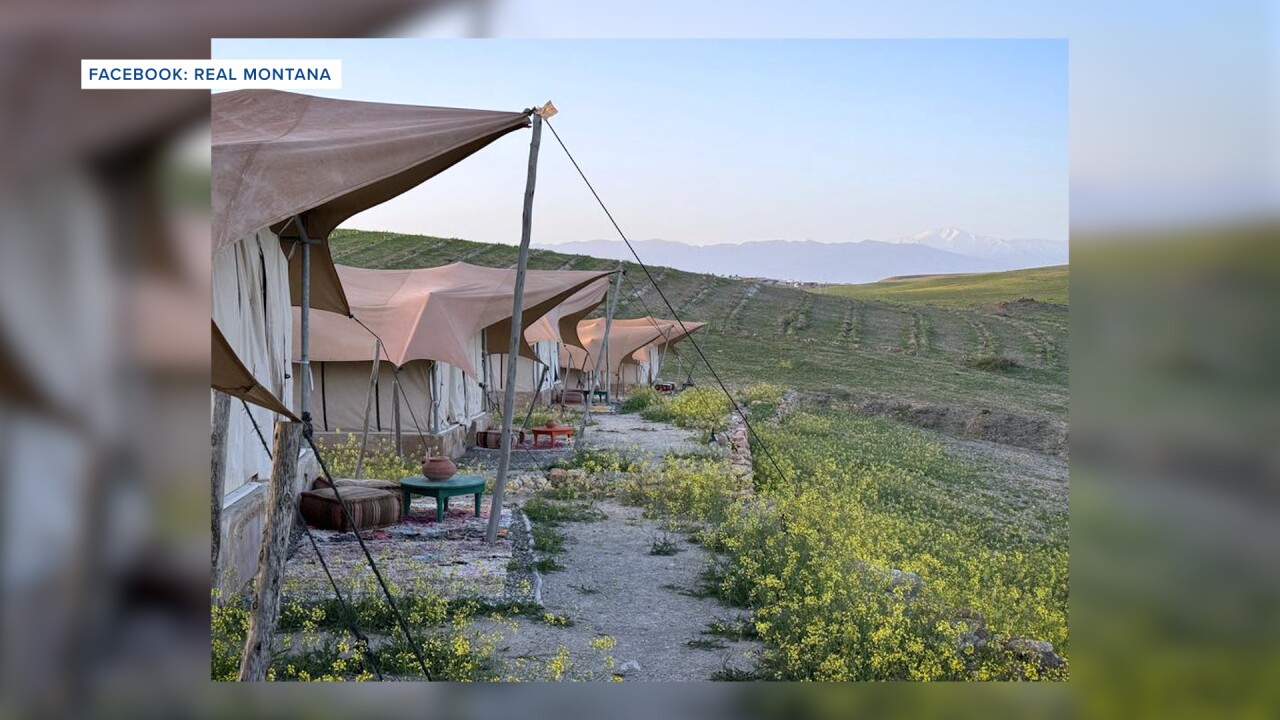
From farm to global table
One of the most impactful moments for participants came from seeing food production up close and realizing how connected it is to back home.
“Eating oranges right off the trees and then thinking about how that food ends up on our grocery store shelves… it just hits different when you’re there,” Miller said.
The experience reinforced a broader takeaway: Montana agriculture plays a role far beyond state lines.
“Montana really is feeding the world. That’s not just a phrase, that’s a reality,” Miller said.
Building the next generation of leaders
The international trip is just one part of the REAL Montana program, which includes eight in-state seminars and a national policy-focused trip to Washington, D.C.
Participants are selected from across Montana’s natural resource industries, including agriculture, energy, and forestry, with the goal of building a diverse network of future leaders.
Program leaders say those experiences are critical as the industry faces ongoing challenges, from global trade to shifting consumer demands.
“Unless we can understand the world around us, it’s really hard to tackle our own problems,” Becken said.
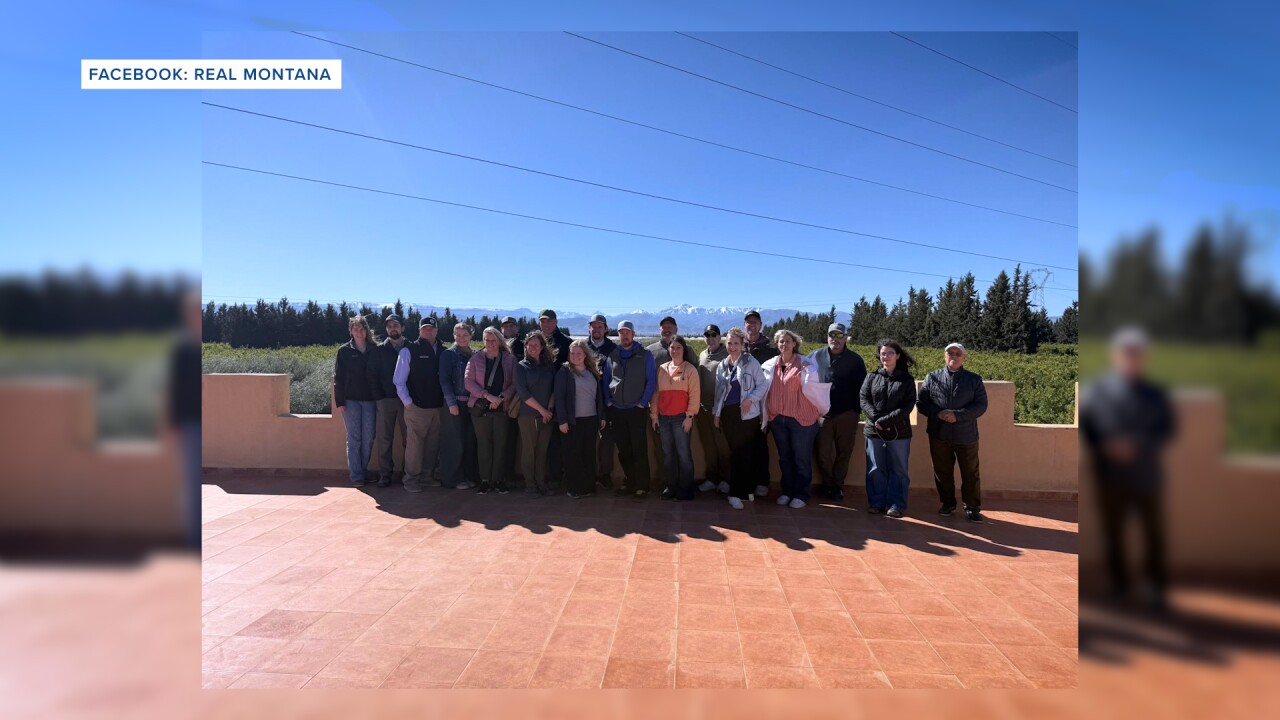
As the current class prepares to graduate, the focus now shifts to applying those lessons back home.
“We hope they go out and make a difference for the state of Montana and their communities,” Becken said.
Looking ahead
Applications for the next REAL Montana class are open through March 31. The program targets individuals working in Montana’s natural resource industries who are interested in growing as leaders and making an impact in their communities.
For Miller, the experience is one she encourages others to pursue.
“It’s an investment you won’t regret making, in yourself and in your industry,” she said.
The Montana Farmers Union is now offering a scholarship to help offset the cost of participation for eligible members accepted into the program. The support is designed to make leadership development more accessible to those working in agriculture and natural resource industries.
More information on scholarship opportunities and the application process can be found on the REAL Montana website.

State House considers reforms that allowed greater variety of construction in Big Sky State
Michigan could follow Montana’s lead after state House members introduced a bipartisan package of bills aimed at making housing less costly.
“The bipartisan Housing Readiness Package modernizes our development processes to reduce unnecessary costs and delays, making housing more affordable and available across the state,” according to a press release from the House Republican caucus. “This is about ensuring Michigan is prepared for growth and that more residents have access to safe, stable homes.”
The package draws on ideas Montana successfully enacted in 2023 and 2025 to ease the state’s housing shortage. It includes Michigan House bills 5529, 5530, 5531, 5532, 5581, 5582, 5583, 5584 and 5585. The package is intended to restrain cities and counties from restricting accessory dwelling units, duplexes, and other non-single-family units; to limit protests and impact studies on developments; and to reduce local red tape.
Housing costs in Michigan have almost doubled in recent years, according to the Federal Reserve Bank of St. Louis. Michigan has exceeded the pace of housing inflation found in other states.
The average price of homes in the state was about 75% of the national average in 2012, but it is roughly 82% of the average today, according to Jarrett Skorup, vice president of marketing and communications at the Mackinac Center for Public Policy.
Inflation, interest rates, and rising construction costs have increased housing prices, Skorup told Michigan Capitol Confidential, but local government red tape is still making things worse.
“A lot of this is because of dumb, unnecessary, big-government policies at the local level,” Skorup told CapCon in an email. “This bill package protects the private property rights of citizens in a way similar to what Montana and many other states have done. It is good policy that will help people afford to live where they want.”
Montana made changes to legalize duplexes, allow accessory dwelling units, open commercial zones to housing, and permit taller buildings that can accommodate more housing units.
The laws faced a legal challenge, but the Montana Supreme Court unanimously upheld the bipartisan legislation.
“There are a lot of similarities between what is being proposed in Michigan and what we accomplished in Montana,” Forrest Mandeville, a Republican state senator from Stillwater County, told Michigan Capitol Confidential in an email.
Montana enacted laws that call for freedom to build duplexes and accessory dwelling units by right (with no need for extra approvals) in many cities. The Big Sky State also streamlined review processes and simplified public participation.
“These reforms were necessitated by a housing market that was seeing prices skyrocket and existing zoning that created a lot of single-family-only development in large areas,” Mandeville said.
A broad coalition supported the changes: builders, real estate agents, free-market advocates and some local government groups, Mandeville told CapCon. Housing prices and rents have stabilized since the legislation was enacted.
“We tried to get government out of the way to encourage building without red tape,” Sen. Jeremy Trebas, a Cascade County Republican, told CapCon in an email about the housing situation in Bozeman. With a population of 60,000 and slow growth, the city faced a housing crunch, with a large inventory of aging and obsolete buildings. Expensive housing and taxes, Trebas said, were driving people to move to Washington, California and other states.
“If we could change land-use policy, encourage development of higher density like duplexes as infill, allow for housing in commercial zones (as it was a 100 years ago), reduce minimum lot sizes, and allow by-right accessory dwelling units and such, we could let the market work to produce density and supply without spending government dollars to incentivize it,” Trebas said.
Opponents of Montana’s reforms expressed concerns about more people moving in from out-of-state, said Trebas. He countered that Montana natives were hurt by high costs that price upcoming generations out of the housing market.

Hundreds of thousands march through London in stand against the far right

2 students killed, 7 other people injured in Tennessee bus crash during school field trip

Three Detroit Pistons Players That Have Impressed Most Without Cade Cunningham

People We Meet: Ranjit Brar’s ‘horrible’ road led him back to San Francisco

Cowboys Showing Significant Interest in Son of Philadelphia Eagles Legend

Florida High School Football Rankings: Top 25 teams – Oct. 21

How old is Bo Nix? What to know about Oregon quarterback ahead of 2024 NFL Draft

Cleary's 21 help Le Moyne down Central Connecticut State 69-64 in OT

99th annual Pony Swim held in Virginia

Indiana Members Credit Union announced as new anchor tenant at Bottleworks District
Hundreds of thousands march through London in stand against the far right
2 students killed, 7 other people injured in Tennessee bus crash during school field trip

Dem senators dodge crucial question on illegal alien accused of killing Chicago college student

EU Parliament unblocks key political hurdle in digital euro talks

Man arrested in plot to firebomb Palestinian activist’s home after undercover op
-

 Detroit, MI1 week ago
Drummer Brian Pastoria, longtime Detroit music advocate, dies at 68
-

 Movie Reviews1 week ago
‘Youth’ Twitter review: Ken Karunaas impresses audiences; Suraj Venjaramoodu adds charm; music wins praise | – The Times of India
-

 Sports1 week ago
IOC addresses execution of 19-year-old Iranian wrestler Saleh Mohammadi
-

 New Mexico6 days ago
Clovis shooting leaves one dead, four injured
-
 Business1 week ago
Disney’s new CEO says his focus is on storytelling and creativity
-

 Tennessee5 days ago
Tennessee Police Investigating Alleged Assault Involving ‘Reacher’ Star Alan Ritchson
-

 Technology6 days ago
YouTube job scam text: How to spot it fast
-

 Texas1 week ago
How to buy Houston vs. Texas A&M 2026 March Madness tickets