Montana
Montana Heritage Center opens in Helena


Politicians, philanthropists and an excited public are celebrating the opening of the Montana Heritage Center, a $107 million project showcasing the state’s history.
During a ceremony Tuesday, Gov. Greg Gianforte called it a “world class facility,” and its historical exhibits and art galleries would not be out of place at major museums in Chicago, San Francisco or New York.
“This accomplishment is remarkable and highlights the generosity and the love that Montanans have for Montana,” Gianforte said.
Tuesday’s ribbon-cutting ceremony was the result of decades of work from many Montanans who wanted to help preserve the state’s history. A 70,000-square-foot addition was added to the building and an existing 90,000 square foot area was remodeled.
The Homeland Gallery will likely become a destination for visitors to the state capitol, taking them through Montana’s rich history all the way back to the Ice Age. The space has exhibits from the state’s Indigenous peoples, with artifacts and deep explanations of nuanced history.
“If you think about it, 160 years ago, a number of pioneers met in Virginia City to talk about the process of starting to collect and preserve and honor the history of this area, and to be sure, it didn’t start with them, right?” Tim Fox, board president of the Montana Historical Society, said. “Our indigenous peoples were the first humans here, and our history goes back way beyond the discovery of gold, copper or silver.”
As visitors walk through that section, they’re treated to sounds that change as they move through the gallery. There’s interactive exhibits, things to watch and plenty to read. There’s also a smudge room, gardens, paths and gathering areas outside, as well as a cafe and event space.
The Charlie M. Russell Gallery also houses an extensive collection of work from the famed western artist. With low light, some incredible frames and even a sitting area, it is a home for many paintings that had been in storage.
There’s also another rotating gallery that will house additional exhibits. Only about 10% of the total collection is on display, museum officials said.
And in the Homeland Gallery, there’s even a covered wagon, a simulation of going down a Butte mineshaft and an exhibit on where the nuclear missiles in Montana are.
“One of the goals that we’ve had in this gallery is to make sure that there are lots of different stories and lots of different perspectives presented,” Amanda Streeter Trum, head of curatorial with the Montana Historical Society, said. “History is not just told from one group’s point of view. And so we’ve got lots of stories and lots of people represented here, as it should be.”
The final $60 million for constructing the facilities was privately funded. The Dennis and Phyllis Washington Foundation, Norm Asbjornson, and BNSF Railway together contributed more than $40 million, according to a release from the governor’s office.
Gianforte helped fundraise after taking office, he said at the ceremony. He was supportive of the project, but wanted cost overruns to be paid for by private donations.
“I called every major business in the state … telling them about our plans and asking them for support,” Gianforte said. “Many of you got those calls and are here today.”
Hundreds of people filled the main atrium of the building for the ceremony and then were able to wander the facility after.

Gianforte also announced about $3.5 million had been donated toward an endowment to support Montana students getting to experience the museum. The goal, Gianforte said, is that every student in the state gets a tour the year they study the state’s history.
The target for the endowment is $10 million.
Some facilities and parts of the center are still under construction and a full grand opening is planned for next summer.
“I hope that we can be a space where we can talk about difficult things and present challenging topics in addition to the fun, joyous topics as well,” Streeter Trum said.






Keila Szpaller
(Daily Montanan) The Montana Board of Regents is taking up the hire of Jeremiah Shinn for University of Montana president at a special meeting on April 14.
Shinn, interim president of Boise State University, visited the Missoula campus earlier this week after emerging as the sole finalist out of more than 70 applicants, according to earlier information from the Office of the Commissioner of Higher Education.
At the meeting, the Board of Regents will consider employment terms that include an annual salary of $467,197 and annual deferred compensation of $76,875, according to the agenda item. The terms also include a university-owned residence.
The start date would be July 1, 2026. Commissioner of Higher Education Clayton Christian has taken on interim president duties and will continue to do so until then.
The Board of Regents is considering the hire because former UM President Seth Bodnar announced his resignation in January and subsequently filed to run for U.S. Senate as an independent.
Christian undertook an expedited hire to preserve momentum at the Missoula flagship and said he had never seen a pool of candidates with so much presidential experience — many had served in the role in some capacity.
Christian said Shinn rose to the top because he was “a fit” with UM and has a deep background in student affairs.
In May 2025, the Board of Regents approved $455,802 salaries for presidents at both UM and Montana State University and Commissioner Christian, along with deferred compensation of $75,000, all effective July 1, 2025.
Galen Hollenbaugh, spokesperson for the Commissioner’s Office, said because Shinn’s start date is July 1, his salary reflects the 2.5% increase from the 2025 legislative session effective in 2026.
“President Tessman and Commissioner Christian will also receive the scheduled increase, and the salaries will be at the same level,” Hollenbaugh said in an email.
The UM president’s house near campus has been on the market for $2.895 million, but Hollenbaugh said it will be off the market, and Shinn will plan to occupy it.

Restoring Montana values.
When you hear that term, your ears should perk up. This phrase isn’t folksy nostalgia; it’s shorthand for something else. It’s Republican code. It’s an old trick. Take one of grandpa’s old slogans and use it to mean something else. Usually something vile. Something about 50 or 100 years past its sell-by date.
Republicans like to talk about restoring “Montana values.” It’s like they are promising to bring back nickel candy. They aren’t. It sounds harmless, even virtuous. Let’s be clear: It isn’t.
So, what does “Restoring Montana Values” mean today in Republican speak? It means a never-ending stream of unconstitutional laws intended to deny certain groups of Montana citizens their constitutional rights. But, they won’t say that out loud. These laws are consistently unconstitutional. And, here’s the subterfuge – Republicans blame our nonpartisan judges. Not the legislature. Not the governor. Not the unconstitutional laws. Just the judges.
Republicans continue to adopt laws that violate basic freedoms under our Constitution. There is a pattern. Our courts find these bills to be unconstitutional. So, Republicans claim that the problem is woke, out-of-control, radical, liberal judges. (Whew! It’s hard to fit all that outrage into one sentence.) They blame all of the world’s problems on the judicial branch. What Republicans are doing is making “Montana Values” a campaign slogan for something sinister. It’s an attack on the independence of our judicial branch.
Republicans have a “solution.” Restore “Montana Values” by getting rid of our nonpartisan judges. Make judicial elections red team vs. blue team. Not more justice. Just more bad politics.
To be clear – when the legislature knowingly passes bills that violate the Constitution, and our judges find them unconstitutional – that has nothing to do with politics. That is the role of judges. It’s called judicial review. It dates back to the U.S. Supreme Court decision in 1803 in Marbury vs. Madison.
Republicans have gone so far as to attack Chief Justice John Marshall (and the unanimous court). They claim that the Supreme Court got it wrong. Courts do not have the power to find legislative actions unconstitutional. They are trying to erase 223 years of legal precedent.
State Sen. Tom McGillvary from Billings is a high priest in the “Blame the Woke Judges Order.” He has lectured on why the Supreme Court got it wrong in Marbury vs. Madison. I am sure that McGillvary prayed about it, but it might have helped if he had gone to law school and actually studied the Constitution. Bold. Or, just dishonest. You get to decide.
Republicans’ attack on judicial review just doesn’t ring true. It’s like proclaiming that the person with the fewest points is the winner of the Scrabble game. You can smell that argument; it isn’t perfume.
Blaming judges for doing their jobs. That is the antithesis of Montana values.
The real issue is why Republicans want to deny people their constitutional rights. Could there be anything more inconsistent with Montana values than that? Our Constitution is the foundation of our law. It is the social contract between the people of our great state. Our Constitution isn’t just the law; it’s how we treat each other; how we value every person; and how we respect the rights of all people. Violating our Constitution is totally inconsistent with Montana Values.
Montana has a libertarian streak. Independence is a good thing. You don’t have to agree with me or even like me for us to get along and be good neighbors. People get to believe what they believe and pretty much do what they want, so long as they don’t hurt someone. But, there is a line. You can’t deny people their Constitutional rights. That is over the line.
If Republicans want to restore Montana values: Easy. All they have to do is honor and follow the Montana Constitution.
In 1972, 100 Montana citizens crafted our Constitution. Delegates sat in alphabetical order, not by party. Pragmatism bent party loyalty to build a consensus. It’s not a Republican constitution or a Democratic constitution. It isn’t woke or fascist. It’s ours. Eighty-nine out of 100 delegates approved. Montana citizens –not Republicans; not Democrats. Montanans.
And then, in June of 1972, Montana citizens voted to approve the new Constitution. It holds our values.
Republicans want to deny some Montana citizens their Constitutional rights.
Well? That’s not Montana values.

Detroit Evening Report: Hamtramck student kidnapped at bus stop – WDET 101.9 FM

Breakfast Burritos, Galbi Patty Melts, and More Dishes Chef Nyesha Arrington Tried in San Francisco

NFL Draft Rumor Reveals 5 Teams Cowboys Can Trade Up With But 1 Isn’t Realistic

Equestrian Event With Insane Prize Pool Draws Out Big Names in Miami

One Boston Day 2026: How to volunteer, take part across Boston

Florida High School Football Rankings: Top 25 teams – Oct. 21

How old is Bo Nix? What to know about Oregon quarterback ahead of 2024 NFL Draft

Cleary's 21 help Le Moyne down Central Connecticut State 69-64 in OT

99th annual Pony Swim held in Virginia

Indiana Members Credit Union announced as new anchor tenant at Bottleworks District

Melania Trump’s Epstein remarks turn up the heat on DOJ, Acting AG Todd Blanche to do more
Newsletter: Cautious optimism in Brussels as Orbán ousted in landslide Hungarian opposition win
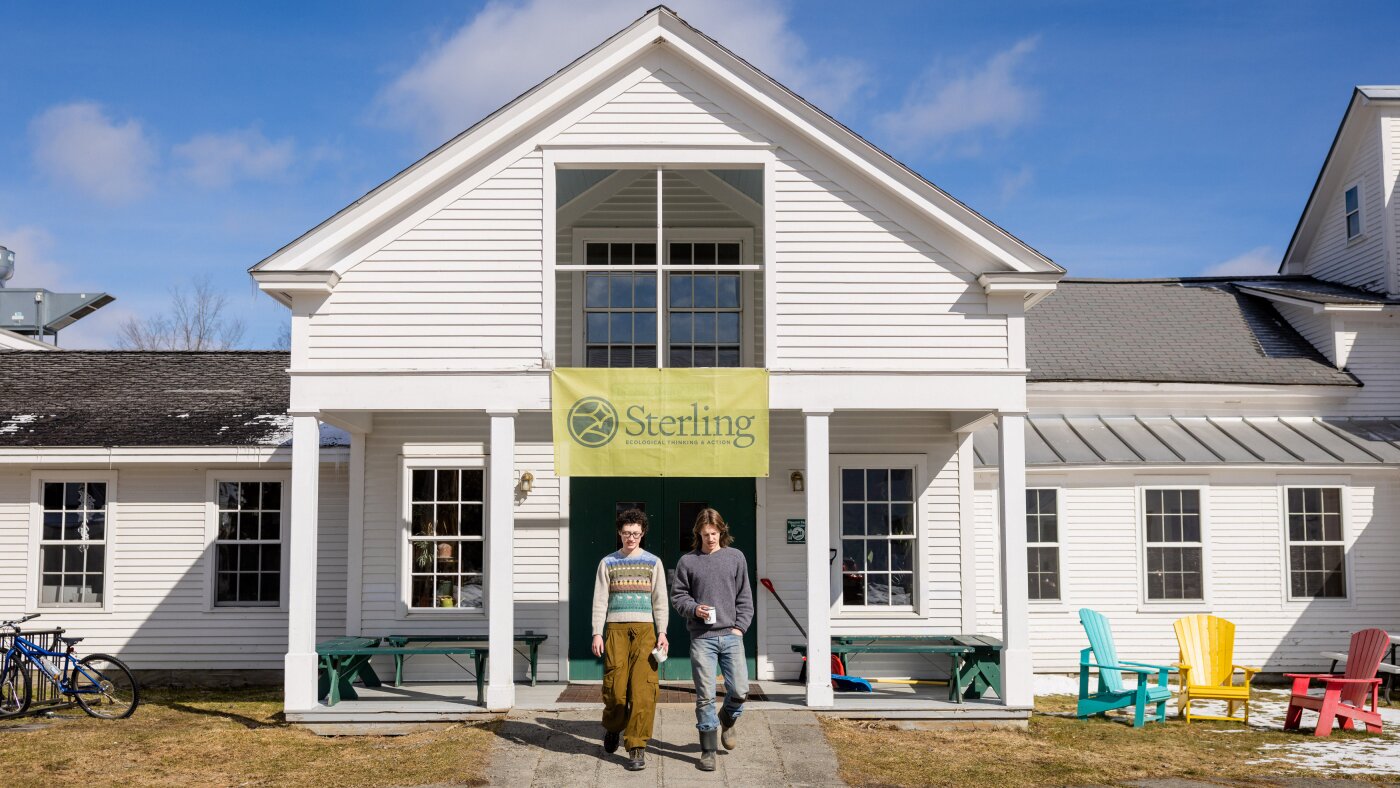
More than a quarter of private colleges are at risk of closing, a new projection shows

NYC mayor cites $180K racial wealth gap to justify taxes, police cuts

Abuse allegations against lead Democrat shake race for California governor
-

 Atlanta, GA1 week ago
1 teenage girl killed, another injured in shooting at Piedmont Park, police say
-

 Georgia6 days ago
Georgia House Special Runoff Election 2026 Live Results
-

 Arkansas3 days ago
Arkansas TV meteorologist Melinda Mayo retires after nearly four decades on air
-

 Pennsylvania7 days ago
Parents charged after toddler injured by wolf at Pennsylvania zoo
-
 Milwaukee, WI1 week ago
Potawatomi Casino Hotel evacuated after fire breaks out in rooftop HVAC system
-

 Technology1 week ago
Anthropic essentially bans OpenClaw from Claude by making subscribers pay extra
-

 Austin, TX6 days ago
ABC Kite Fest Returns to Austin for Annual Celebration – Austin Today
-

 World1 week ago
Two dozen Democrat-led states sue Trump over mail-in ballot limits