Montana
Latest Mill Closure Threatens Northwest Montana’s Timber Traditions and its Forest Health – Flathead Beacon


For as many Montana mills as Gordy Sanders has seen shuttered or sold during his 53-year career working in the woods, the loss of another local timber company hasn’t gotten any easier. But following the recent closure at Pyramid Mountain Lumber, Seeley Lake’s largest employer for 75 years, where Sanders has worked for nearly 30, he says this one feels like the end of an era.
It’s not just the 100 out-of-work loggers forcing Sanders to reimagine a future for the forest products industry while also pining for the past, nor is it the family owned and operated business’s demonstrated commitment to long-term sustainability and land stewardship. To finally lose Pyramid is to sacrifice a critical cog in the Seeley-Swan Valley that has powered the region economically and ecologically, and to lose it in large part due to the steep cost of living and labor in northwest Montana, as well as the depressed demand for lumber, just doesn’t sit right with Sanders.
“All the mills I’ve watched close have done so because of a lack of raw materials,” Sanders said. “But this is different. This is about not being able to keep enough employees on the payroll, which is tied to housing costs. There’s a lot of creative thinking happening right now to figure out a future, and there’s a lot of support from this community. But I just have no idea what the future looks like.”
Sanders isn’t alone in his struggle to puzzle out a path forward for Pyramid. The forces straining the forest products industry are bearing down on every other family-owned sawmill in Montana, of which only a half-dozen remain. They’re all grappling with a slumping commodities market that’s compounded by underlying factors like labor shortages, lack of housing, an aging workforce, plummeting lumber prices, rising costs of living, an increasingly complex set of land management directives, and a lot of outdated infrastructure, which is more cost effective to replace with automation.
In announcing the closure, Pyramid’s management group and board of directors said the company’s owners have worked for years “to try and find a way to address these difficult issues.” But recently, the confluence of challenges has “crippled Pyramid’s ability to operate” and, “despite their best efforts, they see no way out of this situation,” the board members and shareholders wrote in a March 14 letter.
“It is with the heaviest of hearts that the Board of Directors and Shareholders voted unanimously to close the mill and shut down Pyramid’s operations,” the letter states.
In the month since Pyramid issued that somber notice, however, industry stakeholders, community boosters and the conservation community have rallied around the company to craft a long-term solution. But with so many factors working against it, the reality is stark – either a new buyer comes forward by next month and makes a substantial investment in Pyramid’s infrastructure, to the tune of $60 million, or the owners continue a strategic wind down of operations and auction off the mill equipment. Pyramid already cut off logs on March 31, running the last of its inventory through the sawmill, and surfacing and selling the final loads of lumber.
Despite the long odds, Sanders is emboldened by the show of support, and remains fully invested in helping Pyramid President and General Manager Todd Johnson through the transition. But he can’t say for sure whether that transition leads Pyramid toward a bold new chapter or through a graceful exit.
“My commitment to the owners is that I am going to stay as long as I can help them be as successful as possible in the transition ahead of them and that would include if someone else acquires the mill,” Sanders said. “How that evolves over time, I don’t have a real clear picture of that. I’ve been in this industry since 1971, and one thing that’s clear is that you accomplish very little by yourself. The true benefit of collaboration develops over time. And we might yet benefit.”
When Sanders started out in the industry, he worked for the Anaconda Company, which sold its mill in Bonner to Champion International in 1972. By 1976, Sanders recalled that Champion employed 1,000 workers at the mill with a payroll of $1.2 million, but it sold the mill to Stimson Lumber in 1993 and its 867,000 acres of timberlands to Plum Creek Corporation. The mill in Bonner closed for good in 2008, ushering in a new kind of industrial use at the 28,000-acre site.
“When I started working for the Anaconda Company, I was treating logs one at a time, dragging them from the log pond into the sawmill,” Sanders said. “That log pond is now the Kettlehouse brewery. There’s been lots of changes over time, and there’s always been downsides and upsides, but generally upsides, and that’s what carried us through. Until now.”
The problems facing Pyramid are all too familiar for Paul McKenzie, the vice president and general manager of F.H. Stoltze Land and Lumber Company in Columbia Falls, a 112-year-old family-owned mill on Half Moon Road that holds 39,000 forested acres in Flathead and Lincoln counties. McKenzie said falling lumber prices and a constricted log supply on National Forests are significant sources of pressure on Stoltze; without a dependable and affordable pipeline of raw material it’s hard for traditional family-owned businesses to adapt and keep pace with the dramatic changes upending the timber industry. But employee retention in a prohibitive housing market has also hindered Stoltze’s ability to operate at full capacity, McKenzie said, which is directly tied to the depressed demand for lumber.
“Competition for labor and the cost of living has changed dramatically since the pandemic,” McKenzie said. “Whereas in 2018 and 2019 a $25-an-hour job was at least a living wage and you could afford to buy a house somewhere in the Flathead Valley, today it’s hard to find a rental you can afford at that same pay scale.”
Sam Scott, a forest economist at the University of Montana’s Bureau of Business and Economic Research, where he runs the forest industry research program, said stakeholders’ concerns over log supply aren’t misplaced, but it’s clear that the larger onus on most remaining mills has shifted to labor supply, an aging workforce and the affordability crisis.
“It’s all tied back down to housing, especially in Seeley Lake, where housing is both unavailable and expensive,” Scott said, noting that community leaders have blamed the dearth of new developments on septic restrictions imposed by the county. “There is nowhere to live, and out of 100 Pyramid employees, 20 are at retirement age, and another 20 will be at retirement age in a couple years. So nearly half of their workforce is at or approaching retirement age, and right now in communities in western Montana, you can’t replenish your workforce when that kind of attrition hits you.”
But the true costs of another closure will only be realized over time, Scott said, with Seeley Lake and the trees that surround it paying the steepest price. He likens a company like Pyramid to a critical piece of community infrastructure, not so different from a wastewater treatment plant.
“In some ways, you have to view them as a public service,” Scott said. “Using the comparison to a wastewater treatment plant, if it starts losing money, shutting down isn’t an option. As we look at the landscape of northwest Montana, shutting down forest treatment isn’t an option. We need sawmills. We need to figure something out as a community.”
Fortunately for companies like Stoltze and Pyramid, they remain beloved institutions in their respective communities, where taking care of their employees is a non-negotiable part of doing business. But that employee investment stretches thin an operations budget that’s already lean due to the low cost of lumber that nobody’s buying because the housing market is unaffordable.
“The only thing that hasn’t changed is our cost of production,” McKenzie said. “And looking to the future we’re thinking, ‘well, how long is this going to last?’ That’s the space we live in — how do we get through the tough times so when they need us again we’re here for them in the future?”

The latest saga involving Pyramid isn’t the first time the company has faced a crossroads, having come close to shuttering in 2000, 2007 and 2015. But they rode out those recessions out of a dedication to their community.
“Money was tight. Pyramid’s owners were advised that their best option would be to close the mill,” according to the shareholders’ letter. “Yet, they decided to ride it out. They couldn’t stomach the idea of letting down their employees, neighbors, friends, and fellow members of the community. However, today’s crisis is much worse.”
With only six mills of consequence remaining in Montana, it’s a crisis that Julia Altemus, executive director of the Montana Wood Products Association, said should not be underestimated. Just one week after Pyramid announced its closure, Roseburg Forest Products in nearby Missoula said it was closing its particleboard plant, which employs 150 workers and bought residual wood like sawdust, chips and bark from Pyramid.
“This is a problem that we have to solve. There are so many ripple effects,” Altemus said. “When that many people are going to be out of work, it has a huge impact, both directly and indirectly. And the forests are going to be a mess.”
Indeed, nearly everyone agrees that the most significant indirect impacts of the closures will be absorbed by the forests, especially parcels that fall in the Wildand Urban Interface (WUI), where state and federal governments have made historic investments in fuel reduction treatments to mitigate the intensifying risk of wildland fire. Last year, the Department of the Interior (DOI) allocated $780 million in funding for wildfire mitigation under the Bipartisan Infrastructure Law, and it recently announced an additional $79 million for the same purpose.
Both the Flathead and Kootenai National Forests have already proposed a multitude of forest treatment and fuels reduction projects in the WUI that would benefit from the funding.
Meanwhile, the Montana Department of Natural Resources and Conservation (DNRC) last month awarded $3.1 million to fund 13 projects to reduce wildfire risk to communities and improve forest health. Funding for those projects comes from the State Fire Suppression Fund, which was bolstered by a significant increase in funding through House Bill 883 during the 68th Montana Legislature. The allocation dedicated $15 million annually to reduce wildfire risk and improve forest health through targeted fuels treatments across the state.
“We have all this money coming in from the feds and the state for forest treatment and now we don’t have someone to haul it out of the woods or take the products,” Altemus said. “It is going to require a concentrated effort to find a solution. But we have to find a buyer for Pyramid. These are good workers, and we need them in the woods not going to work at Amazon. These mills need to stay here. We need to get this work done. We need the products. We need to work in the woods.”

DNRC State Forester Shawn Thomas has spent his whole career working in the woods, a path forged during his childhood growing up in Columbia Falls.
“It’s a sawmill town. When I was growing up there in the ‘80s there were quite a few mills in town, and now they’re down to two. It’s sad to lose another one, especially when your forests are so dependent on it for sustainable management.”
He understands firsthand the significant role a mill like Pyramid plays in Montana’s forest treatment landscape; of the roughly 376 million board feet the state produces annually, down from 412 million board feet a decade ago, Pyramid processes about 40 million board feet, with between 25% and 30% coming from National Forests. The rest of Pyramid’s wood comes from the state, the Bureau of Land Management, and from private parcels and tribal lands, including the Confederated Salish and Kootenai Tribes, which harvests about one-third of the volume the state contributes.
The blueprint for Montana’s management puzzle is the Montana Forest Action Plan, a statewide initiative guiding collaborative forest management across federal, state, tribal, and local jurisdictions, while partnering with private landowners and conservation groups. One of those conservation groups is The Nature Conservancy (TNC), whose forest treatment projects spanning western Montana are primarily aimed at restoring fire-adapted ecosystems, not producing revenue. But the value of the trees TNC removes helps cover the cost of the restoration work, and in the Seeley-Swan Valley, Pyramid was a critical partner.
Mike Schaedel, forest restoration and partnership manager with TNC, said Pyramid’s closure will have “profound effects on the ability of TNC and other partners to do forest restoration and fuels reduction work in western Montana.”
Performing forest restoration work in the low-elevation dry-forests usually involves leaving the largest, healthiest trees of fire-adapted species, like ponderosa pine and western larch, and selectively harvesting smaller, less fire-resistant species like Douglas-fir. That said, the projects do produce some ponderosa pine, and the loss of Pyramid, one of the last two major mills to process ponderosa in the state, reduces the economic value of these projects.
“On TNC-managed lands most of the large and medium sized trees were removed by the previous industrial timber landowners,” Schaedel said. “This means we will need more grant funding to complete our projects and we can do less work. On private lands, it may mean that the work may not happen at all.”
Zach Angstead, federal legislative director for Wild Montana, said members of the conservation community are working to identify grants that might help Pyramid over the hump because, he says, “to potentially lose them is devastating.”
“The forests in our state need active management, especially in the wildland urban interface, and we need places like Pyramid in order to do meaningful restoration work,” he said. “They were partners in that. And there’s still more to do.”

Having more to do isn’t what Loren Rose had in mind when he retired as Pyramid’s COO, but he’s been plucked out of retirement to help the company forge a path forward, if one exists.
“I’ve told everybody who’s inquired about the mill and the opportunities going forward that the current model doesn’t work. If it did, they wouldn’t be getting out of the business,” Rose said. “The model that would work would be a more streamlined, more efficient sawmill and those are readily available. But it would cost $60 million plus or minus to do something like that. But ifyou did that, in my way of thinking, not only would you be able to participate in the market, but you would also buy a little time to figure out what else is next.”
Banking time to figure out what’s next isn’t merely a strategy that can help Pyramid, but the Montana forest products industry writ large.
“This really isn’t about Seeley Lake and it’s not about Pyramid; it’s about forest health in Montana and the infrastructure required to maintain forest health, and by just about every metric in Montana the forest health is poor and it’s only going to get poorer,” Rose said. “If you remove the ability to process 30 to 40 million board feet and with it 150 workers then the jobs of our land management agencies just got a lot tougher.”
Ask Pat Clark what’s next, and he’ll tell you about his partnership with F.H. Stoltze to build North America’s first mass timber production facility aimed at using small-diameter trees to build large format, cross-laminated timber panels. Called Stoltze Timber Systems, the concept represents a strategic move to bolster the value of small-diameter timber coming out of Montana forests, which holds little value at the lumberyard, by producing large-format mass timber, or composite wood.

Despite the relative success of Stoltze Timber Systems, including a recent $1 million U.S. Forest Service grant, Clark said the mass timber industry remains out of reach for most mills of Stoltze’s scale. That’s due in part to risk-averse shareholders who are reluctant to bet it all on a product that doesn’t yet hold value, at least not in the way Clark envisions it will one day, having based his company Wooden Haus Supply, on the widespread applications of mass timber in Europe.
“These family-owned mills are understandably risk averse, and they’d prefer to keep doing what they’ve been doing for 112 years,” Clark said. “But there’s no magical way to optimize a sawmill. And if the industry keeps going down the same old path, well, just look at what happened to Pyramid. It didn’t work. I understand that it’s difficult to believe that mass timber is the future of the business because it’s totally different. The mass timber business is like a tech business that uses wood.”
Dan Claridge of Thompson River Lumber Company, the only other Montana mill that processes ponderosa pine, which is also Montana’s state tree, said the downstream consequences of Pyramid affect the whole industry.
“I consider them like family, and with the reduced capacity, it is going to put more strain on the industry as a whole in order to meet the demand of what needs to be done to properly treat the forest,” Claridge said, adding that every mill owner he knows is thinking about how to remain relevant in the coming years.
“Everyone suffers when something like this happens, and everyone is thinking about the future. Obviously, the immediate impact is to the town of Seeley Lake, but we’re all going to feel it. Someone told me a while back that if you’re not moving forward, you’re moving backward, and we can’t afford to stand still. I truly believe that.”

McKenzie said the owners at Stoltze recognize the need to keep moving forward, which is why they’re focused on building better markets for wood products like small diameter timber in order to remain relevant in the future. But the key, McKenzie said, “is we have to find a use that has enough value that is going to pay its way out of the woods.”
“That’s the kind of stuff we are looking toward in the future,” McKenzie said. “How do we generate the kind of wood that Montana needs? We don’t grow timber very fast, but we do a good job in forest management and forest stewardship. But it’s not the cheapest way to do things.”
[email protected]



Following weeks of uncertainty as to whether the state would allow another large No Kings rally on the state Capitol steps, more than 1,000 people stood on the lawn as they protested what they said is creeping authoritarianism in the United States.
Montana poet and author Chris La Tray, along with former Gov. Steve Bullock headlined the event, with stark criticism of President Donald Trump, the Gianforte Administration and attacks on voter rights.
Event organizers scrambled as the state Department of Administration went back-and-forth on a blanket ban of weekend events at the Capitol that was eventually nixed after pressure from legislators and the public.
“When the current governor tried to silence your voice to make it so that you could not gather here on the steps of the people’s house, you stood up and said, ‘No, that’s not who we are,’” Bullock, a Democrat, said. “Today, Montanans and Americans are finding their voices.”
More than 30 No Kings rallies took place across Montana, drawing more than 10,000 to Missoula and at least 5,000 in Billings, according to organizers.
In Helena, Bullock was sharply critical of state Secretary of State Christi Jacobsen, now a Congressional Candidate in the western district, saying, “We still don’t know what she’s given to Trump’s DOJ (Department of Justice).”
Former Montana Poet Laureate La Tray spoke about bringing people together and how that’s both important to him, but also sees it important within the bounds of his Anishinaabe culture, specifically pointing to his nation, the Little Shell Chippewa — a tribe that was not federally recognized until 2019.
After speaking about the complicated relationship he has with the American flag, he pointed to the Little Shell flag, which flies along with Montana’s other sovereign nation flags on the steps of the Capitol, and spoke to the nature of the rally.
“We are a sovereign nation, and we are here to build this future with everybody else,” La Tray said. “So what does that look like? I don’t know, but I think this is where we begin to see it.”
Attendees of all ages stood on the Capitol grounds, including Katy Mays, a Helena woman who had a sign saying “86 47” with a plushie of Kermit the frog.
It became personal to her when the Trump Administration came after public broadcasting.
“They came after PBS, and Kermit didn’t like that very much,” Mays said, who has taken the sign to several No Kings events.
U.S. Senate candidate Alani Bankhead spoke to voters while holding a sign saying “Pedo Hunter for U.S. Senate.” Bankhead, a retired Air Force Lieutenant Colonel, has made child protection and public safety a centerpiece of her campaign for the Democratic nomination in the state. She’s also been active in discussions around the city, also giving public comment in favor of an immigration resolution in Helena earlier this week.
Bankhead said she was encouraged by the protests, adding, “I tell people, make your casserole for someone who needs to be encouraged, and drop it on their stoop. That’s just as powerful as running for Senate.”
Across the state, organizers in Fort Benton said they reached 100 people at their event — 8% of the town’s population — adding it was nearly double their event in October. Miles City saw about 135 people, which was in line with their last rally. Havre had 151, according to Indivisible organizers there.
“People are concerned about a lot of issues from the Epstein files, ICE and giving lots of money to Argentina, but not supporting farmers here,” said Kurt Reinhart, with Indivisible’s chapter in Miles City.
Billings: Largest turnout yet
At the Yellowstone County Courthouse lawn and stretching for several blocks north and south, Billings’ “No Kings” organizers estimated 5,000 to 6,000 people showed up, making it the largest protest turnout so far in the “Magic City.”
“Our voices are louder than money,” said event organizer and leader of Yellowstone Indivisible Elizabeth Klarich. “Sign up for something, get involved because this is how we get change.”
The organizers and speakers at the two-hour event coalesced around the theme of registering to vote and boosting Initiative 194, a measure that hopes to drive out corporate spending in campaigning and politics. In Montana, some cities have elections for school board members in April, a primary in June and a general election in November.
The rally also saw a number of younger speakers, as well as speakers who had a bit more gray hair, including those who hearkened back to the rallies they participated during the Vietnam War era.

Billings Senior High School junior Gage Duffy was the youngest speaker of the day, though it wasn’t his first time speaking or organizing. Earlier this year, he led a walk-out of the high school to protest Immigration and Customs Enforcement treatment of people.
“We call on the abolition of ICE not out of hatred, but out of humanity,” Duffy said, who was spending his 17th birthday speaking to the crowd and rallying. “We have to rethink how justice and immigrants are handled. Justice is not just something we celebrate, it’s something we work for.”
Scott Frazier, a Santee and Crow tribal member who is also Quaker, said he was inspired to participate because the Santee people had been rounded up, held against their will, not so unlike the same people who ICE is detaining.
“Those children who are being put in those camps will suffer for the rest of their lives,” Frazier said. “Yes, I am a Quaker, and you may know them for staying quiet, but we have to be talking about peace. The essence of peace is not hating each other, and guess what? It takes work to have peace.”
After speaking, Frazier sung a traditional sundancing song that is used in the morning called “Meadowlark.”
Tom Curry of Billings is a U.S. Navy veteran and brought a sign to protest for his first rally. He said he missed the other two because of medical issues, but said that his service was part of a NATO mission in Italy, and he wanted to show support for both the Armed Services and NATO.
“But there are 100 really good reasons to be out here,” Curry said.

The March 2026 No Kings rally in Missoula drew more than 10,000 people, organizers said. (Keila Szpaller/The Daily Montanan)

The March 2026 No Kings rally in Missoula drew more than 10,000 people, organizers said. (Keila Szpaller/The Daily Montanan)

The March 2026 No Kings rally in Missoula drew more than 10,000 people, organizers said. (Keila Szpaller/The Daily Montanan)

The March 2026 No Kings rally in Missoula drew more than 10,000 people, organizers said. (Keila Szpaller/The Daily Montanan)

No Kings in March 2026 drew more than double the crowd of the first No Kings rally in Missoula. (Keila Szpaller/The Daily Montanan)

Alex King and Shannon Tillotson of Missoula said they fear for their marriage under the Trump administration because King is transgender. They believe Trump’s hatred has led to more fighting and violence in general. (Keila Szpaller/The Daily Montanan)

No Kings in March 2026 drew more than double the crowd of the first No Kings rally in Missoula. (Keila Szpaller/The Daily Montanan)

Two mothers came with their newborns to participate in the “No Kings” rally on the lawn of the Yellowstone County Courthouse in Billings, Montana on March 28, 2026 (Photo by Darrell Ehrlick of the Daily Montanan).

Laurel Tynes of Missoula showed up to the No Kings rally to defend democracy against Trump. “He’s going to kill us all.” (Keila Szpaller/The Daily Montanan)

A protestor holding a sign at a “No Kings” rally on the Yellowstone County Courthouse lawn in Billings, Montana on March 28, 2026. The sign references Alex Pretti and Renee Good, who were shot by Immigration and Customs Agents in Minneapolis (Photo by Darrell Ehrlick of the Daily Montanan).

A protestor who attended the “No Kings” rally at the Yellowstone County Courthouse lawn in Billings, Montana on March 28, 2026 (Photo by Darrell Ehrlick of the Daily Montanan).

Protestors during the “No Kings Rally” in Billings, Montana on March 28, 2026 (Photo by Darrell Ehrlick of the Daily Montanan).

A protestor at the “No Kings” rally in Billings, Montana on the Yellowstone County Courthouse lawn on March 28, 2026 (Photo by Darrell Ehrlick of the Daily Montanan).

A protestor in an inflatable costume at the “No Kings” rally in Billings, Montana on March 28, 2026. The protestor was pointing to an exchange between President Donald Trump and a female journalist in which Trump didn’t appear to like a question and replied, “Quiet, Piggy.” (Photo by Darrell Ehrlick of the Daily Montanan)

A mother and her daughter walk through the crowd at the “No Kings” protest at the county courthouse lawn in Billings, Montana on March 28, 2026 (Photo by Darrell Ehrlick of the Daily Montanan).

Billie Weston of Billings, Montana holds her sign at the “No Kings” rally on March 28, 2026. She said she had never attended a rally or protest before the first “No Kings” and this is her third (Photo by Darrell Ehrlick of the Daily Montanan).

Protestors holding signs during the “No Kings” rally in Billings, Montana on March 28, 2026 (Photo by Darrell Ehrlick of the Daily Montanan).

A man holds a sign referencing the Epstein files at the “No Kings” rally in Billings, Montana on March 28, 2026 (Photo by Darrell Ehrlick of the Daily Montanan).

Tom Curry, a U.S. Navy veteran, came to protest the war in Iran and the treatment of NATO at the “No Kings” rally in Billings, Montana on March 28, 2026 (Photo by Darrell Ehrlick of the Daily Montanan).

Two protestors at the “No Kings” rally in Billings, Montana on March 28, 2026 (Photo by Darrell Ehrlick of the Daily Montanan).

A woman holds up a sign during the “No Kings” rally along one of the city’s thoroughfares, North 27th Street in Billings, Montana on March 28, 2026 (Photo by Darrell Ehrlick of the Daily Montanan).

Organizers of the “No Kings” rally in Billings, Montana collect current and previous signs for community use on March 28, 2026 (Photo by Darrell Ehrlick of the Daily Montanan).

Over 1,000 people came to the grounds of the state Capitol in Helena, MT, on Saturday, March 28, 2026 for a No Kings rally. (Jordan Hansen / Daily Montanan)

Former Montana Governor Steve Bullock speaks during a No Kings event in Helena, MT, on Saturday, March 28, 2026. (Jordan Hansen / Daily Montanan)

For Kita Mays, a Helena resident who has attended multiple No Kings rallies, it became personal when the Trump Administration went after public broadcasting. “They came after PBS, and Kermit didn’t like that very much,” she said Saturday at a Helena, MT, event on Saturday, March 28, 2026. (Jordan Hansen / Daily Montanan)
The places where he served are now in danger because of the escalating war in Iran, he said.
“That scares the sh—t out of me,” he said. “There was no imminent danger. There was no nuclear threat. There were no missiles that were going to strike the U.S. — there never has been.”
Billings Public Schools Trustee Luke Ashmore, who ran on a platform of no corporate donations, said that sometimes the headlines of news can feel isolating and that’s why he’s participating in these rallies.
“On the worst days, I feel alone, but then look around,” Ashmore said. “But if we rely on each other, and if we stand with each other, and if we join together we can make a difference.”

Billings resident Billie Weston said this was her third “No Kings” rally in Billings. She said that she had never attended a rally or protest before these began.
“I am 67 and had never been to a protest before,” she said.
When asked what made her decide to attend, Weston replied, “How can I not?”
Missoulians protest war in Iran, SAVE Act
In Missoula, more than 10,000 people turned out to protest the Trump administration at a peaceful gathering that started and ended with song.
They came to protest the war in Iran, the SAVE Act, the flagrant disregard for the U.S. Constitution, the erasure of history, attacks on the press, and the enrichment of billionaires at the expense of poor people.
Many veterans showed up to state their disagreement with President Trump’s decision to drop bombs on Iran. Sandy Pisauro, of Seeley Lake, said she is a military veteran who believes in the U.S. Constitution and is tired of seeing Trump fan the flames of hatred.
“Where is the love in our society?” she asked.
Pisauro said she is retired and might be “kind of OK” financially, but she worries for young people who can’t afford homes. She said Trump is creating pain and suffering as he helps rich people make even more money off the backs of others.
“I am sickened by what Republicans have done to this country. I don’t even know how to put it into words,” Pisauro said.
A parade that started at the north end of downtown extended all the way to Caras Park blocks away at the other end, and demonstrators drummed and chanted and even expressed sign envy along the route. Jody Hammond, of Missoula, made eight signs on four boards, including one to which she attached small balls.
“Free Balls For Members of Congress Who Have Lost Theirs,” read one of her signs.
Hammond said she’s so worried for the country, “I can’t stand it.”
She made the signs last week that she and her friends used on Saturday.

“What I worry about more is not so much Trump but the people who know what he’s like and vote for him anyway,” Hammond said.
Penny Bertram, of Florence, drew admirers who stopped to take pictures of her sign: “Trump Sandwich. White Bread. Full of Baloney. W/ Russian Dressing. And A Small Pickle.”
Bertram said she wanted to have fun with the sign despite the attacks on democracy she sees in the country.
“I can’t imagine anything more serious that’s facing our country right now,” Bertram said.
Before the parade started, Laurel Tynes sat in a wheelchair at the head of the No Kings banner, and asked why she showed up to the event, her eyes flickered, and she paused.
“He’s going to kill us all,” Tynes said.
On the parade route, the demonstrators chanted: “Hey, hey! Ho, ho! Donald Trump has got to go;” “No kings. No tyrants. The people will not be silent.”
Previous demonstrations in Missoula have drawn thousands, and the one Saturday, organized by Missoula Resists, Indivisible Missoula and Stand Up Fight Back, was estimated at more than double, possibly triple, the first No Kings rally.
Joanna Morrison, who watched the parade for a few minutes before going to work, described herself as a child of the ‘60s and ‘70s. She said she was arrested in her 20s in front of Malmstrom Air Force Base to protest the nuclear arms race. Morrison said she appreciated the attendance Saturday, both the high number of people and the lack of heckling.
“I’m thankful to see so many people on the same page,” Morrison said.

One speaker, Amber Shaffer of Missoula, said she’s an enrolled tribal member attending her first No Kings rally. Shaffer said she feels like she’s been judged for not participating in the past, but many Native Americans don’t feel secure in the country.
“I just want to acknowledge the privilege that everyone here has to feel safe enough to gather in these spaces,” Shaffer said. “Many of my Indigenous relatives don’t feel that sense of safety in our country, or any marginalized people.”
Lindsey Stout, who came to the rally with her daughter, Morgan Taylor, said she opposed the fear Trump was bringing not just to the country but the world. Stout also said under the SAVE Act, she wouldn’t even be able to vote as a woman who changed her last name.
“I think that’s insane,” Stout said.
Sean Eudaily, a professor of political philosophy and Constitutional studies at the University of Montana-Western, also spoke to the crowd, although as a concerned citizen. Eudaily said he watched his dad, a conservative Republican from western Montana, work on conservation efforts in the Bob Marshall Wilderness and the Rock Creek drainage. He said Montana’s political history offers “good, old common sense wisdom” for people today.
“We were the first state to systematically regulate the influence of corporate money in politics. We were the first state to send a woman to Congress, Jeannette Rankin,” Eudaily said.
He also said when it was time to rewrite the Montana Constitution in 1972, Montana sent everyday people to do it, not politicians, and it has a model document in the country.
“If you let the politicians write the constitution, the people will be sidelined. So that’s not how we do it,” Eudaily said.
Organizers said more than 10,000 people showed up, and possibly as many as 15,000. Rose Zee, with Missoula Resists, said the protests weren’t about political parties, but about protecting the country.
“It is about standing up for what we know to be right and taking action against what is wrong,” Zee said. “Today (Saturday), about 15,000 Montanans came together in Missoula because we can no longer remain silent while our Constitution and our rights are under attack.”
The Montana Lottery offers multiple draw games for those aiming to win big.
Here’s a look at March 27, 2026, results for each game:
Winning Mega Millions numbers from March 27 drawing
13-27-28-41-62, Mega Ball: 16
Check Mega Millions payouts and previous drawings here.
Winning Big Sky Bonus numbers from March 27 drawing
04-05-15-16, Bonus: 14
Check Big Sky Bonus payouts and previous drawings here.
Winning Millionaire for Life numbers from March 27 drawing
06-09-28-33-46, Bonus: 04
Check Millionaire for Life payouts and previous drawings here.
Feeling lucky? Explore the latest lottery news & results
When are the Montana Lottery drawings held?
- Powerball: 8:59 p.m. MT on Monday, Wednesday, and Saturday.
- Mega Millions: 9 p.m. MT on Tuesday and Friday.
- Lucky For Life: 8:38 p.m. MT daily.
- Lotto America: 9 p.m. MT on Monday, Wednesday and Saturday.
- Big Sky Bonus: 7:30 p.m. MT daily.
- Powerball Double Play: 8:59 p.m. MT on Monday, Wednesday, and Saturday.
- Montana Cash: 8 p.m. MT on Wednesday and Saturday.
- Millionaire for Life: 9:15 p.m. MT daily.
Missed a draw? Peek at the past week’s winning numbers.
This results page was generated automatically using information from TinBu and a template written and reviewed by a Great Falls Tribune editor. You can send feedback using this form.
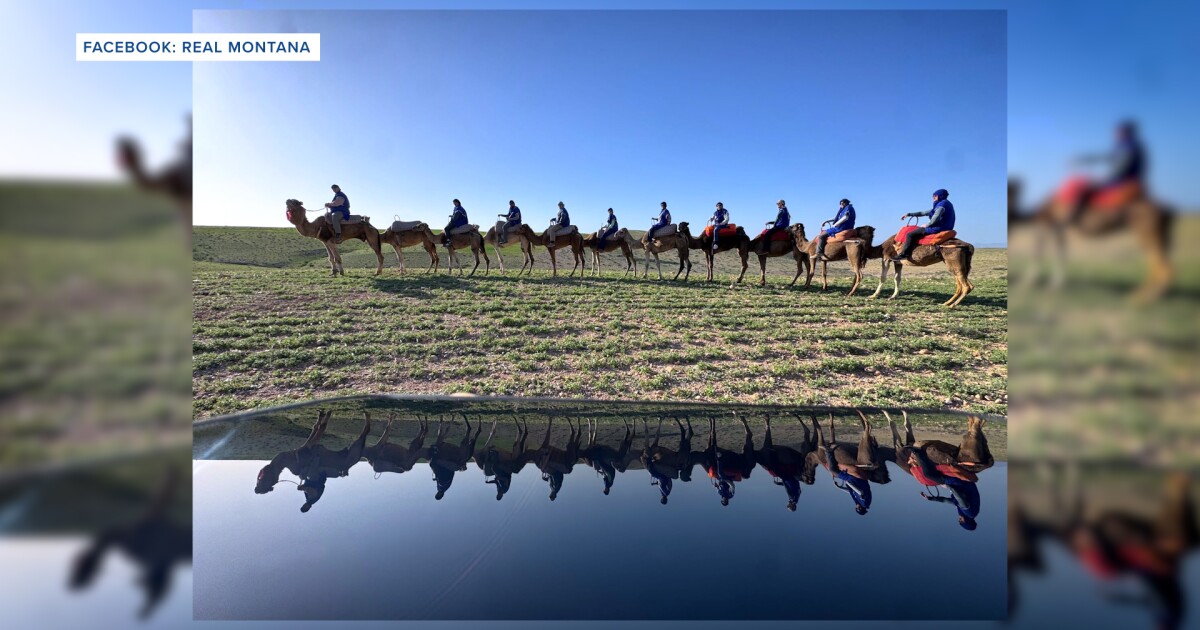
GREAT FALLS — REAL Montana, short for Resource Education & Agriculture Leadership, is a two-year leadership development program through Montana State University Extension designed to strengthen the future of the state’s natural resource industries. The program combines in-state seminars, national travel, and an international study tour to expose participants to a wide range of perspectives.
Madison Collier reports – watch the video here:
Montana Ag Network: REAL group highlights international industry
The mission is simple: build a network of informed leaders who can help advance Montana agriculture and natural resource industries in a rapidly changing world.
A global classroom
This year, participants traveled across Morocco, visiting farms, research centers, and food production facilities to better understand how agriculture operates on a global scale.
According to REAL Montana Co-Director Tara Becken, the trip is about more than just travel, it’s about perspective.
“We were able to see how Montana commodities fit into the global picture,” said Becken, who also attended the trip. “Wheat from Montana’s Golden Triangle ends up on a plate on the other side of the world.”
Participants explored everything from citrus production to international trade, gaining firsthand insight into how food systems connect across continents.
Similar challenges, different landscapes
While Morocco’s environment and crops differ from those in Montana, participants said the challenges facing producers still felt familiar.
“Even though we’re worlds away, our challenges are very, very similar,” Becken said, pointing to issues like drought, labor shortages, and market pressures.
For Alice Miller, a participant in the program, those similarities stood out immediately.
“They’ve been dealing with drought. They’re working through input costs and labor… those are the same conversations we’re having here,” Miller said.
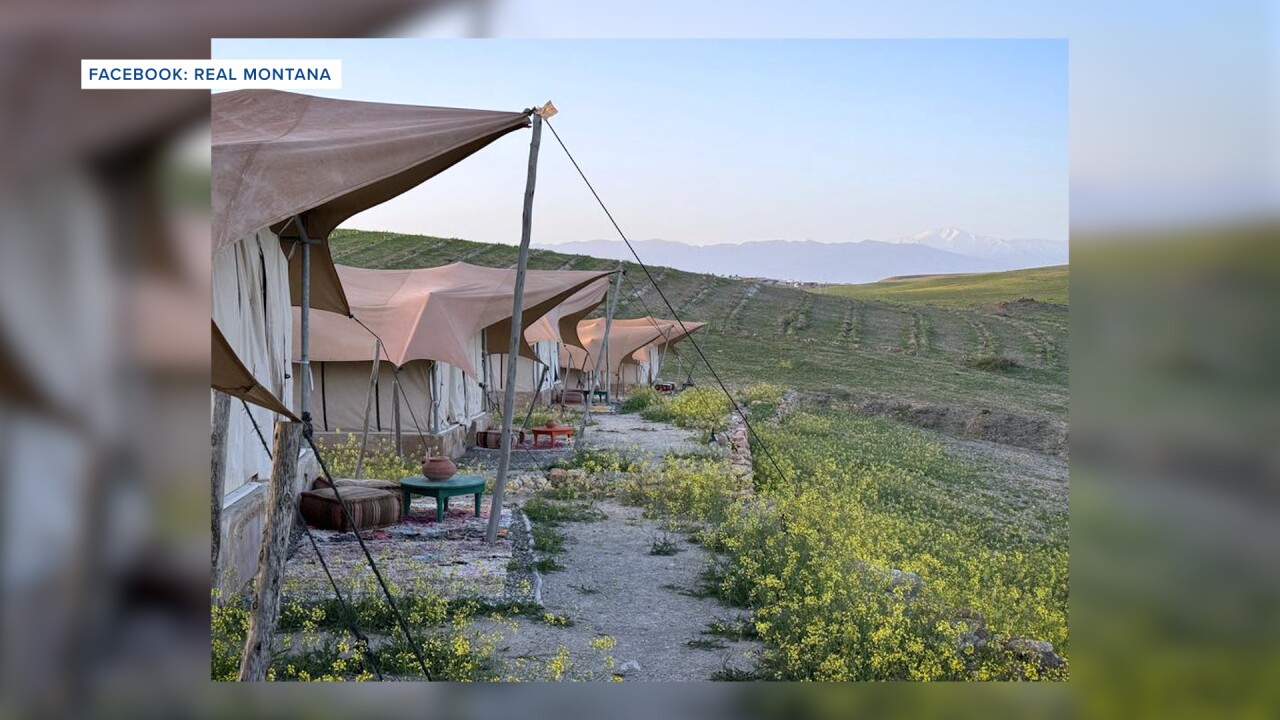
From farm to global table
One of the most impactful moments for participants came from seeing food production up close and realizing how connected it is to back home.
“Eating oranges right off the trees and then thinking about how that food ends up on our grocery store shelves… it just hits different when you’re there,” Miller said.
The experience reinforced a broader takeaway: Montana agriculture plays a role far beyond state lines.
“Montana really is feeding the world. That’s not just a phrase, that’s a reality,” Miller said.
Building the next generation of leaders
The international trip is just one part of the REAL Montana program, which includes eight in-state seminars and a national policy-focused trip to Washington, D.C.
Participants are selected from across Montana’s natural resource industries, including agriculture, energy, and forestry, with the goal of building a diverse network of future leaders.
Program leaders say those experiences are critical as the industry faces ongoing challenges, from global trade to shifting consumer demands.
“Unless we can understand the world around us, it’s really hard to tackle our own problems,” Becken said.
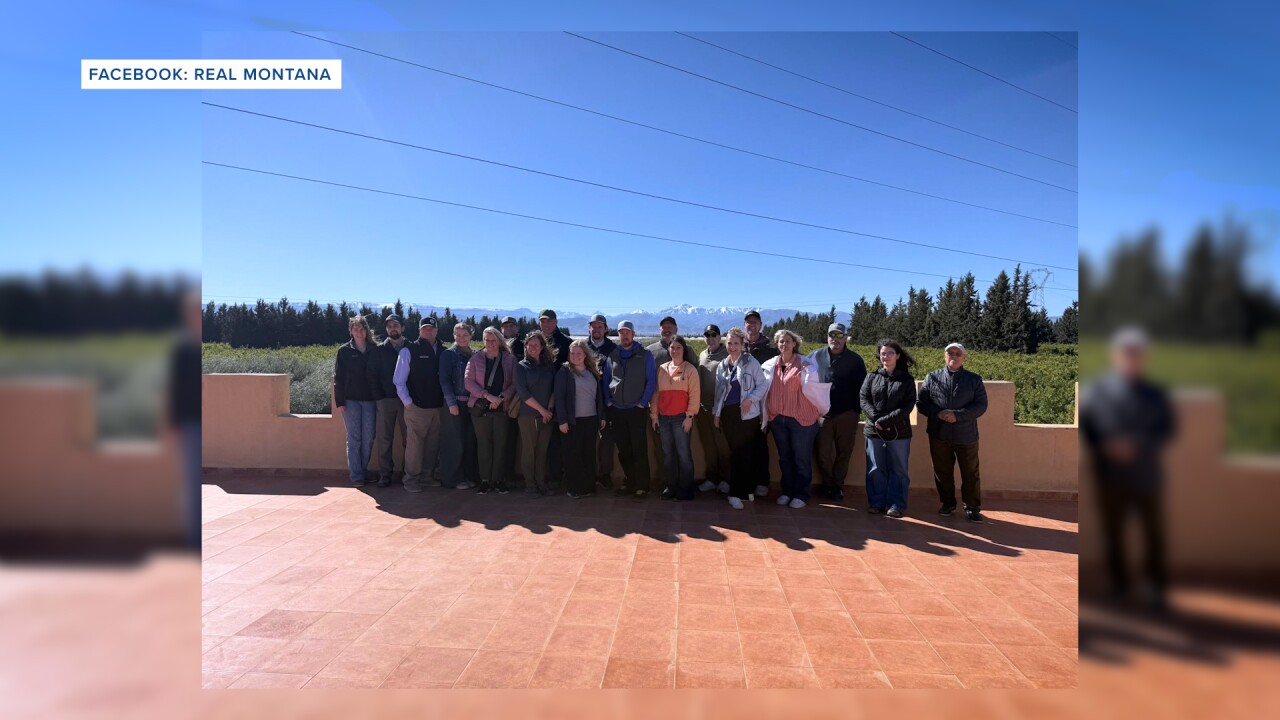
As the current class prepares to graduate, the focus now shifts to applying those lessons back home.
“We hope they go out and make a difference for the state of Montana and their communities,” Becken said.
Looking ahead
Applications for the next REAL Montana class are open through March 31. The program targets individuals working in Montana’s natural resource industries who are interested in growing as leaders and making an impact in their communities.
For Miller, the experience is one she encourages others to pursue.
“It’s an investment you won’t regret making, in yourself and in your industry,” she said.
The Montana Farmers Union is now offering a scholarship to help offset the cost of participation for eligible members accepted into the program. The support is designed to make leadership development more accessible to those working in agriculture and natural resource industries.
More information on scholarship opportunities and the application process can be found on the REAL Montana website.

Photos: ‘No Kings’ protests across the country

Ken Roczen wins second race of 2026 in Detroit, Hunter Lawrence crashes and loses points lead

San Francisco’s 5 Best Affordable Places To Stay On A Tight Budget, According To Guests – Islands

DAL@PIT Postgame: Glen Gulutzan | Dallas Stars

1 dead, 9 injured in 3-vehicle crash in southwest Miami-Dade

Florida High School Football Rankings: Top 25 teams – Oct. 21

How old is Bo Nix? What to know about Oregon quarterback ahead of 2024 NFL Draft

Cleary's 21 help Le Moyne down Central Connecticut State 69-64 in OT

99th annual Pony Swim held in Virginia

Indiana Members Credit Union announced as new anchor tenant at Bottleworks District
Photos: ‘No Kings’ protests across the country

Jeffries declines to break with indicted Democrat after ethics panel’s guilty verdict

Hundreds of thousands march through London in stand against the far right

2 students killed, 7 other people injured in Tennessee bus crash during school field trip

Dem senators dodge crucial question on illegal alien accused of killing Chicago college student
-

 Movie Reviews1 week ago
‘Youth’ Twitter review: Ken Karunaas impresses audiences; Suraj Venjaramoodu adds charm; music wins praise | – The Times of India
-

 Sports1 week ago
IOC addresses execution of 19-year-old Iranian wrestler Saleh Mohammadi
-

 New Mexico6 days ago
Clovis shooting leaves one dead, four injured
-

 Tennessee5 days ago
Tennessee Police Investigating Alleged Assault Involving ‘Reacher’ Star Alan Ritchson
-

 Technology7 days ago
YouTube job scam text: How to spot it fast
-

 Minneapolis, MN3 days ago
Boy who shielded classmate during school shooting receives Medal of Honor
-

 Texas1 week ago
How to buy Houston vs. Texas A&M 2026 March Madness tickets
-

 Science1 week ago
Record Heat Meets a Major Snow Drought Across the West