Montana
Key takeaways from our investigation of Montana’s agricultural tax code


Montana’s property tax system is a complicated thing, involving mind-boggling math and a bewildering array of rules aimed at fairly dividing the bill for public services like schools and police departments between hundreds of thousands of properties.
It’s a tricky task, of course, to agree on what exactly fair means when it comes to taxes — and a trickier one for lawmakers to write a tax code that implements a fair framework without loopholes. Earlier this week, Montana Free Press and High Country News published a lengthy investigation into a facet of the state’s tax code that has been a perennial concern on the loophole front for decades: whether a property tax break intended for farms and ranches is being abused by people who own luxury homes on rural parcels.
Our full story, which you can read here, runs more than 3,400 words. If you’re looking for something briefer, here are some of the key takeaways:
1. Agricultural tax status offers farm and ranch properties a discount relative to residential properties by marking down the value of the underlying land.
If you own a Montana home in an urban or suburban neighborhood, it’s almost certainly classified as a residential property. For those, both the house structure and the home lot beneath it are valued and taxed based on their market value — how much the Montana Department of Revenue thinks they would sell for.
Structures on agricultural properties are also valued and taxed based on their market value, but the underlying land is not. Instead, agricultural land is valued for tax purposes based on its production value — how much money the revenue department thinks its owner could make growing crops or grazing livestock.
That’s a significant difference. Home lot prices vary from place to place across Montana, but the average residential property had a land value of about $127,000 in 2023. Production values are much, much lower. Some of the properties we looked at, for example, had grazing land valued at less than $50 an acre.
RELATED
Montana’s agricultural tax rules slash bills for thousands of million-dollar homes
Montana’s property tax code is designed to offer working farms and ranches lower land taxes than those paid on residential properties. An analysis by HCN and MTFP indicates there are thousands of high-end houses benefitting from ag treatment, paying reduced property taxes with the offset landing on other taxpayers. While some lawmakers want to tighten the qualification requirements during the 2025 Legislature, those measures face tough odds because stripping agriculture tax status from current beneficiaries would mean forcing them to pay more.
2. The agricultural discount can translate into hundreds or thousands of dollars in annual tax savings.
One example we looked at was a property on the Flathead River near Kalispell, described in a Zillow listing as a “gorgeous Montana river estate” with a putting green and orchard. Classified as agricultural land, the 10-acre property paid about $7,000 in property taxes in 2023, all but $20 of that based on the value of the property’s structures, according to our analysis.
A 10-acre residential property next door, including a slightly less valuable home, paid about $9,100 in taxes in 2023, including about $3,300 in land taxes.
That sort of disparity is typical. For parcels smaller than 20 acres, we found that residential properties paid a median effective land tax of $1,609 an acre in 2023, compared to only $6.61 for agricultural parcels.
3. Critics worry that it’s too easy for high-end real estate to qualify for agricultural tax benefits.
Unlike most western states, larger Montana properties automatically qualify for agricultural tax treatment without being required to document that the land is being used for agriculture. Properties of 160 acres or more are automatically granted a full agricultural designation, while properties bigger than 20 acres automatically qualify for a partial agricultural designation that offers slightly reduced tax benefits regardless of whether the land is being put to significant agricultural use.
Smaller properties can qualify for the full designation by reporting at least $1,500 a year in agricultural income. Critics say that threshold, which hasn’t been updated since 1986, is low enough that savvy property owners can reach it with relatively little effort.
4. Thousands of million-dollar Montana homes are benefiting from the ag tax treatment. Gov. Greg Gianforte’s Bozeman home is one of them.
Looking at state property data for 2023, MTFP and HCN found more than 3,000 properties with million-dollar structure values that qualify for the full or partial agricultural tax benefit. In some cases, like the Flathead River example, those properties are adjacent to otherwise comparable residential properties, resulting in stark tax disparities.
Another example is Gianforte’s home on an 11-acre parcel with an agricultural designation on the outskirts of Bozeman. According to our calculations, the governor and his wife, Susan, paid about $5.75 an acre in land taxes on it in 2023 while a neighbor with a residential parcel across the street paid $826 per acre. (The governor’s office said that the Gianfortes’ property, which also includes additional parcels, is used for barley and alfalfa production and is also used to board horses and mules.)
The governor’s $66 land tax bill for the 11-acre parcel is also less than what the vast majority of urban homeowners in Montana pay each year for the lots beneath their homes.
RELATED

Montana homeowners see higher property taxes as some big businesses pay less
Higher property tax bills are hitting homeowners across Montana this year as the state’s tax system shudders into a new alignment following the first reappraisal cycle using tax appraisals reflecting the explosive growth in Montana home values during and after the COVID-19 pandemic. Those higher bills for residential properties appear to be the result of higher local and state-level tax collections, as well as how the Montana Department of Revenue’s valuations for residential properties have spiked while its valuations for some industrial and utility properties have declined, a dynamic that pushes more tax burden onto homeowners.
5. Lawmakers could change the tax code as the Montana Legislature meets this year.
As the session opened in early January, there were two bills under consideration that would tighten qualification standards for the agricultural designations (House Bill 27) and increase taxes on homesite portions of high-value ag properties (Senate Bill 4).
Similar measures have floundered in the past, in part because of opposition from people who would face higher tax bills. The sponsors of both measures told MTFP this week that they are working on revisions to their proposals in an effort to make the bills politically viable.
READ MORE: Montana’s agricultural tax rules slash bills for thousands of million-dollar homes.
LATEST STORIES
Montana Senate works to get back on track
The Montana Senate Republicans fighting over rules has led to delays in the chamber’s operations just days into the session.
Grizzly bears to remain protected under Endangered Species Act
All grizzly bears in the Lower 48 United States would be federally managed as a single population under a proposed U.S Fish and Wildlife Service rule. That DPS, or distinct population segment, would retain the grizzly’s threatened status under the Endangered Species Act and reject petitions from the states of Montana, Idaho and Wyoming to delist the bears.
Former judge-elect pleads not guilty to drug charges in Lake County
An investigation by the Montana Department of Justice’s Division of Criminal Investigation found that Kenneth Britton “Britt” Cotter, 48, had tried to purchase cocaine on multiple occasions between March 2022 and May 2023.



The Montana Lottery offers multiple draw games for those aiming to win big.
Here’s a look at March 27, 2026, results for each game:
Winning Mega Millions numbers from March 27 drawing
13-27-28-41-62, Mega Ball: 16
Check Mega Millions payouts and previous drawings here.
Winning Big Sky Bonus numbers from March 27 drawing
04-05-15-16, Bonus: 14
Check Big Sky Bonus payouts and previous drawings here.
Winning Millionaire for Life numbers from March 27 drawing
06-09-28-33-46, Bonus: 04
Check Millionaire for Life payouts and previous drawings here.
Feeling lucky? Explore the latest lottery news & results
When are the Montana Lottery drawings held?
- Powerball: 8:59 p.m. MT on Monday, Wednesday, and Saturday.
- Mega Millions: 9 p.m. MT on Tuesday and Friday.
- Lucky For Life: 8:38 p.m. MT daily.
- Lotto America: 9 p.m. MT on Monday, Wednesday and Saturday.
- Big Sky Bonus: 7:30 p.m. MT daily.
- Powerball Double Play: 8:59 p.m. MT on Monday, Wednesday, and Saturday.
- Montana Cash: 8 p.m. MT on Wednesday and Saturday.
- Millionaire for Life: 9:15 p.m. MT daily.
Missed a draw? Peek at the past week’s winning numbers.
This results page was generated automatically using information from TinBu and a template written and reviewed by a Great Falls Tribune editor. You can send feedback using this form.

GREAT FALLS — REAL Montana, short for Resource Education & Agriculture Leadership, is a two-year leadership development program through Montana State University Extension designed to strengthen the future of the state’s natural resource industries. The program combines in-state seminars, national travel, and an international study tour to expose participants to a wide range of perspectives.
Madison Collier reports – watch the video here:
Montana Ag Network: REAL group highlights international industry
The mission is simple: build a network of informed leaders who can help advance Montana agriculture and natural resource industries in a rapidly changing world.
A global classroom
This year, participants traveled across Morocco, visiting farms, research centers, and food production facilities to better understand how agriculture operates on a global scale.
According to REAL Montana Co-Director Tara Becken, the trip is about more than just travel, it’s about perspective.
“We were able to see how Montana commodities fit into the global picture,” said Becken, who also attended the trip. “Wheat from Montana’s Golden Triangle ends up on a plate on the other side of the world.”
Participants explored everything from citrus production to international trade, gaining firsthand insight into how food systems connect across continents.
Similar challenges, different landscapes
While Morocco’s environment and crops differ from those in Montana, participants said the challenges facing producers still felt familiar.
“Even though we’re worlds away, our challenges are very, very similar,” Becken said, pointing to issues like drought, labor shortages, and market pressures.
For Alice Miller, a participant in the program, those similarities stood out immediately.
“They’ve been dealing with drought. They’re working through input costs and labor… those are the same conversations we’re having here,” Miller said.
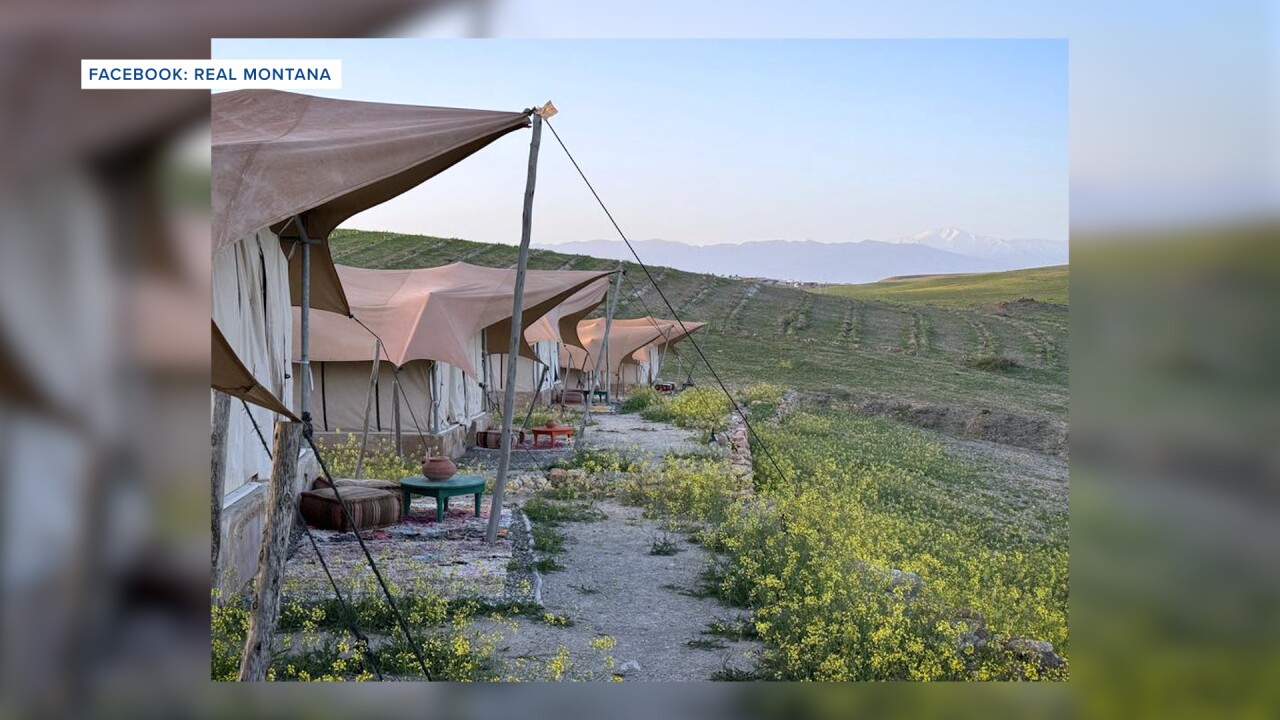
From farm to global table
One of the most impactful moments for participants came from seeing food production up close and realizing how connected it is to back home.
“Eating oranges right off the trees and then thinking about how that food ends up on our grocery store shelves… it just hits different when you’re there,” Miller said.
The experience reinforced a broader takeaway: Montana agriculture plays a role far beyond state lines.
“Montana really is feeding the world. That’s not just a phrase, that’s a reality,” Miller said.
Building the next generation of leaders
The international trip is just one part of the REAL Montana program, which includes eight in-state seminars and a national policy-focused trip to Washington, D.C.
Participants are selected from across Montana’s natural resource industries, including agriculture, energy, and forestry, with the goal of building a diverse network of future leaders.
Program leaders say those experiences are critical as the industry faces ongoing challenges, from global trade to shifting consumer demands.
“Unless we can understand the world around us, it’s really hard to tackle our own problems,” Becken said.

As the current class prepares to graduate, the focus now shifts to applying those lessons back home.
“We hope they go out and make a difference for the state of Montana and their communities,” Becken said.
Looking ahead
Applications for the next REAL Montana class are open through March 31. The program targets individuals working in Montana’s natural resource industries who are interested in growing as leaders and making an impact in their communities.
For Miller, the experience is one she encourages others to pursue.
“It’s an investment you won’t regret making, in yourself and in your industry,” she said.
The Montana Farmers Union is now offering a scholarship to help offset the cost of participation for eligible members accepted into the program. The support is designed to make leadership development more accessible to those working in agriculture and natural resource industries.
More information on scholarship opportunities and the application process can be found on the REAL Montana website.

State House considers reforms that allowed greater variety of construction in Big Sky State
Michigan could follow Montana’s lead after state House members introduced a bipartisan package of bills aimed at making housing less costly.
“The bipartisan Housing Readiness Package modernizes our development processes to reduce unnecessary costs and delays, making housing more affordable and available across the state,” according to a press release from the House Republican caucus. “This is about ensuring Michigan is prepared for growth and that more residents have access to safe, stable homes.”
The package draws on ideas Montana successfully enacted in 2023 and 2025 to ease the state’s housing shortage. It includes Michigan House bills 5529, 5530, 5531, 5532, 5581, 5582, 5583, 5584 and 5585. The package is intended to restrain cities and counties from restricting accessory dwelling units, duplexes, and other non-single-family units; to limit protests and impact studies on developments; and to reduce local red tape.
Housing costs in Michigan have almost doubled in recent years, according to the Federal Reserve Bank of St. Louis. Michigan has exceeded the pace of housing inflation found in other states.
The average price of homes in the state was about 75% of the national average in 2012, but it is roughly 82% of the average today, according to Jarrett Skorup, vice president of marketing and communications at the Mackinac Center for Public Policy.
Inflation, interest rates, and rising construction costs have increased housing prices, Skorup told Michigan Capitol Confidential, but local government red tape is still making things worse.
“A lot of this is because of dumb, unnecessary, big-government policies at the local level,” Skorup told CapCon in an email. “This bill package protects the private property rights of citizens in a way similar to what Montana and many other states have done. It is good policy that will help people afford to live where they want.”
Montana made changes to legalize duplexes, allow accessory dwelling units, open commercial zones to housing, and permit taller buildings that can accommodate more housing units.
The laws faced a legal challenge, but the Montana Supreme Court unanimously upheld the bipartisan legislation.
“There are a lot of similarities between what is being proposed in Michigan and what we accomplished in Montana,” Forrest Mandeville, a Republican state senator from Stillwater County, told Michigan Capitol Confidential in an email.
Montana enacted laws that call for freedom to build duplexes and accessory dwelling units by right (with no need for extra approvals) in many cities. The Big Sky State also streamlined review processes and simplified public participation.
“These reforms were necessitated by a housing market that was seeing prices skyrocket and existing zoning that created a lot of single-family-only development in large areas,” Mandeville said.
A broad coalition supported the changes: builders, real estate agents, free-market advocates and some local government groups, Mandeville told CapCon. Housing prices and rents have stabilized since the legislation was enacted.
“We tried to get government out of the way to encourage building without red tape,” Sen. Jeremy Trebas, a Cascade County Republican, told CapCon in an email about the housing situation in Bozeman. With a population of 60,000 and slow growth, the city faced a housing crunch, with a large inventory of aging and obsolete buildings. Expensive housing and taxes, Trebas said, were driving people to move to Washington, California and other states.
“If we could change land-use policy, encourage development of higher density like duplexes as infill, allow for housing in commercial zones (as it was a 100 years ago), reduce minimum lot sizes, and allow by-right accessory dwelling units and such, we could let the market work to produce density and supply without spending government dollars to incentivize it,” Trebas said.
Opponents of Montana’s reforms expressed concerns about more people moving in from out-of-state, said Trebas. He countered that Montana natives were hurt by high costs that price upcoming generations out of the housing market.

First Submarine Named After Massachusetts Joins the Navy Fleet

No. 6 Minnesota-Duluth 3, No. 10 Penn State 1: Goalied

Mother, her 2 daughters among 5 killed in collision between train and van
Missouri Lottery Mega Millions, Pick 3 winning numbers for March 27, 2026
Montana Lottery Mega Millions, Big Sky Bonus results for March 27, 2026

Florida High School Football Rankings: Top 25 teams – Oct. 21

How old is Bo Nix? What to know about Oregon quarterback ahead of 2024 NFL Draft

Cleary's 21 help Le Moyne down Central Connecticut State 69-64 in OT

99th annual Pony Swim held in Virginia

Indiana Members Credit Union announced as new anchor tenant at Bottleworks District

Dem senators dodge crucial question on illegal alien accused of killing Chicago college student

EU Parliament unblocks key political hurdle in digital euro talks

Man arrested in plot to firebomb Palestinian activist’s home after undercover op

WATCH: Senate hearing goes silent after Angel Father confronts top Dem over daughter’s death

US diplomat Marco Rubio denounces settler violence, tolls in Hormuz strait
-

 Detroit, MI1 week ago
Drummer Brian Pastoria, longtime Detroit music advocate, dies at 68
-

 Movie Reviews1 week ago
‘Youth’ Twitter review: Ken Karunaas impresses audiences; Suraj Venjaramoodu adds charm; music wins praise | – The Times of India
-

 Sports7 days ago
IOC addresses execution of 19-year-old Iranian wrestler Saleh Mohammadi
-

 New Mexico6 days ago
Clovis shooting leaves one dead, four injured
-
 Business1 week ago
Disney’s new CEO says his focus is on storytelling and creativity
-

 Technology6 days ago
YouTube job scam text: How to spot it fast
-

 Tennessee5 days ago
Tennessee Police Investigating Alleged Assault Involving ‘Reacher’ Star Alan Ritchson
-

 Texas1 week ago
How to buy Houston vs. Texas A&M 2026 March Madness tickets