Montana
FWP extends river closure to Blackfoot River due to downed power lines

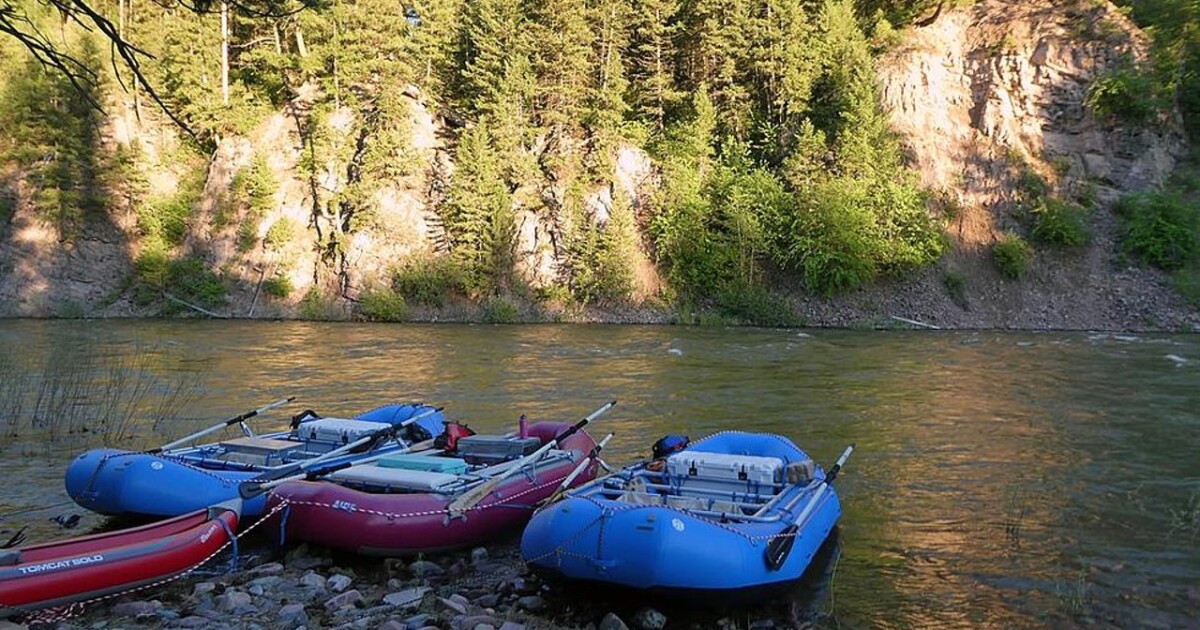
Montana Fish, Wildlife & Parks has extended the river closures to the Blackfoot River due to power lines in the water following Wednesday’s storm.
The closure now includes the upper Blackfoot River from River Junction Fishing Access Site to Russell Gates Memorial FAS.
In addition to this new closure, the Clark Fork River also remains closed from Milltown State Park, just east of Missoula, to Petty Creek Fishing Access Site about 20 miles west of town.
The Bitterroot River is still closed from Chief Looking Glass FAS near Florence to the confluence with the Clark Fork River near Missoula.
These closures went into effect on July 25 and will continue as long as danger from power lines in the water exists.
FWP says recreationists should use caution in areas impacted by the storm and find other spots to go if possible. If you are out, expect that you might encounter power lines on roadways and potentially across waterways that have not yet been identified, as well as downed trees and other debris that could be blocking recreation sites and creating safety hazards in the water.


The Montana Lottery offers multiple draw games for those aiming to win big.
Here’s a look at June 26, 2026, results for each game:
Winning Mega Millions numbers from June 26 drawing
05-13-30-33-52, Mega Ball: 06
Check Mega Millions payouts and previous drawings here.
Winning Big Sky Bonus numbers from June 26 drawing
07-08-20-22, Bonus: 12
Check Big Sky Bonus payouts and previous drawings here.
Feeling lucky? Explore the latest lottery news & results
When are the Montana Lottery drawings held?
- Powerball: 8:59 p.m. MT on Monday, Wednesday, and Saturday.
- Mega Millions: 9 p.m. MT on Tuesday and Friday.
- Lucky For Life: 8:38 p.m. MT daily.
- Lotto America: 9 p.m. MT on Monday, Wednesday and Saturday.
- Big Sky Bonus: 7:30 p.m. MT daily.
- Powerball Double Play: 8:59 p.m. MT on Monday, Wednesday, and Saturday.
- Montana Cash: 8 p.m. MT on Wednesday and Saturday.
- Millionaire for Life: 9:15 p.m. MT daily.
Missed a draw? Peek at the past week’s winning numbers.
This results page was generated automatically using information from TinBu and a template written and reviewed by a Great Falls Tribune editor. You can send feedback using this form.
Montana
EXCLUSIVE: 2 ‘Exceptionally Rare’ Ski-In, Ski-Out Montana Mansions Head to Auction in Big Sky—and Could Sell for a Serious Steal

A pair of stunning Montana ski homes are going under the hammer in the exclusive resort of Big Sky—where they could sell for well below their market value, having been offered up with no reserve.
Currently listed for a combined total of $13 million, the “exceptionally rare” dwellings are both located within the exclusive Spanish Peaks Mountain Club community—and come complete with full access to all of the incredible amenities that the private club has to offer, including “a Tom Weiskopf-designed 18-hole Championship Golf Course, a 10-hole Par 3 course, preferred access to Montage Big Sky, and a private clubhouse featuring dining, a bar, fitness center, pro shop, pool, and hot tub.”
Now, the properties will be sold off to the highest bidder when they are auctioned off with Trayor Lesnock, founder and president of Platinum Luxury Auctions, in cooperation with listing agents Greg Smith and Amelia Turbyfill of Engel & Völkers.
The larger of the two residences, which are both currently owned by Mark and Jennifer Kozubal, was placed on the market for $7.25 million in 2025, having been completed in 2023. It was more recently listed for the reduced price of $6.68 million.
Spanning more than 4,200 square feet, it features five bedrooms and five bathrooms, as well as a beautiful chef’s kitchen, ideal for hosting large groups. There are also “multiple living areas designed for entertaining and hosting family and friends,” according to the listing.
Combining classic Alpine style with “sleek, modern finishes,” the property offers both comfort and elegance, as well as incredible privacy, thanks to its plum location at the end of a quiet street.
Boasting incredible proximity to both the club’s golf courses and the Big Sky slopes, the property features an array of amenities designed to create a relaxing sanctuary where owners and their guests can retreat after a busy day of sporting activity.
“After a day on the ski slopes or a round of golf, relax in your private hot tub, cozy up by the fireplace, or cook a meal in the chef-inspired kitchen,” the description states.
The second property offers just under 3,000 square feet of living space, including four bedrooms and 3.5 bathrooms—as well as “direct ski-in, ski-out access with groomed connectivity to Big Sky Resort terrain,” according to its listing.
Much like the other residence, the second dwelling—which was brought to the market in January with an asking price of $6.25 million—has been designed specifically for those with a passion for outdoor living, providing the ideal setting in which to unwind after a long day of skiing or golfing.
“The residence includes open-concept living spaces designed for gathering after skiing, hiking, or riding, complemented by warm mountain finishes throughout,” the listing notes.
For those seeking to enjoy year-round life on the mountain, the property has been outfitted with a number of unique features that ensure a comfortable, luxurious experience no matter the weather, including “whole-home humidification and water purification systems.”
Beyond the impressive infrastructure, other alluring amenities include a “full-home audio and visual system,” as well as a dedicated eight-locker ski boot room that opens directly onto the nearest ski trail.
“Outdoor amenities include beautiful landscaping and a stone fireplace seating area positioned along the ski trail, with expansive views to the surrounding mountains,” the listing description continues.
However, perhaps the most tempting aspect of both properties is the fact that they could be sold for well below market value—presenting a truly rare opportunity for buyers to secure property in an area where luxury home sales are booming and price tags are regularly set in the seven-figure range.
“Opportunities like these are exceptionally rare in Big Sky,” seller Mark Kozubal explains. “These two Spanish Peaks Highlands homes offer true ski-in/ski-out access to a lightly used lift that connects directly into Big Sky Resort, creating an almost private ski experience with little to no wait.
“Combined with the privacy, beauty, and prestige of Spanish Peaks, these properties stand apart as truly unique mountain residences.”
Both properties are conveniently located within one of the most exclusive enclaves in Big Sky, offering proximity to both the area’s stunning ski resorts and the Yellowstone Club, which has long been one of the most star-studded neighborhoods in the area.
Among those celebrities who are rumored to have purchased properties at the Yellowstone club are NFL star Tom Brady, musician Justin Timberlake and his actress wife Jessica Biel, and Microsoft billionaire Bill Gates.
“Spanish Peaks is one of the premier private residential clubs in the West,” the club’s website notes. “Here, you can experience world-class skiing and golf, fine food and drink, spectacular natural beauty and so much more. This is mountain living at its best.”
Auctioneer Lesnock emphasizes that the opportunity to secure homes in such a luxury-leaning market for what could be a truly bargain price is not something that happens very often.
“Single-family homes within Spanish Peaks have solidly maintained an entry point of at least $5 million, so the ability for buyers to ‘name their price’ in these without reserve auctions represents a substantial purchase opportunity compared to this status quo,” he explains.
“In addition to the high caliber of each property, the community’s world-class golf, ski and wellness amenities are integral parts of the overall formula that continues to attract affluent, second-home buyers to Spanish Peaks from around the world.”
As for why the owners have chosen to pursue an auction, rather than waiting for the homes to sell in a more traditional manner, Lesnock says this process will help them to secure a sale in a timely manner, without having to hang around for months on end in the hopes that a buyer will come forward.
“Under the luxury auction process, we’re giving buyers not only that economic purchase opportunity, but also the guarantee of a seamless, non-contingent sale, free of the haggling and aggravations that can plague traditional, luxury property transactions,” he shares.
“The sellers also benefit in accord, knowing they have a date-certain sale and a clear path to their ‘Next Step.’”
Get real estate news in your inbox
-

 New Hampshire6 minutes ago
Concord Heights Abuse Of Corpse And Falsifying Evidence Case From May 2024 Inches Forward
-

 New Jersey9 minutes ago
The votes are in! Top 10 Jersey beaches for 2026 summer fun
-

 New Mexico14 minutes ago
11 New Mexico Towns With A Slower Pace Of Life
-

 North Dakota24 minutes ago
Bankruptcies for North Dakota and western Minnesota published June 27, 2026
-

 Ohio29 minutes ago
In Springfield, Ohio, Trump’s rhetoric becomes a grim reality
-

 Oklahoma36 minutes ago
Trump nominates former Oklahoma officer Lance Schroyer to lead ICE
-

 Oregon39 minutes ago
OPB’s First Look: Town hall follows power outages
-

 Pennsylvania44 minutes ago
Fetterman, McCormick partner to represent Pennsylvania at Great American State Fair

