Montana
Family recounts losing two daughters to impaired drivers on Montana's highways


May 5 marks the National Day of Awareness for Missing and Murdered Indigenous Women and Girls.
Native women face murder rates more than 10 times the national average. Here in Montana, Indigenous women are four times more likely to go missing.
MTN is sharing some of the stories from the MMIW crisis; some of which you might know, some of which you won’t.
Maureena ‘Mena’ Twoteeth was walking along Highway 93 in January 0f 2022, next to Mission Bridge in St. Ignatius.
She was intoxicated and called for a ride. Mena was waiting to be picked up when she was struck and killed by a vehicle.
Watch the full story:
Family recounts losing two daughters to impaired drivers on Montana’s highways
A 22-year-old woman from Bozeman struck and killed her.
The initial police report did not indicate any drugs were involved. However, three years later, the Montana Highway Patrol confirmed to MTN that the driver had THC in her system.
We reached out to the Lake County Attorney for comment on this case, but have not heard back.
Now, Twoteeth’s family shares the impact of living next to roads that have stolen more than one of their loved ones.
Emily Brown/MTN News
U.S. Highway 93 cuts right through the heart of the Flathead Reservation, and a lot of people walk alongside the road, which is known for its dangerous conditions and high speeds.
Many have lost their lives, which is why locals say: ‘Pray for me, I drive 93.’
“It’s just not safe,” sister Kristen Twoteeth said.
Mena was Cree and a member of the Confederated Salish and Kootenai Tribes.
Emily Brown/MTN News
After she was killed, a Tribal officer showed up at her mother, Bonnie Asencio’s, residence.
“I remember just being in disbelief, just holding myself because my body wasn’t doing what I wanted it to do, and that was stand up,” Asencio said.
But Mena wasn’t the first child Asencio lost.
Emily Brown/MTN News
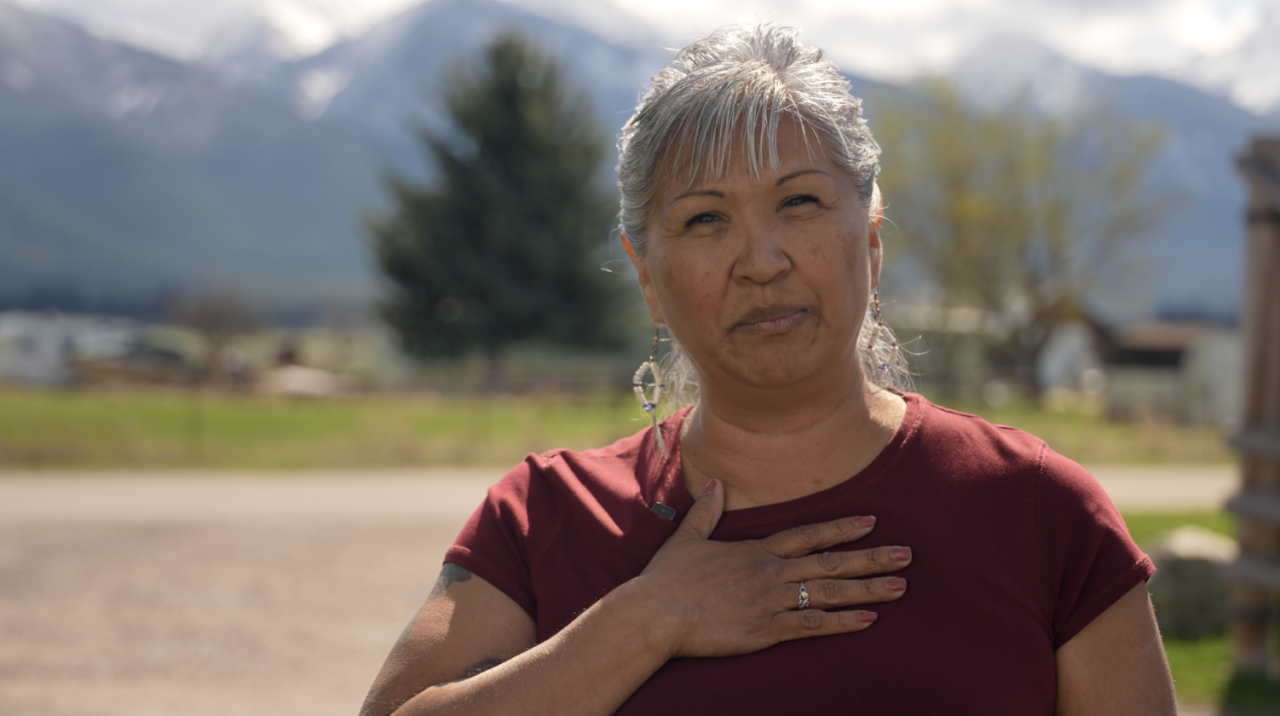
“Two of my children died before me,” Asencio stated.
Her daughter, Ruby Saluskin, was a passenger in a 2020 fatal crash along Montana Highway 35.
“My daughters are important. They are just as important as any other children in the world,” Asencio said.
Emily Brown/MTN News

Now, only four of Asencio’s six daughters are alive.
“My mom’s voice keeps ringing through my ears to be safe, please,” sister Bonnie Saluskin said.
The surviving family lives alongside the roads where white crosses mark their losses.
“I had anxiety really bad after that. I couldn’t even drive really, and especially at like nighttime,” Kristen Twoteeth shared.
“There have been 58 crashes and 65 fatalities on Highway 93 from Wye to the end of the Flathead Reservation from 2020-2025,” Montana Highway Patrol Captain Sean Silvan shared in a statement to MTN.
Emily Brown/MTN News

Still, people commonly walk.
“Indian people walk. We’re not afraid to not have a vehicle. My mom lives a mile just right down the road here. I’ll walk over there easy,” Asencio said.
The family hopes someday for changes that would make getting around the reservation safer for the next generation.
“I would love for a billboard to be here that says: ‘You are now on a reservation and we love to walk,’” Asencio stated.
But all the while, they hold memories of loved ones lost on the road close.
Kristen Twoteeth got a tattoo of a cat for her sister Mena to honor her Indigenous name and remember her by.

Emily Brown/MTN News
She also named her daughter after a saying from Ruby.
“My sister Ruby was always telling us to love each other. That’s what I named my baby, Leila Love, after her saying that,” said Twoteeth.
Bonnie Saluskin channels her emotions into song with one line being, “Now, death is no longer an option. That’s my word to my mom.”
Emily Brown/MTN News
As the family lives each day, they focus on caring for their remaining family members and elevating their loved ones’ stories whenever possible.
“Being able to be there for your children, being able to be there for your mothers, your, you know, your fathers, your, your family. That’s what this is all about,” Saluskin said.
“They are my daughters, and I love them with all of my heart. They continue to be mine even though they’re in heaven,” Asencio concluded.



HELENA, Mont — Gov. Greg Gianforte is backing a new effort to keep data centers from driving up Montanans’ power bills.
This week, Gianforte announced Montana is signing on to the Ratepayer Protection Pledge — an initiative endorsed by President Trump.
Several major technology companies like Amazon, Google, Meta, Microsoft, OpenAI, Oracle, and XAI first signed the pledge back in March.
The pledge comes as data center development continues to grow — raising questions about how much new energy will be needed and who will pay for it.
NBC Montana spoke with Julia Haggerty, professor of geography and department head of earth sciences at Montana State University, about whether Montana’s power grid is ready for that growth.
“Not without resolution of significant transmission bottlenecks and massive amounts of new generation. So, while our grid is adequately, relatively adequately equipped to serve the needs of our current load base, it’s definitely not equipped to accommodate the new demands without a lot of expansion,” she said.
According to the pledge, data center developers will pay for new power generation, and infrastructure needed to support their operations.
“It does align with ongoing regulatory efforts to ensure that the cost of new generation associated with data centers is borne by the developers of those data centers and not customers,” Haggerty said.
The governor’s office says Gianforte’s support of the pledge is designed to encourage responsible data center investments while protecting Montana ratepayers from long-term costs.

The Montana Lottery offers multiple draw games for those aiming to win big.
Here’s a look at July 7, 2026, results for each game:
Winning Mega Millions numbers from July 7 drawing
02-31-35-36-63, Mega Ball: 12
Check Mega Millions payouts and previous drawings here.
Winning Big Sky Bonus numbers from July 7 drawing
09-21-24-29, Bonus: 15
Check Big Sky Bonus payouts and previous drawings here.
Winning Millionaire for Life numbers from July 7 drawing
27-43-48-49-50, Bonus: 02
Check Millionaire for Life payouts and previous drawings here.
Feeling lucky? Explore the latest lottery news & results
When are the Montana Lottery drawings held?
- Powerball: 8:59 p.m. MT on Monday, Wednesday, and Saturday.
- Mega Millions: 9 p.m. MT on Tuesday and Friday.
- Lucky For Life: 8:38 p.m. MT daily.
- Lotto America: 9 p.m. MT on Monday, Wednesday and Saturday.
- Big Sky Bonus: 7:30 p.m. MT daily.
- Powerball Double Play: 8:59 p.m. MT on Monday, Wednesday, and Saturday.
- Montana Cash: 8 p.m. MT on Wednesday and Saturday.
- Millionaire for Life: 9:15 p.m. MT daily.
Missed a draw? Peek at the past week’s winning numbers.
This results page was generated automatically using information from TinBu and a template written and reviewed by a Great Falls Tribune editor. You can send feedback using this form.
-

 Los Angeles, Ca2 minutes ago
Loved ones search for missing 34-year-old Southern California woman
-

 Detroit, MI22 minutes ago
Chickens, geese found at vacant home after nonprofit reports them stolen
-

 San Francisco, CA32 minutes ago
What’s next for San Francisco Giants as MLB trade deadline approaches?
-
 Dallas, TX37 minutes ago
Dallas millionaire files lawsuit against groundwater district
-

 Miami, FL44 minutes ago
7 more women arrested at southwest Miami-Dade massage parlors, accused of prostitution in undercover sting
-

 Boston, MA47 minutes ago
‘They’re my buddies’: 96-year-old Back Bay woman befriends French soccer team
-

 Denver, CO52 minutes ago
Denver officers cited for separate incidents, 1 fired
-

 Seattle, WA59 minutes ago
Study finds dangerous chemicals in the breast milk of Seattle moms

