West
Labor Department deploys ‘strike team’ to California over $21B unemployment debt, fraud concerns

NEWYou can now listen to Fox News articles!
The Labor Department deployed a “strike team” to California to address federal findings of improper payments and alleged fraud within the state’s unemployment insurance (UI) program.
California has been found to have a depleted UI trust fund, along with $21 billion in borrowed federal funds to keep the system running, which federal officials say has led state employers to pay higher UI taxes to repay the debt.
In a statement, the department cited an 83-page California State Auditor report that determined the state’s UI system is high-risk in part due to “inadequate fraud prevention and claimant service [in its employment development department (EDD)], as well as a high rate of overturned eligibility decisions in its Unemployment Insurance Program.”
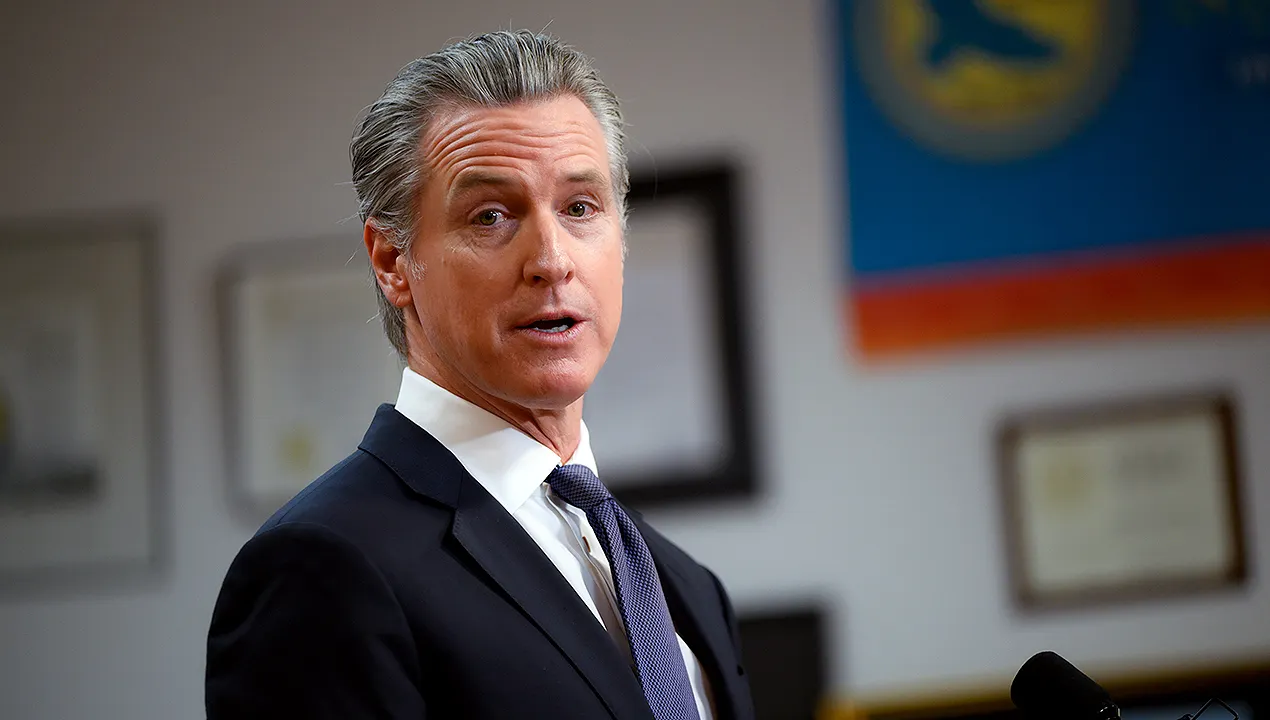
California Gov. Gavin Newsom (Tayfun Coskun/Getty Images)
“Financial issues and potential fraud in California’s unemployment insurance program will be fully examined. The previous administration turned a blind eye toward failing Labor programs. This ends now,” Labor Secretary Lori Chavez-DeRemer said.
“Immediately, we are engaging a specialized strike team to uncover any potential fraud or abuse and quickly moving to protect the American worker and taxpayers. I look forward to restoring the California UI program’s integrity and financial health.”
Chavez-DeRemer added that the “strike team” will include Labor Department specialists from both its national and regional offices.
The secretary also wrote a letter to the EDD, citing increasing improper payment rates, insufficient timeliness, data accuracy and quality concerns and questions about participants’ eligibility and the use of taxpayer funds.
California received about $290 billion in COVID relief, part of which helped what the California Post described as “rapidly implementing expanded unemployment benefits.”
FEDERAL PROSECUTOR CALLS NEWSOM ‘KING OF FRAUD’ AS TRUMP LAUNCHES CALIFORNIA CORRUPTION PROBE
Department of Labor Secretary Lori Chavez-DeRemer is cracking down on reported H-1B abuse. (Chip Somodevilla/Getty Images)
At least one California UI steward was convicted of using her position to file nearly $860,000 in fraudulent UI claims, while some civilians were convicted of creating nonexistent businesses to claim UI.
Before the strike team’s deployment, DOL Inspector General Anthony D’Esposito said he found nearly $1 billion in taxpayer funds “at risk” nationwide due to COVID-related UI fraud.
D’Esposito, a former NYPD officer and ex-congressman from Long Island, said in a statement that an analysis of 6.5 million prepaid debit cards used for COVID UI benefits still had $720 million loaded on them.
WALZ’S MINNESOTA MESS COULD SPARK THE TOUGHEST FRAUD REFORMS IN DECADES
“My office has warned that, absent swift action, U.S. taxpayers risk losing nearly a billion dollars in fraudulently obtained benefits,” D’Esposito said in a statement.
“This is taxpayer money, and it demands immediate attention.”
D’Esposito said fraud is not a victimless crime and that every misspent dollar is one that an actual needy family could use.
CLICK HERE TO DOWNLOAD THE FOX NEWS APP
Quality Learning Center in Minnesota was found to be at the center of an alleged childcare fraud scandal in the state. (Madelin Fuerste/Fox News)
“When we root out fraud, we protect taxpayers and lower the real cost of living,” he said.
Fox News Digital reached out to Newsom and the state Senate’s top Republican for comment.
Related Article

Read the full article from Here



DENVER — Five of the seven law enforcement officers in a rural Colorado county, including the sheriff, have been indicted in an investigation into allegations of misconduct, prosecutors said Friday.
A grand jury indicted Costilla County Sheriff Danny Sanchez and former Deputy Keith Schultz on charges of allegedly mishandling human remains discovered in October 2024, according to court documents. A man who found the remains and reported them to the sheriff’s office said Sanchez and Schultz took only the skull and left the other remains behind, including teeth, court documents state.
Two months passed before Schultz wrote a report, saying he left bones in a bag on his desk and went on another call, the documents state. A coroner’s official said he received the skull in an unlabeled paper bag from the sheriff’s office, the documents state.
Separately, Undersheriff Cruz Soto, Sgt. Caleb Sanchez — the sheriff’s son — and Deputy Roland Riley are charged in connection with the use of a Taser against a man who was suffering a mental health crisis in February and tried to leave when they insisted he go to the hospital, according to the documents. The man said he was “roughed up” by deputies and was left with broken ribs, according to the indictments.
Soto was charged with failing to intervene and third-degree assault, according to court documents. Caleb Sanchez and Riley were charged with second- and third-degree assault.
In announcing the indictments, 12th District Attorney Anne Kelly said she’s committed to investigating and prosecuting crimes no matter the offender.
“I cannot and will not ignore violations of the trust that a community should have in their police. No citizen of the San Luis Valley should have any doubts about the integrity of their police force,” Kelly said at a news conference Friday evening.
A person who answered the phone Friday at the sheriff’s office said it had no immediate comment but planned to post a statement online. Phone numbers listed for Danny Sanchez, Soto and Riley did not work. Caleb Sanchez did not have a listed number. An unidentified person who answered a number for Schultz referred The Associated Press to an attorney, Peter Comar. The AP left a message Friday for Comar seeking comment.
__

KONA (HawaiiNewsNow) – The Hawaii Police Department is investigating a terror threat at Kealakehe Intermediate School after a student reportedly intended to bring a gun to campus on Friday.
Police said they interviewed several students and, during the investigation, determined the student in question was absent and not on campus.
Authorities said they have not located anyone who directly heard the alleged threat, and the report has not been substantiated.
Police said the school remained open and its daily operations were not impacted.
Anyone with information is asked to contact officer John Antonio at (808) 935-3311 or by email at John.Antonio@hawaiipolice.gov.
Anonymous tips can be sent to Crime Stoppers by calling (808) 961-8300. All Crime Stoppers information is kept confidential.
Copyright 2026 Hawaii News Now. All rights reserved.
Idaho
Idaho Senate introduces new bill to give local municipalities authority to control rat populations

BOISE, Idaho — A new bill in the Idaho Senate aims to let local municipalities take action to control rat populations. This, after a previous bill to combat rat infestations across Idaho, died in the House.
Rats have been spreading throughout the Treasure Valley in recent years, but previous attempts at legislation to deal with the problem have failed.
WATCH: Senior Reporter Roland Beres provides an update on the new rat bill
New bill would allow local governments to combat rats
Residents in Eagle and Boise have been tracking an alarming rise in rat populations recently.
Rep. John Gannon (D – District 17) introduced new legislation today that would essentially permit local governments to act in order to control rat populations if they want to, without creating a mandate.
Gannon said some cities complained that they did not have the authority to do the job themselves.
The bill was introduced with a dose of humor.
“I’m going to support this. It’s very late in the session, but I think this might just squeak through,” said Sen. Ben Adams (R – District 12). “Well. Unless it encounters a trap along the way.”
ALSO READ | ‘I’ve never seen something that big’: Boise neighbors finding rats in their backyards
This story was initially reported by a journalist and has been, in part, converted to this platform with the assistance of AI. Our editorial team verifies all reporting on all platforms for fairness and accuracy.
Send tips to neighborhood reporter Riley Shoemaker
Have a story idea from Downtown Boise, the North End or Garden City ? Share it with Riley below —

Grand jury indicts over half the officers in a rural Colorado county

The Houston Comets are back as the Sun sets on the WNBA’s time in Connecticut, where fans face unfortunate reality

Supreme Court says local elections board must hear residency challenge

Tiger Woods charged with DUI after rollover crash in Florida

Georgia Senate passes bill for hand-marked paper ballots

Florida High School Football Rankings: Top 25 teams – Oct. 21

How old is Bo Nix? What to know about Oregon quarterback ahead of 2024 NFL Draft

Cleary's 21 help Le Moyne down Central Connecticut State 69-64 in OT

99th annual Pony Swim held in Virginia

Indiana Members Credit Union announced as new anchor tenant at Bottleworks District

WATCH: Senate hearing goes silent after Angel Father confronts top Dem over daughter’s death

US diplomat Marco Rubio denounces settler violence, tolls in Hormuz strait

Iran-linked hackers have breached FBI Director Kash Patel’s personal emails | CNN Politics

Live: CPAC 2026 Day 2

Video: Will ICE Change Under Its New Leader?
-

 Detroit, MI1 week ago
Drummer Brian Pastoria, longtime Detroit music advocate, dies at 68
-

 Movie Reviews1 week ago
‘Youth’ Twitter review: Ken Karunaas impresses audiences; Suraj Venjaramoodu adds charm; music wins praise | – The Times of India
-

 Sports6 days ago
IOC addresses execution of 19-year-old Iranian wrestler Saleh Mohammadi
-

 New Mexico5 days ago
Clovis shooting leaves one dead, four injured
-
 Business1 week ago
Disney’s new CEO says his focus is on storytelling and creativity
-

 Technology5 days ago
YouTube job scam text: How to spot it fast
-

 Tennessee4 days ago
Tennessee Police Investigating Alleged Assault Involving ‘Reacher’ Star Alan Ritchson
-

 Texas1 week ago
How to buy Houston vs. Texas A&M 2026 March Madness tickets