Hawaii
Shark attacks in Florida, Hawaii lead to closed beaches, hospitalizations: What to know


Warm water, more swimmers and frolickers in the ocean and sharks: it’s a formula that likely leads to unprovoked shark attacks on humans. Recent attacks happened in Florida, Hawaii and California.

Tiger shark baffles scientists by regurgitating entire echidna
Scientists from James Cook University witnessed a tiger shark regurgitate an entire echidna off the coast of Orpheus Island, north Queensland.
unbranded – Newsworthy
As summer approaches, reports of shark attacks are on the rise. The most recent? A 25-year-old woman who was in serious condition Friday after an apparent attack off the island of Oahu.
That same day, two shark attacks occurred off beaches in the panhandle of Florida injuring one woman and two teenage girls, according to the Northwest Florida Daily News, part of the USA TODAY Network.
Officials reopened the beaches in Walton County and neighboring Bay County in Florida on Saturday. Both counties changed beach flags from double-red (water closed to the public) to single-red and purple – indicating high hazard conditions and the presence of dangerous marine life.
“Walton County Sheriff’s Office and Florida Fish and Wildlife will have their boats in the Gulf to monitor the shoreline,” said Corey Dobridnia, the public information officer for the Walton County Sheriff’s Office, Northwest Florida Daily News reported. “We just ask everyone to be aware of their surroundings while in the water.”
Washington state: Man fatally shoots 17-year-old who had BB gun, says he ‘had a duty to act’
What happened in the shark attack near Honolulu, Hawaii?
The as-yet-unidentified woman, 25, was seriously injured in an apparent shark attack Friday in the waters off the island of Oahu in Hawaii near the Haleiwa Small Boat Harbor, a popular destination for shark tours, according to KHON, a Honolulu, Hawaii Fox affiliate, which was among several news outlets reporting the attack.Paramedics responded at about 2 p.m. HST/8 p.m. ET Friday and treated the woman for multiple injuries and took her to a trauma hospital in serious condition, according to Sunny Johnson, Honolulu Emergency Medical Services paramedic supervisor, The Associated Press reported. No additional details were available.
In March, another shark attack happened on Oahu to the east in Ka’a’awa, when an 11-year-old girl was swimming – reportedly the first shark encounter in the state this year. Another attack two days later on March 4 in Waikīkī involved a shark biting off the tail of a surfboard, according to the state’s Shark Incidents List.
Shark attack: Florida man who survived Bahamas shark attack shares how he kept his cool
What happened in the shark attacks in Florida?
A woman was injured by a shark when swimming past the first sandbar in the Gulf of Mexico in Walton County, west of Laguna Beach, after 1:15 p.m. ET Friday, according to the Walton County Sheriff’s Office. The woman, 45, lost her lower left arm and suffered injuries to her midsection, officials said at a Friday afternoon news conference. She was hospitalized in critical condition, officials said.
Less than two hours later, another attack occurred about five miles to the east near Inlet Beach. The victims, ages 15 to 17, were in waist-deep water about 4 miles from where the first attack occurred. One victim was hospitalized in critical condition and one in stable condition, officials said.
“We’re 100% confident that this was done by a shark,” Dobridnia told USA TODAY. The two attacks happened within “a very short distance,” he said. “it’s most likely going to be the same shark.”
Beaches were closed Friday and reopened Saturday morning.
Why do shark attacks happen?
The U.S. had the most reported unprovoked shark bites (36) – two were fatal – in 2023, a year in which shark bites and fatal shark attacks increased slightly worldwide, according to the University of Florida’s International Shark Attack File. (Provoked bites happen when a person initiates interaction with a shark in some way, while unprovoked bites occur without human provocation.)
Florida had the most unprovoked (16) last year. That was slightly below average, but the state’s extended coastline and tourism industry makes it the usual contender for the most shark activity, Gavin Naylor, director of the Florida Museum of Natural History’s shark research program, told USA TODAY in February.
Experts don’t think sharks are getting more aggressive. It’s a combination of factors including people in the warm water, Naylor says on the museum’s website. “It causes a lot of fear, but the reality is you’re putting a lot of people in the water on a hot day with bait fish in the water,” he said.
Bay County Sheriff Tommy Ford said in a note on Facebook that the state Fish and Wildlife Conservation Commission noted how “bait fish are schooling near the shore at this time of year which may have been a contributing factor in the attacks.”
Other recent shark attacks in California, Florida
A man hospitalized June 2 after being attacked by a shark was released from the hospital June 6, according to a press release from the City of Del Mar, California. He suffered injuries to his torso, left arm and hand from shark bites that happened when he was about 100 yards offshore from the beach north of Torrey Pines State Park. He was part of a group of swimmers who regularly train in the area, officials said.
A two-mile stretch of San Clemente beach was closed for part of Memorial Day weekend after an “aggressive” shark incident resulted in a surfer being knocked from a surfboard on Sunday, May 26, the Orange County (Calif.) Register reported. The beach has since reopened.
In May, two fishermen were bitten by sharks in separate incidents less than 36 hours apart in the Florida Keys, The AP reported.
Contributing: Natalie Neysa Alund, Collin Bestor, Nathan Cobb, Emily DeLetter, Cheryl McCloud, James Powel, Anthony Robledo and Dinah Voyles Pulver, USA TODAY Network.
Follow Mike Snider on X and Threads: @mikesnider & mikegsnider.
What’s everyone talking about? Sign up for our trending newsletter to get the latest news of the day



A brush in North Kona, near the Ulu Wini Apartments, has closed a portion of Hina Lani Street, between Route 190 and Ane Keokalole Highway.
According to Hawai‘i Island police, the road is expected to be closed for the next three hours and motorists are advised to avoid the area.
Hawai‘i Fire Assistant Chief Chris Carvalho confirmed at least two engines, two brush trucks, Chopper 2 and a medic vehicle responded to the blaze that started in some bushes.
No evacuations or injuries have been reported at this time.
At 11:09 a.m., an AlertWest camera, installed by Hawaiian Electric in wildfire-prone areas, showed smoke billowing above the Keahuolu Courthouse. As of 12:06 p.m., that smoke appears to have dissipated.
This is a developing story. More information will be provided as it becomes available.
Hawaii
Chinese communist party member arrested in Hawaii on visa fraud charge | Honolulu Star-Advertiser


HONOLULU (HawaiiNewsNow) – Newly redesigned Hawaii driver’s licenses and state IDs are beginning to arrive in mailboxes statewide.
The Department of Customer Services said more than 50,000 residents who renewed or obtained a license or state ID starting in mid-May began receiving the new cards last Friday.
Officials said the updated cards are made of 100% polycarbonate, with laser-engraved photos and added security features intended to deter tampering, fraud and identity theft.
The department said existing driver’s licenses and state IDs remain valid until their expiration dates and do not need to be replaced.
“There’s no reason for them to request a duplicate unless they would like the new card design,” said Kim Hashiro, director of the Department of Customer Services.
Residents were also reminded that temporary paper licenses are not accepted by the Transportation Security Administration for air travel. Travelers using a temporary credential should bring another acceptable form of identification, such as a passport.
Permanent plastic cards are typically mailed within six to eight weeks after an application is submitted, officials said.
Copyright 2026 Hawaii News Now. All rights reserved.
-

 Washington, D.C4 minutes ago
Police search for suspect caught on camera slashing tires in Georgetown
-

 Cleveland, OH11 minutes ago
Ohio ICAC Task Force’s “Operation Guardians’ Watch” Results in 25 Individuals Arrested and Charged for Attempting to Meet with an Underage Child to Engage in Sexual Activity
-

 Austin, TX14 minutes ago
Texas’ Goosby hosts camp to benefit heart research
-

 Alabama19 minutes ago
Alabama teen charged with stabbing mom to death issued vile threat to dad — as new pic shows bloodbath left behind
-

 Alaska27 minutes ago
Outmigration, inflation, choice schools: Alaska school closures likely to continue without changes
-
 Arizona29 minutes ago
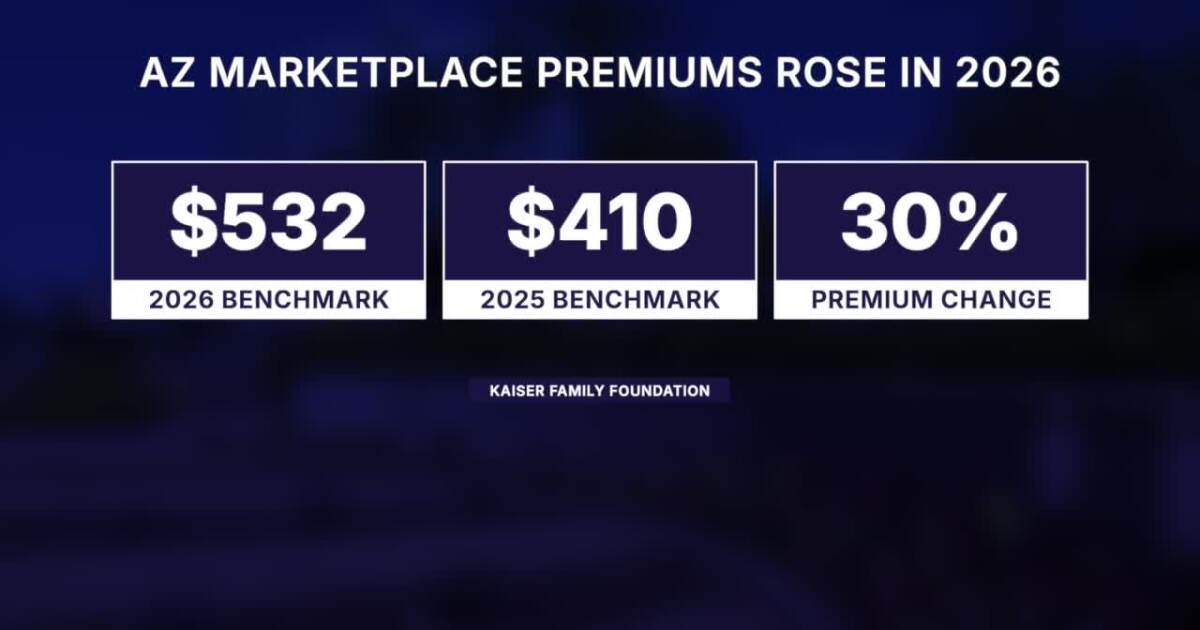
WATCH: Arizona’s health insurance marketplace is seeing dropping enrollment
-

 Arkansas34 minutes ago
ARKANSAS SIGHTSEEING: Randolph County can claim many firsts in Arkansas | Northwest Arkansas Democrat-Gazette
-

 California41 minutes ago
Toddler sustains brain injury in fall after California childcare worker threw him into the air, lawsuit says

