Hawaii
Hawaii beach volleyball team gets AVCA, Big West postseason awards


The Hawaii beach volleyball team has been fully furnished with conference and national postseason awards heading into the NCAA Tournament.
On the eve of their first-round matchup against Loyola Marymount in Gulf Shores, Ala., the Rainbow Wahine received a haul of American Volleyball Coaches Association and Big West Conference honors.
UH’s top pair of Jaime Santer and Alana Embry was named to the AVCA All-America second team after going 24-11 in 2024. Santer, of Toronto, and Embry, of Poway, Calif., became the 13th and 14th All-Americans in program history. The most recent were Brooke Van Sickle and Kaylee Glagau.
In addition, UH’s pairs at the No. 4 and 5 courts, Riley Wagoner/Sydney Amiatu and Anna Maidment/Sydney Miller received AVCA Top Flight status. To be eligible, a pair has to compete in at least 15 dual matches at that flight and win 75% of its matches at that flight.
Alana Embry left, and Jaime Santer received second-team All-America honors. (Spectrum News/Brian McInnis)
Wagoner, of Dublin, Ohio, and Amiatu, of Oceanside, Calif., went 21-6 at the fourth flight, including the match against Long Beach State for the Big West championship.
Maidment, of Winnipeg, Canada, and Miller, of San Diego, Calif., went 16-4 at the fifth flight and have lined up at the third flight in recent weeks.
The Big West’s postseason awards were also announced Thursday, with third-year program leader Evan Silberstein named BWC Co-Coach of the Year for the second time.
Silberstein encouraged a mantra of “fail fast, fail forward” during the season so the team could grow from its early setbacks. UH started 0-5 with a winless weekend at the Outrigger Duke Kahanamoku Beach Classic in February, a sequence that included a loss to LMU.
“Even all the way up until the Big West (championships), we were talking to them about three things,” Silberstein said. “Connection … composed … and stay curious. I think that element of curiosity and adaptability has been really helpful for us. Living those in the high-pressure moments has really panned out and put us in a position of success. We’re just stoked for everything that has happened up ‘til now.”
Santer/Embry and Wagoner/Amiatu were named to the All-BWC first team, while Maidment/Miller and Pani Napoleon/Glagau were named honorable mentions.
Cal Poly’s Todd Rogers was the BWC’s other Co-Coach of the Year.
Ninth-seeded UH (24-11) faces eighth-seeded LMU (27-13) for the third straight NCAA Tournament starting 7 a.m. Hawaii time Friday.
“We’re prepared, we’re hungry,” Napoleon told Hawaii media before the team departed for Alabama this week. “Honestly, we’re glad that we’re playing against them again because it gives us another opportunity to get our revenge.”

Evan Silberstein, middle, was named a Big West Coach of the Year for the second time. (Spectrum News/Brian McInnis)
Brian McInnis covers the state’s sports scene for Spectrum News Hawaii. He can be reached at brian.mcinnis@charter.com.



Three convicted sex offenders were arrested on Hawaii Island last week for allegedly failing to comply with sex offender registry requirements.
Multiple law-enforcement agencies conducted checks in Kona on registered sex offenders who had been identified as potentially out of compliance with the state’s Sex Offender Registry laws, according the Department of the Attorney General.
As a result of the three-day operation, several individuals were brought back into compliance, and three West Hawaii men were arrested for allegedly failing to comply with the requirements.
The three men who were arrested are Joseph Debus, 56, of Kailua-Kona, Garth Coleman, 53, of Holualoa and Alexsandr Skelcey, 34, of Kailua-Kona.
Debus was convicted of second-degree sex assault in Hawaii in 1993 and sentenced to five years probation with a year in jail. Coleman was sentenced to 20 years in prison for first-degree assault in 2000 after a jury trial in Hawaii. And Skelcey was convicted in Michigan in 2012 of assault with intent to commit sex assault.
“Sex offender registration requirements exist to protect our communities and ensure law enforcement knows where convicted offenders are living,” Tom Alipio, chief of the AG department’s Investigations Division, said in a press release. “Compliance operations like this send a clear message that we will actively monitor the registry, investigate violations and work closely with our law enforcement partners to hold offenders accountable when they fail to meet their legal obligations.”
HPD Chief Reed Mahuna said, “Operations like this allow us to verify that offenders are maintaining strict compliance with registration laws and those who aren’t will be addressed immediately. We will continue to leverage these multi-agency partnerships to keep our island communities safe,”
Members of the public can look up publicly available offender information and subscribe to notifications at sexoffenders.ehawaii.gov/coveredoffender/.
Anyone with information regarding a registered sex offender who may be violating registration requirements is encouraged to contact the Department of the Attorney General’s Investigation Division at (808) 586-1240 or their local law enforcement.

A brush in North Kona, near the Ulu Wini Apartments, has closed a portion of Hina Lani Street, between Route 190 and Ane Keokalole Highway.
According to Hawai‘i Island police, the road is expected to be closed for the next three hours and motorists are advised to avoid the area.
Hawai‘i Fire Assistant Chief Chris Carvalho confirmed at least two engines, two brush trucks, Chopper 2 and a medic vehicle responded to the blaze that started in some bushes.
No evacuations or injuries have been reported at this time.
At 11:09 a.m., an AlertWest camera, installed by Hawaiian Electric in wildfire-prone areas, showed smoke billowing above the Keahuolu Courthouse. As of 12:06 p.m., that smoke appears to have dissipated.
This is a developing story. More information will be provided as it becomes available.
Hawaii
Chinese communist party member arrested in Hawaii on visa fraud charge | Honolulu Star-Advertiser

-

 Utah3 minutes ago
Man suspected in 2006 Utah murder left suicide note in Las Vegas jail cell: police
-
 Vermont6 minutes ago
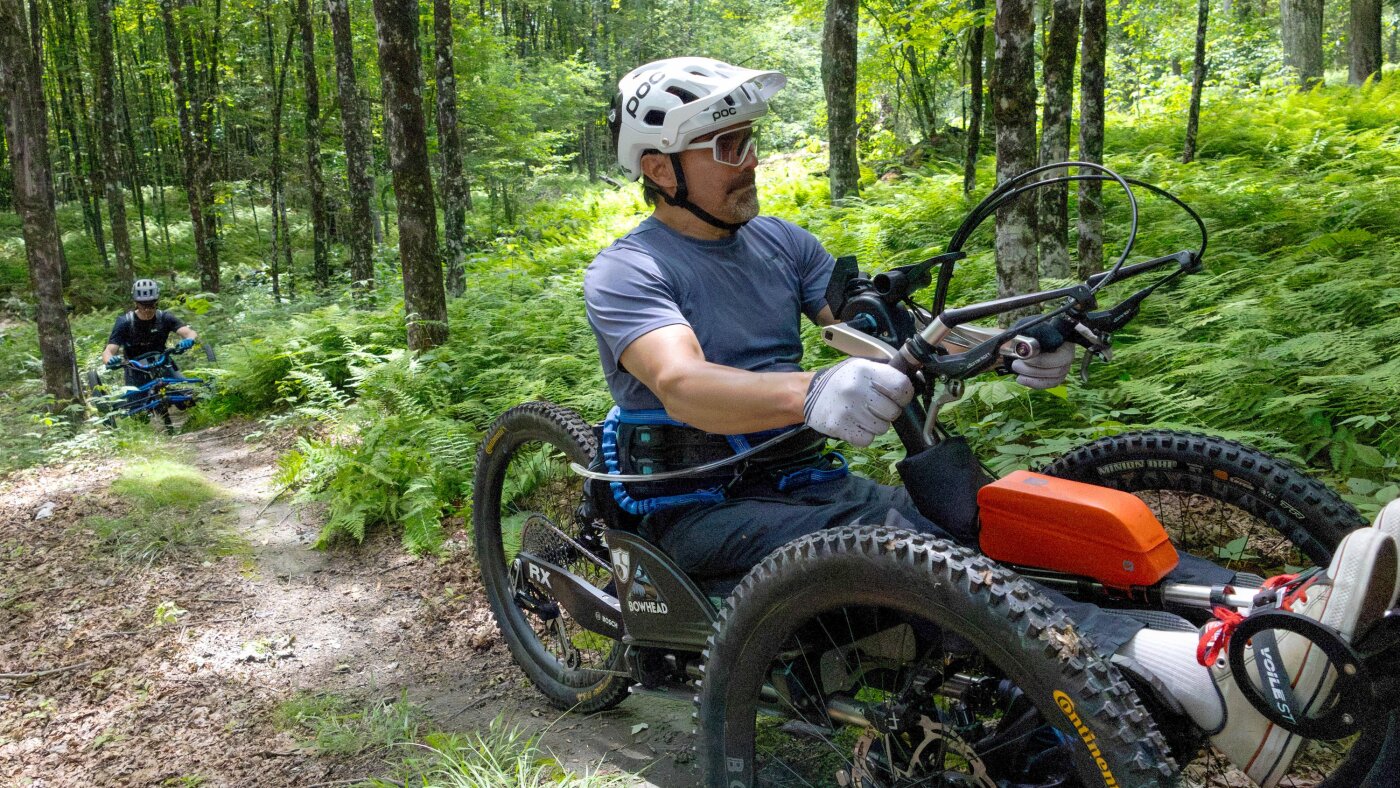
OUTDOOR ACCESS FOR DISABLED IN VERMONT
-
 Virginia11 minutes ago
4 indicted in Virginia double homicide; second victim ID’d as grandmother of 6
-

 Washington18 minutes ago
Washington Commanders are retiring Hall of Famer John Riggins’ No. 44
-

 Wisconsin21 minutes ago
Wisconsin State Patrol rides with truck and bus drivers to spot violations in five areas
-

 West Virginia26 minutes ago
West Virginia town fires entire police force after chief resigns, sergeant alleges evidence room break-in
-

 Wyoming33 minutes ago
WHP: July 5 single-vehicle rollover north of Riverton resulted in one death, one injury
-

 Crypto36 minutes ago
British Airline Jet2 Shares Jump 9% After $536M Fuel Hedge Gain Offsets Middle East Travel Fears

