Hawaii
Hawaii 2025: Mauna Lani lives up to its name with breathtaking golf


Hawaii’s Mauna Lani has spectacular par-3s, views
No matter what your score, these two holes will be lodged in your memory for years to come.
(Editor’s note: Although the PGA Tour’s 2026 Sentry Tournament of Champions at Kapalua was canceled, golf in Hawaii is very much alive and well. As the year comes to a close, Golfweek has been highlighting some of the state’s incredible courses and views.)
WAIMEA, Hawaii — A few decades ago, Ross Birch was a 20-something with big golf dreams and plenty of time to chase them. One day, he found himself walking outside the ropes alongside Jack Nicklaus during a practice round for the PGA Senior Skins Game at Mauna Lani. The setting was pure paradise — crystal-blue waters lapping against the shores of Hawaii’s two-course resort.
Nicklaus had played the South Course as part of the event’s 10-year run, which also featured legends like Arnold Palmer, Raymond Floyd and Lee Trevino. But when the Golden Bear turned his attention to the North Course — a layout dotted with large trees in the middle of fairways — even the 18-time major champion was flummoxed.
“What the hell is with these trees?” Nicklaus said, eyeing the first hole, a dogleg right guarded by a towering kiawe tree, a tropical cousin of mesquite.
Birch laughed and warned him there were plenty more surprises ahead. Nicklaus threw up his hands in disbelief, then motioned for Birch — who was working at another Big Island course at the time — to join the group.
“It was one of the greatest days of my life,” Birch recalls, “walking this incredible course with one of the greatest players ever.”
Today, Birch shares that story often in his role as Mauna Lani’s director of golf, a position he’s held since 2022. An affable host and solid player, he sprinkles anecdotes like this throughout an afternoon on either of the resort’s stunning seaside courses. And at Mauna Lani, there’s no shortage of tales to tell.
Despite the cancellation of the 2026 The Sentry, golf in Hawaii is thriving. Here, the game becomes an experience — teeing off on courses carved into volcanic landscapes, challenging seaside holes where waves crash just beyond the green, and soaking in panoramic views that stop you in your tracks. With more than 70 courses across the islands, every round is an adventure.
But Mauna Lani offers something truly special.
The North Course
Opened in 1988, the North Course is a mature track, its rolling fairways framed by weathered lava beds and kiawe forests. Trees often stand boldly in the middle of fairways, forcing creative shot-making, while trade winds add another layer of challenge. On the ninth hole, a par-4 near the water, strong gusts can turn an approach into a test of nerve.
Wildlife adds to the charm — and the challenge. Feral goats frequently wander across fairways, a quirky hazard that once caused serious backups. In fact, the state held a lottery in 2021 to relocate some of the herds, which had become invasive in the nearby Historic Park. That park, Pu’uhonua o Hōnaunau, holds deep cultural significance as a place of refuge for defeated warriors and civilians during times of battle.
Survive the wildlife and navigate the narrow fairways, and you’ll reach the course’s crown jewel: the par-3 17th. From elevated tees, you’ll fire toward a green cradled in a dramatic lava bowl—a natural amphitheater and one of the most unforgettable shots in Hawaii.
The South Course
For those who prefer a more forgiving layout, the South Course delivers equally stunning views with fewer trees but newer, jagged lava flows. Opened in 1981, it’s a sensory feast — and home to two of the most spectacular par 3s you’ll ever play.
No. 7 demands a long iron or fairway wood to reach a green perched beside the ocean, with water hugging the left and a tall tree guarding the right. A well-placed bunker offers a lucky bailout for those who flirt with disaster.
Later, the shorter 15th hole tests your nerves with a mid-iron carry over an inlet to a green framed by palms and water. It’s no wonder this hole ranks among the most photographed in the country. No matter what your score, these two holes will be lodged in your memory for years to come.
Short course and more
As if the two courses don’t offer enough to keep a golfer fully engaged, Mauna Lani’s short course is the perfect way to spend some time before sunset, or to get the kids out on the course before a day at the beach.
The WikiWiki short course is best played in flip-flops or with no shoes at all. Lined on the outside by towering palms, the course was originally part two holes from the main complex, but have since become a perfect way to enjoy tropical breezes for an hour or so, preferably with a Kona Big Wave or a dragonfruit margarita in hand.
We played the course as a group, two teams playing rotating shots, and the laughs and smiles were consistent. The short course sits up on a slight perch, so the winds are even more severe and the views of the Mauna Kea, the state’s highest point, are breathtaking.
Other amenities
Golf may be the star at Mauna Lani as the South Course is currently No. 13 on Golfweek’s Best Courses You Can Play in Hawaii and the North Course sits at No. 6, but the resort offers experiences that linger long after the final putt. One highlight? A sunrise canoe paddle that stirs the soul. Before dawn, our group pushed off into the gentle surf, working hard for 15 minutes to break free from the incoming waves. Then, as the first light crept over the mountains, our guides shared stories of the island’s heritage — how generations of Hawaiians gave thanks each morning to the sun and all it provided. It’s a moment that blends effort, beauty, and deep cultural connection — an unforgettable way to start the day.
There’s a reason both locals and visitors gravitate to the Clubhouse Bar. Perched on the second floor overlooking the practice facility, it offers sweeping ocean views and a relaxed vibe — the perfect spot to toast the day with craft cocktails and island-inspired bites.
Craving something more indulgent? Head to the nearby CanoeHouse, where Japanese-inspired cuisine meets a breathtaking oceanfront setting. Menu highlights include a melt-in-your-mouth Wagyu ribeye, local mushrooms like lion’s mane and ali‘i with koji barbecue and cashews, and the showstopper: The King Tower — a lavish spread of poached lobster, Kaua‘i shrimp, Hokkaido scallops, Japanese uni, local sashimi, oysters, and snow crab. It’s a feast as unforgettable as the view.
In Hawaiian, Mauna Lani means “mountain reaching heaven.” And after a day — or even a week — on these breathtaking shores, no matter what your scorecard says, you’ll drift off with a full belly and an even fuller heart.



Three convicted sex offenders were arrested on Hawaii Island last week for allegedly failing to comply with sex offender registry requirements.
Multiple law-enforcement agencies conducted checks in Kona on registered sex offenders who had been identified as potentially out of compliance with the state’s Sex Offender Registry laws, according the Department of the Attorney General.
As a result of the three-day operation, several individuals were brought back into compliance, and three West Hawaii men were arrested for allegedly failing to comply with the requirements.
The three men who were arrested are Joseph Debus, 56, of Kailua-Kona, Garth Coleman, 53, of Holualoa and Alexsandr Skelcey, 34, of Kailua-Kona.
Debus was convicted of second-degree sex assault in Hawaii in 1993 and sentenced to five years probation with a year in jail. Coleman was sentenced to 20 years in prison for first-degree assault in 2000 after a jury trial in Hawaii. And Skelcey was convicted in Michigan in 2012 of assault with intent to commit sex assault.
“Sex offender registration requirements exist to protect our communities and ensure law enforcement knows where convicted offenders are living,” Tom Alipio, chief of the AG department’s Investigations Division, said in a press release. “Compliance operations like this send a clear message that we will actively monitor the registry, investigate violations and work closely with our law enforcement partners to hold offenders accountable when they fail to meet their legal obligations.”
HPD Chief Reed Mahuna said, “Operations like this allow us to verify that offenders are maintaining strict compliance with registration laws and those who aren’t will be addressed immediately. We will continue to leverage these multi-agency partnerships to keep our island communities safe,”
Members of the public can look up publicly available offender information and subscribe to notifications at sexoffenders.ehawaii.gov/coveredoffender/.
Anyone with information regarding a registered sex offender who may be violating registration requirements is encouraged to contact the Department of the Attorney General’s Investigation Division at (808) 586-1240 or their local law enforcement.

A brush in North Kona, near the Ulu Wini Apartments, has closed a portion of Hina Lani Street, between Route 190 and Ane Keokalole Highway.
According to Hawai‘i Island police, the road is expected to be closed for the next three hours and motorists are advised to avoid the area.
Hawai‘i Fire Assistant Chief Chris Carvalho confirmed at least two engines, two brush trucks, Chopper 2 and a medic vehicle responded to the blaze that started in some bushes.
No evacuations or injuries have been reported at this time.
At 11:09 a.m., an AlertWest camera, installed by Hawaiian Electric in wildfire-prone areas, showed smoke billowing above the Keahuolu Courthouse. As of 12:06 p.m., that smoke appears to have dissipated.
This is a developing story. More information will be provided as it becomes available.
Hawaii
Chinese communist party member arrested in Hawaii on visa fraud charge | Honolulu Star-Advertiser

-
 Business6 minutes ago
California soccer fans sue StubHub after it fails to deliver expensive World Cup tickets
-
 Entertainment9 minutes ago
Lucas Museum to give free annual passes to South L.A. neighbors, host community preview day
-
 Lifestyle14 minutes ago
Meow Wolf taps famed L.A. animation house for its new Los Angeles venue
-
Politics21 minutes ago
Column: Trump decries ‘communism’ while his government takes ownership of companies
-
 Science24 minutes ago
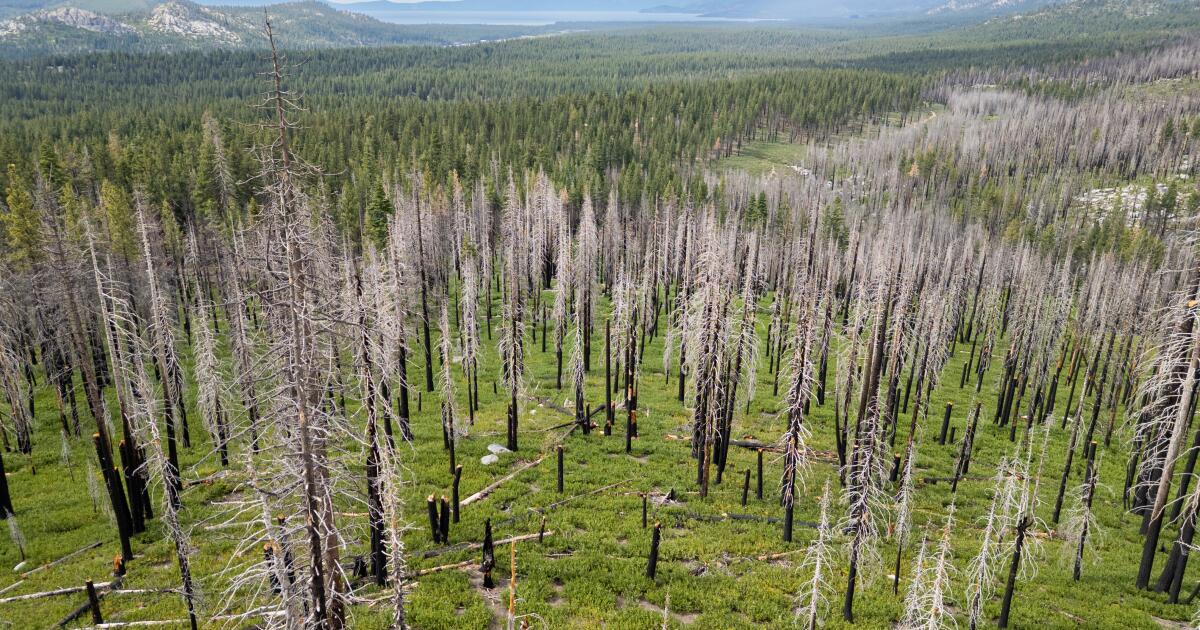
‘I’d rather my house burn down than get cancer’: Herbicide use upends California’s fight to save forests
-
 Sports29 minutes ago
Dodgers scheduled to visit White House in late July to celebrate 2025 World Series win
-

 World39 minutes ago
Former US Olympian pleads not guilty in DC reflecting pool vandalism case
-
 News1 hour ago
Former Olympian pleads not guilty in reflecting pool vandalism charges


